Scarlet oak
Quercus coccinea. Family Fagaceae. Tree.
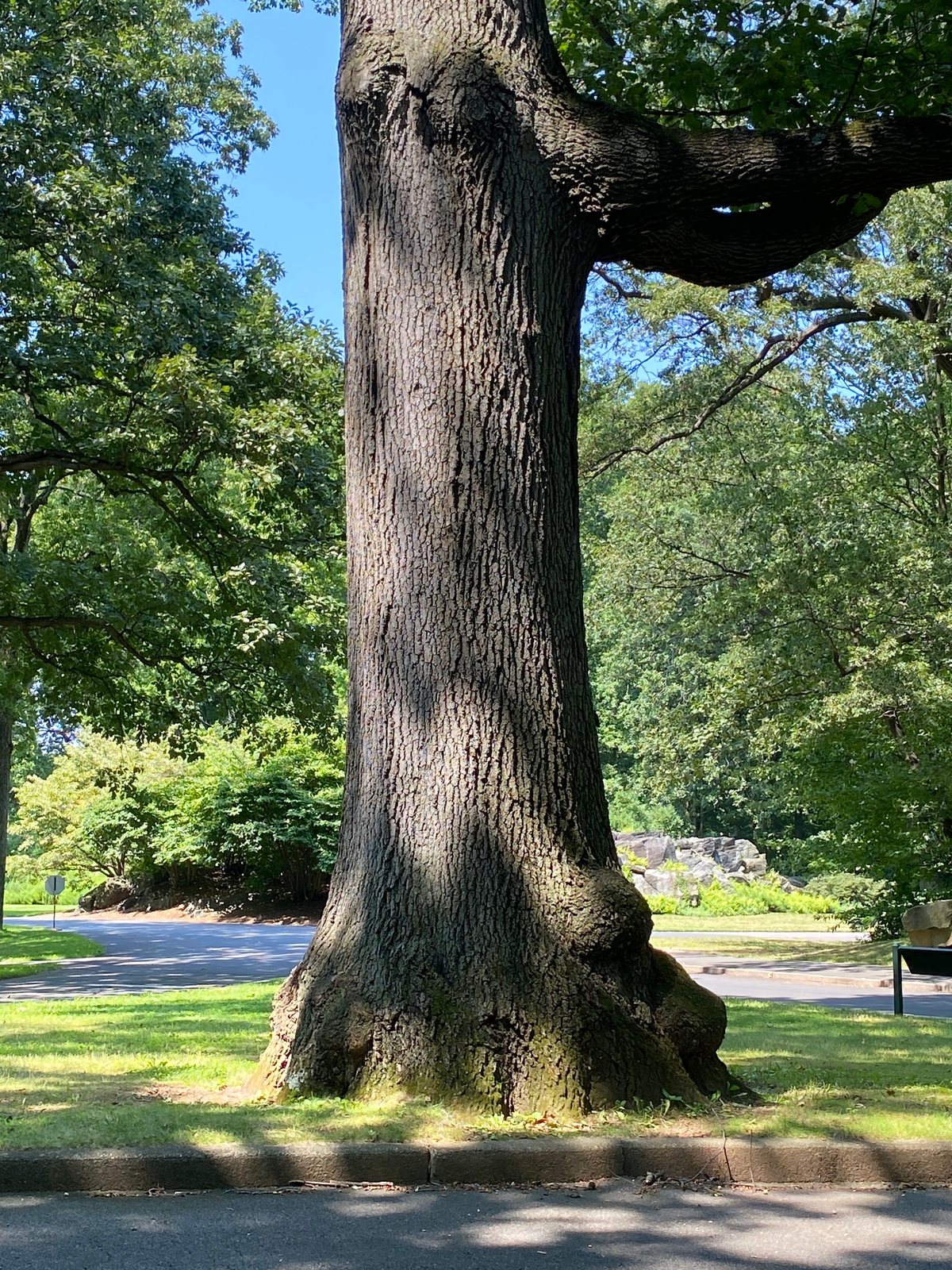
Scarlet oak is a large deciduous tree native to eastern North America, grown for its deeply cut leaves and often brilliant scarlet autumn colour. It suits spacious gardens with acidic, well-drained soil; autumn colour varies with the site and weather.
At a glance
- Sun
- Full sun for good growth and autumn colour.
- Water
- Water regularly while establishing. Established trees tolerate dry spells but dislike waterlogged ground.
- Soil
- Acidic, well-drained soil, including sandy or gravelly ground. Avoid chalk, strongly alkaline soil and persistently wet sites.
- Height
- 50-80 ft (15-24 m)
- Spread
- 40-50 ft (12-15 m)
- Foliage
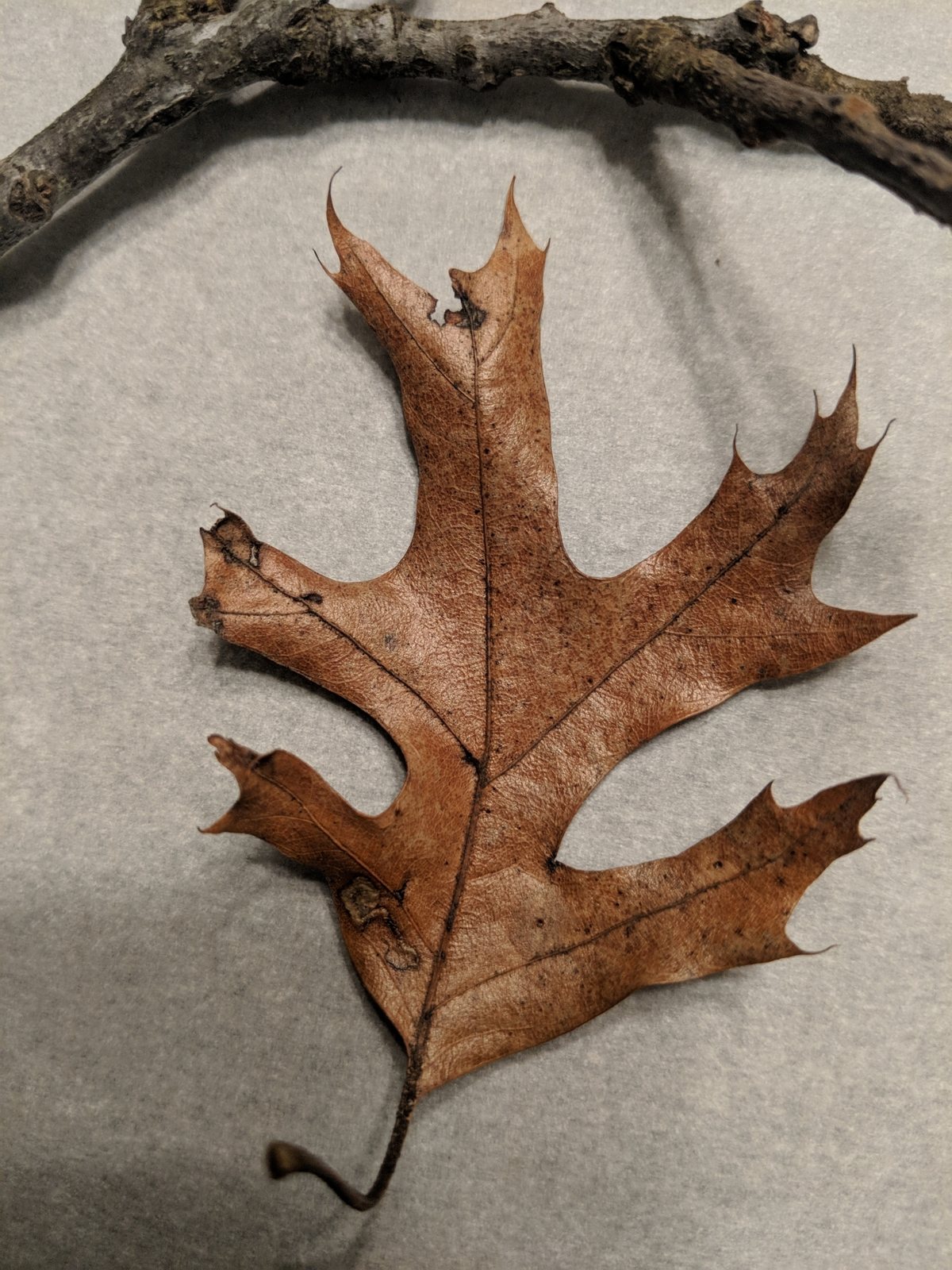
- Glossy green leaves with deep, rounded sinuses and pointed, bristle-tipped lobes. Leaves turn red to scarlet in autumn; some brown leaves may remain on young trees through winter.
- Growth
- Moderate to fast when young, slowing with age.
- Care needed
- Low
The year at a glance
- Drought tolerant
- Cold hardy
- Heat tolerant
- Wildlife
| J | F | M | A | M | J | J | A | S | O | N | D | |
|---|---|---|---|---|---|---|---|---|---|---|---|---|
| Fruit | ||||||||||||
| Plant |
Northern hemisphere months. In Australia, shift them by six.
- Difficulty
- Easy
- Toughness
- Very tough
Will it suit your garden?
Pick your zone, country, light and whether you have pets.
Full sun is 6 or more hours of direct sun a day, part shade 3 to 6 hours, shade under 3.
How it grows
Planting day
8 ft (2.3 m)
After 1 year
10 ft (3.2 m)
After 2 years
13 ft (4.1 m)
After 3 years
16 ft (4.9 m)
After 5 years
22 ft (6.6 m)
About 20 years to full size.
From a typical nursery size, at an average rate for this kind of plant. A rule of thumb, not a forecast.
Good to know
- Cats and dogs
- Toxic
- Native to
- the US
- Growth rate
- Moderate
Care
Jobs through the year
- WaterApr–May, Sep–Oct, every 21 days
- Water established trees only if dry; check establishing trees more frequently.
- WaterJun–Aug, every 14 days
- Water deeply during prolonged drought; young trees need more frequent watering for three years.
- MulchMar, Nov
- Maintain 5–8 cm of organic mulch, leaving the root flare and trunk exposed.
- PruneJan–Feb, Dec
- Remove damaged branches and competing leaders while dormant, following local oak-wilt restrictions.
- Plant a young tree with its root flare at soil level; older specimens can be difficult to transplant.
- Water deeply during dry spells for the first two or three growing seasons.
- Spread 2-3 in (5-8 cm) of organic mulch over the root area, keeping it clear of the trunk.
- Do not feed routinely; investigate poor growth or yellow leaves before adding fertiliser.
- Protect the trunk from mower damage and avoid digging, paving or compacting soil beneath the crown.
Pruning. Prune young trees during winter dormancy to retain one main leader and remove damaged or badly crossing branches. Where oak wilt occurs, follow local pruning restrictions and avoid pruning during spring and summer; use a qualified arborist for large limbs.
Through the year
- Autumn
- Plant young trees while the soil is workable, watering thoroughly after planting.
- Winter
- Check young trees for competing leaders and prune lightly during dormancy, subject to local oak-wilt advice.
- Spring
- Renew mulch without covering the root flare, and check that any tree ties are not tightening.
- Summer
- Water establishing trees deeply during dry periods and check foliage for persistent yellowing or premature wilting.
- Late autumn
- Collect fallen leaves for leaf mould, unless local disease guidance recommends disposal.
In the garden
- Plant as a specimen in a large lawn where its mature crown and autumn colour have room to develop.
- Use in a spacious woodland-edge planting with acid-loving shrubs beneath the outer canopy.
- Include in eastern North American native landscapes to provide long-lived structure and wildlife habitat.
- Place beyond a terrace or seating area for eventual summer shade, allowing ample room away from buildings and paving.
Garden styles it suits: Woodland, Wildlife garden, Grand estate, Autumn colour, Traditional and New England.
Plant it with: Flowering dogwood, Serviceberry, Witch hazel, Lowbush blueberry, Pennsylvania sedge and Christmas fern.
Wildlife: Acorns feed squirrels, jays, deer and other wildlife. The leaves support many moth and butterfly caterpillars within its native range, while mature branches and cavities provide shelter and nesting sites.
Problems to watch for
- Iron chlorosis on alkaline soil: leaves yellow between green veins. Choose an acidic site; repeated feeding will not correct an unsuitable soil.
- Oak wilt in affected parts of North America: rapid wilting and browning need prompt professional diagnosis. Avoid warm-season pruning and never move infected firewood.
- Spongy moth caterpillars in affected regions: heavy feeding can strip foliage. Monitor egg masses and seek local advice on targeted treatment when infestations are severe.
- Bacterial leaf scorch: leaf edges brown repeatedly in summer and branches may gradually decline. Obtain a diagnosis, reduce drought stress and consult an arborist; there is no cure.
Safety
Acorns, buds and leaves contain tannins and can poison horses, especially when eaten in quantity, causing serious gut and kidney damage. Dogs may develop vomiting or diarrhoea after eating acorns, with more serious poisoning possible after substantial ingestion; acorns can also cause intestinal blockage. Cats should not eat oak material. Raw acorns are not suitable for people to eat without proper processing.
Easily confused with
Pin oak (Quercus palustris)
Pin oak commonly has strongly drooping lower branches and smaller acorns with shallow, saucer-like cups. Scarlet oak has a less tiered outline and deeper acorn cups.
Northern red oak (Quercus rubra)
Northern red oak usually has shallower leaf sinuses and broad lobes. Its acorns sit in very shallow cups, unlike the deeper cups of scarlet oak.
Black oak (Quercus velutina)
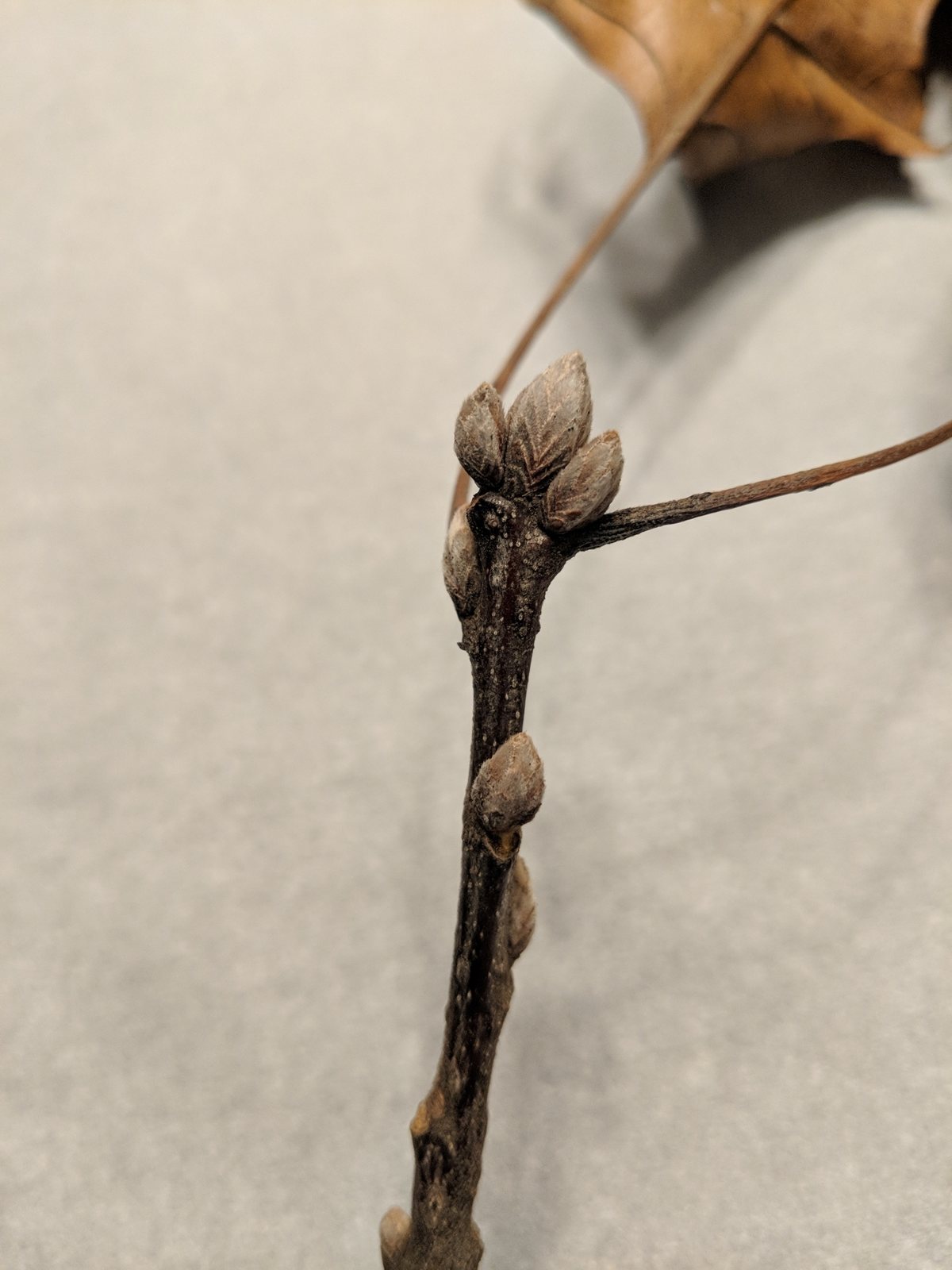
Black oak usually has conspicuously hairy buds and more hair beneath the leaves. Its acorn cups have coarser, looser scales; scarlet oak cups have tighter scales, and the exposed acorn tip often shows concentric rings.
The name
Quercus is the Latin name for oak, and coccinea means scarlet, referring to the autumn foliage.
Propagation. Grow from fresh, sound acorns collected in autumn. Sow outdoors in a protected pot or seedbed, or give them roughly two to three months of cold, moist stratification before spring sowing. Protect from rodents and plant out while young, before the taproot becomes crowded.
Checked against open data
- Accepted botanical name
- Quercus coccinea
- In the US and Canada
- Native in the lower 48 states.
- Native range
- Alabama, Arkansas, Connecticut, Delaware, District of Columbia, Georgia, Illinois, Indiana, Kentucky, Maine, Maryland and Masachusettes.
- Measured
- Soil pH 4.5 to 6.9. Average height 1950 cm.
Sources: GBIF (CC BY 4.0), USDA PLANTS and Trefle (CC BY 4.0). The care and design notes are LandscapeGPT's own.
See it in your own yard.
Upload a photo of your yard and see it redesigned with plants that suit your climate, each checked against your zone.