Lowbush blueberry
Vaccinium angustifolium. Family Ericaceae. Shrub.
Also called Wild blueberry, Low sweet blueberry.
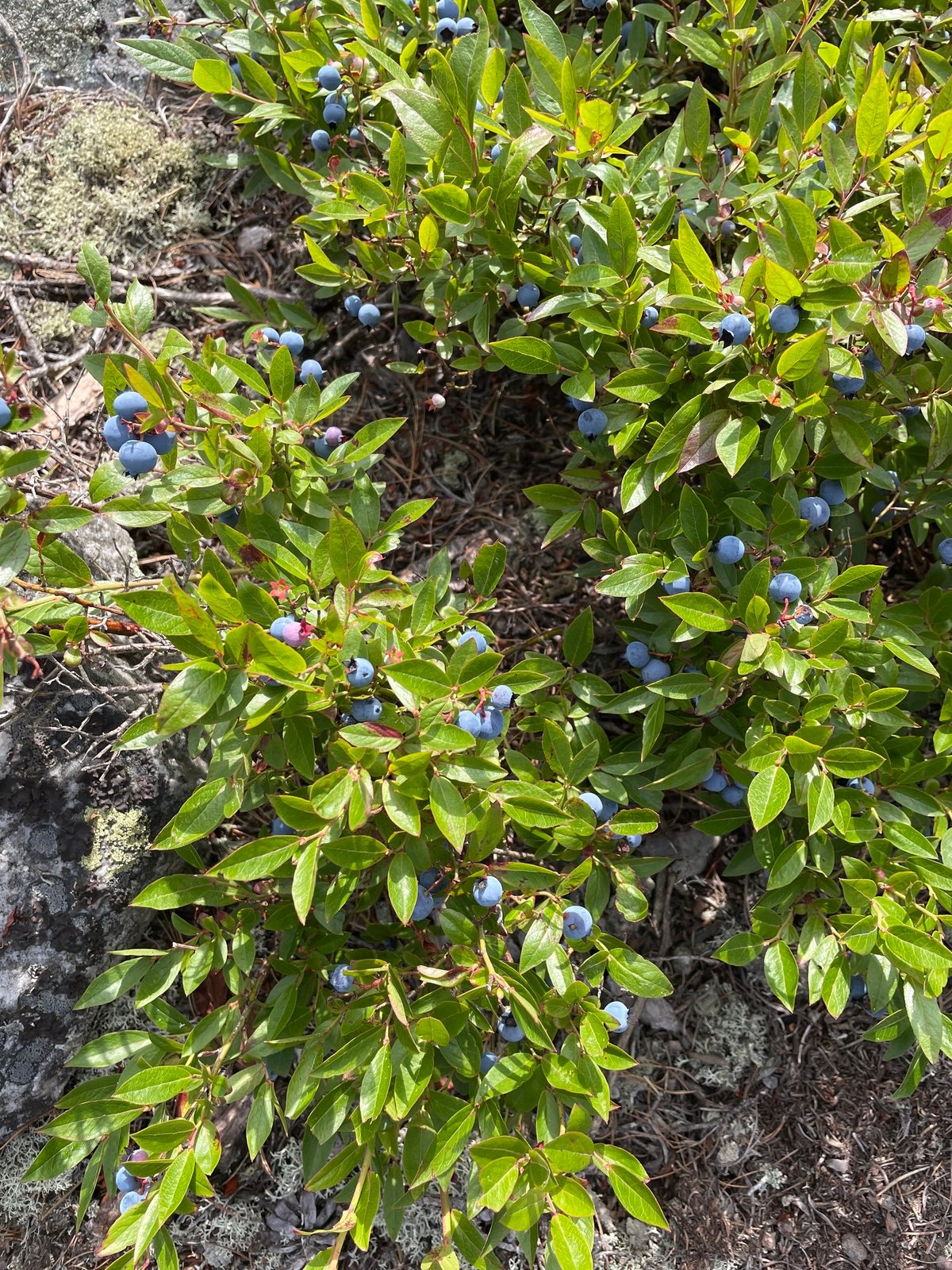
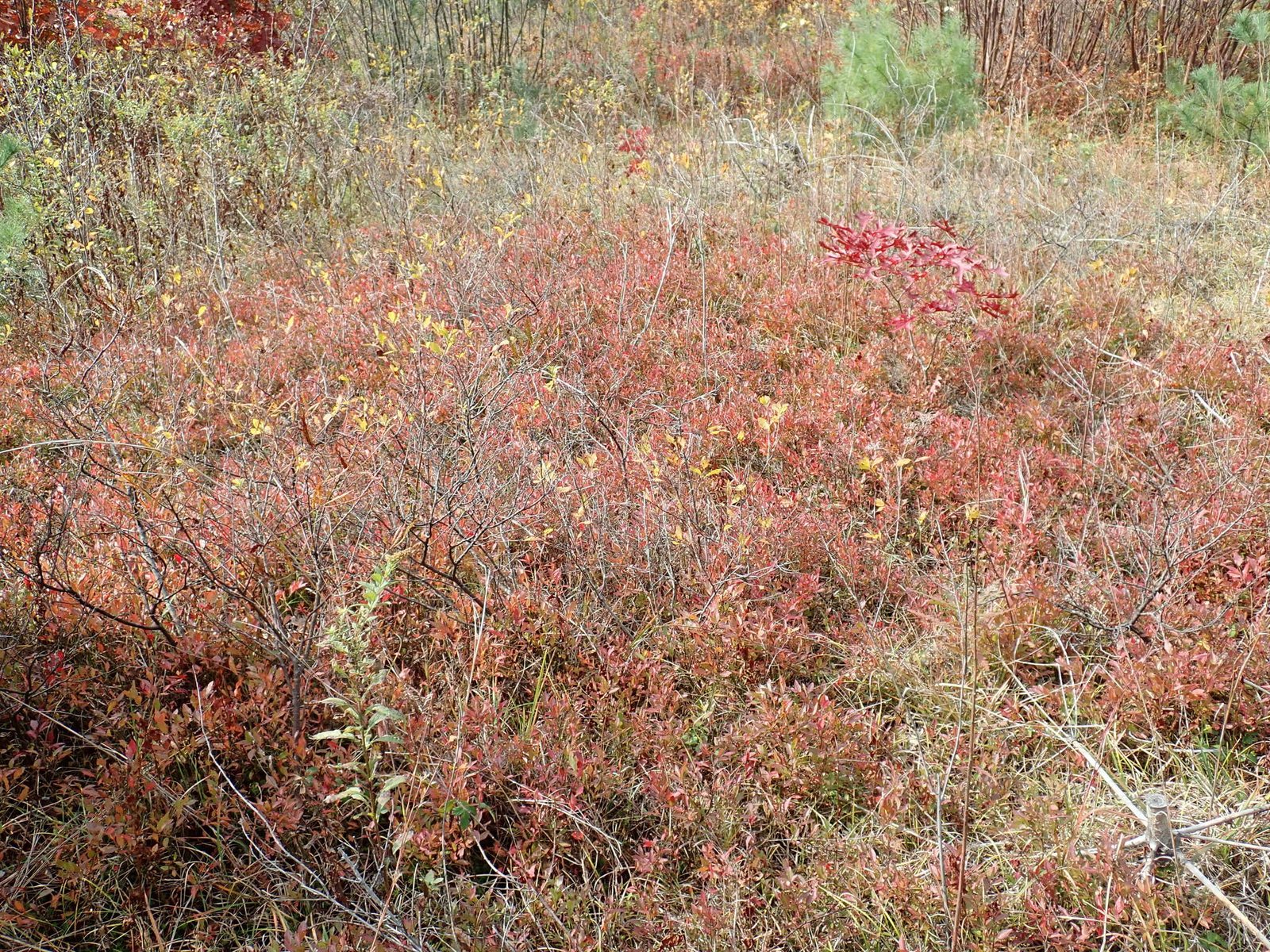
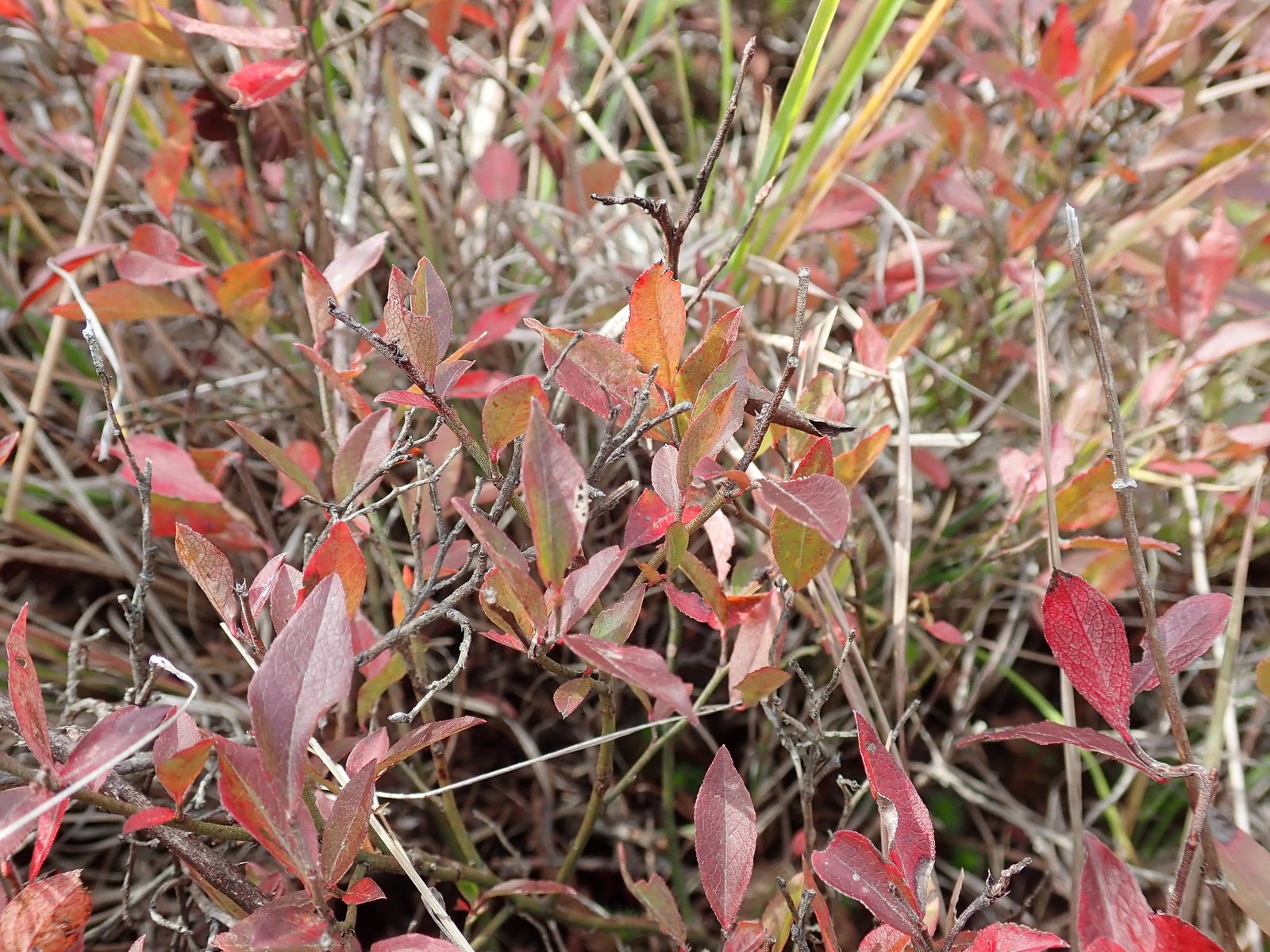
A low, deciduous shrub native to northeastern North America, lowbush blueberry spreads by underground stems to form patches. Gardeners grow it for sweet blue berries, spring flowers and red autumn foliage. It needs strongly acidic soil and a cool climate with reliable winter chilling; hot lowland gardens are generally unsuitable.
At a glance
- Sun
- Full sun to partial shade; full sun gives the best crops and autumn colour.
- Water
- Keep the shallow root zone evenly moist, especially during establishment and fruit development; avoid waterlogged soil.
- Soil
- Strongly acidic, humus-rich, well-drained soil, ideally pH 4.0-5.2. Use an ericaceous raised bed or container where garden soil is alkaline.
- Height
- 0.5-2 ft (0.15-0.6 m)
- Spread
- 2-3 ft (0.6-0.9 m), eventually forming wider colonies
- Flowers
- Mid- to late spring; small, hanging, bell-shaped flowers, white to pale pink.
- Foliage
- Small, narrow, finely toothed green leaves turn red, orange or burgundy in autumn.
- Growth
- Slow to moderate; spreads gradually once established.
- Care needed
- Medium
The year at a glance
- Pollinators
- Cold hardy
- Wildlife
- Low allergen
- Edible
| J | F | M | A | M | J | J | A | S | O | N | D | |
|---|---|---|---|---|---|---|---|---|---|---|---|---|
| Flowers | ||||||||||||
| Fruit | ||||||||||||
| Plant |
Northern hemisphere months. In Australia, shift them by six.
- Difficulty
- Moderate
- Toughness
- Fairly tough
Will it suit your garden?
Pick your zone, country, light and whether you have pets.
Full sun is 6 or more hours of direct sun a day, part shade 3 to 6 hours, shade under 3.
How it grows
Planting day
1.2 ft (0.38 m)
full size
About 7 years to full size.
From a typical nursery size, at an average rate for this kind of plant. A rule of thumb, not a forecast.
Good to know
- Cats and dogs
- Safe
- Native to
- the US and Canada
- In the garden
- Spreads vigorously: plan to contain it.
- Growth rate
- Slow
Care
Jobs through the year
- WaterMar–May, Sep–Oct, every 7 days
- Check established plants weekly; water if rain is insufficient, using rainwater where tap water is alkaline.
- WaterJun–Aug, every 4 days
- In dry weather, keep shallow roots evenly moist without waterlogging; young plants need closer checks.
- PruneFeb–Mar
- Remove dead stems and some oldest growth; renew only a section because cut stems will not crop that summer.
- MulchMar–Apr
- Apply 5–8 cm of pine bark or well-rotted sawdust, keeping stem bases clear.
- FeedApr
- Only if growth is weak, apply a light blueberry feed; test soil acidity and never add lime.
- ProtectJun–Aug
- Before berries colour, fit taut wildlife-safe netting over a frame and check it daily.
- HarvestJul–Aug
- Pick sweet, fully blue berries that release easily; newly blue berries may need several more days.
- ProtectAug–Nov
- Remove shrivelled berries and fallen berry mummies to limit mummy berry disease.
- Plant two or more genetically distinct plants close together for better pollination; divisions from one plant are the same clone.
- Water during dry spells, preferably with collected rainwater where tap water is alkaline.
- Mulch with 2-3 in (5-8 cm) of pine bark or well-rotted sawdust, keeping it clear of stem bases.
- Test soil pH before planting and periodically afterward; do not add lime.
- If growth is weak, apply a light dose of fertiliser labelled for blueberries or acid-loving plants in spring; avoid heavy feeding.
- Weed by hand without deep cultivation, which damages shallow roots and rhizomes.
Pruning. In late winter, remove dead or damaged stems and thin out some of the oldest stems at ground level. To renew an established patch, cut one section to the ground while leaving the rest to fruit; the cut section will not crop that summer.
Harvest
Pick berries in summer when they are fully blue, sweet and release easily with a gentle roll of the fingers; newly blue fruit may need a few more days. Harvest repeatedly as berries ripen unevenly. Established nursery plants usually give a first worthwhile crop about 2-3 years after planting, while small plugs may take longer.
Through the year
- Late winter
- Prune dead wood and renew a small section of an older patch if needed.
- Spring
- Plant while conditions are cool, check soil acidity and refresh the mulch.
- Mid-spring
- Apply a light blueberry feed only if needed; keep insecticides away from open flowers.
- Early summer
- Water during dry weather and fit bird netting over a frame before berries colour.
- Summer
- Pick ripe berries regularly and remove shrivelled or diseased fruit.
- Autumn
- Plant in mild regions, remove fallen diseased berries and mark any spreading shoots that need containing.
In the garden
- Use as a low edible groundcover along sunny woodland edges with acidic soil.
- Plant in broad patches beneath widely spaced pines, where enough light reaches the ground for fruiting.
- Edge an acid-soil fruit garden with blueberries for berries at picking height and autumn colour.
- Combine with heathers and dwarf rhododendrons in an acidic border, leaving room for gradual spread.
Garden styles it suits: Woodland, Wildlife garden, Edible landscape, New England, Autumn colour and Homestead.
Plant it with: Lingonberry, Wintergreen, Heather, Dwarf rhododendron and Sheep laurel.
Wildlife: Spring flowers feed bumblebees and other native bees. Birds and small mammals eat the berries, and the low thickets provide cover; deer and rabbits may browse the shoots.
Problems to watch for
- Yellow leaves with green veins usually indicate soil that is too alkaline: test the pH, avoid alkaline irrigation water and move plants into an ericaceous bed if necessary.
- Birds can strip ripening fruit: use taut, wildlife-safe netting secured over a frame and check it daily.
- Mummy berry disease causes blighted shoots and shrivelled berries: collect affected fruit and fallen berry mummies, then refresh mulch before spring growth.
- Root rot and dieback develop in saturated soil: improve drainage or replant in a raised bed rather than watering more.
Safety
Not known to be toxic to people, cats, dogs or horses. The ripe berries are edible; leaves and stems are not normally eaten.
Easily confused with
Velvetleaf blueberry (Vaccinium myrtilloides)
Its leaves are noticeably hairy and usually have smooth margins; lowbush blueberry usually has less hairy leaves with fine teeth.
Northern highbush blueberry (Vaccinium corymbosum)
Usually develops into a much taller, upright shrub with larger leaves rather than a low, spreading patch.
Black huckleberry (Gaylussacia baccata)
Leaf undersides carry yellowish resin dots, and its usually black berries contain ten hard seed-like nutlets rather than the blueberry's many small seeds.
The name
The species name angustifolium means narrow-leaved, while lowbush describes its short stature compared with highbush blueberries.
Propagation. Lift rooted sections from the edge of an established patch in early spring, with the owner's permission, or take softwood cuttings in early summer. Seed-grown plants vary and take longer to crop; use unrelated plants rather than divisions of one clone for better cross-pollination.
Checked against open data
- Accepted botanical name
- Vaccinium angustifolium
- In the US and Canada
- Native in Canada, the lower 48 states and St. Pierre and Miquelon.
- Native range
- Connecticut, Delaware, Illinois, Indiana, Iowa, Labrador, Maine, Manitoba, Maryland, Masachusettes, Michigan and Minnesota.
- Measured
- Soil pH 4.7 to 7.5. Average height 29 cm.
Sources: GBIF (CC BY 4.0), USDA PLANTS and Trefle (CC BY 4.0). The care and design notes are LandscapeGPT's own.
See it in your own yard.
Upload a photo of your yard and see it redesigned with plants that suit your climate, each checked against your zone.