Lingonberry
Vaccinium vitis-idaea. Family Ericaceae. Shrub.
Also called Cowberry, Mountain cranberry, Partridgeberry.
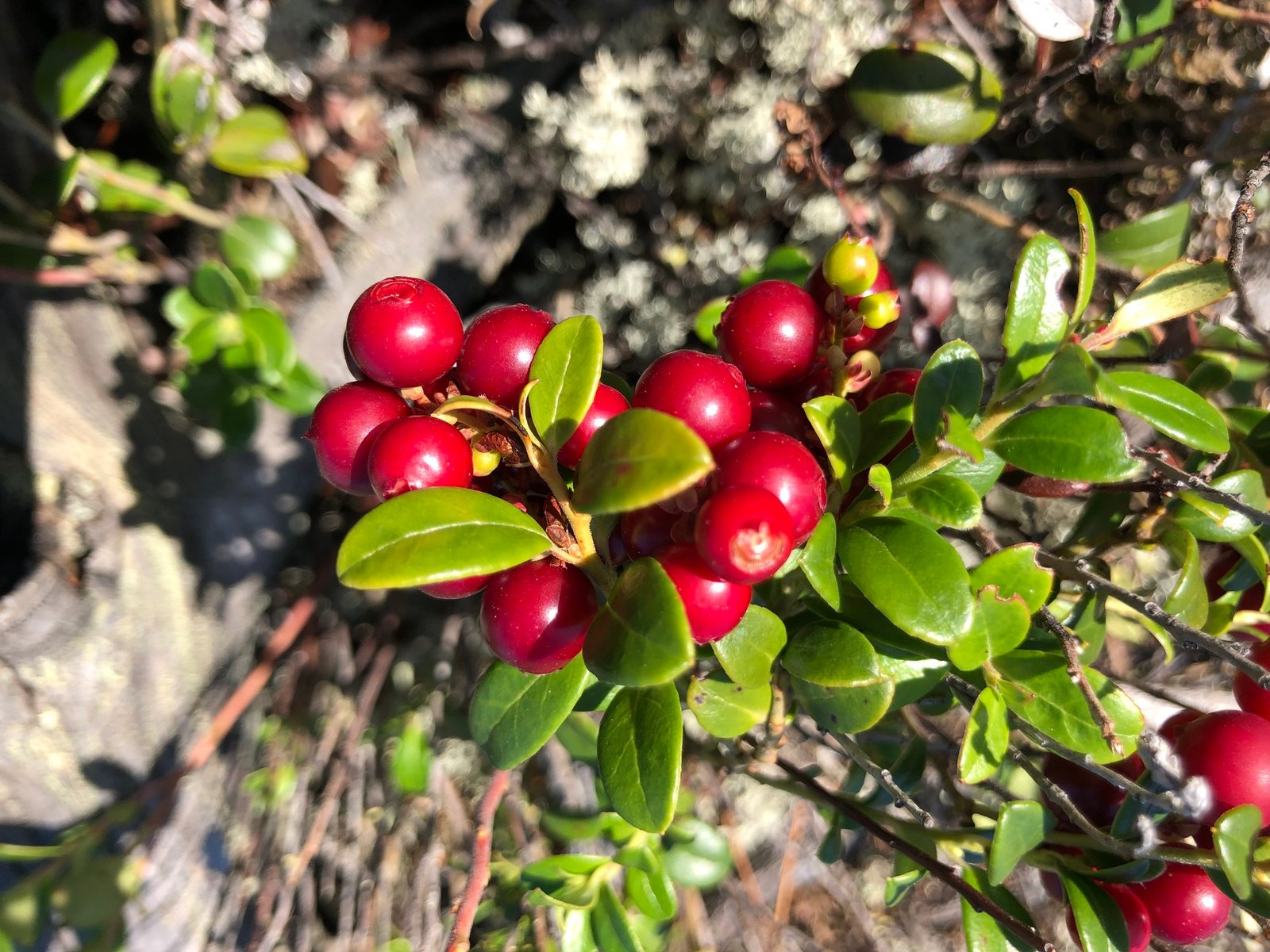
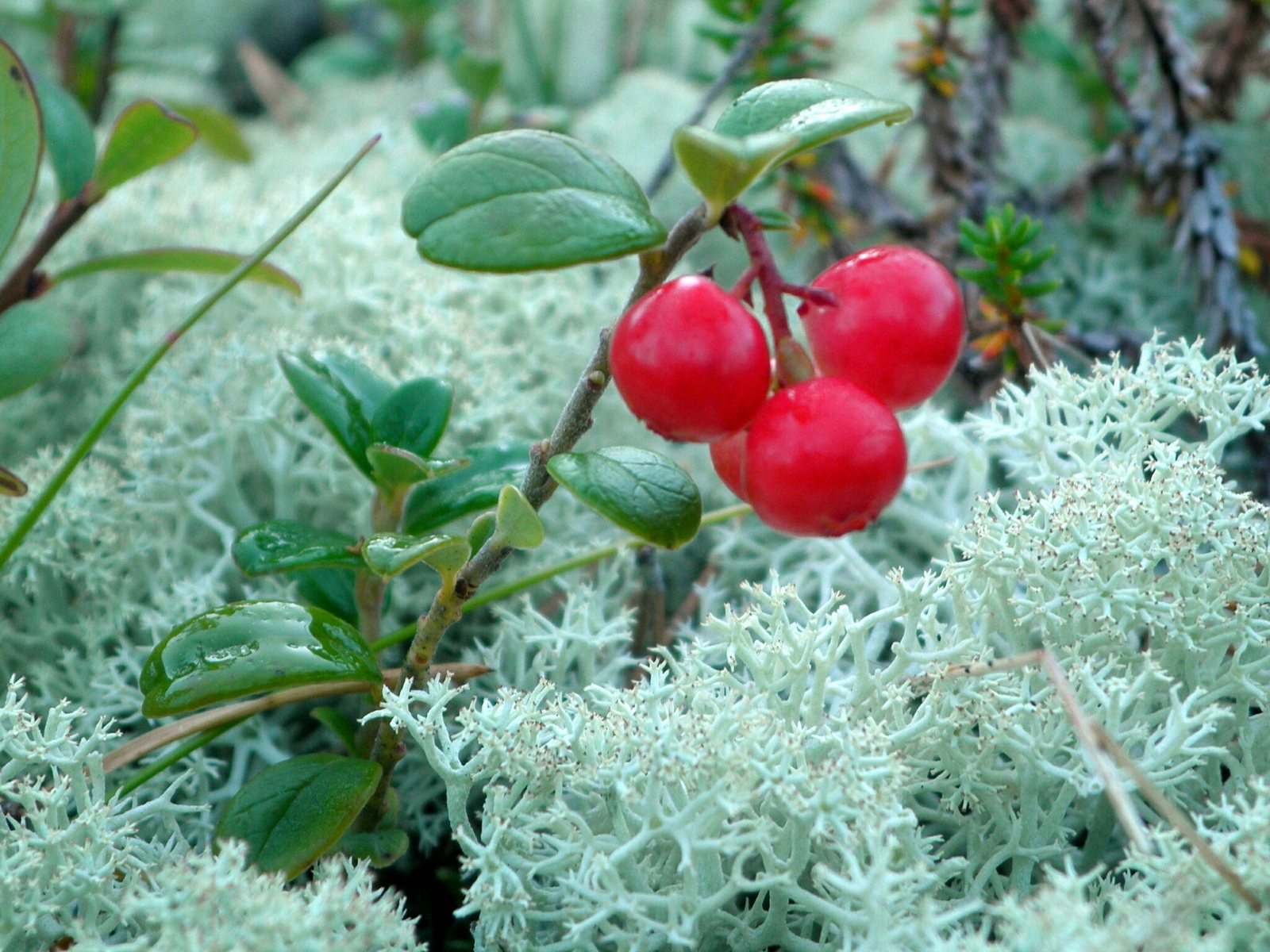
Lingonberry is a low, evergreen shrub grown for its tart red berries, small bell-shaped flowers and glossy foliage. It spreads slowly into a groundcover in cool gardens with acidic soil; hot summers, drying winds and alkaline ground make it difficult to grow.
At a glance
- Sun
- Full sun to partial shade; afternoon shade helps near the warmer end of its range. Heavy shade reduces flowering and fruiting.
- Water
- Keep the shallow root zone evenly moist but never waterlogged. Water during dry spells, including winter dry spells when the ground is unfrozen.
- Soil
- Acidic, humus-rich, well-drained soil, ideally pH 4.0-5.5. Avoid chalk, lime and heavy, poorly drained clay.
- Height
- 0.5-1.5 ft (0.15-0.45 m)
- Spread
- 1-3 ft (0.3-0.9 m), eventually wider as underground stems form a colony
- Flowers
- White to pale pink bells in late spring to early summer; some cultivars flower again later in summer.
- Foliage
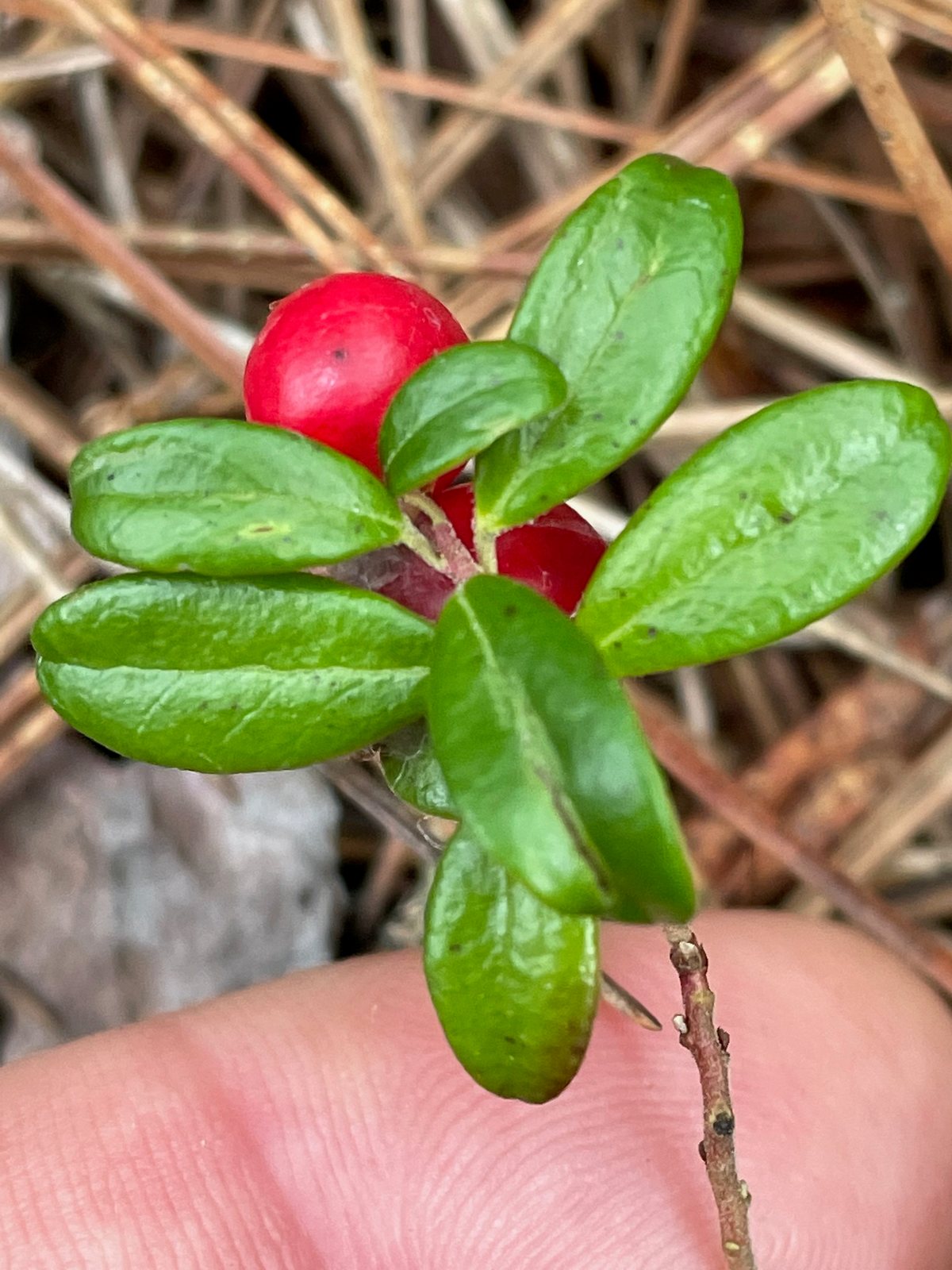
- Evergreen. Small, leathery, oval leaves with glossy dark green upper surfaces, rolled edges and dark dots underneath; foliage may bronze in winter.
- Growth
- Slow to moderate; establishment is often slow during the first year.
- Care needed
- Medium
The year at a glance
- Pollinators
- Cold hardy
- Wildlife
- Low allergen
- Edible
| J | F | M | A | M | J | J | A | S | O | N | D | |
|---|---|---|---|---|---|---|---|---|---|---|---|---|
| Flowers | ||||||||||||
| Fruit | ||||||||||||
| Plant |
Northern hemisphere months. In Australia, shift them by six.
- Difficulty
- Moderate
- Toughness
- Fairly tough
Will it suit your garden?
Pick your zone, country, light and whether you have pets.
Full sun is 6 or more hours of direct sun a day, part shade 3 to 6 hours, shade under 3.
How it grows
Planting day
1 ft (0.3 m)
full size
About 7 years to full size.
From a typical nursery size, at an average rate for this kind of plant. A rule of thumb, not a forecast.
Good to know
- Cats and dogs
- Mildly toxic: may upset a stomach
- Native to
- the US, Canada and the UK
- In the garden
- Spreads vigorously: plan to contain it.
- Growth rate
- Slow
Care
Jobs through the year
- WaterMar–May, Sep–Oct, every 7 days
- Check established ground plants and water if drying; use rainwater where tap water is hard.
- WaterJun–Aug, every 3 days
- Keep shallow roots evenly moist when rainfall is insufficient; check new plants more often.
- WaterJan–Feb, Nov–Dec, every 14 days
- Check during winter dry spells; water only if soil is dry and unfrozen.
- FeedMar–Apr
- Feed lightly with acid-loving plant fertiliser only if growth is weak.
- MulchMar–Apr
- Renew 2.5–5 cm of fine pine bark or pine needles, leaving stems clear.
- PruneFeb–Mar
- Remove dead stems and thin a few oldest stems only when patches become congested.
- DivideSep–Oct
- Separate rooted runners if propagation or thinning is needed.
- ProtectAug–Oct
- If birds take the crop, fit supported wildlife-safe netting and check daily.
- HarvestAug–Oct, every 7 days
- Pick fully red, firm berries that detach readily; later flowers and repeat crops depend on cultivar.
- Water before the shallow root zone dries out; use rainwater where tap water is hard.
- Mulch with 1-2 in (2.5-5 cm) of fine pine bark or pine needles, keeping the main stems clear.
- Feed sparingly in spring with a fertilizer for acid-loving plants; avoid heavy feeding and manure.
- Plant two different compatible cultivars for better fruit set, even though many can fruit alone.
- Keep weeds down by hand rather than hoeing through the shallow roots.
- In containers, use ericaceous compost and keep drainage holes clear.
Pruning. In late winter or early spring, remove dead, damaged or crowded stems at their base. Once a patch becomes congested or less productive, thin a few of the oldest stems rather than shearing the whole plant annually.
Harvest
Pick berries in late summer and autumn when they are fully red, firm and detach readily; some cultivars produce an earlier crop as well. Expect a worthwhile crop about 2-3 years after planting, sometimes longer in poor conditions. The berries remain tart when ripe and are commonly cooked into sauces, preserves or juice.
Through the year
- Late winter
- Remove dead stems and lightly thin congested established plants.
- Spring
- Plant into prepared acidic soil, renew mulch and apply a light feed if growth is weak.
- Late spring
- Keep flowering plants watered and avoid insecticides that could harm visiting bees.
- Summer
- Check soil moisture regularly, especially in containers, and water before plants wilt.
- Late summer to autumn
- Pick fully red berries and protect ripening crops from birds if necessary.
- Autumn
- Separate rooted runners for new plants where the soil is still workable.
In the garden
- Use as an edible groundcover beneath blueberries, where both receive enough light to fruit.
- Edge an acidic-soil woodland border with a low, evergreen ribbon of foliage.
- Plant among dwarf conifers and heathers for contrasting leaf textures and seasonal berries.
- Grow in a broad container of ericaceous compost where garden soil is alkaline.
Garden styles it suits: Woodland, Edible landscape, Scandinavian, Food forest, Small-space and Winter interest.
Plant it with: Blueberries, Heather, Bilberry, Dwarf rhododendrons, Dwarf conifers and Japanese painted fern.
Wildlife: The flowers feed bumblebees and other pollinating insects. Birds and small mammals eat the berries, and established patches provide low cover.
Problems to watch for
- Yellow leaves with greener veins usually indicate soil that is too alkaline: test the pH, stop using lime and move plants into acidic soil or ericaceous container compost if necessary.
- Root rot in wet ground causes decline or dieback: improve drainage, avoid standing water and replace badly affected plants.
- Dry soil and hot winds cause scorched leaves and poor crops: maintain mulch, water consistently and provide afternoon shade in warmer gardens.
- Birds may take ripe berries: cover the crop with taut, securely enclosed wildlife-safe netting and check it daily.
Safety
Ripe berries are edible for people and are not known to be toxic to cats, dogs or horses, although specific veterinary safety information is limited. Leaves contain arbutin and should not be eaten or used for homemade medicinal preparations; safety of substantial leaf consumption is not established.
Easily confused with
Bearberry (Arctostaphylos uva-ursi)
Also forms evergreen mats with red berries, but its leaves generally widen toward the tip and lack the dark gland dots visible beneath lingonberry leaves.
American wintergreen (Gaultheria procumbens)
Has larger leaves with fine teeth and a strong wintergreen smell when crushed; its red fruits are usually carried singly rather than in lingonberry-like clusters.
Large cranberry (Vaccinium macrocarpon)
Has slender trailing stems, narrower leaves and larger berries on long stalks; its flowers have strongly swept-back petals rather than bell-shaped corollas.
The name
Lingonberry comes from the Swedish word lingon, while vitis-idaea means 'vine of Mount Ida'.
Propagation. Separate rooted runners in spring or autumn and replant promptly. Semi-ripe cuttings can be rooted in summer; seed is slower and does not preserve cultivar characteristics.
Checked against open data
- Accepted botanical name
- Vaccinium vitis-idaea
- In the US and Canada
- Native in Alaska, Canada, Greenland, the lower 48 states and St. Pierre and Miquelon.
- Native range
- Alaska, Albania, Alberta, Aleutian Is., Altay, Amur, Austria, Baltic States, Belarus, Belgium, British Columbia and Bulgaria.
- Measured
- Soil pH 4.5 to 6. Average height 6 cm.
Sources: GBIF (CC BY 4.0), USDA PLANTS and Trefle (CC BY 4.0). The care and design notes are LandscapeGPT's own.
See it in your own yard.
Upload a photo of your yard and see it redesigned with plants that suit your climate, each checked against your zone.