Shagbark hickory
Carya ovata. Family Juglandaceae. Tree.
Also called Upland hickory.
Shagbark hickory is a large, long-lived deciduous tree native to eastern North America, grown for its peeling bark, golden autumn leaves and edible nuts. It suits a spacious garden or smallholding rather than a small lawn, and nut crops are more dependable where summers are warm.
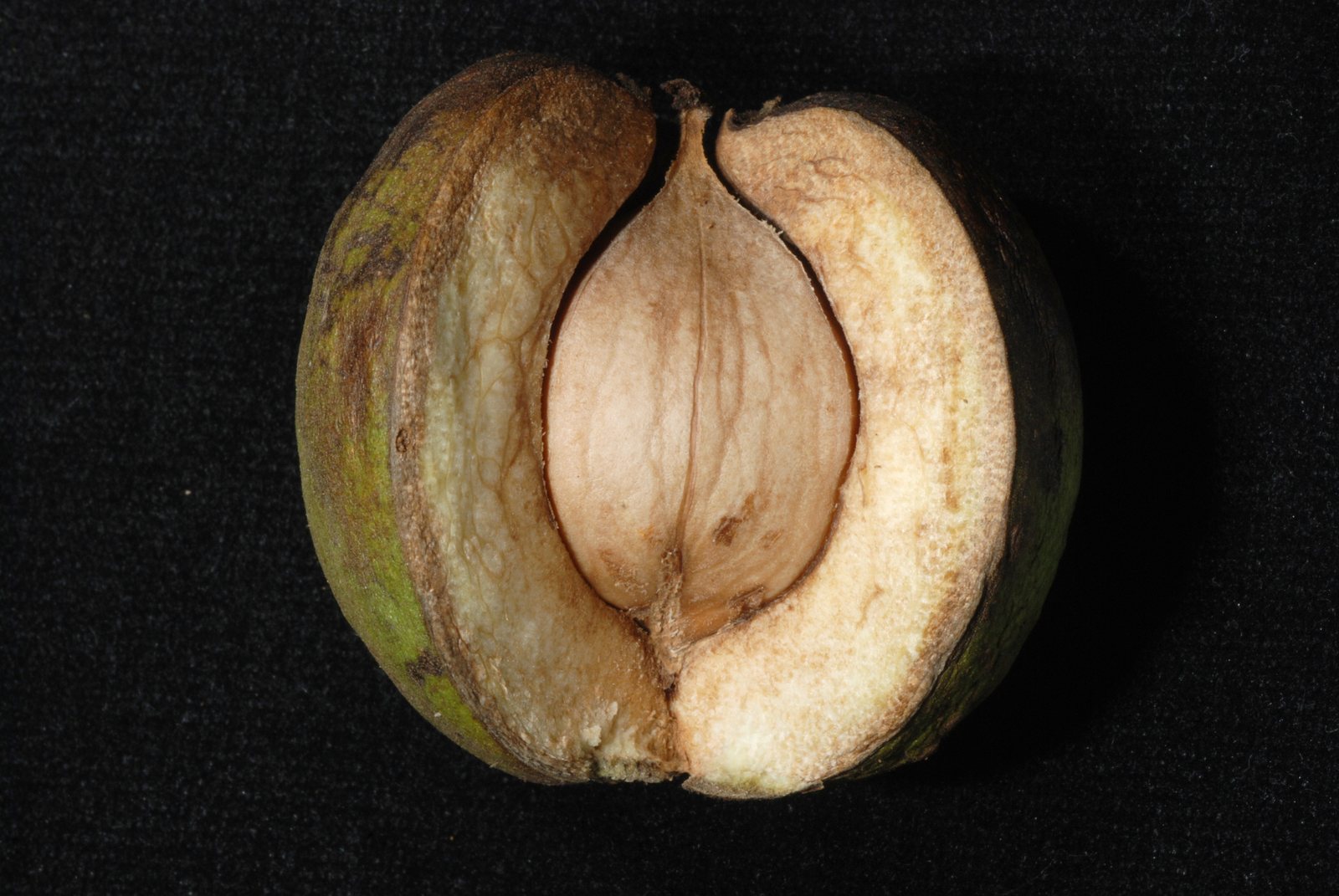
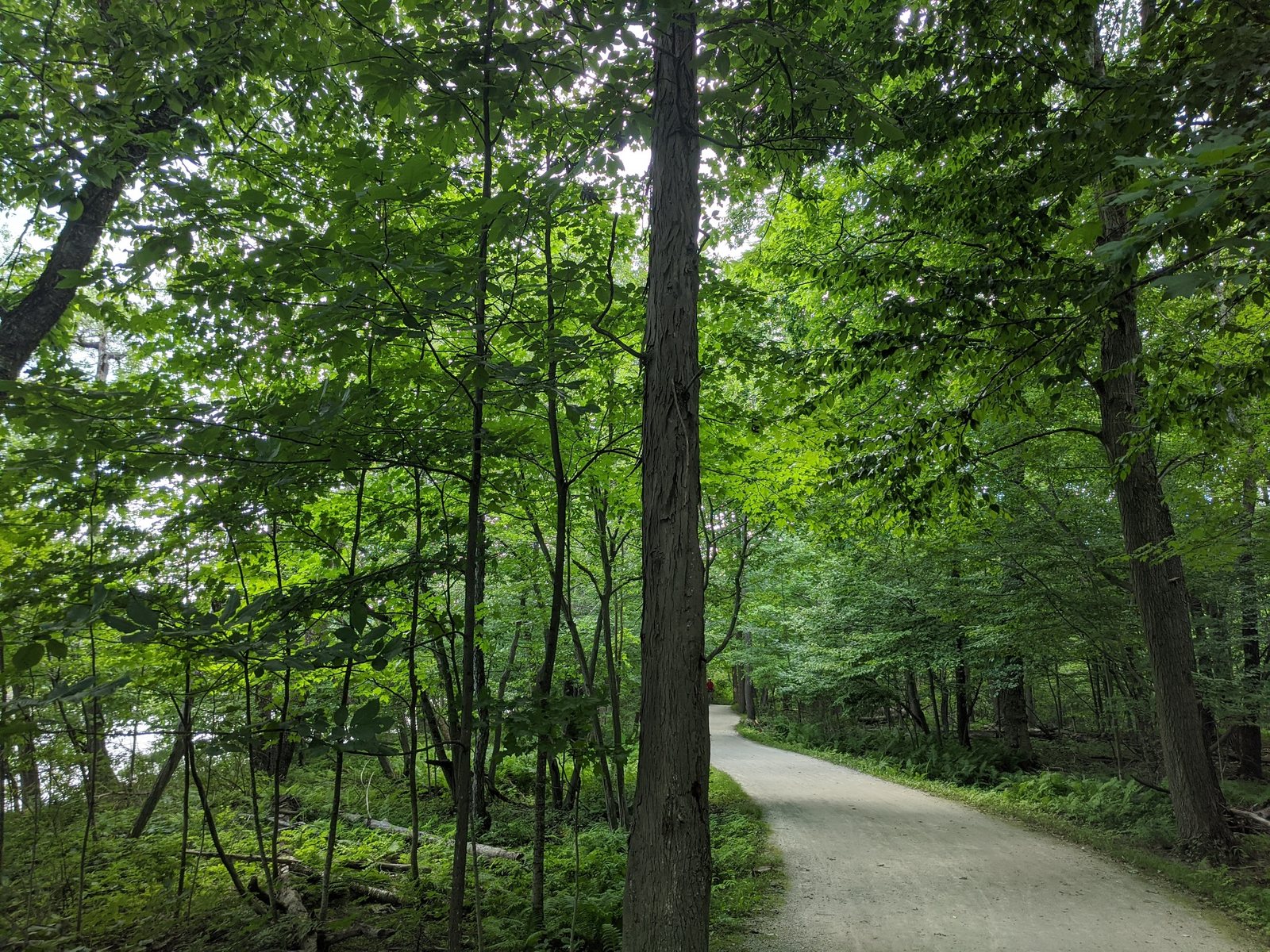
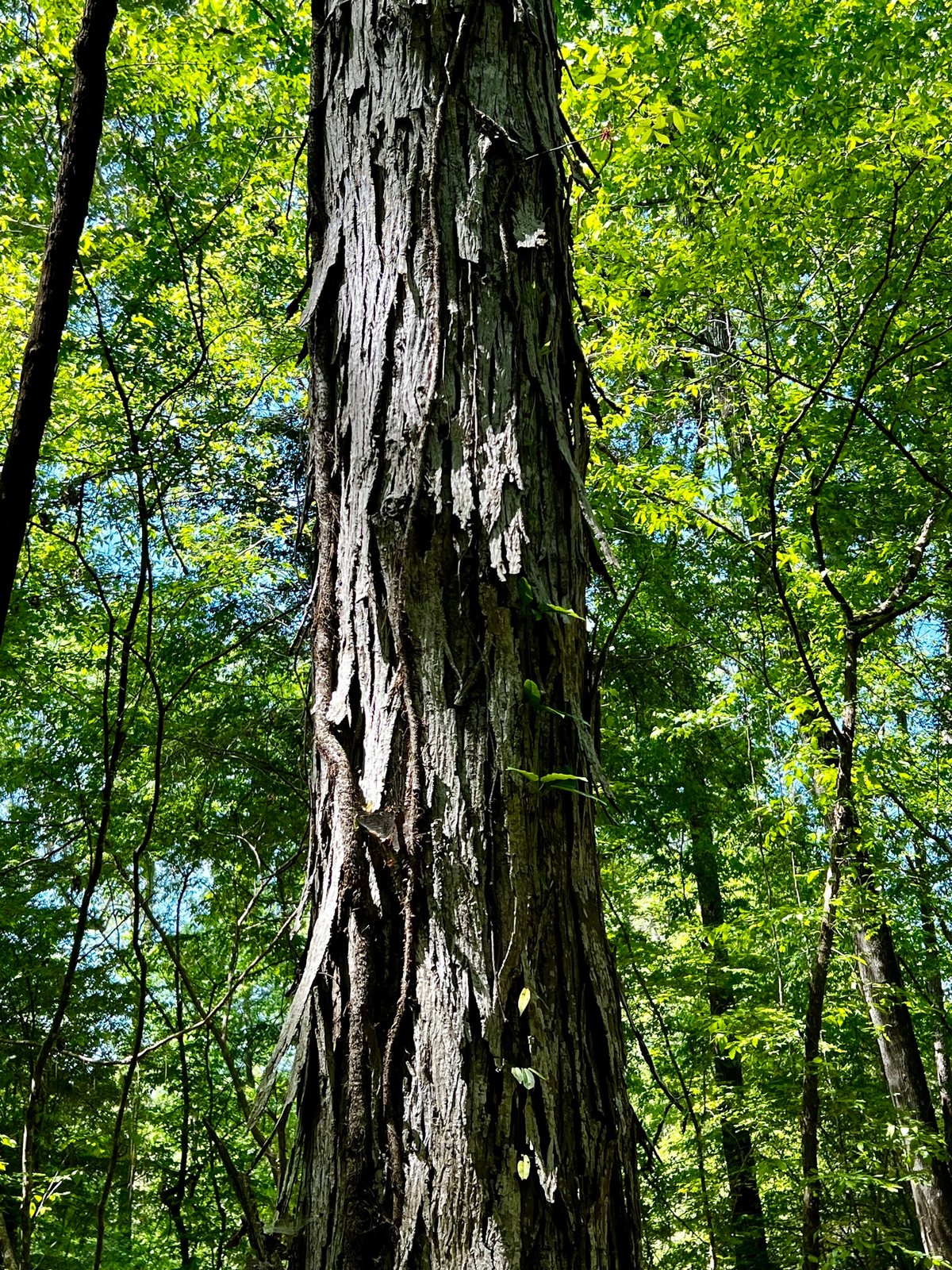
At a glance
- Sun
- Full sun; tolerates light shade, but grows and crops better in sun.
- Water
- Moderate; water young trees during dry spells. Established trees tolerate some drought but grow best with consistent soil moisture.
- Soil
- Deep, fertile, well-drained soil, preferably loam. Tolerates clay if drainage is adequate; avoid shallow soil and prolonged waterlogging.
- Height
- 60-80 ft (18-24 m), occasionally over 100 ft (30 m)
- Spread
- 40-60 ft (12-18 m)
- Flowers
- Spring, as leaves emerge; inconspicuous yellow-green male catkins and tiny female flowers on the same tree.
- Foliage
- Large, compound leaves usually have five pointed leaflets, with the terminal leaflet largest. Green through summer, turning golden yellow in autumn; young trees lack the mature tree's distinctive loose bark strips.
- Growth
- Slow to moderate, often slow during establishment.
- Care needed
- Low
The year at a glance
- Cold hardy
- Wildlife
- Edible
| J | F | M | A | M | J | J | A | S | O | N | D | |
|---|---|---|---|---|---|---|---|---|---|---|---|---|
| Flowers | ||||||||||||
| Fruit | ||||||||||||
| Plant |
Northern hemisphere months. In Australia, shift them by six.
- Difficulty
- Easy
- Toughness
- Very tough
Will it suit your garden?
Pick your zone, country, light and whether you have pets.
Full sun is 6 or more hours of direct sun a day, part shade 3 to 6 hours, shade under 3.
How it grows
Planting day
8 ft (2.5 m)
After 1 year
11 ft (3.2 m)
After 2 years
13 ft (3.9 m)
After 3 years
15 ft (4.7 m)
After 5 years
20 ft (6.1 m)
About 26 years to full size.
From a typical nursery size, at an average rate for this kind of plant. A rule of thumb, not a forecast.
Good to know
- Cats and dogs
- Safe
- Native to
- the US and Canada
- Growth rate
- Slow
Care
Jobs through the year
- WaterApr–May, Oct, every 21 days
- Water established trees only during prolonged dry spells; young trees need more frequent watering.
- WaterJun–Sep, every 14 days
- Water established trees deeply during prolonged drought; check young trees weekly for the first three years.
- PruneFeb–Mar
- Maintain one leader in young trees; remove dead or crossing branches without making unnecessary large cuts.
- MulchMar–Apr
- Refresh a broad, grass-free organic mulch ring, keeping mulch clear of the trunk.
- HarvestSep–Nov
- Collect fallen nuts as husks split; remove husks, discard damaged nuts and dry in a squirrel-proof place.
- ProtectJan–Feb, Nov–Dec
- Fit and check ventilated guards on young trunks where rabbits, voles or deer cause damage.
- Plant a small, nursery-grown tree in its permanent position; its deep taproot makes later transplanting difficult.
- Water deeply during dry weather for the first two or three growing seasons.
- Keep a broad, grass-free mulch ring, with mulch clear of the trunk.
- Feed only if a soil test shows a deficiency; established trees usually need no routine fertiliser.
- For better nut set, plant two genetically different shagbark hickories with overlapping flowering times.
- Allow room away from paving, buildings and seating areas, where falling nuts and husks can be troublesome.
Pruning. Prune in late winter while dormant, removing dead, damaged or crossing branches and developing one main leader while the tree is young. Avoid topping and unnecessary large cuts on mature trees.
Harvest
Collect fallen nuts in autumn when the thick green husks turn brown and split into four sections; remove the husks, discard damaged nuts and dry sound nuts in a ventilated, squirrel-proof place before storage. Seed-grown trees often take 15-25 years or longer to produce a substantial crop; grafted trees may bear sooner, and crops vary considerably between years.
Through the year
- Late autumn
- Plant dormant nursery trees where the ground is workable, or defer planting until spring in very cold regions.
- Late winter
- Check young trees for competing leaders and remove damaged or crossing branches.
- Spring
- Refresh the mulch ring and remove grass or weeds around young trees.
- Summer
- Water young trees deeply during dry spells and check leaves for aphids or chewing damage.
- Autumn
- Gather ripe fallen nuts promptly before squirrels take them; remove husks and dry the nuts.
- Winter
- Check young trunks for rabbit, vole or deer damage and fit a ventilated guard where needed.
In the garden
- Use as a specimen tree on a large lawn, leaving space to appreciate the mature bark and autumn colour.
- Include in an eastern North American woodland planting with oaks, serviceberries and shade-tolerant groundcover.
- Plant along the sunny edge of a food forest or nut orchard, with another compatible hickory nearby.
- Use in a large wildlife garden where fallen nuts and natural leaf litter can remain.
Garden styles it suits: Woodland, Wildlife garden, Grand estate, Autumn colour, Food forest and Homestead.
Plant it with: White oak, Serviceberry, Eastern redbud, Christmas fern, Wild ginger and Pennsylvania sedge.
Wildlife: Nuts feed squirrels, chipmunks, mice and birds, including jays. The foliage supports many moth caterpillars, and loose bark provides shelter, including roosting sites for some North American bats.
Problems to watch for
- Poor establishment after transplanting: choose a small tree, avoid disturbing the roots and water consistently during establishment.
- Aphids and sticky honeydew: tolerate light infestations and encourage natural predators; rinse accessible foliage with water if needed.
- Leaf spots or anthracnose: usually cosmetic on established trees; collect badly affected fallen leaves and avoid wetting foliage when watering.
- Weevil larvae in nuts: collect nuts promptly, discard infested nuts and remove spoiled nuts from beneath the tree to reduce carry-over.
Safety
Not known to be toxic to people, cats, dogs or horses; the kernels are edible for people. Whole nuts, shells and husks can cause choking or intestinal blockage in pets, and mouldy nuts can cause serious poisoning, especially in dogs. Do not let animals eat fallen, spoiled nuts.
Easily confused with
Shellbark hickory (Carya laciniosa)
Also has shaggy bark, but usually has seven leaflets rather than five, stouter twigs and larger nuts; it is especially associated with moist bottomlands.
Pignut hickory (Carya glabra)
Often has five leaflets too, but its mature bark stays comparatively tight and ridged; its smaller, often pear-shaped nuts have thinner husks.
Mockernut hickory (Carya tomentosa)
Usually has seven to nine leaflets with noticeably hairy undersides and leaf stalks; mature bark is ridged rather than hanging in long loose strips.
The name
Shagbark refers to the long, peeling strips of mature bark; Carya comes from the Greek word for nut, and ovata means egg-shaped.
Propagation. Grow from fresh nuts protected from rodents, either sown outdoors in autumn or given several months of cold, moist stratification before spring sowing. Seedlings vary in nut quality; named nut selections are propagated by grafting, usually by specialist nurseries.
Checked against open data
- Accepted botanical name
- Carya ovata
- In the US and Canada
- Native in Canada and the lower 48 states.
- Native range
- Alabama, Arkansas, Connecticut, Delaware, District of Columbia, Georgia, Illinois, Indiana, Iowa, Kansas, Kentucky and Louisiana.
- Measured
- Average height 1500 cm.
Sources: GBIF (CC BY 4.0), USDA PLANTS and Trefle (CC BY 4.0). The care and design notes are LandscapeGPT's own.
See it in your own yard.
Upload a photo of your yard and see it redesigned with plants that suit your climate, each checked against your zone.