Show Off forsythia
Forsythia × intermedia 'Mindor'. Family Oleaceae. Shrub.
Also called Forsythia × intermedia 'Mindor', Show Off border forsythia.
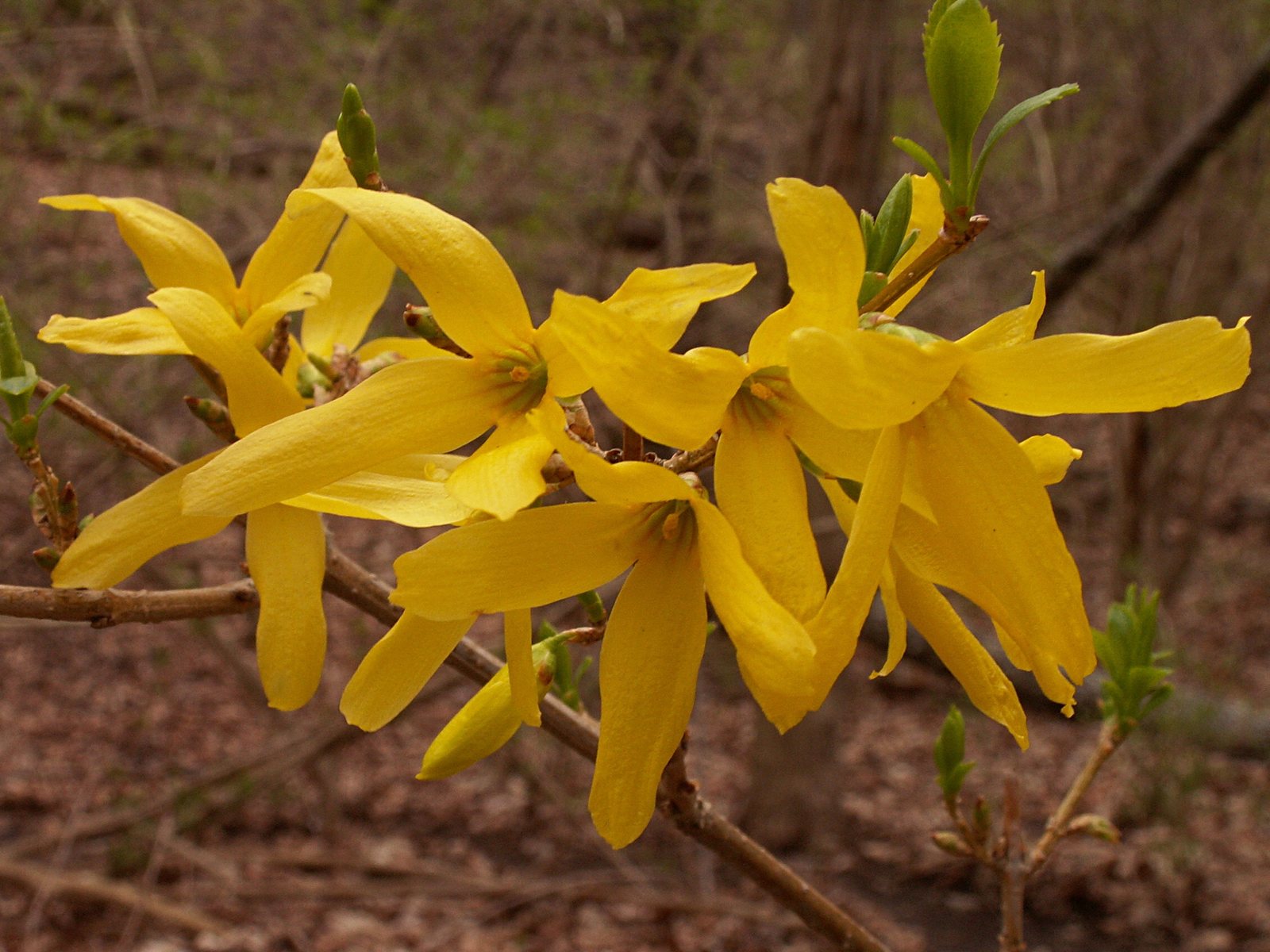
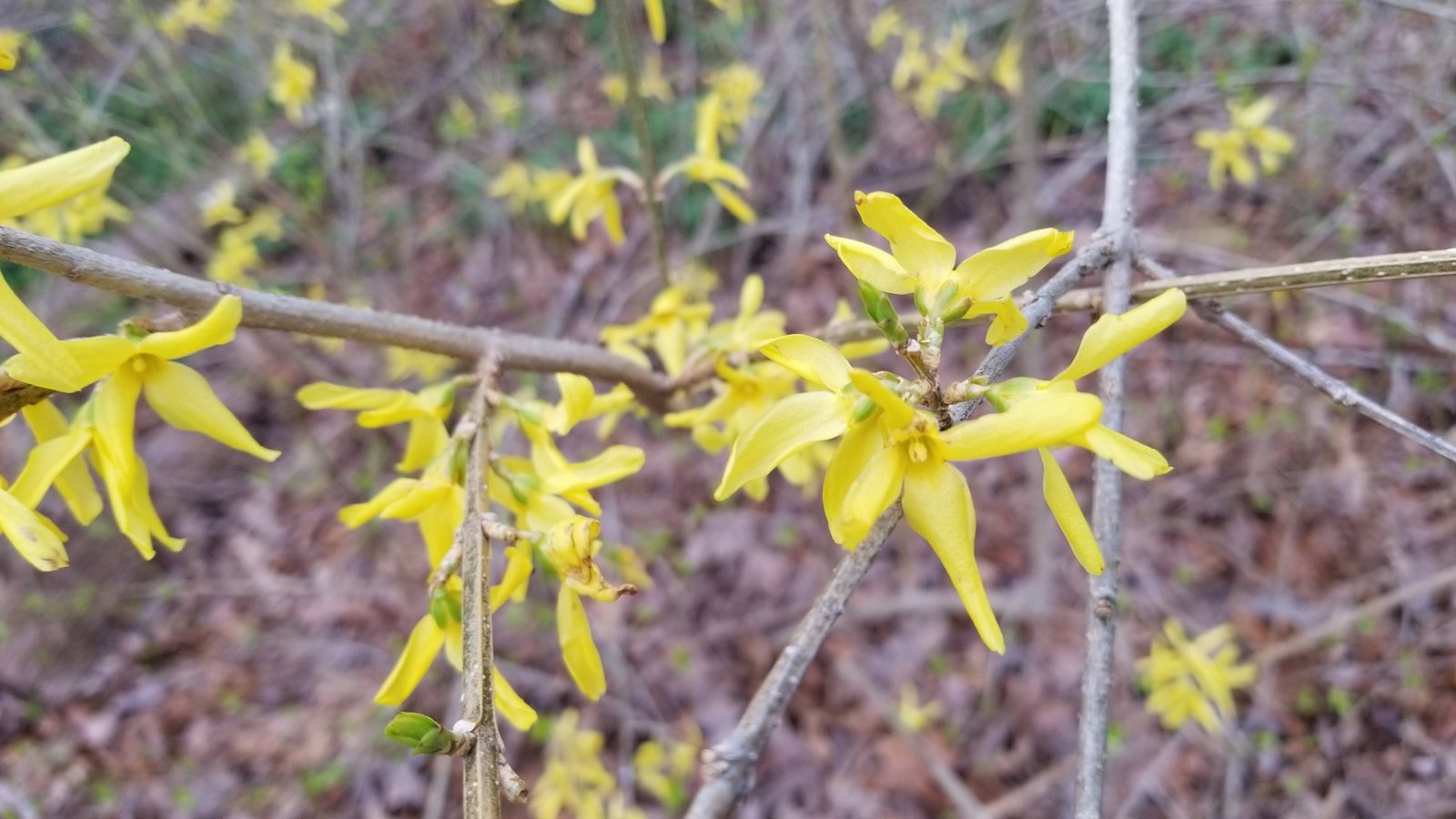
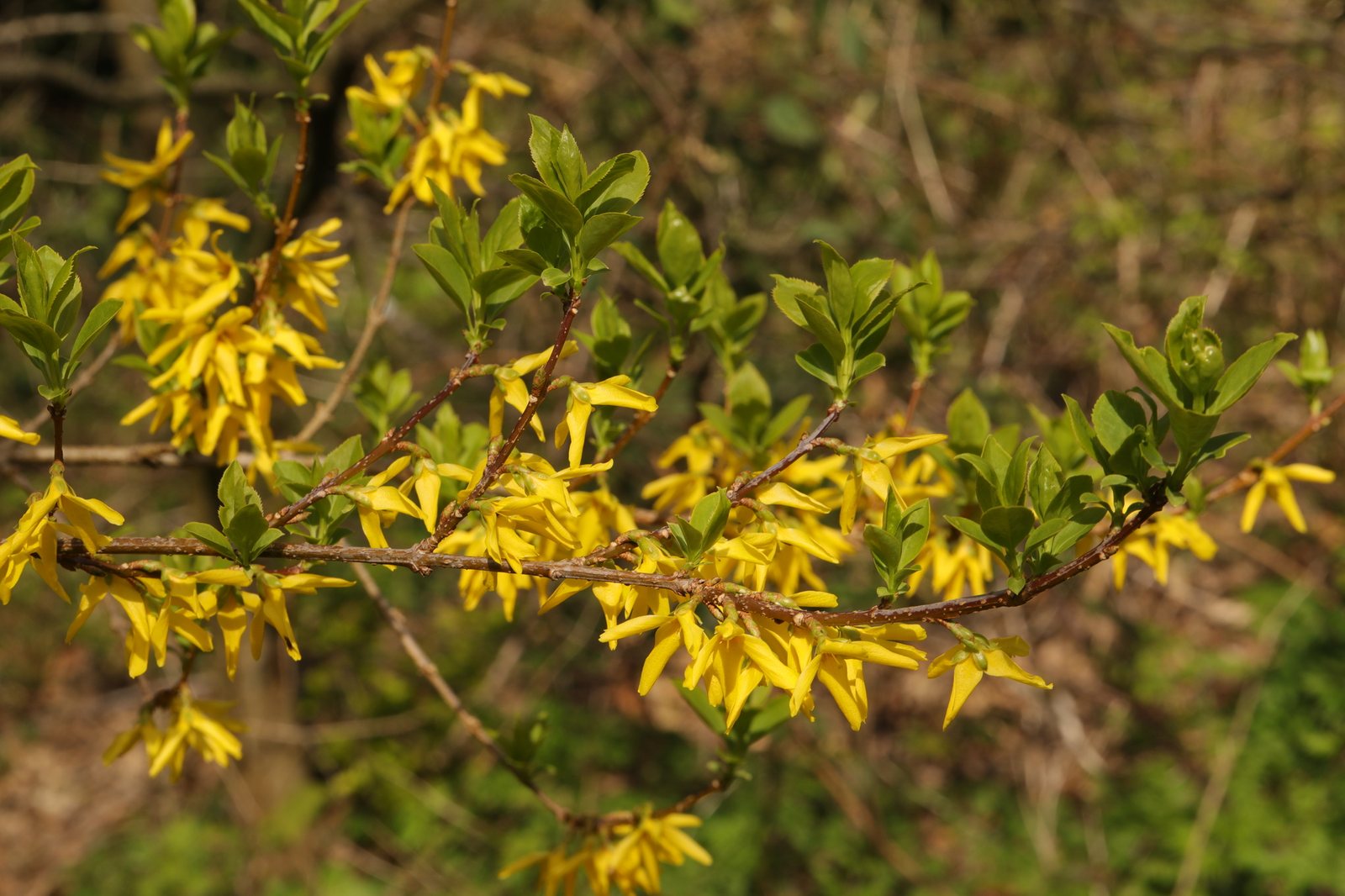
Show Off is a compact, upright deciduous forsythia with bright yellow flowers crowded along the stems before the leaves open. It makes a strong early-spring display without the sprawling size of many older varieties, though its plain green foliage is less distinctive for the rest of the year.
At a glance
- Sun
- Full sun for the most flowers; tolerates partial shade but flowers less densely.
- Water
- Water regularly during establishment. Once established, water deeply during prolonged dry spells; avoid persistently wet soil.
- Soil
- Average, well-drained soil, including clay that does not remain waterlogged; tolerates acidic, neutral and alkaline conditions.
- Height
- 5-6 ft (1.5-1.8 m)
- Spread
- 5-6 ft (1.5-1.8 m)
- Flowers
- Bright yellow flowers in early to mid-spring, usually before the leaves emerge.
- Foliage
- Opposite, pointed green leaves with toothed edges; autumn colour is variable and often unremarkable.
- Growth
- Moderate to fast
- Care needed
- Low
The year at a glance
- Wildlife
- Low allergen
| J | F | M | A | M | J | J | A | S | O | N | D | |
|---|---|---|---|---|---|---|---|---|---|---|---|---|
| Flowers | ||||||||||||
| Plant |
Northern hemisphere months. In Australia, shift them by six.
- Difficulty
- Easy
- Toughness
- Very tough
Will it suit your garden?
Pick your zone, country, light and whether you have pets.
Full sun is 6 or more hours of direct sun a day, part shade 3 to 6 hours, shade under 3.
How it grows
Planting day
1.6 ft (0.5 m)
After 1 year
2.6 ft (0.79 m)
After 2 years
4 ft (1.1 m)
After 3 years
4 ft (1.4 m)
After 5 years
5 ft (1.7 m)
full size
About 4 years to full size.
From a typical nursery size, at an average rate for this kind of plant. A rule of thumb, not a forecast.
Good to know
- Cats and dogs
- Safe
- Growth rate
- Fast
Care
Jobs through the year
- WaterApr–May, Sep–Oct, every 14 days
- Water established shrubs only if soil is dry; keep new plants watered as their root zones dry.
- WaterJun–Aug, every 14 days
- Water established shrubs deeply during prolonged dry spells; check young plants more often.
- FeedMar–Apr
- Top-dress with compost; add balanced fertiliser only for weak growth on poor soil.
- PruneApr–May
- Prune once, immediately after flowering; remove dead wood and up to one-third of the oldest stems.
- MulchApr
- Apply 5–8 cm of organic mulch, keeping it clear of stem bases.
- Water deeply whenever the root zone begins to dry during the first growing season.
- Spread 2-3 in (5-8 cm) of organic mulch over the roots, keeping it clear of the stem bases.
- Apply compost in spring; use a balanced fertiliser only if growth is weak or the soil is poor.
- Allow room for its mature width rather than relying on repeated clipping.
- Avoid high-nitrogen lawn fertiliser around the roots, which can encourage leafy growth at the expense of flowers.
Pruning. Prune just after flowering, removing dead wood and, when needed, up to one-third of the oldest stems at ground level. Shorten awkward shoots selectively; autumn or winter pruning removes the following spring's flower buds.
Through the year
- Late winter
- Check for broken branches, but leave healthy stems untrimmed to preserve flower buds.
- Early spring
- Plant container-grown shrubs when the soil is workable and neither frozen nor waterlogged.
- Spring
- After flowering, thin old stems if needed and refresh the mulch.
- Summer
- Water young plants during dry weather and check that surrounding plants are not crowding them.
- Early autumn
- Plant in mild regions while the soil is still warm, allowing time for roots to establish.
- Late autumn
- Water before the ground freezes if autumn has been dry; avoid routine pruning.
In the garden
- Plant as an informal flowering hedge where its full width can develop without shearing.
- Use behind spring bulbs so yellow flowers rise above daffodils, grape hyacinths or blue squills.
- Place against a dark evergreen background to make the bare-stemmed flowers stand out.
- Include in a mixed shrub border with later-flowering shrubs that take over after its spring display.
Garden styles it suits: Cottage garden, English country, Traditional, Farmhouse, Low-maintenance and Family-friendly.
Plant it with: Daffodils, Grape hyacinths, Siberian squill, Hellebores, Catmint and Panicle hydrangea.
Wildlife: The branching growth provides cover for small birds. Insects may visit the flowers, but it is not a particularly rich nectar or pollen source.
Problems to watch for
- Few flowers: provide more sun and prune only immediately after flowering; excessive nitrogen can also reduce bloom.
- Winter-damaged flower buds: severe cold can kill buds while the shrub survives; choose a sheltered position and avoid frost pockets.
- Root rot in wet soil: improve drainage or move the plant to a better-drained site; do not keep the root zone saturated.
- Stem galls or dieback: cut affected stems back into healthy wood, disinfect tools between cuts and discard infected material.
Safety
Not known to be toxic to people, cats, dogs or horses. No part is recognised as a significant poisoning hazard, but it is not an edible plant and eating plant material may cause stomach upset.
Easily confused with
Lynwood forsythia (Forsythia × intermedia 'Lynwood Variety')
Usually grows substantially taller and broader than Show Off. Young plants can be difficult to distinguish reliably without a cultivar label.
Weeping forsythia (Forsythia suspensa)
Has long, strongly arching or trailing stems that may root where they touch the ground, rather than Show Off's more compact, upright framework.
Winter jasmine (Jasminum nudiflorum)
Has slender green stems and yellow flowers with usually six lobes; forsythia flowers have four lobes and grow on woody brown stems.
The name
Forsythia honours Scottish horticulturist William Forsyth, while × intermedia refers to its hybrid origin between two species.
Propagation. Softwood cuttings in late spring or early summer, or hardwood cuttings during dormancy, preserve the cultivar's characteristics. Check current plant breeders' rights or patent restrictions in your country before propagating it.
Checked against open data
- Accepted botanical name
- Forsythia intermedia
Sources: GBIF (CC BY 4.0). The care and design notes are LandscapeGPT's own.
See it in your own yard.
Upload a photo of your yard and see it redesigned with plants that suit your climate, each checked against your zone.