Showy milkweed
Asclepias speciosa. Family Apocynaceae. Perennial.
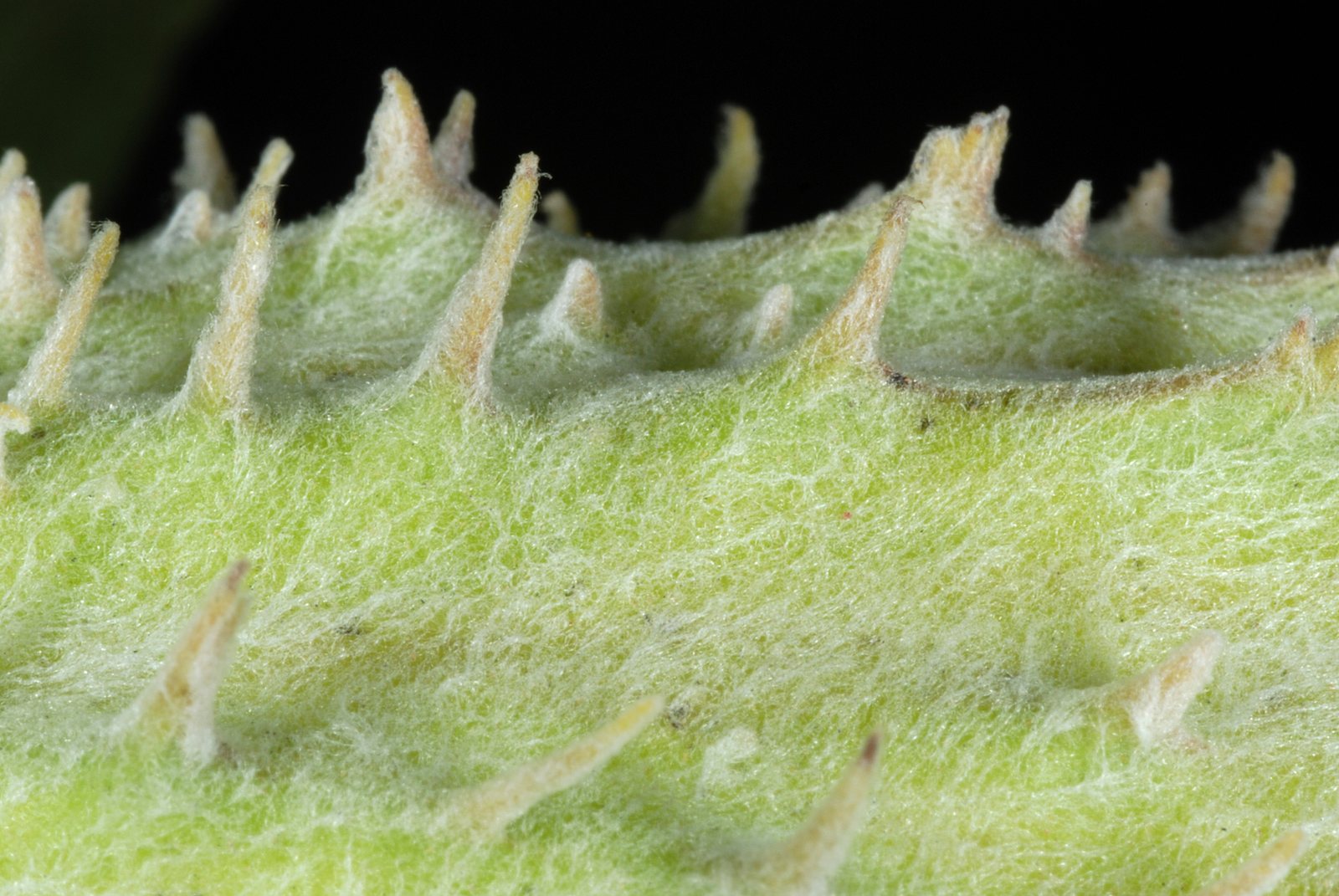
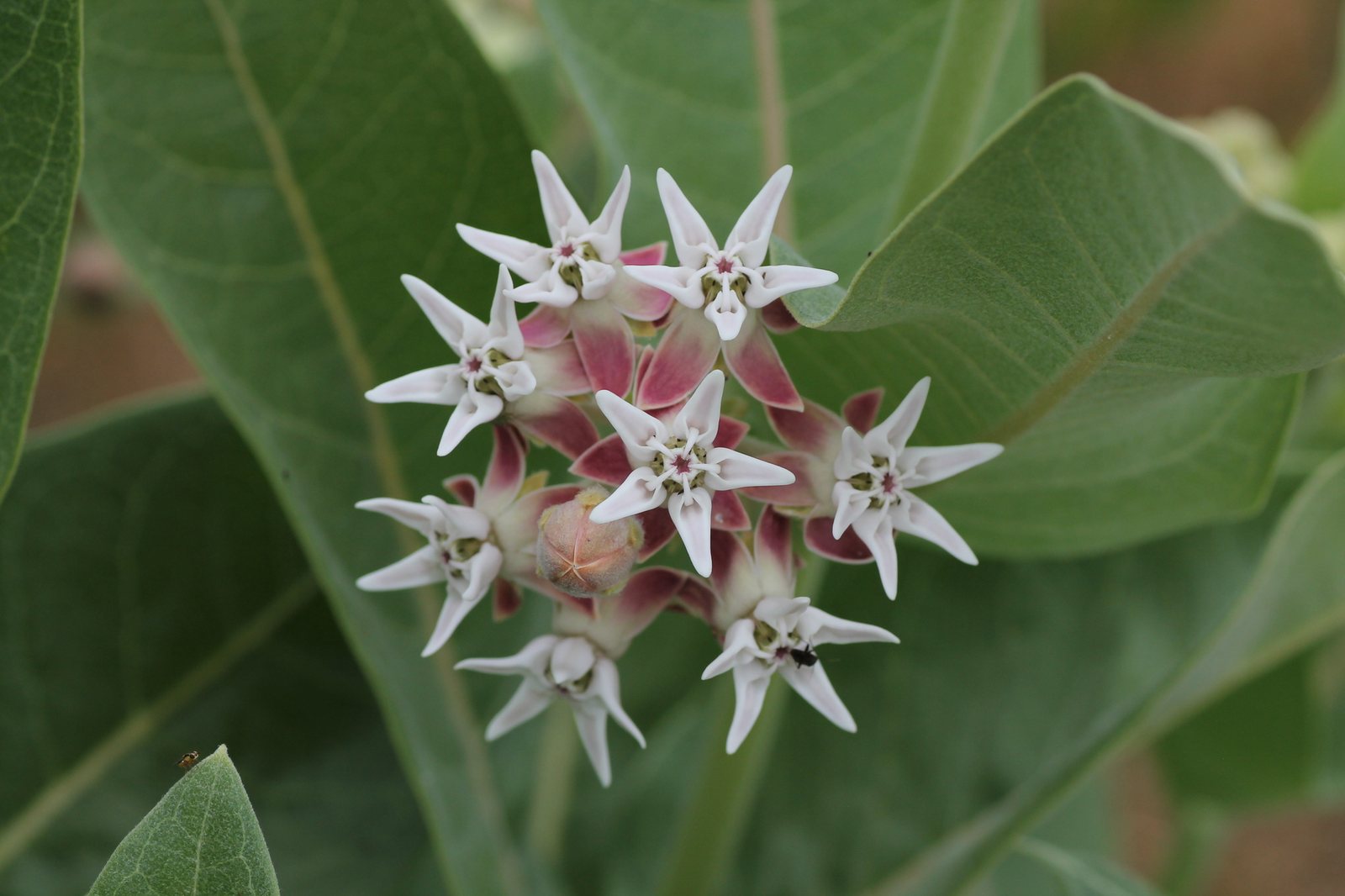
Showy milkweed is a deciduous perennial native to western and central North America, grown for its rounded clusters of fragrant, pink, star-shaped flowers and soft grey-green leaves. It supports monarch caterpillars and many flower-visiting insects, but its spreading roots make it better suited to roomy borders and meadow plantings than small, tightly managed beds.
At a glance
- Sun
- Full sun; flowering and stem strength decline in shade.
- Water
- Water regularly during establishment. Established plants tolerate dry spells, but flower best with occasional deep watering during prolonged drought.
- Soil
- Well-drained sandy, loamy or clay soil; tolerates relatively poor soil but not prolonged waterlogging, especially in winter.
- Height
- 2-4 ft (0.6-1.2 m)
- Spread
- 1-3 ft (0.3-0.9 m) initially; spreading roots can eventually form much wider colonies.
- Flowers
- Late spring to midsummer, depending on climate; rounded clusters of pale pink to rose-purple flowers with prominent, pointed hoods.
- Foliage
- Large, opposite, oval leaves with conspicuous veins and a soft, grey-green, hairy surface; stems contain milky sap.
- Growth
- Moderate; seedlings establish slowly, while mature plants can spread vigorously.
- Care needed
- Low
The year at a glance
- Pollinators
- Deer resistant
- Drought tolerant
- Cold hardy
- Heat tolerant
- Wildlife
- Low allergen
- Fragrant
| J | F | M | A | M | J | J | A | S | O | N | D | |
|---|---|---|---|---|---|---|---|---|---|---|---|---|
| Flowers | ||||||||||||
| Fruit | ||||||||||||
| Plant |
Northern hemisphere months. In Australia, shift them by six.
- Difficulty
- Easy
- Toughness
- Very tough
Will it suit your garden?
Pick your zone, country, light and whether you have pets.
Full sun is 6 or more hours of direct sun a day, part shade 3 to 6 hours, shade under 3.
How it grows
Planting day
1 ft (0.3 m)
After 1 year
1.6 ft (0.5 m)
After 2 years
2.3 ft (0.7 m)
After 3 years
3 ft (0.9 m)
full size
About 3 years to full size.
From a typical nursery size, at an average rate for this kind of plant. A rule of thumb, not a forecast.
Good to know
- Cats and dogs
- Toxic
- Native to
- the US and Canada
- In the garden
- Spreads vigorously: plan to contain it.
- Growth rate
- Moderate
Care
Jobs through the year
- WaterApr–May, Sep, every 14 days
- Check established plants and water during extended drought; water new plants regularly as soil begins to dry.
- WaterJun–Aug, every 7 days
- Check established plants; soak deeply during prolonged drought, letting the surface dry between waterings.
- MulchApr–May
- Apply a light mulch away from the crown; avoid moisture-retaining winter mulch on heavy soil.
- PruneFeb–Mar
- Cut dead stems near ground level once their winter wildlife value has passed.
- PruneAug–Sep
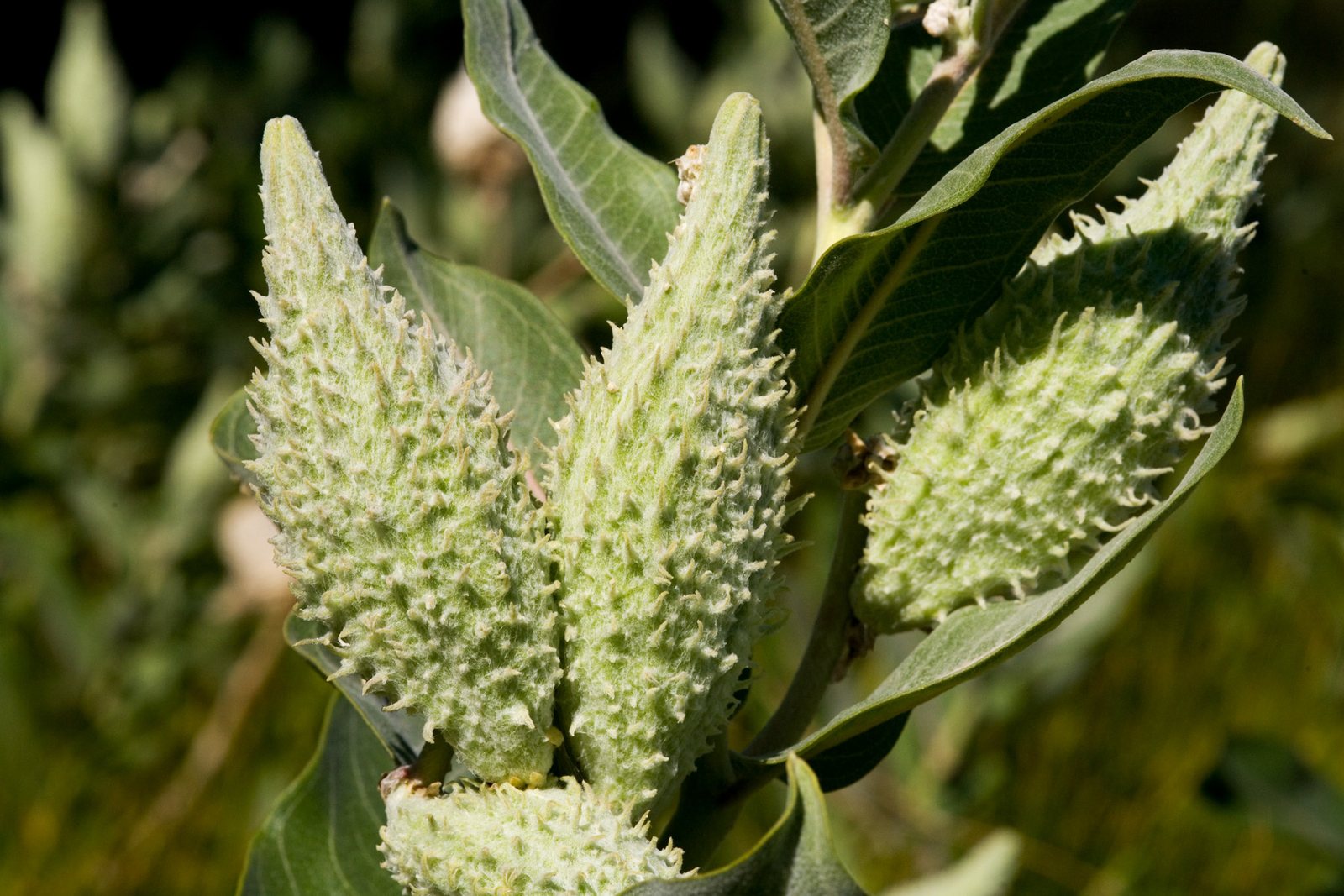
- Remove unwanted pods before they split, checking carefully for caterpillars first.
- ProtectApr–May
- Remove outlying shoots with connecting roots where practical; leave the main clump undisturbed.
- ProtectJun–Aug
- Check for monarch eggs and caterpillars before pest removal; avoid insecticides.
- Water deeply through the first growing season, allowing the soil surface to dry between waterings.
- Avoid routine feeding; rich soil and excess nitrogen can encourage weak, floppy growth.
- Use a light mulch, keeping it away from the crown, and avoid moisture-retaining winter mulch on heavy soil.
- Remove unwanted shoots at the edge of the colony, digging out their connecting roots where practical.
- Plant young specimens in their final position; established plants resent disturbance of their deep roots.
Pruning. Remove unwanted seed pods before they split, checking for caterpillars first. Cut dead stems back near ground level in late winter or early spring, once any remaining seed and wildlife value has passed.
Through the year
- Autumn
- Sow fresh seed outdoors in a marked seedbed or pots so winter cold can break dormancy.
- Late winter
- For spring sowing, give seed about 30 days of cold, moist stratification in a refrigerator.
- Early spring
- Cut down dead stems and mark the planting area; new growth can emerge late.
- Spring
- Plant young plants after severe frosts have passed and water them in thoroughly.
- Summer
- Check for monarch eggs and caterpillars before removing pests or cutting stems; water during extended dry spells.
- Late summer
- Remove unwanted pods before they open, or leave selected pods to ripen for seed.
In the garden
- Plant in broad drifts through a sunny native meadow, where spreading colonies have room to develop.
- Combine with little bluestem and purple coneflower in a prairie-style border for contrasting leaf textures and summer flowers.
- Use toward the middle or back of a wildlife border, with lower plants masking the bare stems later in the season.
- Include in an informal, sunny gravel garden with well-drained soil, away from narrow paths and small planting pockets.
Garden styles it suits: Native meadow, Wildlife garden, Pollinator garden, New perennial (prairie), Wildflower and Desert / xeriscape.
Plant it with: Little bluestem, Prairie dropseed, Purple coneflower, Blanket flower, Yarrow and Prairie blazing star.
Wildlife: A host plant for monarch butterfly caterpillars within the butterfly's range. The flowers supply nectar to bees, butterflies and other insects; milkweed bugs and other specialist insects also use the plant. Avoid insecticides on plants intended to support caterpillars.
Problems to watch for
- Oleander aphids: tolerate small colonies or wipe off heavy clusters while avoiding monarch eggs and caterpillars; avoid systemic insecticides.
- Root rot in wet soil: improve drainage or move young plants to a drier site; do not keep the crown constantly wet.
- Flopping stems or poor flowering: provide full sun and stop high-nitrogen feeding; discreetly support stems if needed.
- Unwanted spreading: remove outlying shoots with their roots and cut off pods before seed disperses.
Safety
Toxic to people, cats, dogs and horses if eaten. All parts contain cardiac glycosides, including leaves, stems, roots and seeds; ingestion can cause digestive illness and potentially serious heart effects. Milky sap can irritate skin and eyes. Wear gloves when cutting, keep it away from grazing animals, and seek prompt medical or veterinary advice after ingestion.
Where it spreads. Can spread aggressively by underground roots in garden beds across its growing range, including its native western and central United States and western Canada. It also self-seeds; allow room for a colony rather than treating it as a permanently contained clump.
Easily confused with
Common milkweed (Asclepias syriaca)
Usually has greener, less densely hairy leaves and smaller individual flowers with shorter hoods. Showy milkweed has conspicuously elongated, pointed flower hoods and a softer, greyer appearance.
Swamp milkweed (Asclepias incarnata)
Has much narrower, mostly smooth leaves and smaller flowers in flatter clusters; it prefers consistently moist soil.
Heartleaf milkweed (Asclepias cordifolia)
Has broad, heart-shaped, often stem-clasping leaves and darker reddish-purple flowers; showy milkweed has oval leaves and pale pink flowers.
The name
Asclepias refers to Asclepius, the Greek god of medicine, while speciosa means showy or beautiful and describes the conspicuous flowers.
Propagation. Grow from seed sown outdoors in autumn, or cold-moist stratify seed for about 30 days before spring sowing. Transplant seedlings while small and handle roots gently. Root cuttings taken during dormancy are another option; avoid digging up established wild plants.
Checked against open data
- Accepted botanical name
- Asclepias speciosa
- In the US and Canada
- Native in Canada and the lower 48 states.
- Native range
- Alberta, Arizona, British Columbia, California, Colorado, Idaho, Iowa, Kansas, Manitoba, Minnesota, Montana and Nebraska.
- Measured
- Soil pH 5 to 7.
Sources: GBIF (CC BY 4.0), USDA PLANTS and Trefle (CC BY 4.0). The care and design notes are LandscapeGPT's own.
See it in your own yard.
Upload a photo of your yard and see it redesigned with plants that suit your climate, each checked against your zone.