Prairie blazing star
Liatris pycnostachya. Family Asteraceae. Perennial.
Also called Prairie gayfeather, Cattail blazing star, Thickspike gayfeather.
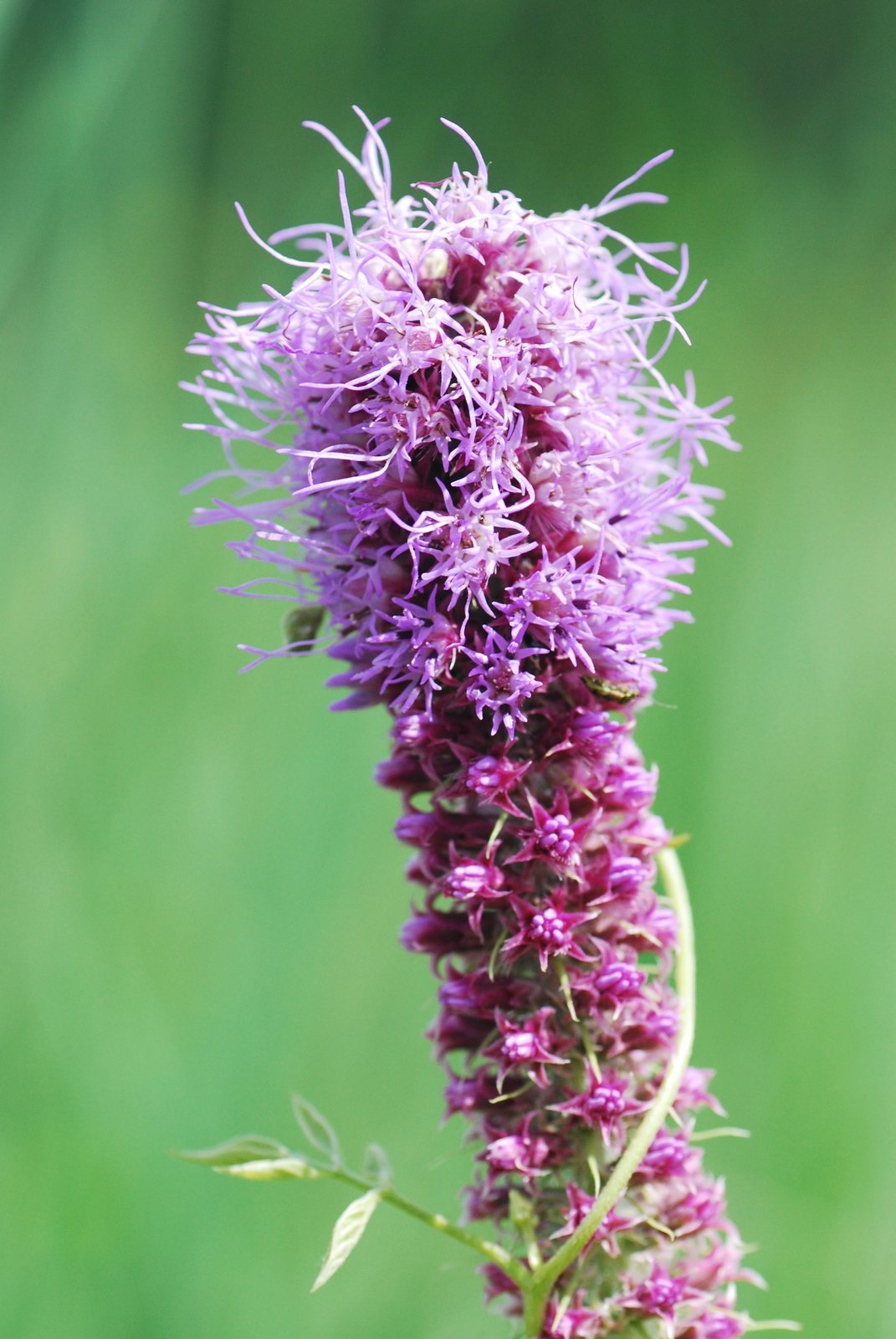
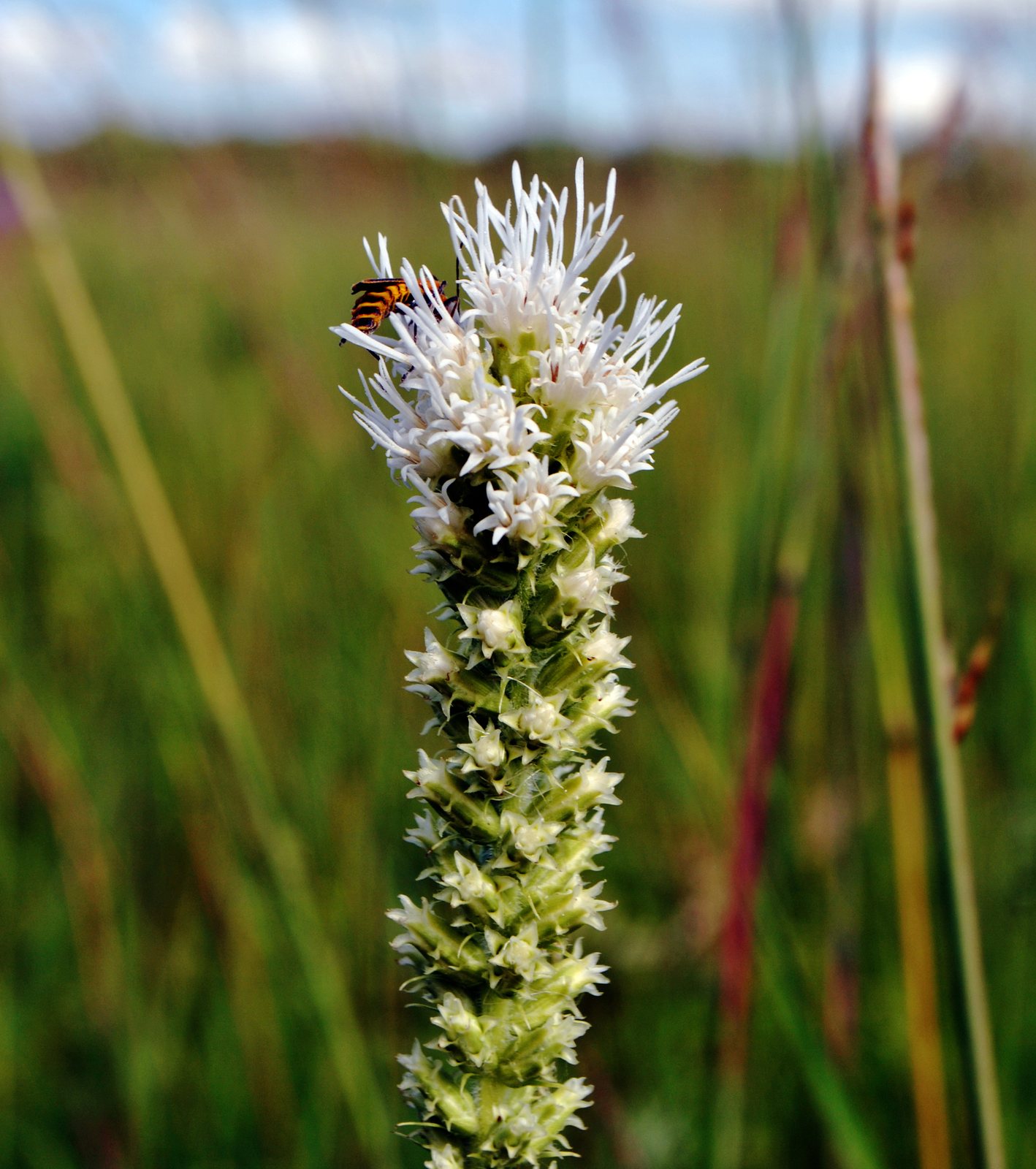
Prairie blazing star is a clump-forming perennial native to central North American prairies and moist meadows. Gardeners grow it for its tall, densely packed purple flower spikes, which open from the top downward and attract butterflies and bees.
At a glance
- Sun
- Full sun; shade reduces flowering and makes stems more likely to lean.
- Water
- Moderate; keep evenly moist while establishing. Established plants tolerate short dry spells, but flower best with moisture during active growth.
- Soil
- Average to fertile, moist but well-drained soil; tolerates clay if it does not remain waterlogged, especially in winter.
- Height
- 3-5 ft (0.9-1.5 m)
- Spread
- 1-2 ft (0.3-0.6 m)
- Flowers
- Midsummer to early autumn; dense spikes of fluffy rose-purple flowers.
- Foliage
- Narrow, grasslike green leaves form a basal clump and continue up the stems, becoming smaller toward the top.
- Growth
- Moderate; develops into a substantial flowering clump over several growing seasons.
- Care needed
- Low
The year at a glance
- Pollinators
- Cold hardy
- Heat tolerant
- Wildlife
- Low allergen
| J | F | M | A | M | J | J | A | S | O | N | D | |
|---|---|---|---|---|---|---|---|---|---|---|---|---|
| Flowers | ||||||||||||
| Fruit | ||||||||||||
| Plant |
Northern hemisphere months. In Australia, shift them by six.
- Difficulty
- Easy
- Toughness
- Very tough
Will it suit your garden?
Pick your zone, country, light and whether you have pets.
Full sun is 6 or more hours of direct sun a day, part shade 3 to 6 hours, shade under 3.
How it grows
Planting day
1 ft (0.3 m)
After 1 year
2 ft (0.6 m)
After 2 years
3 ft (0.9 m)
After 3 years
4 ft (1.2 m)
full size
About 3 years to full size.
From a typical nursery size, at an average rate for this kind of plant. A rule of thumb, not a forecast.
Good to know
- Cats and dogs
- Safe
- Native to
- the US
- Growth rate
- Moderate
Care
Jobs through the year
- WaterApr–May, Sep, every 14 days
- Water established clumps if dry; check new plants more often to keep roots evenly moist.
- WaterJun–Aug, every 7 days
- Water established clumps deeply during dry spells, especially while flower spikes develop.
- FeedApr
- Apply a thin compost dressing; avoid rich or high-nitrogen feeding.
- MulchApr
- Apply light mulch to conserve moisture, leaving crowns uncovered.
- DivideMar–Apr
- Divide only crowded clumps whose flowering has declined.
- ProtectMay–Jun
- Support leaning stems early with discreet stakes or sturdy neighbouring plants.
- DeadheadAug–Sep
- Remove fading spikes only to prevent seedlings; otherwise retain seed heads for birds.
- PruneFeb–Mar
- Cut old stems near ground level before new shoots emerge.
- Water deeply during the first growing season whenever the soil begins to dry.
- Give established plants extra water during prolonged dry weather, particularly as flower spikes develop.
- Apply a thin layer of compost in spring; avoid heavy nitrogen feeding, which encourages floppy growth.
- Use a light mulch to conserve moisture, keeping it clear of the crown.
- Support leaning stems early with discreet stakes or nearby sturdy plants.
- Divide crowded clumps in spring if flowering declines.
Pruning. Leave spent spikes standing for seed-eating birds and winter structure, or remove them before seed ripens to limit seedlings. Cut dead stems close to ground level in late winter or early spring before new growth appears.
Through the year
- Late winter
- Cut down old stems before new shoots emerge.
- Spring
- Plant or divide clumps in a sunny position with good drainage.
- Mid-spring
- Apply a thin compost dressing and a light mulch, leaving the crown uncovered.
- Early summer
- Water during dry spells and support stems if they begin to lean.
- Late summer
- Remove fading spikes if you do not want seedlings, or leave them for birds.
- Autumn
- Collect ripe seed for outdoor sowing and check that winter rain can drain away from the crowns.
In the garden
- Plant in repeated groups among prairie grasses for upright purple accents above fine-textured foliage.
- Use in the middle or back of sunny borders with coneflowers and black-eyed Susans.
- Include in pollinator plantings where its summer flowers provide nectar for butterflies and bees.
- Use beside a rain garden where soil stays moist but drains between storms, rather than in permanently flooded ground.
Garden styles it suits: Native meadow, Midwest prairie, New perennial (prairie), Pollinator garden, Wildlife garden and Cottage garden.
Plant it with: Purple coneflower, Black-eyed Susan, Switchgrass, Little bluestem, Wild bergamot and Culver's root.
Wildlife: Flowers attract butterflies, native bees and other pollinating insects. Finches and other seed-eating birds may feed on the mature seed heads.
Problems to watch for
- Corm or crown rot in waterlogged soil: improve drainage or move plants to a better-drained site; discard rotting plants.
- Flopping stems in shade or overly rich soil: provide full sun, reduce feeding and support stems before flowering.
- Powdery mildew during humid weather: allow more air movement, avoid crowding and remove badly affected foliage.
- Voles eating underground corms: reduce dense cover around crowns and use buried wire-mesh protection where damage recurs.
Safety
Not known to be toxic to people, cats, dogs or horses. No part is generally recognized as poisonous, although species-specific toxicity information is limited; it is an ornamental plant, not a food plant.
Easily confused with
Dense blazing star (Liatris spicata)
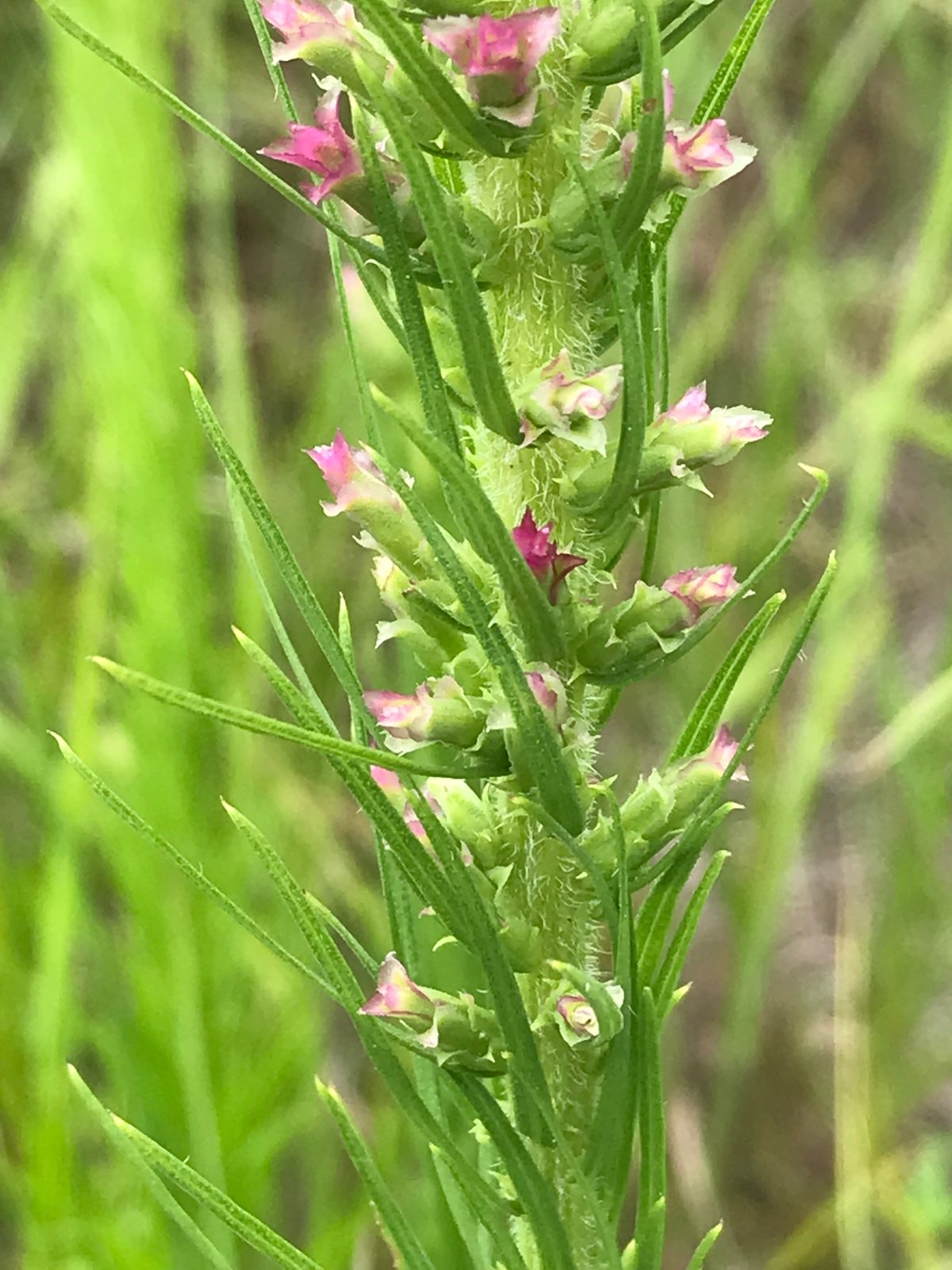
Both have dense flower spikes, but dense blazing star has rounded, closely pressed flower-head bracts; prairie blazing star has pointed bracts with tips that spread or curl outward.
Rough blazing star (Liatris aspera)
Rough blazing star has larger, rounded flower heads spaced apart along the stem rather than packed into a dense, nearly continuous spike.
Meadow blazing star (Liatris ligulistylis)
Meadow blazing star has more widely separated flower heads, with the lower heads carried on noticeable stalks; prairie blazing star has densely crowded, essentially stalkless heads.
The name
The species name pycnostachya means dense-spiked, referring to the tightly crowded flower heads.
Propagation. Divide established clumps in spring, retaining healthy buds and roots on each section. Sow seed outdoors in autumn, or give spring-sown seed a cold, moist treatment first; seed-grown plants may take two or three years to flower.
Checked against open data
- Accepted botanical name
- Liatris pycnostachya
- In the US and Canada
- Native in the lower 48 states.
- Native range
- Arkansas, Illinois, Indiana, Iowa, Kansas, Kentucky, Louisiana, Masachusettes, Michigan, Minnesota, Mississippi and Missouri.
- Measured
- Soil pH 6 to 7.8. Average height 81 cm.
Sources: GBIF (CC BY 4.0), USDA PLANTS and Trefle (CC BY 4.0). The care and design notes are LandscapeGPT's own.
See it in your own yard.
Upload a photo of your yard and see it redesigned with plants that suit your climate, each checked against your zone.