Silver maple
Acer saccharinum. Family Sapindaceae. Tree.
Also called Silverleaf maple, Soft maple, White maple.
Silver maple is a large, fast-growing deciduous tree native to eastern and central North America, grown for shade and deeply cut leaves that flash silver beneath in the wind. It suits spacious, moist sites, but brittle branches and vigorous, shallow roots make it a poor choice near houses, paving or underground drains.
At a glance
- Sun
- Full sun to partial shade; develops its best crown in full sun.
- Water
- Prefers consistently moist ground and tolerates seasonal flooding. Established trees withstand some drought, but prolonged dry conditions can cause leaf scorch.
- Soil
- Deep, moist soil, including clay, with an acidic to neutral pH. Tolerates wet ground and compaction better than many trees; alkaline soil can cause iron chlorosis.
- Height
- 50-80 ft (15-24 m)
- Spread
- 35-60 ft (11-18 m)
- Flowers
- Late winter to early spring, before the leaves; small reddish to greenish-yellow flower clusters.
- Foliage
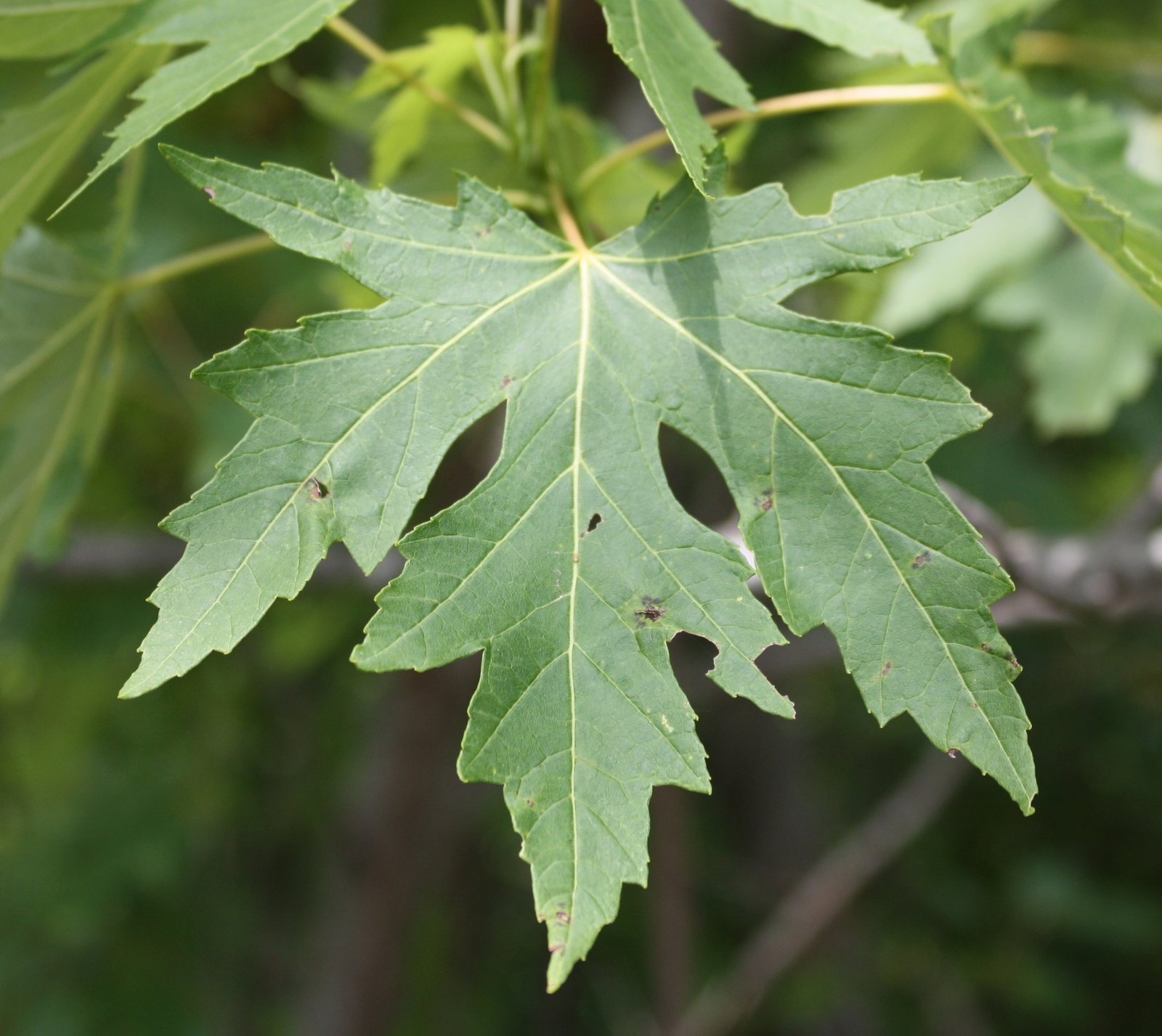
- Green leaves with five deeply cut lobes and silvery-white undersides; usually pale yellow in autumn, sometimes with orange tones.
- Growth
- Fast; young trees often grow 2-3 ft (0.6-0.9 m) a year in suitable conditions.
- Care needed
- High
The year at a glance
- Pollinators
- Cold hardy
- Heat tolerant
- Wildlife
| J | F | M | A | M | J | J | A | S | O | N | D | |
|---|---|---|---|---|---|---|---|---|---|---|---|---|
| Flowers | ||||||||||||
| Fruit | ||||||||||||
| Plant |
Northern hemisphere months. In Australia, shift them by six.
- Difficulty
- Hard
- Toughness
- Very tough
Will it suit your garden?
Pick your zone, country, light and whether you have pets.
Full sun is 6 or more hours of direct sun a day, part shade 3 to 6 hours, shade under 3.
How it grows
Planting day
8 ft (2.3 m)
After 1 year
12 ft (3.7 m)
After 2 years
16 ft (5 m)
After 3 years
21 ft (6.3 m)
After 5 years
29 ft (8.9 m)
About 13 years to full size.
From a typical nursery size, at an average rate for this kind of plant. A rule of thumb, not a forecast.
Good to know
- Cats and dogs
- Safe
- Native to
- the US and Canada
- In the garden
- Spreads vigorously: plan to contain it.
- Growth rate
- Fast
Care
Jobs through the year
- WaterApr–May, Sep–Oct, every 14 days
- Water established trees during prolonged dry weather only; young trees need regular deep watering as soil dries.
- WaterJun–Aug, every 10 days
- Water established trees deeply during prolonged dry spells; keep young trees consistently moist but not saturated.
- MulchMar–Apr
- Maintain 5–8 cm of organic mulch over the root area, keeping it clear of the trunk.
- PruneJun–Aug
- Train young trees to one leader with well-spaced branches; use an arborist for large limbs and never top.
- ProtectJan–Feb, Dec
- Inspect for cracks, weak forks and hanging limbs, especially after storms; arrange professional assessment where needed.
- Choose a large site well away from buildings, paving, drains and overhead wires; allow for the full mature crown and roots extending beyond it.
- Water deeply during dry spells for the first two or three growing seasons, keeping the root area moist rather than constantly saturated.
- Spread a 2-3 in (5-8 cm) layer of organic mulch over the root area, keeping it clear of the trunk.
- Do not routinely fertilise; test the soil first if growth is weak or leaves turn yellow.
- Stake only if the root ball is unstable, and remove supports after the first growing season.
- Have a qualified arborist assess large trees for weak forks, cracks and storm damage.
Pruning. Train young trees in summer to develop a strong main leader and well-spaced branches, removing competing leaders while cuts are small. Never top the tree; use a qualified arborist for large limbs, and avoid late-winter pruning if sap bleeding is a concern.
Through the year
- Autumn
- Plant while the soil is workable, water thoroughly and mulch the root area.
- Winter
- Inspect the bare crown for cracks, weak forks and hanging branches, especially after storms.
- Early spring
- Check mulch depth and keep the trunk base clear.
- Late spring
- Pull unwanted seedlings while small and check new leaves for yellowing between green veins.
- Summer
- Water young trees during dry weather and carry out light formative pruning.
- Late autumn
- Clear fallen leaves from drains and paths; compost healthy leaves or make leaf mould.
In the garden
- A broad shade canopy in a large lawn or park, well away from buildings and hard surfaces.
- A canopy tree for spacious rain gardens or seasonally wet ground where its mature size can be accommodated.
- A component of native floodplain or streamside restoration in eastern and central North America.
- A backdrop to moisture-loving woodland planting, with the pale leaf undersides adding movement and contrast.
Garden styles it suits: Grand estate, Woodland, Wildlife garden, Rewilded, Traditional and Green on green.
Plant it with: Virginia sweetspire, Winterberry, Cinnamon fern, Royal fern, Golden ragwort and Fox sedge.
Wildlife: Early flowers provide pollen and nectar for insects. Seeds feed squirrels and birds, while older trees can develop cavities used by nesting birds and other wildlife; retain cavities only where the tree remains structurally safe.
Problems to watch for
- Weak forks and brittle limbs can split in storms: train the young tree carefully, avoid topping and arrange professional inspections as it matures.
- Shallow roots can lift paving and compete strongly with lawns and borders: choose an open site, mulch beneath the crown and do not cut major roots.
- Iron chlorosis causes yellow leaves with green veins on alkaline soil: confirm the soil pH and seek advice on iron treatment; prevention through suitable siting is more reliable.
- Tar spot and anthracnose can mark leaves or cause early leaf fall: collect fallen leaves and maintain tree health; established trees rarely need fungicide.
Safety
Not known to be toxic to people, cats or dogs. Safety for horses is less certain: silver maple is among the maples suspected of causing poisoning from wilted or dried leaves, although evidence is much stronger for red maple. Keep fallen leaves and prunings out of horse paddocks and seek urgent veterinary advice after suspected ingestion.
Where it spreads. Can self-seed heavily on moist, bare ground in its native eastern and central North American range and around introduced plantings, including in Britain. Remove unwanted seedlings; vigorous self-seeding does not necessarily mean it is officially listed as invasive.
Easily confused with
Red maple (Acer rubrum)
Red maple has much shallower leaf sinuses, usually three to five lobes, and less strikingly silver undersides; autumn colour is often red rather than pale yellow.
Freeman maple (Acer × freemanii)
This red maple–silver maple hybrid often has intermediate leaf shapes and stronger red autumn colour. Some trees are difficult to identify confidently without a reliable planting record.
Sugar maple (Acer saccharum)
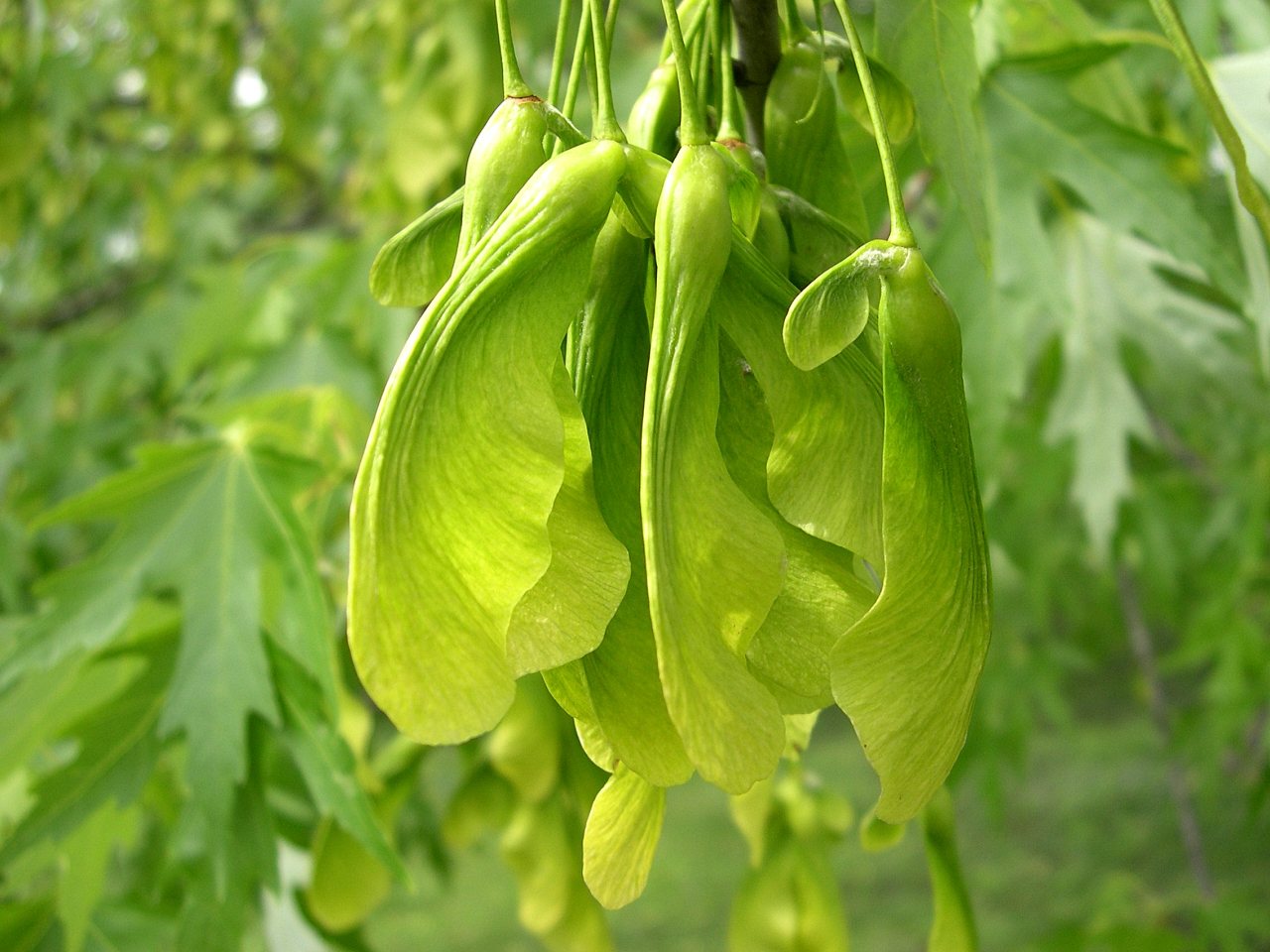
Sugar maple has shallower, rounded leaf sinuses and lacks the bright silvery-white underside; its winged seeds ripen in autumn rather than spring.
The name
Silver maple refers to the silvery leaf undersides, while Acer is the Latin name for maple and saccharinum means sugary, referring to the sweet sap.
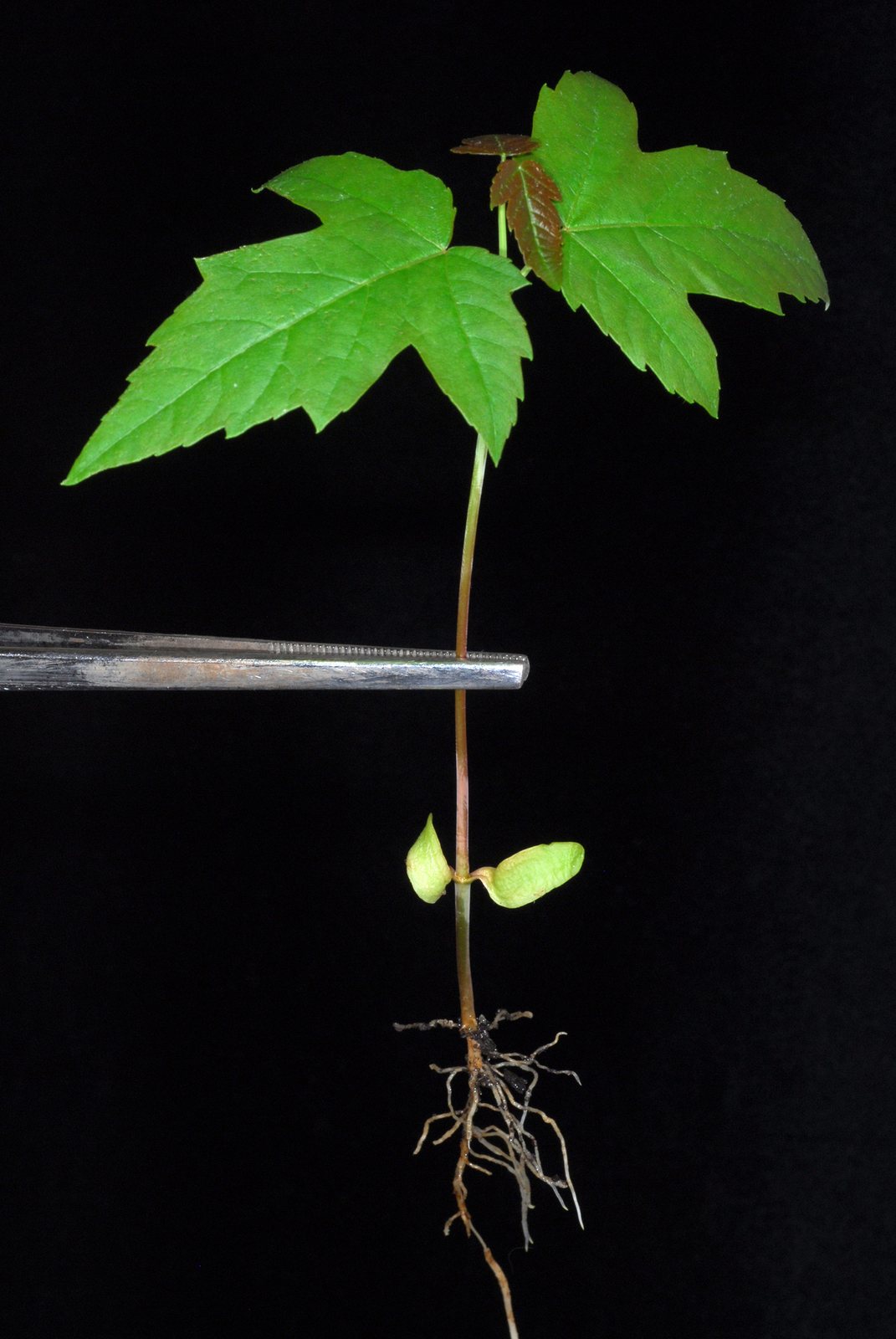
Propagation. Sow fresh seed as soon as it ripens in spring or early summer; unlike many maples, it normally needs no cold stratification and loses viability quickly if allowed to dry. Named selections are usually propagated by grafting.
Checked against open data
- Accepted botanical name
- Acer saccharinum
- In the US and Canada
- Native in Canada and the lower 48 states.
- Native range
- Alabama, Florida, Illinois, Kansas, Kentucky, Maryland, Minnesota, New York, Oklahoma, Ontario, Québec and Tennessee.
- Measured
- Soil pH 4 to 7.3. Average height 2438 cm.
Sources: GBIF (CC BY 4.0), USDA PLANTS and Trefle (CC BY 4.0). The care and design notes are LandscapeGPT's own.
See it in your own yard.
Upload a photo of your yard and see it redesigned with plants that suit your climate, each checked against your zone.