Smooth aster
Symphyotrichum laeve. Family Asteraceae. Perennial.
Also called Smooth blue aster, Aster laevis.
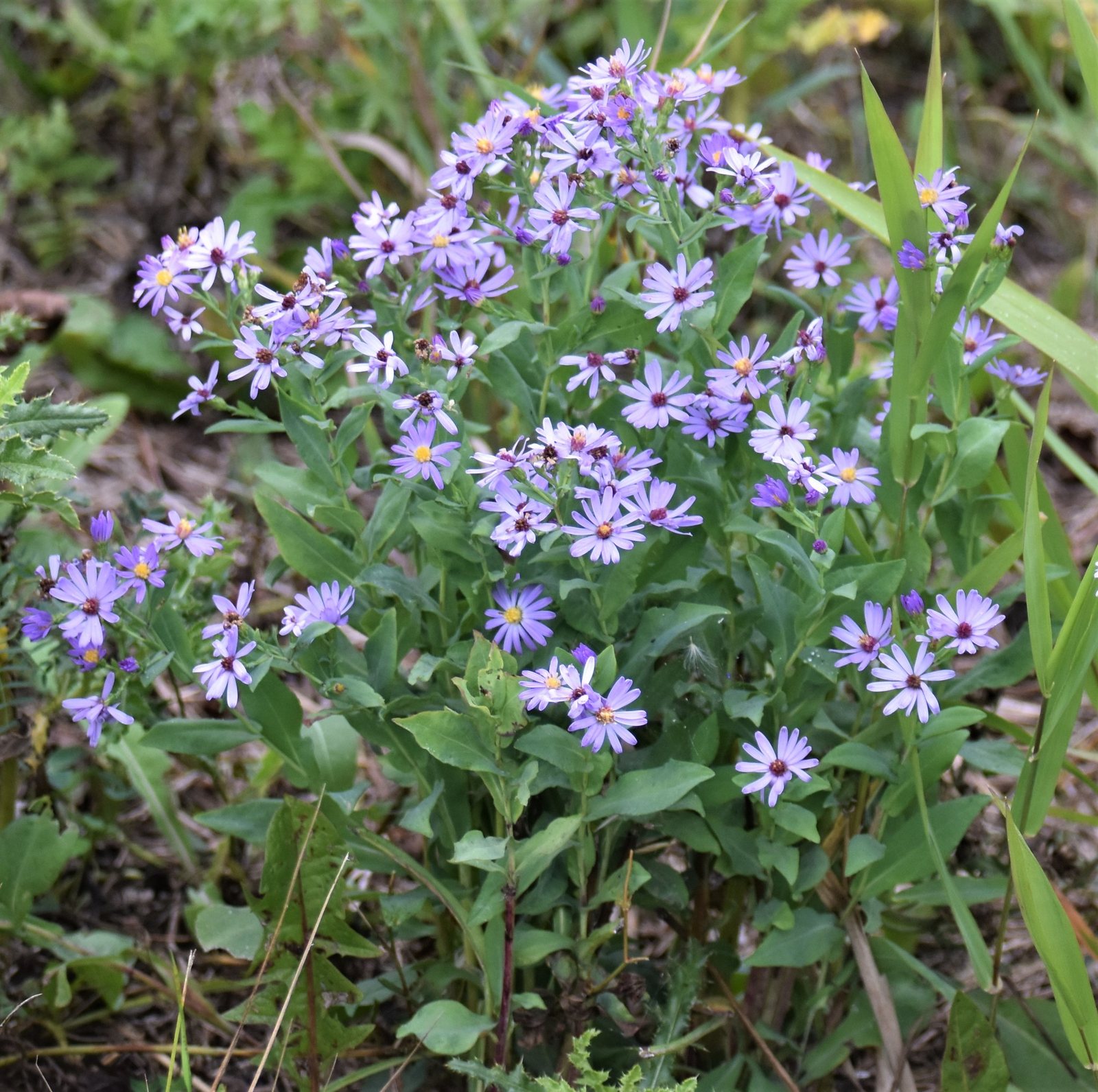
Smooth aster is a North American perennial grown for its blue-violet daisies in late summer and autumn. Its smooth, blue-green leaves and upright stems suit sunny borders and meadow-style planting, where the flowers provide late-season food for pollinators.
At a glance
- Sun
- Full sun is best; tolerates light shade but may flower less and lean.
- Water
- Moderate while establishing; tolerates dry spells once established. Water during prolonged drought for better flowering.
- Soil
- Well-drained sandy, loamy or clay soil; tolerates lean, dry and stony ground. Avoid persistently wet soil, especially in winter.
- Height
- 2-4 ft (0.6-1.2 m)
- Spread
- 1-2 ft (0.3-0.6 m), gradually widening into a clump
- Flowers
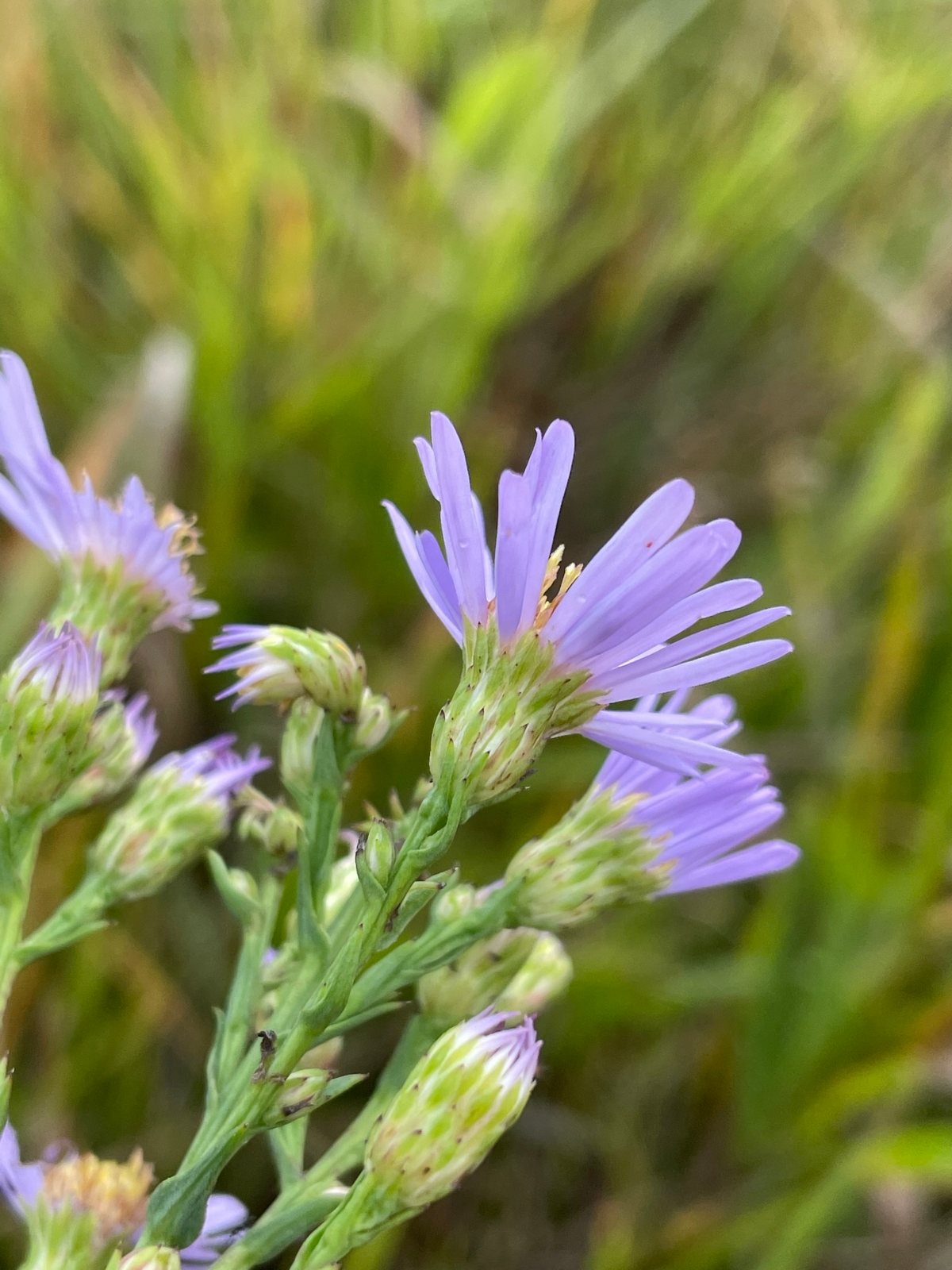
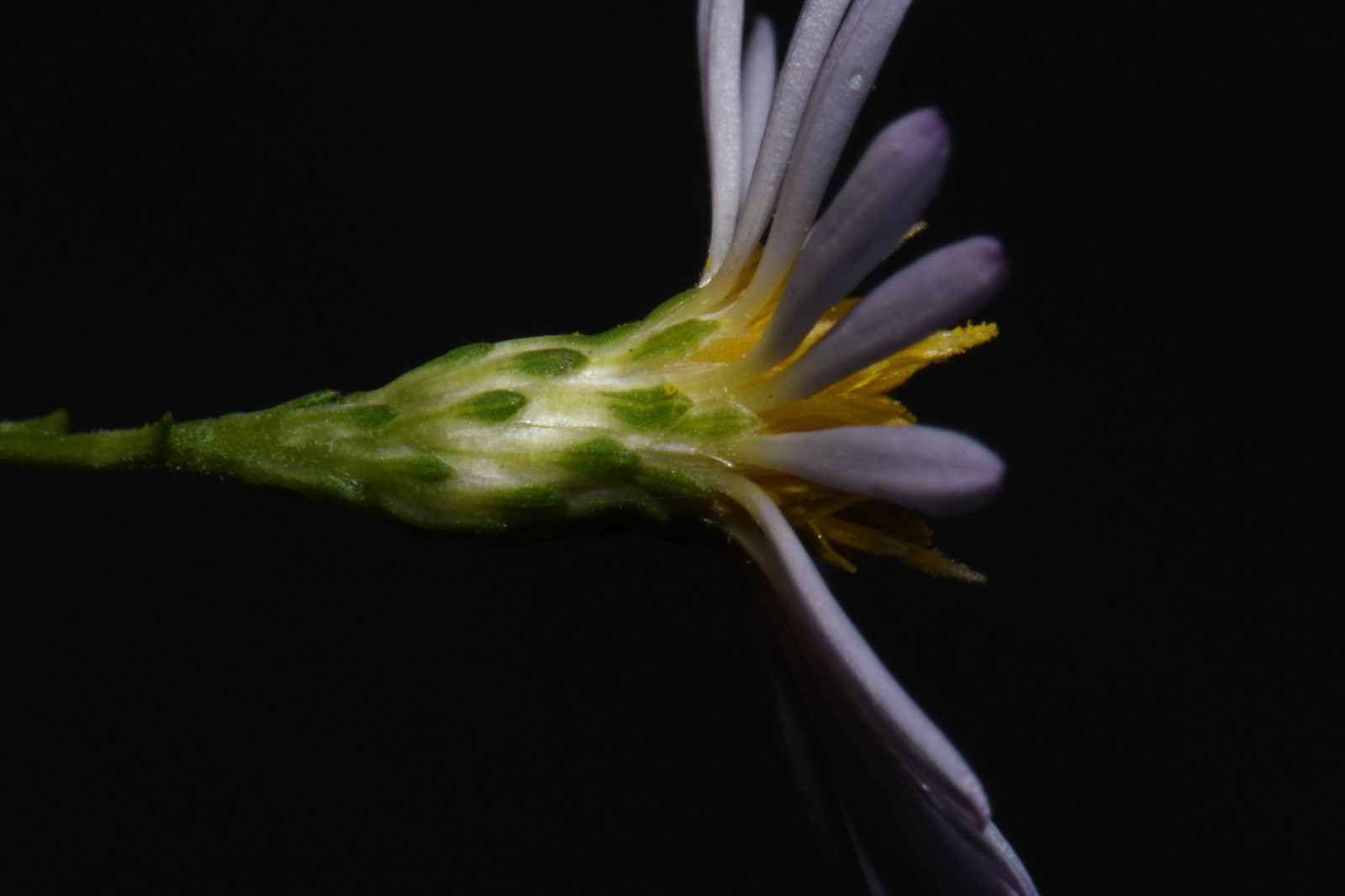
- Late summer through autumn; blue-violet to lavender daisies with yellow centres that age reddish-purple.
- Foliage
- Smooth, often waxy blue-green leaves; upper leaves clasp the stems. Leaves die back for winter.
- Growth
- Moderate
- Care needed
- Low
The year at a glance
- Pollinators
- Drought tolerant
- Cold hardy
- Disease resistant
- Wildlife
- Low allergen
| J | F | M | A | M | J | J | A | S | O | N | D | |
|---|---|---|---|---|---|---|---|---|---|---|---|---|
| Flowers | ||||||||||||
| Fruit | ||||||||||||
| Plant |
Northern hemisphere months. In Australia, shift them by six.
- Difficulty
- Easy
- Toughness
- Very tough
Will it suit your garden?
Pick your zone, country, light and whether you have pets.
Full sun is 6 or more hours of direct sun a day, part shade 3 to 6 hours, shade under 3.
How it grows
Planting day
1 ft (0.3 m)
After 1 year
1.6 ft (0.5 m)
After 2 years
2.3 ft (0.7 m)
After 3 years
3 ft (0.9 m)
full size
About 3 years to full size.
From a typical nursery size, at an average rate for this kind of plant. A rule of thumb, not a forecast.
Good to know
- Cats and dogs
- Safe
- Native to
- the US and Canada
- Growth rate
- Moderate
Care
Jobs through the year
- WaterApr–May, Oct, every 14 days
- Water established plants only if soil is dry; water new plants more regularly.
- WaterJun–Sep, every 14 days
- Water established plants deeply during prolonged drought, especially as buds develop.
- FeedMar–Apr
- On poor soil only, add a thin compost dressing; avoid high-nitrogen feed.
- PruneFeb–Mar
- Cut old stems near ground level before new growth emerges.
- PruneMay–Jun
- Optionally shorten stems by one-third for bushier growth and slightly later flowers.
- DivideMar–Apr
- Divide crowded clumps every three to four years.
- ProtectMay–Jun
- Support leaning clumps with twiggy stakes or a discreet ring before flowering.
- DeadheadSep–Oct
- Remove spent heads only to prevent seedlings; otherwise leave seeds for birds.
- Water deeply during the first growing season, allowing the soil surface to dry between waterings.
- Avoid rich feeding; excess nitrogen encourages tall, floppy stems.
- Apply a thin layer of compost in spring on poor soil, keeping it clear of emerging shoots.
- Support tall clumps early with twiggy stakes or a discreet ring if they lean.
- Divide crowded clumps every three to four years in spring.
- Remove spent flower heads before seed ripens if you do not want seedlings.
Pruning. For shorter, bushier plants, shorten stems by about one-third in late spring or early summer; this may delay flowering slightly. Leave dead stems through winter for wildlife, then cut them close to ground level in early spring before new growth develops.
Through the year
- Early spring
- Cut back old stems, avoiding emerging shoots.
- Spring
- Plant or divide clumps and water thoroughly.
- Late spring
- Shorten stems if a more compact plant is needed, and install supports where necessary.
- Summer
- Water young plants during dry weather and check for aphids or mildew.
- Late summer
- Keep plants watered during prolonged drought as flower buds develop.
- Autumn
- Leave seed heads for birds, or remove them before seed disperses to limit seedlings.
In the garden
- Plant in loose groups through a sunny mixed border for late-season blue-violet flowers.
- Combine with goldenrods and ornamental grasses in prairie-style planting.
- Use behind shorter perennials, allowing the flowering stems to rise above them.
- Include in a pollinator border to extend nectar and pollen supplies into autumn.
Garden styles it suits: Native meadow, New perennial (prairie), Pollinator garden, Cottage garden, Autumn colour and Midwest prairie.
Plant it with: Little bluestem, Prairie dropseed, Butterfly weed, Purple coneflower, Stiff goldenrod and Black-eyed Susan.
Wildlife: Flowers attract bees, butterflies and other nectar-feeding insects. As a native North American aster, it also supports caterpillars of several insects; seed-eating birds may visit the seed heads.
Problems to watch for
- Powdery mildew can occur, although smooth aster is generally less susceptible than many asters. Give plants good airflow, avoid crowding and water at soil level.
- Aphids may gather on young shoots. Wash them off with water and encourage ladybirds and other predators.
- Stems may flop in shade or rich soil. Move plants into more sun, reduce feeding and shorten stems in late spring.
- Poor drainage can cause crown or root rot. Improve drainage or move plants to higher ground rather than watering persistently wet soil.
Safety
Not known to be toxic to people, cats, dogs or horses. No part is widely recognised as poisonous, but species-specific toxicity information is limited; it is an ornamental plant, not a recommended food.
Easily confused with
New England aster (Symphyotrichum novae-angliae)
Usually has conspicuously hairy stems and leaves, often with deeper purple flowers; smooth aster has largely hairless, often blue-green foliage.
Aromatic aster (Symphyotrichum oblongifolium)
Has smaller, rough or hairy leaves that smell aromatic when crushed, and usually a bushier habit; smooth aster has smooth leaves with clasping bases on the upper stems.
Sky-blue aster (Symphyotrichum oolentangiense)
Its lower leaves typically have heart-shaped bases and long stalks, while its upper leaves do not clasp the stems like those of smooth aster.
The name
The species name laeve means smooth, referring to the largely hairless stems and leaves that also give smooth aster its common name.
Propagation. Divide established clumps in spring. Sow seed outdoors in autumn, or give spring-sown seed a cold, moist period to improve germination; seedlings may vary, so divide named cultivars to preserve their characteristics.
Checked against open data
- Accepted botanical name
- Symphyotrichum laeve
- In the US and Canada
- Native in Canada and the lower 48 states.
- Native range
- Alabama, Alberta, Arkansas, British Columbia, California, Colorado, Connecticut, Delaware, District of Columbia, Florida, Georgia and Idaho.
- Measured
- Soil pH 7.5 to 8. Average height 73 cm.
Sources: GBIF (CC BY 4.0), USDA PLANTS and Trefle (CC BY 4.0). The care and design notes are LandscapeGPT's own.
See it in your own yard.
Upload a photo of your yard and see it redesigned with plants that suit your climate, each checked against your zone.