Stiff goldenrod
Solidago rigida. Family Asteraceae. Perennial.
Also called Rigid goldenrod, Oligoneuron rigidum.
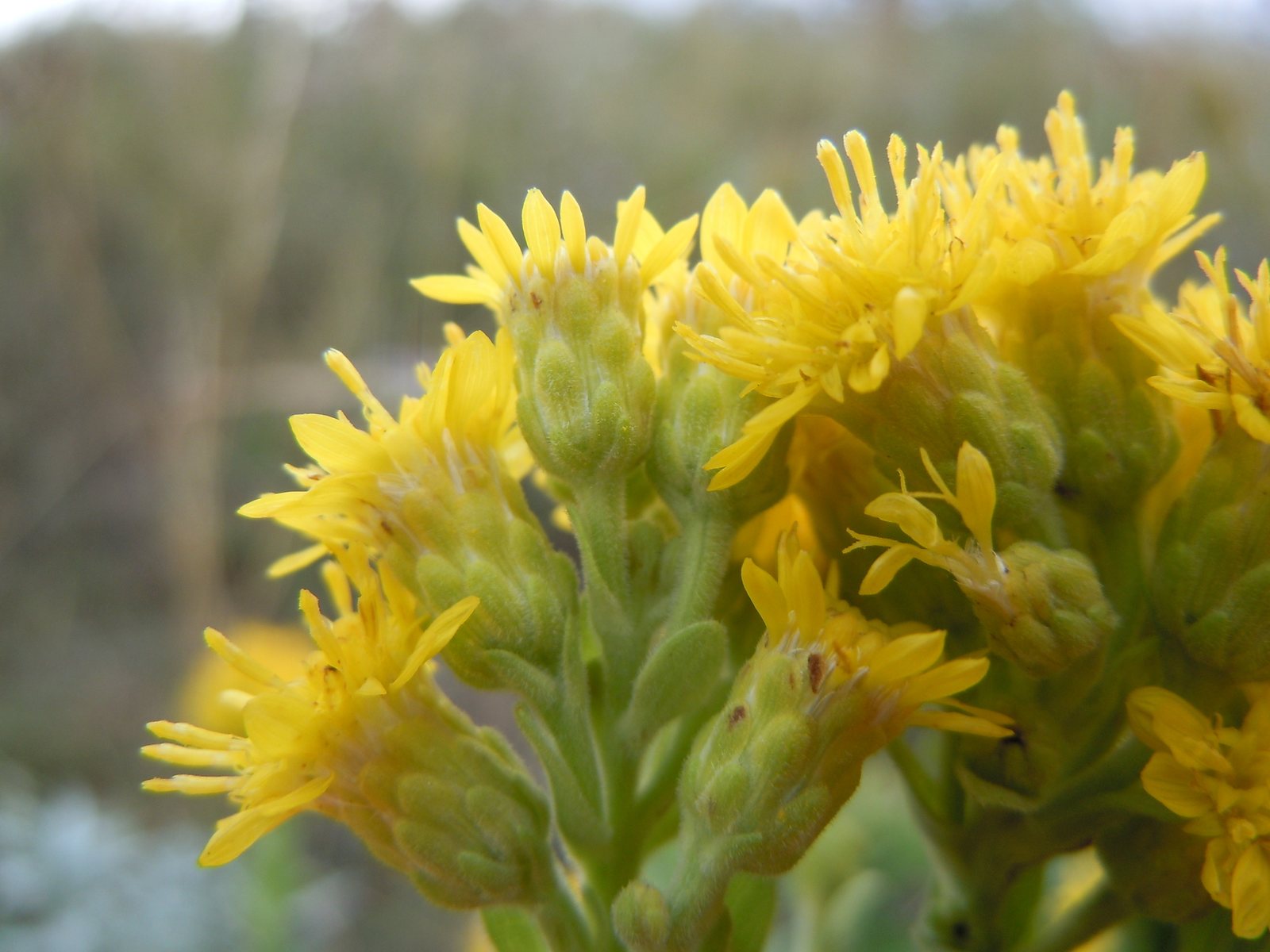
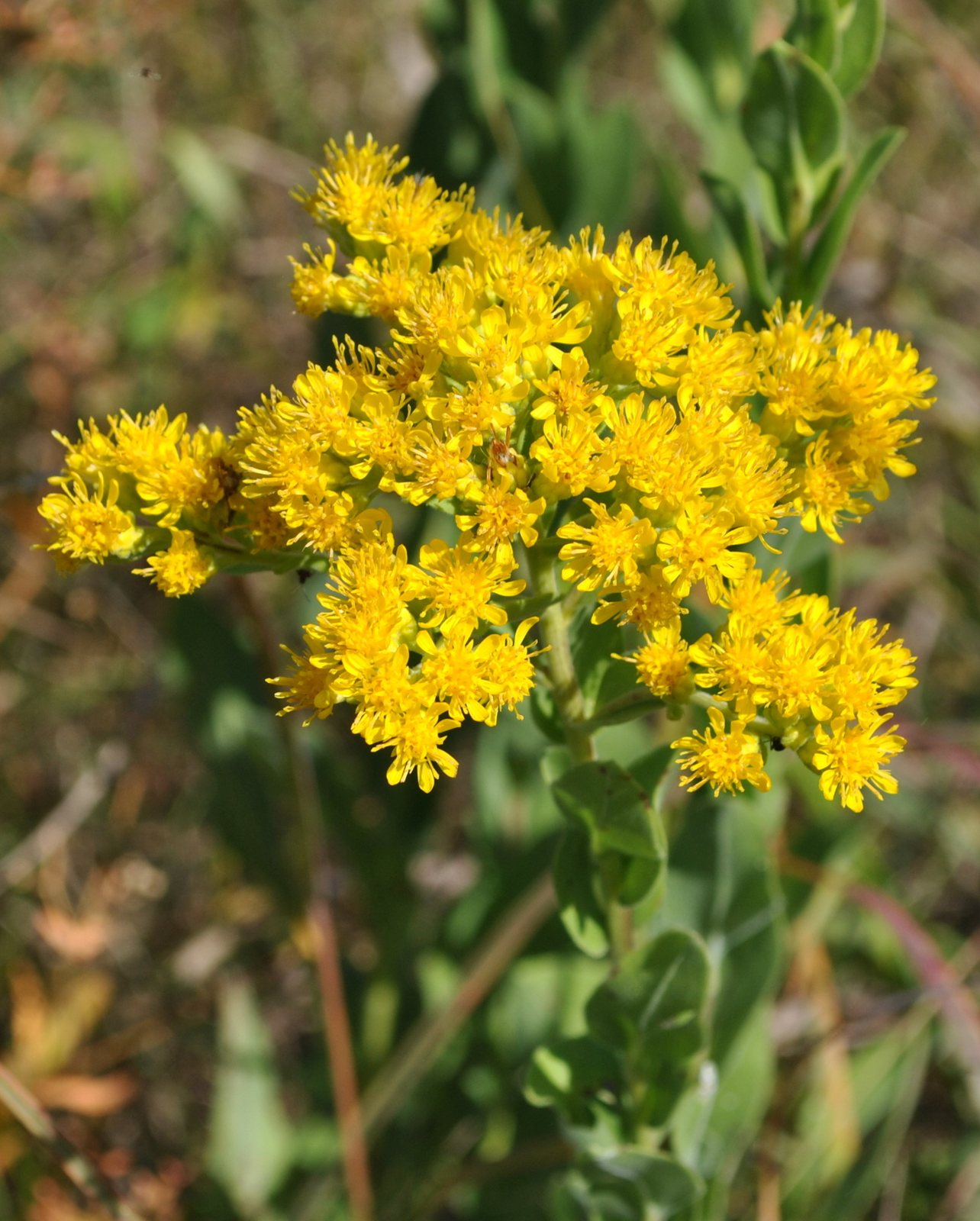
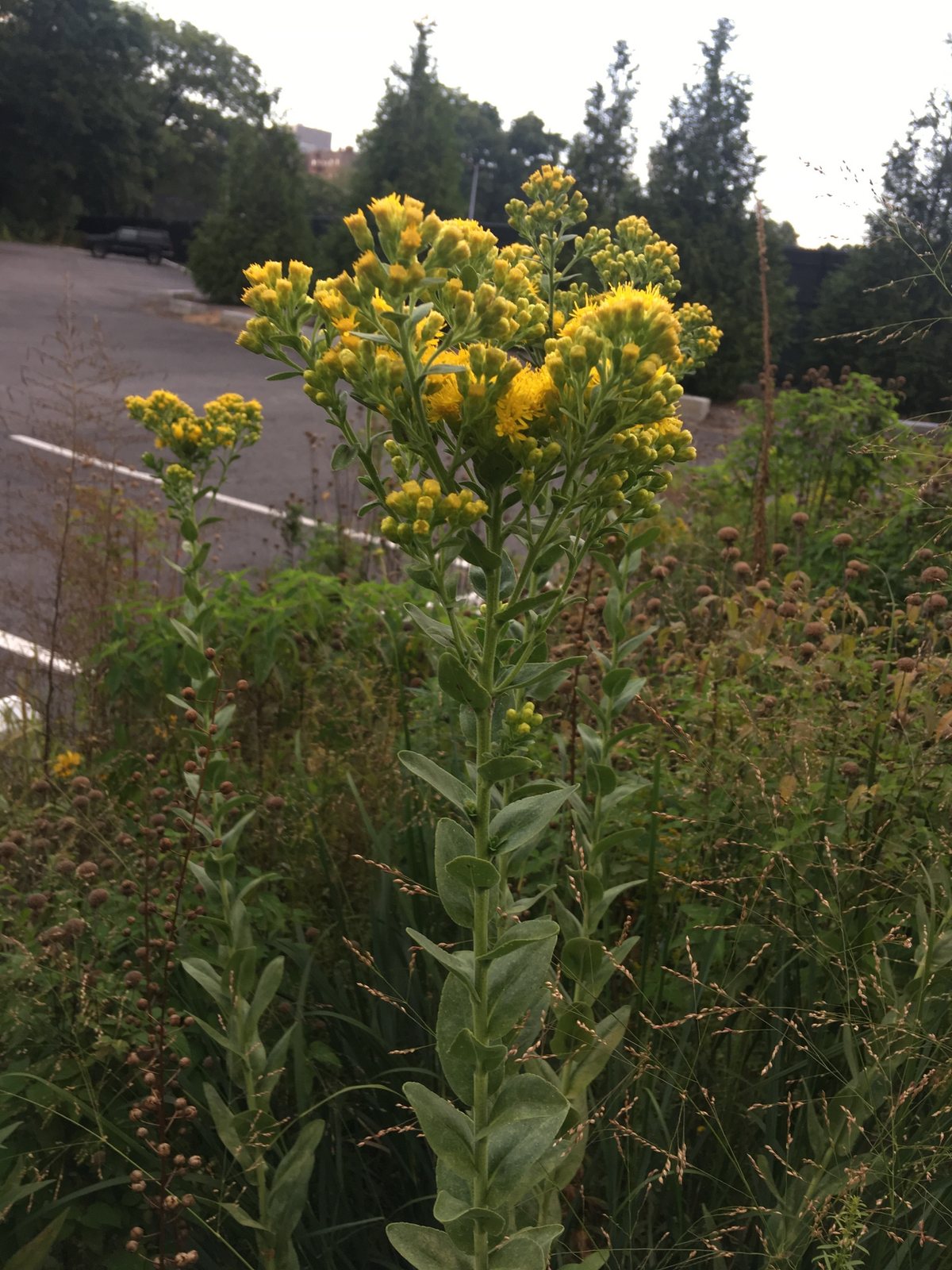
Stiff goldenrod is a North American prairie perennial with upright stems, firm grey-green leaves and broad, fairly flat clusters of yellow flowers. Gardeners grow it for late-season colour, its value to pollinating insects and its strong shape among ornamental grasses.
At a glance
- Sun
- Full sun; tolerates light shade but may lean and flower less.
- Water
- Moderate while establishing; tolerates drought once established. Water during prolonged dry spells for better flowering.
- Soil
- Well-drained sandy, loamy or clay soil; tolerates poor, rocky and alkaline ground. Avoid persistently waterlogged soil.
- Height
- 3-5 ft (0.9-1.5 m)
- Spread
- 1.5-3 ft (0.45-0.9 m)
- Flowers
- Yellow flower clusters in late summer and autumn.
- Foliage
- Firm, slightly rough or downy, grey-green leaves; broad basal leaves and smaller leaves clasping the upright stems. Dies back in winter.
- Growth
- Moderate; forms a substantial clump over several seasons.
- Care needed
- Low
The year at a glance
- Pollinators
- Deer resistant
- Drought tolerant
- Cold hardy
- Heat tolerant
- Wildlife
- Low allergen
| J | F | M | A | M | J | J | A | S | O | N | D | |
|---|---|---|---|---|---|---|---|---|---|---|---|---|
| Flowers | ||||||||||||
| Fruit | ||||||||||||
| Plant |
Northern hemisphere months. In Australia, shift them by six.
- Difficulty
- Easy
- Toughness
- Very tough
Will it suit your garden?
Pick your zone, country, light and whether you have pets.
Full sun is 6 or more hours of direct sun a day, part shade 3 to 6 hours, shade under 3.
How it grows
Planting day
1 ft (0.3 m)
After 1 year
2 ft (0.6 m)
After 2 years
3 ft (0.9 m)
After 3 years
4 ft (1.2 m)
full size
About 3 years to full size.
From a typical nursery size, at an average rate for this kind of plant. A rule of thumb, not a forecast.
Good to know
- Cats and dogs
- Mildly toxic: may upset a stomach
- Native to
- the US and Canada
- In the garden
- Spreads vigorously: plan to contain it.
- Growth rate
- Moderate
Care
Jobs through the year
- WaterApr–May, Sep–Oct, every 21 days
- Water established clumps only if soil stays dry; water new plants regularly.
- WaterJun–Aug, every 14 days
- Water deeply during prolonged drought to support flowering; otherwise rely on rainfall.
- PruneFeb–Mar
- Cut old stems close to ground level; retain some cut hollow stems nearby for insects.
- DivideMar–Apr
- Divide congested clumps every three to five years or when they outgrow their space.
- DeadheadSep–Oct
- Remove fading heads only if seedlings are unwanted; otherwise leave seeds for birds.
- Water deeply during the first growing season, allowing the surface soil to dry between waterings.
- Avoid routine fertiliser; rich soil encourages tall, floppy growth.
- Keep mulch away from the crown and avoid thick, moisture-retentive layers on heavy soil.
- Support stems early if growing in partial shade or exposed, fertile borders.
- Divide congested clumps in spring and remove unwanted seedlings while small.
Pruning. Leave stems standing through winter for seed-eating birds and sheltering insects, then cut them close to ground level in late winter or early spring. Remove spent flower heads before seeds ripen if self-seeding is unwanted.
Through the year
- Early spring
- Cut down old stems before new shoots develop; retain some hollow stems loosely in a quiet corner for insects.
- Spring
- Plant or divide clumps, water thoroughly and keep new plants watered while they establish.
- Early summer
- Install discreet supports if stems are leaning; avoid feeding.
- Summer
- Water during prolonged drought and check crowded foliage for mildew.
- Late summer
- Enjoy the flowers and leave them available to bees, butterflies and other insects.
- Autumn
- Remove flower heads before seed dispersal where seedlings would be a nuisance; otherwise leave stems standing.
In the garden
- Plant in loose groups with prairie grasses for a naturalistic meadow effect.
- Use in the middle or back of a sunny border to give late-season height and structure.
- Pair with purple asters or blazing stars for a strong yellow-and-purple contrast.
- Include in sunny wildlife plantings where flowers and winter seed heads can remain undisturbed.
Garden styles it suits: Native meadow, New perennial (prairie), Midwest prairie, Pollinator garden, Wildlife garden and Autumn colour.
Plant it with: Little bluestem, Prairie dropseed, Purple coneflower, New England aster, Rough blazing star and Wild bergamot.
Wildlife: Flowers provide late-season nectar and pollen for native bees, honeybees, butterflies, wasps and other beneficial insects. Seed-eating birds may visit the dry heads, and standing stems provide winter shelter. Goldenrod pollen is mainly insect-carried; wind-pollinated ragweed flowering nearby is a more usual cause of seasonal hay fever.
Problems to watch for
- Flopping in shade or rich soil: move to full sun, stop feeding and support stems if necessary.
- Powdery mildew: improve spacing and airflow, avoid drought stress and remove badly affected foliage.
- Leaf rust: remove affected leaves and clear diseased debris; avoid wetting foliage when watering.
- Unwanted seedlings: remove spent flower heads before seed ripens and pull young seedlings promptly.
Safety
Not known to be toxic to people, cats, dogs or horses. No part is generally recognised as poisonous, but it is not a food plant and eating it may cause digestive upset.
Where it spreads. Can self-seed freely in open soil, including within its native North American range. It usually forms clumps rather than running as aggressively as Canada goldenrod; remove seed heads where spread is unwanted.
Easily confused with
Canada goldenrod (Solidago canadensis)
Has narrow leaves and branching, arching flower sprays rather than stiff goldenrod's broad basal leaves and broad, nearly flat-topped flower clusters; it also spreads more strongly by rhizomes.
Showy goldenrod (Solidago speciosa)
Usually has a tall, upright, plume-shaped flower cluster rather than a broad, flat-topped cluster, and its leaves are generally smoother.
Flat-top goldentop (Euthamia graminifolia)
Also carries flat-topped yellow flowers, but has numerous narrow, grasslike leaves instead of broad, firm basal leaves.
The name
The name rigida means stiff or rigid, referring to the plant's firm, upright growth.
Propagation. Divide established clumps in spring. Sow seed outdoors in autumn, or give spring-sown seed a period of cold, moist treatment; press seed onto the surface and barely cover.
Checked against open data
- Accepted botanical name
- Solidago rigida
- In the US and Canada
- Native in Canada and the lower 48 states.
- Native range
- Alabama, Alberta, Arkansas, Colorado, Connecticut, Delaware, Georgia, Illinois, Indiana, Iowa, Kansas and Kentucky.
- Measured
- Soil pH 5.5 to 7.2. Average height 81 cm.
Sources: GBIF (CC BY 4.0), USDA PLANTS and Trefle (CC BY 4.0). The care and design notes are LandscapeGPT's own.
See it in your own yard.
Upload a photo of your yard and see it redesigned with plants that suit your climate, each checked against your zone.