Smooth sumac
Rhus glabra. Family Anacardiaceae. Shrub.
Also called Scarlet sumac.
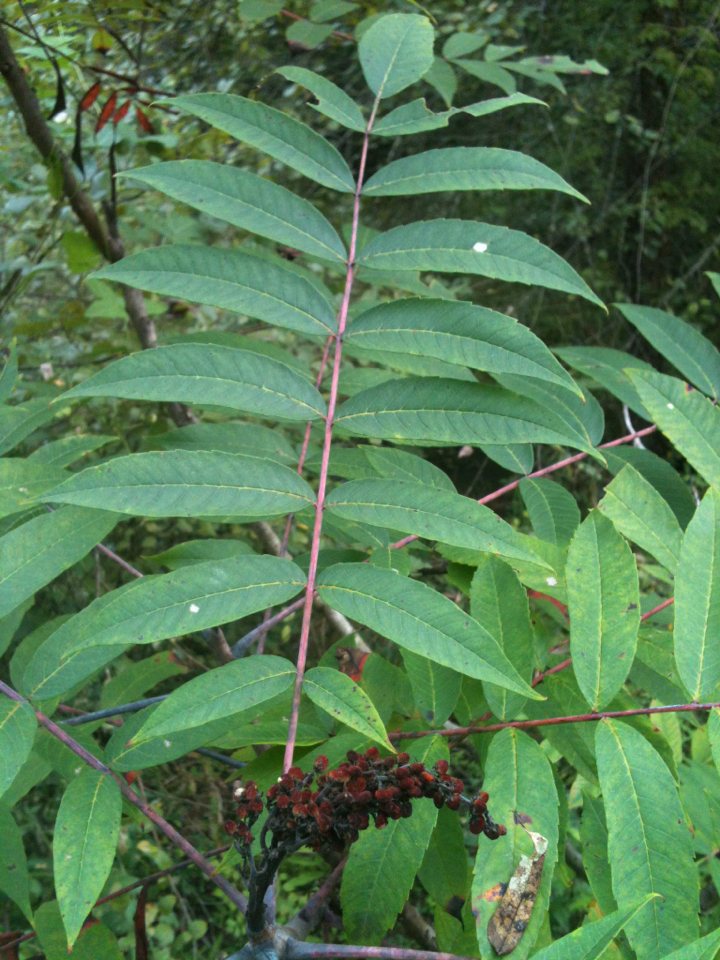
Smooth sumac is a deciduous North American shrub grown for its large, divided leaves, brilliant red autumn colour and upright clusters of red fruit. It forms spreading colonies through root suckers, making it useful for banks and naturalistic planting but difficult to contain in small borders.
At a glance
- Sun
- Full sun gives the strongest autumn colour and densest growth; tolerates partial shade.
- Water
- Water regularly while establishing. Once established, it tolerates drought and usually needs watering only during prolonged dry spells.
- Soil
- Well-drained soil, including sandy, gravelly, rocky or clay soils; tolerates poor fertility and a broad pH range. Avoid persistently waterlogged ground.
- Height
- 8-15 ft (2.4-4.6 m), occasionally taller
- Spread
- 8-15 ft (2.4-4.6 m), with suckering colonies spreading much farther
- Flowers
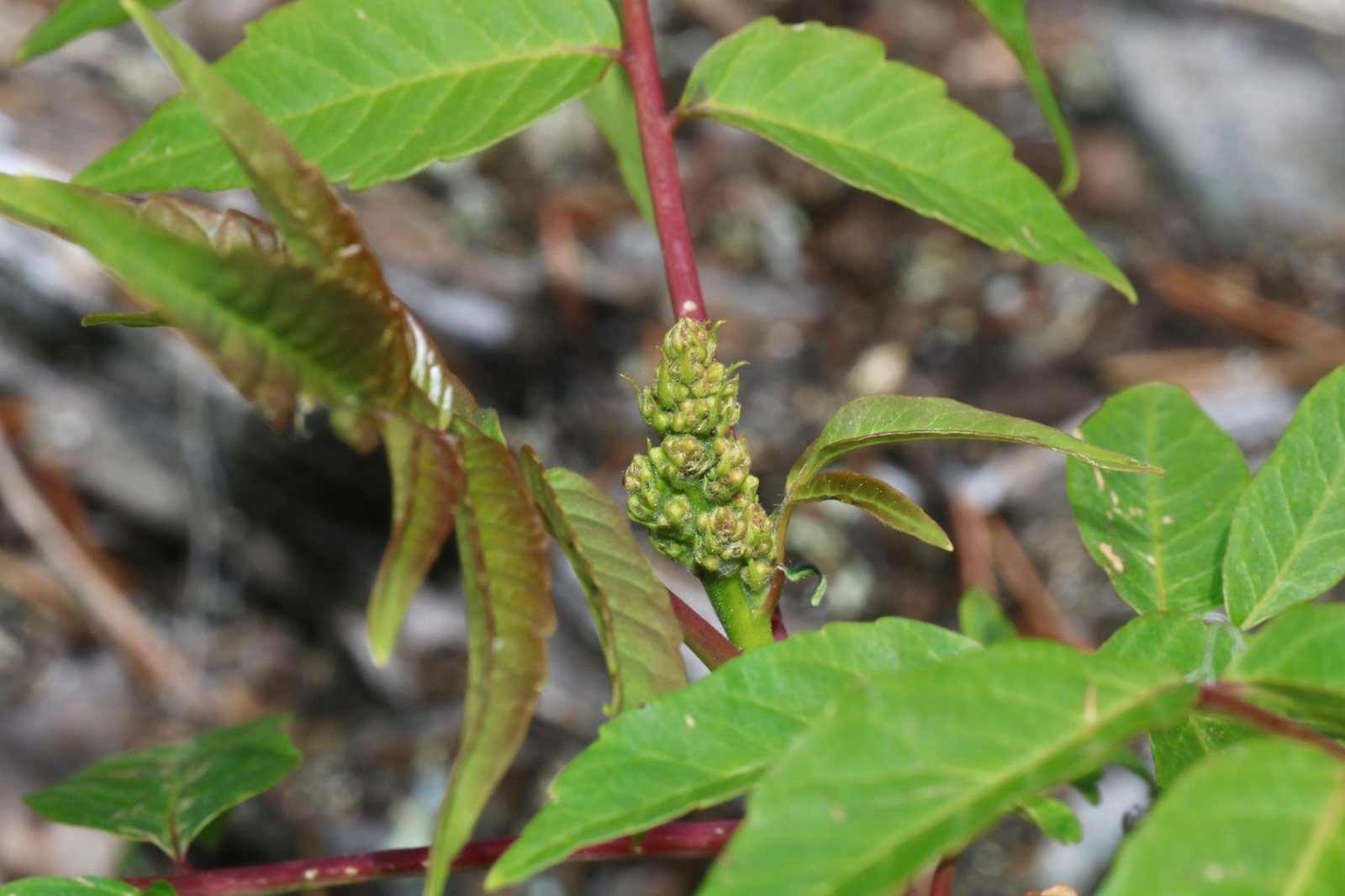
- Small greenish-yellow flowers in upright clusters in late spring to early summer; female plants can develop dense red fruit clusters.
- Foliage
- Large, feather-like leaves with sharply toothed leaflets; green in summer, turning orange, scarlet or crimson in autumn. Young stems are smooth rather than velvety.
- Growth
- Fast, especially through root suckers.
- Care needed
- Medium
The year at a glance
- Pollinators
- Drought tolerant
- Cold hardy
- Heat tolerant
- Wildlife
- Low allergen
| J | F | M | A | M | J | J | A | S | O | N | D | |
|---|---|---|---|---|---|---|---|---|---|---|---|---|
| Flowers | ||||||||||||
| Fruit | ||||||||||||
| Plant |
Northern hemisphere months. In Australia, shift them by six.
- Difficulty
- Easy
- Toughness
- Very tough
Will it suit your garden?
Pick your zone, country, light and whether you have pets.
Full sun is 6 or more hours of direct sun a day, part shade 3 to 6 hours, shade under 3.
How it grows
Planting day
1.6 ft (0.5 m)
After 1 year
5 ft (1.4 m)
After 2 years
8 ft (2.3 m)
After 3 years
11 ft (3.3 m)
After 5 years
11 ft (3.5 m)
full size
About 3 years to full size.
From a typical nursery size, at an average rate for this kind of plant. A rule of thumb, not a forecast.
Good to know
- Cats and dogs
- Safe
- Native to
- the US and Canada
- In the garden
- Spreads vigorously: plan to contain it.
- Growth rate
- Fast
Care
Jobs through the year
- WaterApr–May, Sep–Oct, every 21 days
- Check established shrubs and water only in prolonged drought; water first-year plants more regularly.
- WaterJun–Aug, every 14 days
- Water established shrubs deeply only during prolonged drought, skipping irrigation when soil remains moist.
- MulchApr–May
- Renew a thin organic mulch, leaving stem bases uncovered.
- PruneFeb–Mar
- Remove dead or crowded stems at ground level; hard cutting sacrifices that year's flowers and fruit.
- PruneMay–Sep, every 30 days
- Remove unwanted suckers promptly, tracing them to their origin where practical.
- Water deeply during dry weather through the first growing season.
- Apply a thin organic mulch, keeping it clear of the stems.
- Do not routinely fertilise; rich feeding encourages excessive growth.
- Remove unwanted root suckers while small, tracing them back to their point of origin where practical.
- Allow room for a colony rather than planting beside small beds or neighbouring boundaries.
- For fruit display, grow female plants with a male plant nearby; seed-grown plants may be either sex.
Pruning. Prune in late winter or early spring, removing dead, damaged and crowded stems at ground level. Established plants can be cut back hard for vigorous foliage growth, but this sacrifices much of that year's flowering and fruit display.
Through the year
- Late winter
- Remove dead or crowded stems and reduce the colony if necessary.
- Spring
- Plant into workable, well-drained ground and water thoroughly.
- Late spring
- Renew mulch and remove suckers growing beyond the intended planting area.
- Summer
- Water young plants during dry spells; check established plants only during prolonged drought.
- Autumn
- Enjoy the leaf colour and leave fruit clusters for birds.
- Winter
- Inspect the colony's boundaries and plan any thinning before spring growth begins.
In the garden
- Use in broad drifts on sunny banks where suckering growth can help cover the slope.
- Place behind native grasses and late-flowering perennials for a strong autumn backdrop.
- Plant along a spacious woodland edge, where its foliage provides a transition between trees and meadow.
- Use in wildlife planting where persistent fruit and dense stems provide food and shelter.
Garden styles it suits: Native meadow, Wildlife garden, Rewilded, Autumn colour, Midwest prairie and Desert / xeriscape.
Plant it with: Little bluestem, Switchgrass, Butterfly weed, Purple coneflower, Black-eyed Susan and Aromatic aster.
Wildlife: Flowers attract bees and other insects. Many birds eat the fruit, particularly later in winter when other foods are scarce, and colonies provide cover for birds and small animals. Its greatest wildlife value is within its native North American range.
Problems to watch for
- Unwanted suckering: remove shoots promptly and mow a surrounding grass strip where appropriate; avoid confined borders.
- Powdery mildew: improve air circulation and avoid crowding; mild late-season infection usually needs no treatment.
- Leaf spots: collect badly affected fallen leaves and avoid overhead watering; established plants generally tolerate minor spotting.
- Root decline in wet soil: improve drainage or move the plant to a better-drained site rather than watering on a fixed schedule.
Safety
Smooth sumac is not known to be toxic to people, cats, dogs or horses. Its red fruits have traditional food uses, but correct identification is essential; do not confuse it with poisonous white-fruited sumacs. Sap or plant handling may irritate sensitive skin.
Where it spreads. Spreads aggressively by root suckers, including in gardens within its native range across much of the United States and southern Canada. Outside North America, including the United Kingdom and Australia, keep colonies contained and check local weed guidance before planting.
Easily confused with
Staghorn sumac (Rhus typhina)
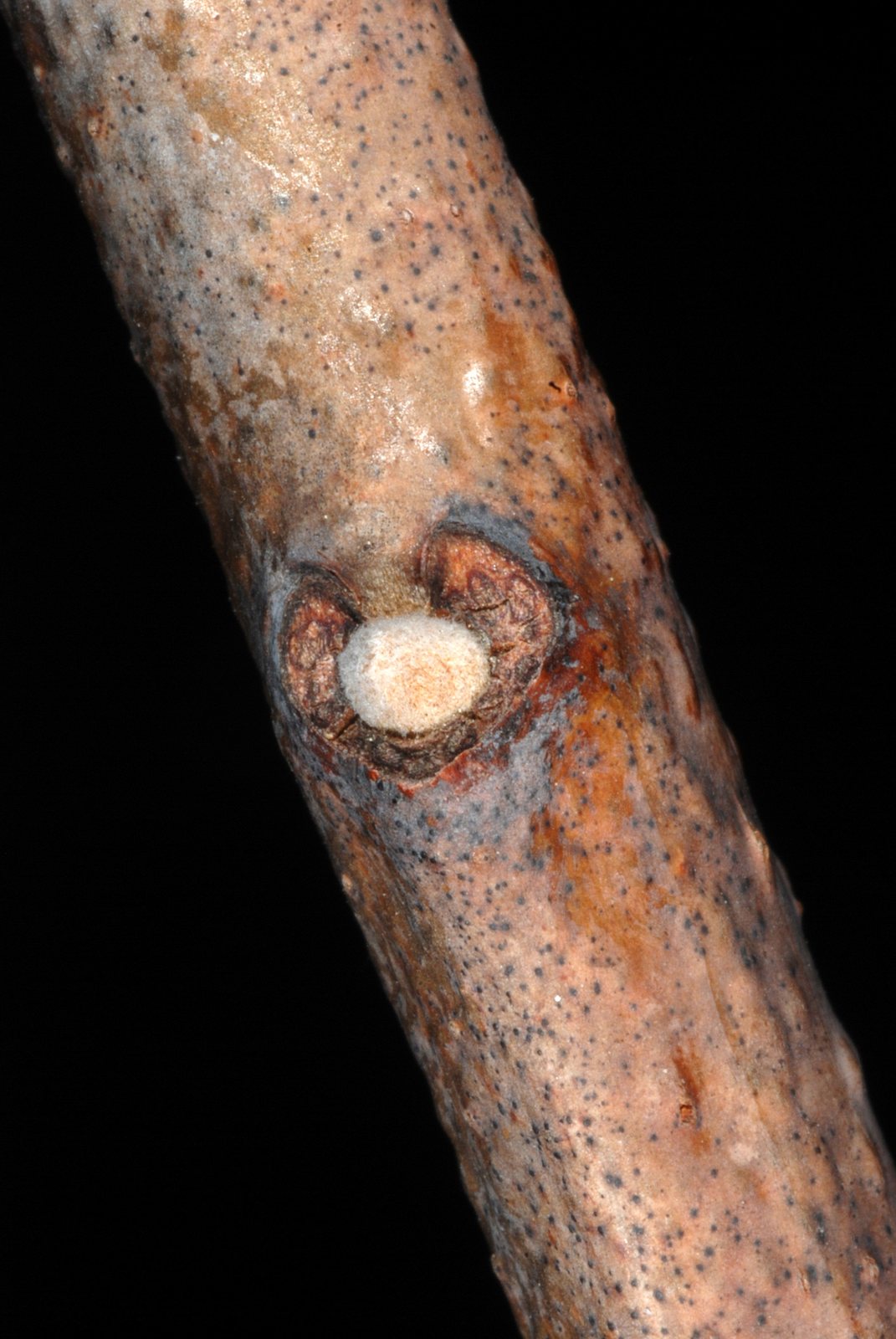
Young stems and leaf stalks are densely velvety-hairy; smooth sumac has hairless young stems.
Poison sumac (Toxicodendron vernix)
Has smooth-edged leaflets and loose, hanging clusters of pale grey-white fruit, usually in wet ground. Smooth sumac has toothed leaflets and dense, upright red fruit clusters.
Tree of heaven (Ailanthus altissima)
Leaflets are mostly smooth-edged, with gland-bearing teeth near their bases; fruits are winged seeds rather than red berry-like clusters.
The name
The species name glabra means hairless, referring to its smooth young stems, which also give smooth sumac its common name.
Propagation. Lift rooted suckers during dormancy, or take root cuttings in late winter. Seed has a hard coat and dormancy requirements, so seed propagation is slower and less predictable than using suckers.
Checked against open data
- Accepted botanical name
- Rhus glabra
- In the US and Canada
- Native in Canada and the lower 48 states.
- Native range
- Alabama, Alberta, Arizona, Arkansas, British Columbia, California, Colorado, Connecticut, Delaware, District of Columbia, Florida and Georgia.
- Measured
- Soil pH 5.3 to 7.5. Average height 175 cm.
Sources: GBIF (CC BY 4.0), USDA PLANTS and Trefle (CC BY 4.0). The care and design notes are LandscapeGPT's own.
See it in your own yard.
Upload a photo of your yard and see it redesigned with plants that suit your climate, each checked against your zone.