Snow pea (mangetout) 'Oregon Sugar Pod'
Pisum sativum 'Oregon Sugar Pod'. Family Fabaceae. Annual.
Also called Mangetout pea, Edible-podded pea, Snow pea.
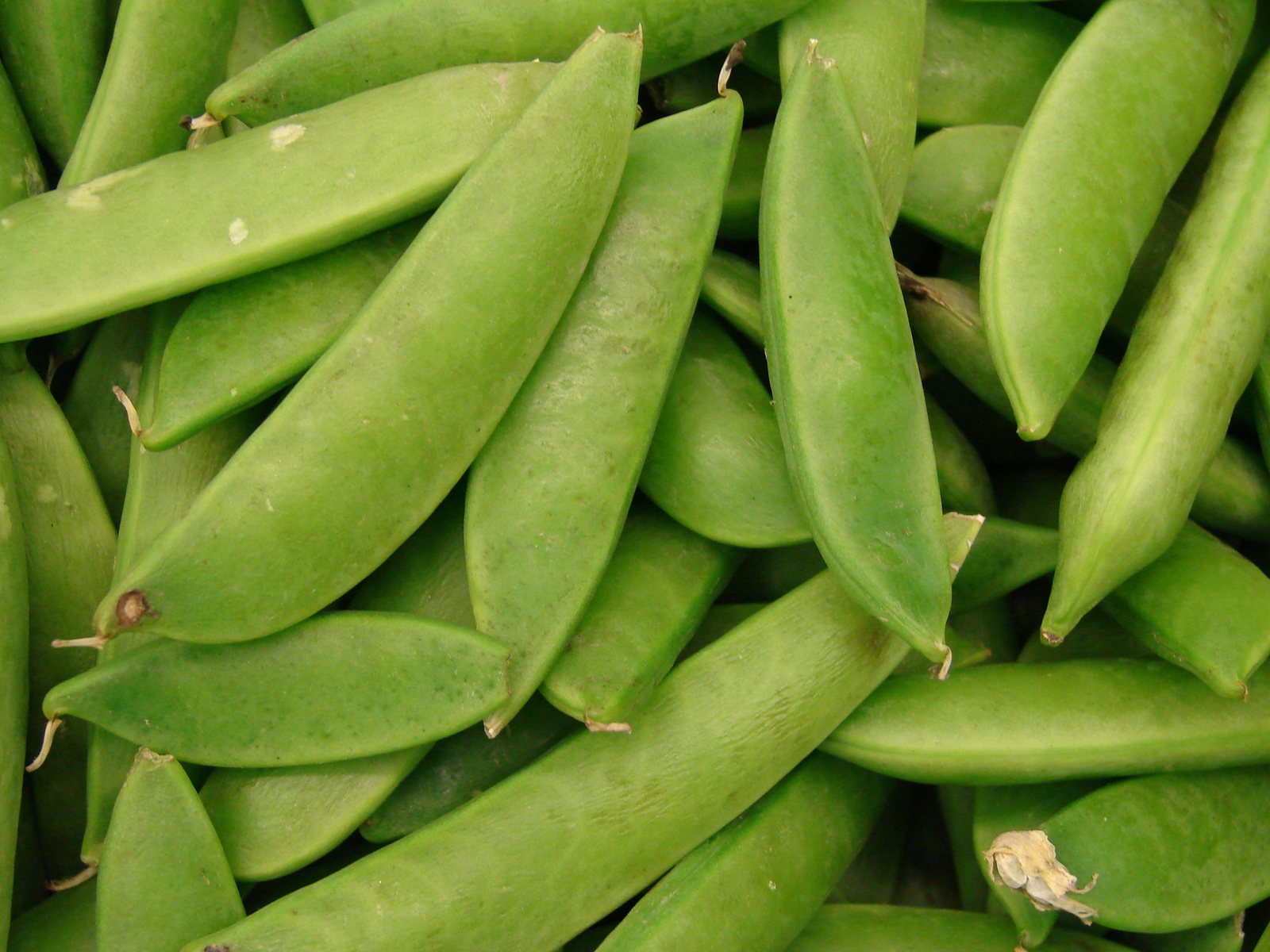
'Oregon Sugar Pod' is a compact, tendril-climbing pea grown for its sweet, flat, edible pods. It is grown as an annual and crops best in cool weather, making it useful for spring planting in cold regions and autumn planting where winters are mild.
At a glance
- Sun
- Full sun; light afternoon shade can help where spring temperatures rise quickly.
- Water
- Keep soil evenly moist, especially during flowering and pod development, but never waterlogged.
- Soil
- Well-drained, moisture-retentive soil enriched with mature compost; roughly pH 6.0-7.5.
- Height
- 2-3 ft (0.6-0.9 m)
- Spread
- 0.5-1 ft (0.15-0.3 m) per supported plant
- Flowers
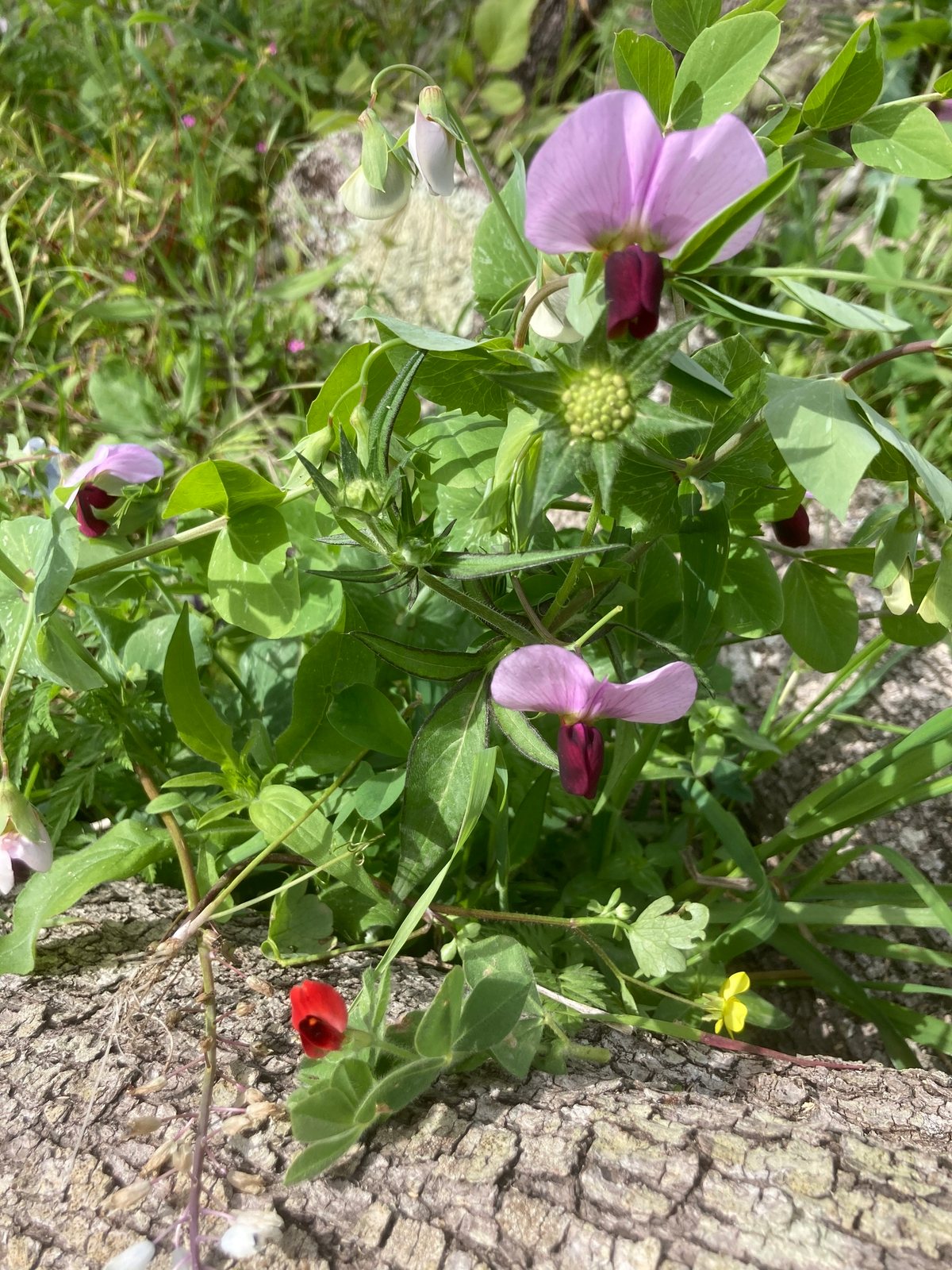
- White flowers in spring to early summer, or during the cool growing season in mild climates.
- Foliage
- Soft green, paired leaflets with branching tendrils that grip nearby supports.
- Growth
- Fast in cool weather; first pods usually about 60-70 days after sowing, longer in cold conditions.
- Care needed
- Low
The year at a glance
- Low allergen
- Edible
| J | F | M | A | M | J | J | A | S | O | N | D | |
|---|---|---|---|---|---|---|---|---|---|---|---|---|
| Flowers | ||||||||||||
| Fruit | ||||||||||||
| Plant |
Northern hemisphere months. In Australia, shift them by six.
- Difficulty
- Easy
- Toughness
- Fairly tough
Will it suit your garden?
Pick your zone, country, light and whether you have pets.
Full sun is 6 or more hours of direct sun a day, part shade 3 to 6 hours, shade under 3.
How it grows
Planting day
0.5 ft (0.15 m)
After 1 year
2.5 ft (0.75 m)
full size
Full size in one season.
From a typical nursery size, at an average rate for this kind of plant. A rule of thumb, not a forecast.
Good to know
- Cats and dogs
- Safe
- Growth rate
- Fast
Care
Jobs through the year
- WaterMar–Apr, every 7 days
- Water established seedlings when soil starts drying; avoid saturating cold soil.
- WaterMay–Aug, every 4 days
- Water established crops if rain is insufficient, keeping flowering and podding plants evenly moist.
- ProtectMar–Jun
- Provide pea sticks or a low trellis at sowing and guide young stems onto it.
- ProtectMar–Jun, every 7 days
- Check seedlings for slugs and bird damage; use securely fixed wildlife-safe protection.
- MulchApr–Jun
- Mulch lightly once seedlings are established, keeping material away from stems.
- HarvestMay–Aug
- Pick flat tender pods before peas swell, supporting the vine while picking.
- PruneJul–Aug
- When cropping ends, cut healthy stems at soil level and leave roots to decay.
- Provide pea netting, twiggy sticks or a low trellis at sowing time.
- Water at soil level when the surface begins to dry; do not let flowering plants dry out.
- Work mature compost into the bed before sowing; avoid heavy nitrogen feeding, which encourages leaves rather than pods.
- Mulch lightly once seedlings are established to retain moisture and suppress weeds.
- Handle shallow-rooted plants gently and pull nearby weeds by hand.
Pruning. No routine pruning is needed; guide young stems onto their supports. Once cropping finishes, cut stems at soil level and leave healthy roots to decay in the ground.
Harvest
Pick pods while they are flat, tender and about 3-4 in (7.5-10 cm) long, before the peas inside noticeably swell. Hold the vine with one hand and snip or gently pick with the other, harvesting every day or two to keep pods from becoming tough.
Through the year
- Late winter
- In cold regions, prepare supports and a well-drained bed; wait to sow until soil is workable rather than frozen or saturated.
- Early spring
- Direct-sow in cool soil, about 1-2 in (2.5-5 cm) deep and 3 in (7.5 cm) apart.
- Mid spring
- Guide seedlings onto supports, protect from slugs and birds, and mulch once growth is established.
- Late spring
- Water consistently during flowering and begin picking as soon as pods reach usable size.
- Summer
- Remove exhausted plants when heat stops production; in cooler districts, sow another crop only if enough cool growing time remains.
- Autumn
- In mild-winter regions, including suitable parts of Australia, sow for a cool-season crop; avoid sites with prolonged hard freezes or winter waterlogging.
In the garden
- Grow on low twig supports in a kitchen garden for an orderly, accessible spring crop.
- Use along the north side of a vegetable bed in the Northern Hemisphere, or the south side in the Southern Hemisphere, to limit shading of shorter crops.
- Train up a small trellis in a deep container on a sunny patio, keeping the compost evenly moist.
- Combine with lettuce and radishes in a mixed edible bed for contrasting leaf shapes and staggered harvests.
Garden styles it suits: Potager (kitchen garden), Cottage garden, Edible landscape, Homestead, Small-space and Family-friendly.
Plant it with: Lettuce, Radishes, Carrots, Spinach and Calendula.
Wildlife: Flowers are mainly self-pollinating but may be visited by bees. Birds and small mammals may eat seeds or seedlings; use securely fixed, wildlife-safe protection where necessary.
Problems to watch for
- Slugs and snails eat emerging seedlings: check after dark, remove hiding places and use locally approved controls if needed.
- Aphids cluster on tender shoots: wash off small colonies with water and encourage ladybirds and other predators.
- Powdery mildew causes white patches on leaves: maintain airflow, water roots consistently and remove spent plants after harvest.
- Seed rot and root rot occur in cold, saturated soil: improve drainage and delay sowing until the bed is workable; replace failed seedlings rather than overwatering.
Safety
Garden peas, including their edible pods and shoots, are not known to be toxic to people, cats, dogs or horses. Large amounts may cause digestive upset, and hard dried peas can be a choking hazard. Do not confuse them with ornamental sweet peas, whose seeds are poisonous.
Easily confused with
Sugar snap pea (Pisum sativum)
Snap peas develop thick, fleshy, rounded edible pods; snow peas are harvested with broad, flat pods before the seeds swell.
Shelling pea (Pisum sativum)
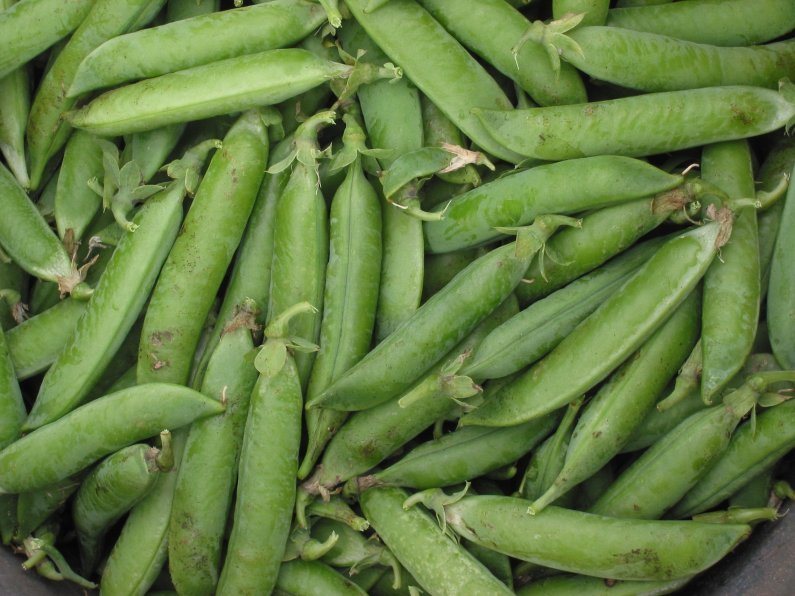
Shelling peas are grown for the swollen seeds inside fibrous pods. Young plants can look identical, so keep seed labels and do not rely on foliage alone.
Sweet pea (Lathyrus odoratus)
Ornamental sweet peas usually have showier, often fragrant flowers, winged stems and hairy pods. They are not edible; never harvest an unidentified pea-like plant.
The name
The French name mangetout means 'eat everything', referring to eating the whole immature pod rather than shelling out the peas.
Propagation. Grow from seed, preferably sown directly where it will crop because roots dislike disturbance. For seed saving, leave a few healthy pods to mature and dry fully on the plant, then shell and store the dry seeds in a cool, dry place.
Checked against open data
- Accepted botanical name
- Lathyrus oleraceus Pisum sativum 'Oregon Sugar Pod' is an older name for Lathyrus oleraceus.
- Native range
- Afghanistan, Albania, Algeria, Bulgaria, Corse, Cyprus, Egypt, France, Greece, Iran, Iraq and Italy.
- Measured
- Soil pH 6.5 to 7. Average height 50 cm.
Sources: GBIF (CC BY 4.0) and Trefle (CC BY 4.0). The care and design notes are LandscapeGPT's own.
See it in your own yard.
Upload a photo of your yard and see it redesigned with plants that suit your climate, each checked against your zone.