Snowy mespilus
Amelanchier lamarckii. Family Rosaceae. Tree.
Also called Juneberry, Snowy serviceberry, Lamarck's serviceberry.
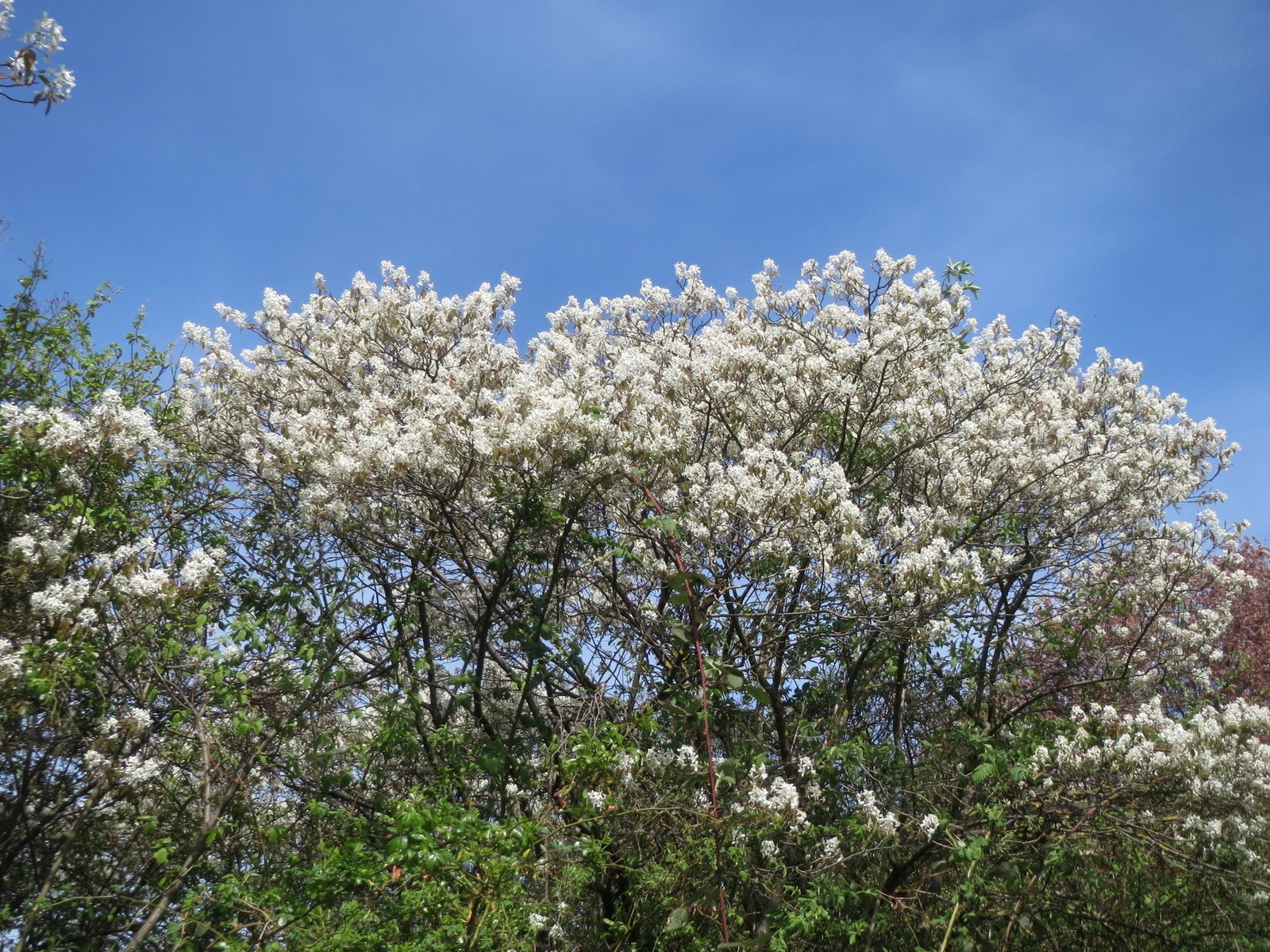
Snowy mespilus is a deciduous small tree or large, multi-stemmed shrub grown for white spring flowers, coppery young leaves and orange-red autumn colour. Its edible summer berries attract birds, and its light canopy suits mixed borders and woodland-edge gardens. It performs best in cool-temperate climates rather than hot, dry regions.
At a glance
- Sun
- Full sun to partial shade; flowering, fruiting and autumn colour are usually best with good sunlight.
- Water
- Moderate; keep the root zone evenly moist while establishing and water during prolonged drought.
- Soil
- Moist but well-drained soil, preferably slightly acidic to neutral. Tolerates clay if drainage is adequate; shallow, chalky soil can cause poor growth and yellow leaves.
- Height
- 15-25 ft (4.5-7.5 m)
- Spread
- 13-20 ft (4-6 m)
- Flowers
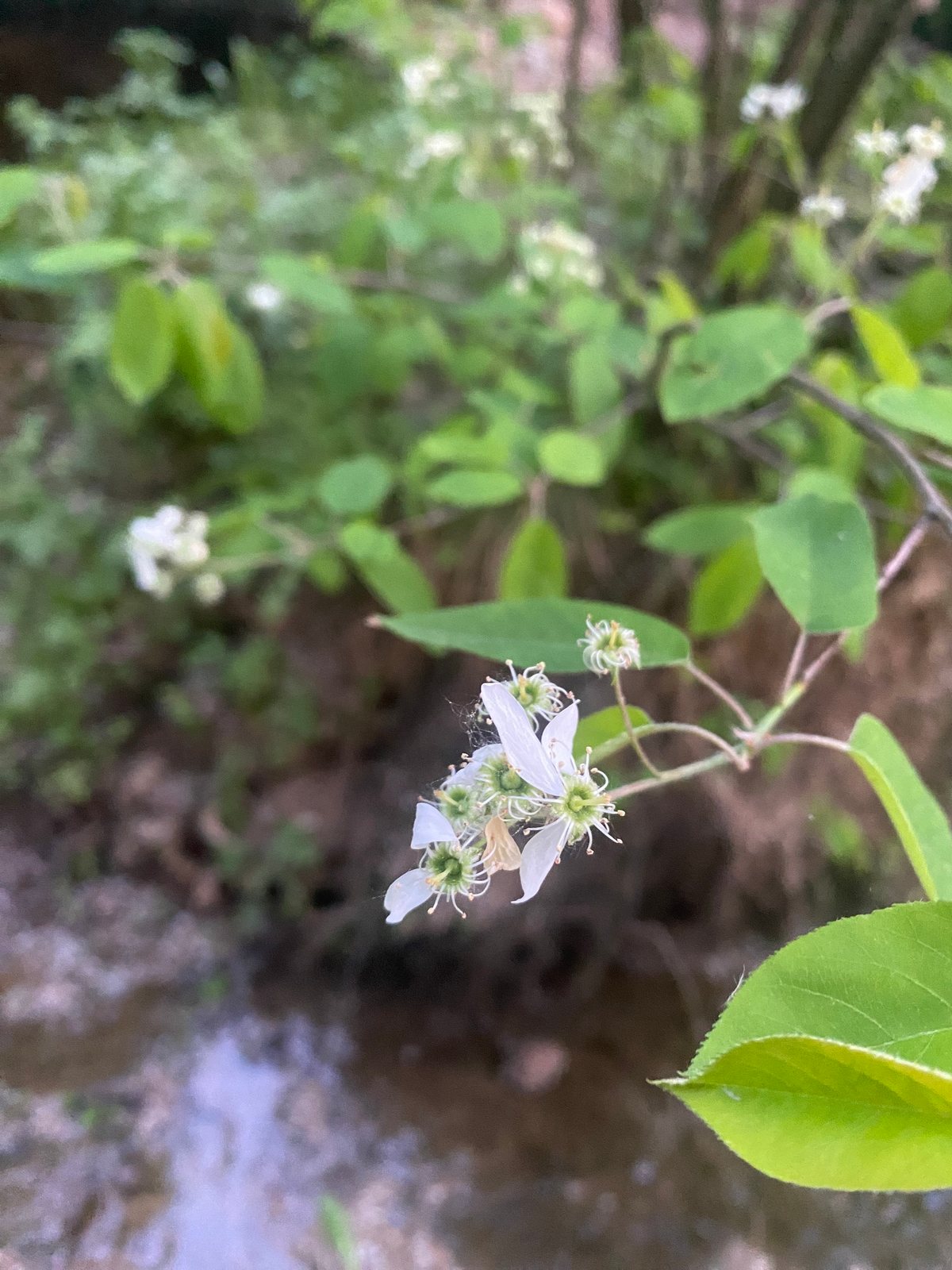
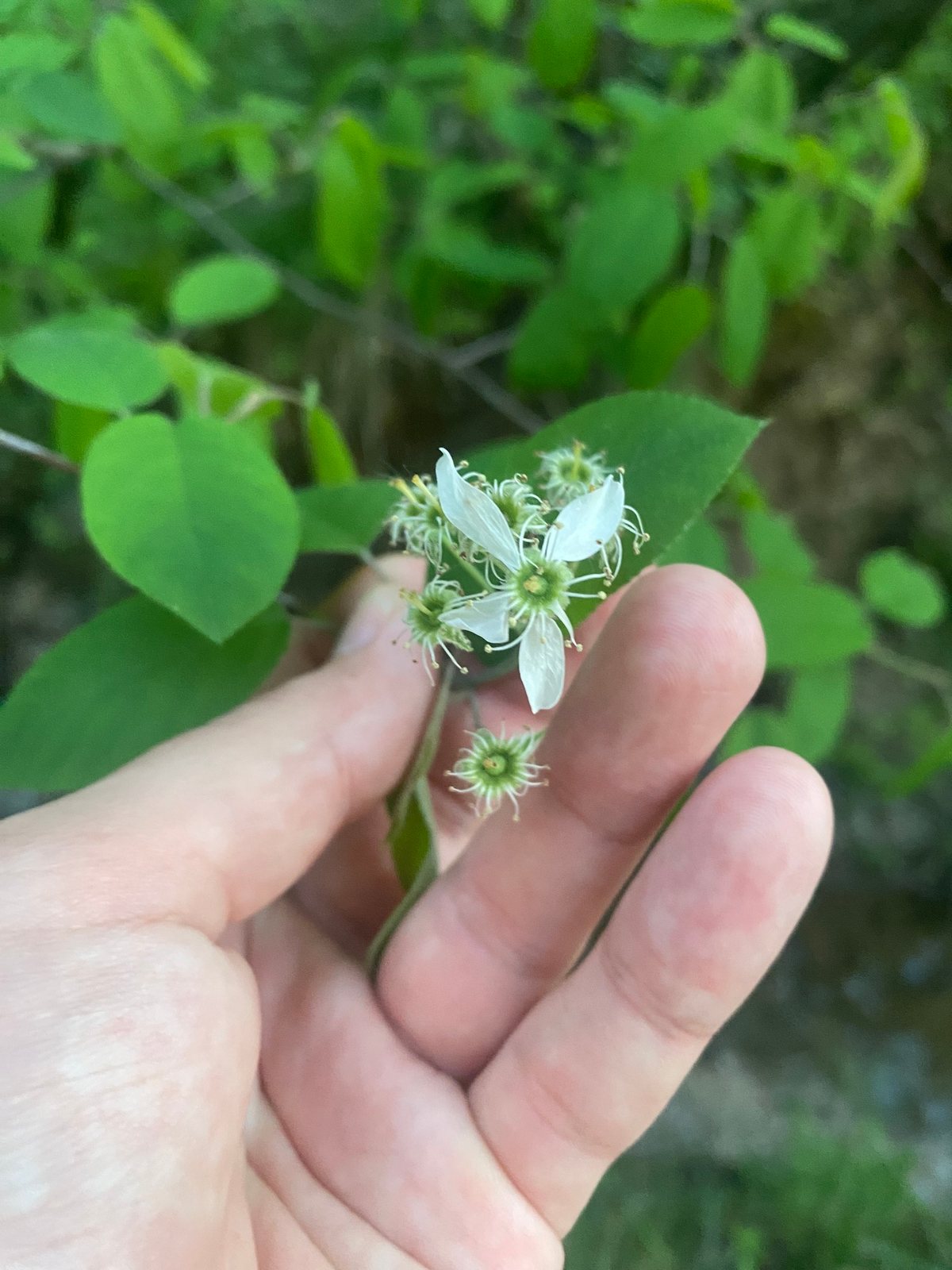
- Early to mid-spring; loose clusters of white, narrow-petalled flowers appear as the leaves unfold.
- Foliage
- Oval leaves emerge coppery bronze, turn green in summer, then change to orange, red and sometimes yellow in autumn.
- Growth
- Moderate
- Care needed
- Low
The year at a glance
- Pollinators
- Cold hardy
- Wildlife
- Low allergen
| J | F | M | A | M | J | J | A | S | O | N | D | |
|---|---|---|---|---|---|---|---|---|---|---|---|---|
| Flowers | ||||||||||||
| Fruit | ||||||||||||
| Plant |
Northern hemisphere months. In Australia, shift them by six.
- Difficulty
- Easy
- Toughness
- Fairly tough
Will it suit your garden?
Pick your zone, country, light and whether you have pets.
Full sun is 6 or more hours of direct sun a day, part shade 3 to 6 hours, shade under 3.
How it grows
Planting day
7 ft (2 m)
After 1 year
7 ft (2.2 m)
After 2 years
8 ft (2.4 m)
After 3 years
9 ft (2.6 m)
After 5 years
10 ft (3 m)
About 20 years to full size.
From a typical nursery size, at an average rate for this kind of plant. A rule of thumb, not a forecast.
Good to know
- Cats and dogs
- Toxic
- Invasive in
- the UK
- In the garden
- Spreads vigorously: plan to contain it.
- Growth rate
- Moderate
Care
Jobs through the year
- WaterApr–May, Sep–Oct, every 14 days
- Deep-water established trees only if soil is drying; water more often for the first two seasons.
- WaterJun–Aug, every 7 days
- Deep-water during prolonged dry weather; skip when rainfall keeps the root zone moist.
- MulchMar–Apr
- Apply 5–8 cm of organic mulch, keeping it clear of stems.
- FeedMar–Apr
- Use a modest balanced feed only if growth is weak on poor soil.
- PruneFeb
- Remove dead, damaged and crossing branches lightly; avoid hard cutting.
- PruneMay–Sep
- Remove unwanted suckers at their origin, especially below a graft.
- Water deeply during dry spells for the first two growing seasons.
- Apply a 2-3 in (5-8 cm) organic mulch each spring, keeping it away from the stems.
- Feed only if growth is weak; on poor soil, use a modest application of balanced fertiliser in spring.
- Keep grass and weeds away from the root zone while the tree establishes.
- Remove unwanted suckers at their point of origin, especially any arising below a graft.
Pruning. Prune lightly in late winter while dormant, removing dead, damaged and crossing branches. Retain several well-spaced stems for a natural form, or gradually select a single trunk; avoid repeated hard cutting or shearing.
Through the year
- Late winter
- Remove dead or crossing branches and check tree ties before spring growth.
- Early spring
- Refresh the mulch and feed only if soil fertility or growth is poor.
- Spring
- Enjoy the flowers and monitor new shoots for aphids or sudden dieback.
- Early summer
- Pick fully purple-black berries if wanted; birds often take them quickly.
- Summer
- Water young trees deeply during dry weather and remove unwanted suckers.
- Autumn
- Plant container-grown trees while soil is moist, and check nearby beds for unwanted seedlings.
In the garden
- Use as a multi-stemmed specimen in a lawn or broad border for flowers, fruit and autumn colour.
- Plant at a woodland edge above ferns, hellebores and other shade-tolerant groundcover.
- Combine with spring bulbs beneath the canopy for an early-season display.
- Include in an informal mixed hedge or wildlife border where its spreading habit has room.
Garden styles it suits: Woodland, Wildlife garden, English country, Cottage garden, Autumn colour and Edible landscape.
Plant it with: Hellebores, Snowdrops, Daffodils, Hardy geraniums, Japanese forest grass and Soft shield fern.
Wildlife: Spring flowers provide pollen and nectar for insects. Birds eat the berries and may nest in the branching canopy; their droppings can spread seeds beyond the garden.
Problems to watch for
- Powdery mildew: improve airflow, water the soil during drought and avoid crowding the canopy.
- Rust: orange spots or distorted fruit can occur, particularly near junipers; remove badly affected material and clear fallen debris.
- Fire blight: blackened shoots may curl at the tips; prune well below affected growth in dry weather and disinfect tools between cuts.
- Yellow leaves on alkaline soil: check soil pH and drainage; mulch with organic matter, but choose a more suitable planting site if chlorosis persists.
Safety
Ripe berries are edible for people. Leaves, twigs and seeds contain cyanogenic compounds, so they should not be treated as edible; substantial consumption of foliage, particularly wilted leaves, can be dangerous to horses and other grazing animals. Poisoning in cats and dogs is not commonly reported, but keep pets from chewing foliage or eating large quantities of seeds.
Where it spreads. Spreads by bird-sown seed and sometimes by suckers. It can invade heathland and open acidic woodland in parts of Britain and northwestern continental Europe, including the Netherlands and Germany; avoid planting beside vulnerable natural habitats in these regions.
Easily confused with
Canadian serviceberry (Amelanchier canadensis)
Its emerging leaves are generally greener and more conspicuously woolly, rather than strongly coppery. Nursery plants are often mislabelled, so leaf colour alone is not conclusive.
Allegheny serviceberry (Amelanchier laevis)
It also has bronze young leaves, but these are essentially hairless as they unfold; snowy mespilus has silky hairs, particularly beneath young leaves. Hybrids and nursery mislabelling can make identification difficult.
The name
The species name lamarckii honours the French naturalist Jean-Baptiste Lamarck, while snowy mespilus refers to the white blossom and its resemblance to relatives of the medlar.
Propagation. Sow fresh seed outdoors and allow natural winter chilling; germination can be slow and seedlings may vary. Established, own-root plants can sometimes be propagated by separating rooted suckers during dormancy; suckers from grafted plants may belong to the rootstock.
Checked against open data
- Accepted botanical name
- Amelanchier lamarckii
Sources: GBIF (CC BY 4.0). The care and design notes are LandscapeGPT's own.
See it in your own yard.
Upload a photo of your yard and see it redesigned with plants that suit your climate, each checked against your zone.