Solitaire palm
Ptychosperma elegans. Family Arecaceae. Tree.
Also called Solitary palm, Alexander palm.
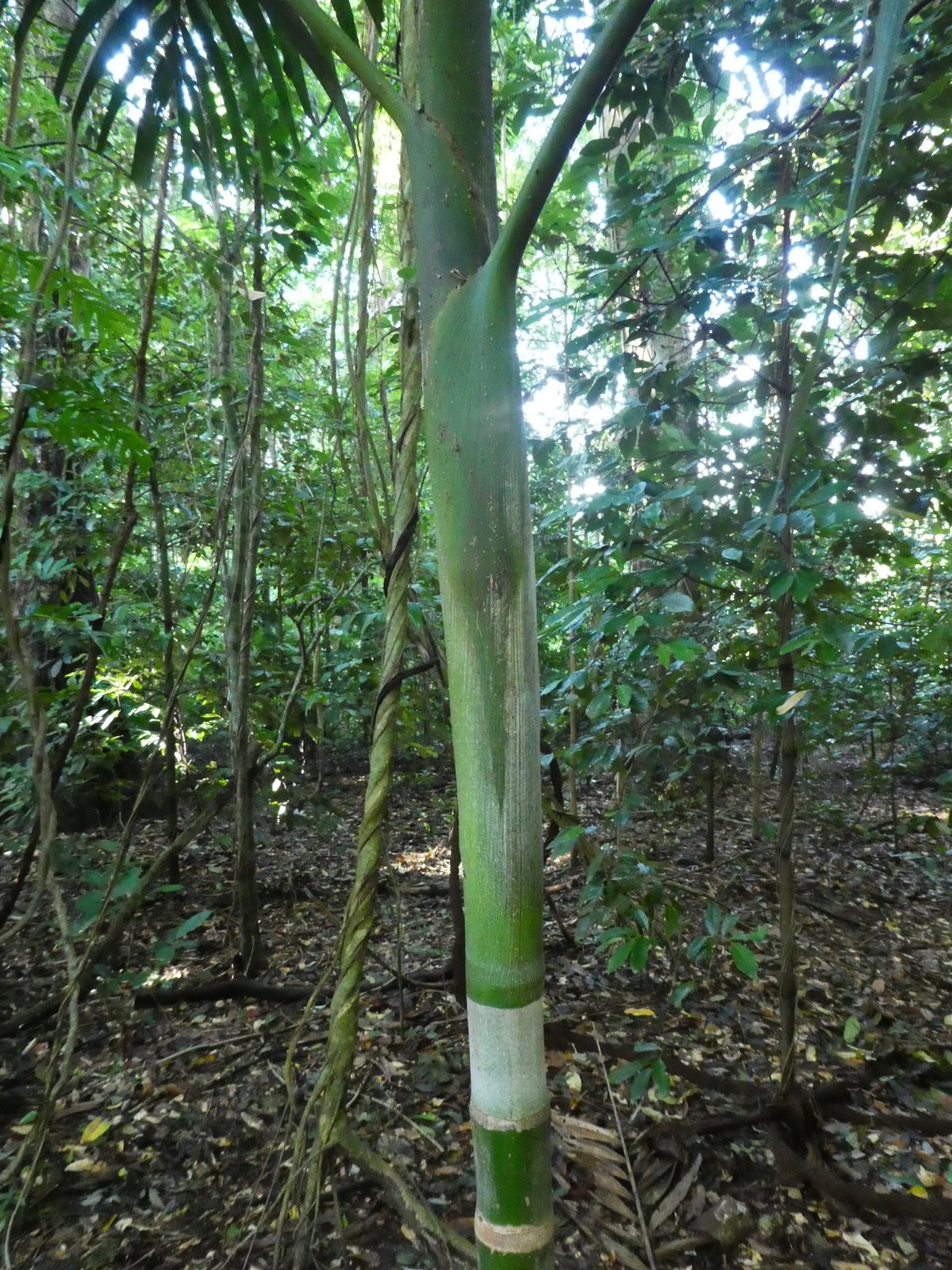
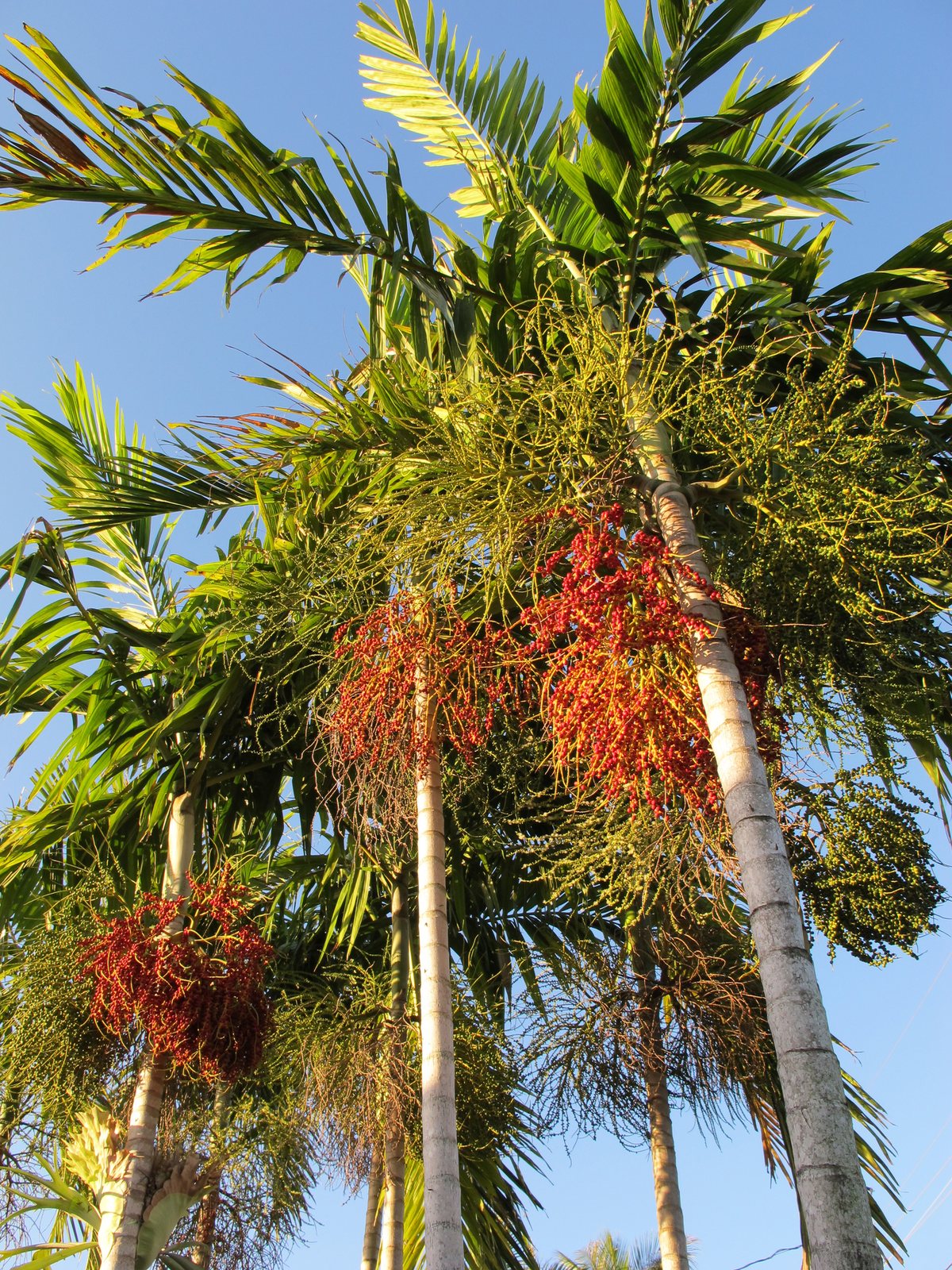
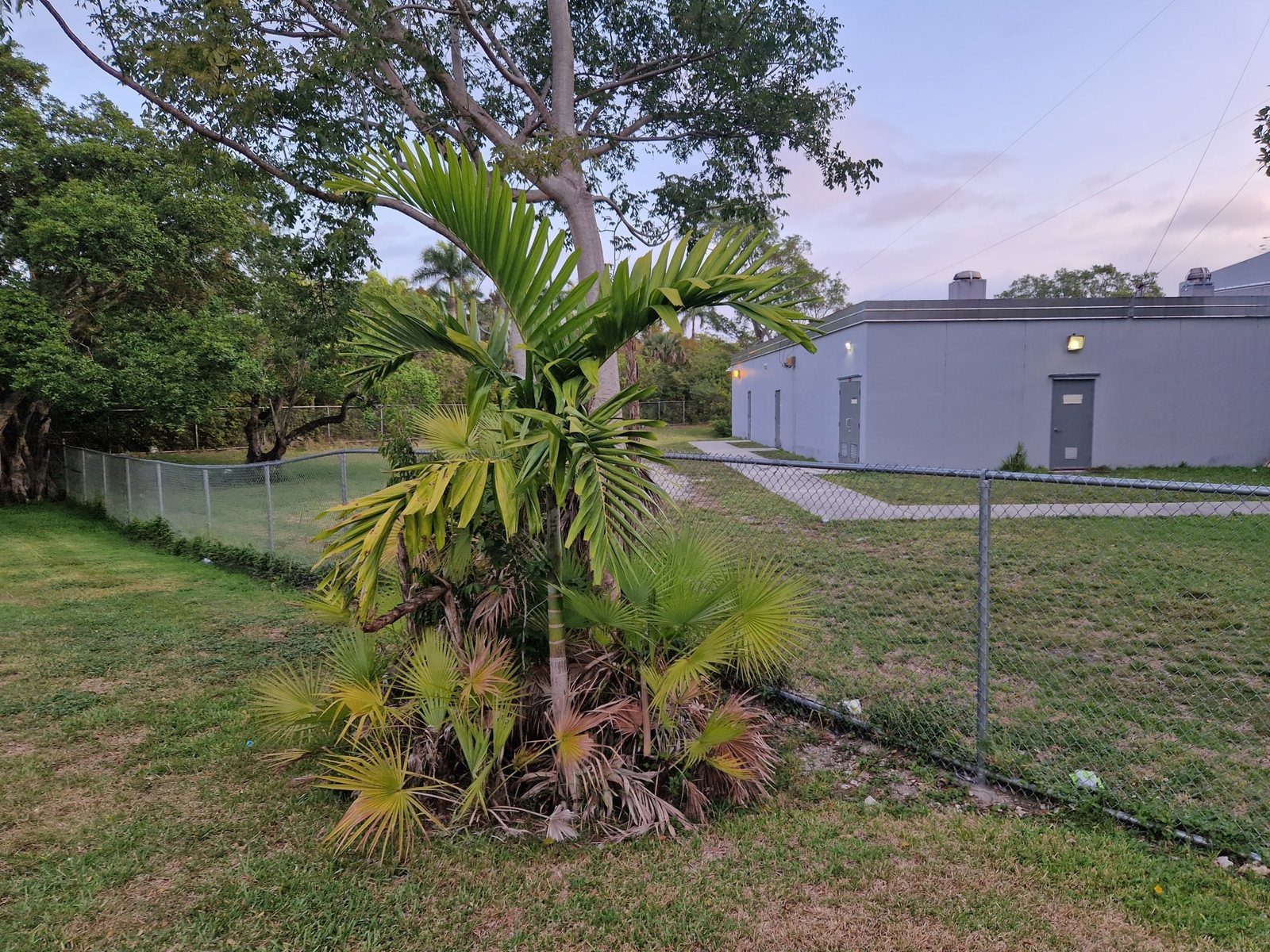
Solitaire palm is a slender, single-trunked evergreen palm native to northeastern Queensland, Australia. Gardeners grow it for its smooth, ringed trunk, green crownshaft and compact crown of arching leaves. It needs a frost-free climate; in the United Kingdom and most of Canada, it is a conservatory plant rather than a permanent outdoor tree.
At a glance
- Sun
- Full sun to partial shade; young plants benefit from light shade and gradual exposure to strong sun.
- Water
- Keep evenly moist but not waterlogged; water established plants during prolonged dry weather.
- Soil
- Moist, well-drained soil enriched with organic matter; avoid persistently waterlogged ground.
- Height
- 20-30 ft (6-9 m), occasionally taller in tropical conditions
- Spread
- 6-10 ft (1.8-3 m)
- Flowers
- Small creamy-white flowers in branched clusters below the crownshaft, mainly during warmer months; followed by red fruit.
- Foliage
- Evergreen. Arching, feather-like green leaves with broad leaflets whose tips look irregularly cut or jagged.
- Growth
- Moderate to fast in warm, moist conditions
- Care needed
- Low
The year at a glance
- Pollinators
- Heat tolerant
- Wildlife
| J | F | M | A | M | J | J | A | S | O | N | D | |
|---|---|---|---|---|---|---|---|---|---|---|---|---|
| Flowers | ||||||||||||
| Fruit | ||||||||||||
| Plant |
Northern hemisphere months. In Australia, shift them by six.
- Difficulty
- Moderate
- Toughness
- Fairly tough
Will it suit your garden?
Pick your zone, country, light and whether you have pets.
Full sun is 6 or more hours of direct sun a day, part shade 3 to 6 hours, shade under 3.
How it grows
Planting day
7 ft (2 m)
After 1 year
8 ft (2.3 m)
After 2 years
9 ft (2.7 m)
After 3 years
10 ft (3 m)
After 5 years
12 ft (3.7 m)
About 16 years to full size.
From a typical nursery size, at an average rate for this kind of plant. A rule of thumb, not a forecast.
Good to know
- Cats and dogs
- Safe
- Native to
- Australia
- Invasive in
- the US
- In the garden
- Spreads vigorously: plan to contain it.
- Growth rate
- Fast
Care
Jobs through the year
- WaterJun–Aug, every 4 days
- Grow in a pot in this climate; check moisture and water as the surface starts drying, never leaving it waterlogged.
- WaterMar–May, Sep–Oct, every 7 days
- Check sheltered pots weekly; keep the root ball lightly moist and drain thoroughly.
- WaterJan–Feb, Nov–Dec, every 14 days
- Check overwintering pots fortnightly; water as needed before the root ball dries completely.
- FeedMay
- Apply slow-release palm fertiliser with magnesium and trace elements; repeat only as the label directs.
- PruneMay–Sep
- Remove only fully dead leaves or unwanted fruit stalks; flowering and fruiting are uncommon in indoor pots.
- ProtectJan–May, Sep–Dec
- Keep under bright, warm, frost-free cover; move summer pots inside before cold nights.
- ProtectJun
- Move outside only in reliably warm weather and acclimatise gradually to sun.
- Plant with the root ball at its original depth; do not bury the trunk.
- Water newly planted palms regularly, then water deeply during dry spells.
- Apply a slow-release palm fertiliser containing magnesium and trace elements during active growth, following the label.
- Spread organic mulch over the root area, keeping it clear of the trunk.
- Protect young plants from cold, drying winds; move container plants into bright, frost-free shelter before cold weather.
Pruning. Remove only fully dead leaves and unwanted flower or fruit stalks when needed; old leaves usually shed naturally. Never cut the crownshaft or central growing point, and do not remove healthy green leaves.
Through the year
- Spring
- Plant once the soil is warm and cold weather has passed; water thoroughly and mulch.
- Spring
- Apply palm fertiliser as new growth begins, following the product label.
- Summer
- Check soil moisture during hot weather and water deeply when the root zone begins to dry.
- Late summer
- Remove unwanted fruit stalks before fruit ripens where seed spread is a concern.
- Autumn
- Move container-grown palms under cover before temperatures approach freezing.
- Winter
- Water sheltered container plants less often, but do not let the root ball dry out completely.
In the garden
- Plant as a slender vertical accent in a sheltered, frost-free courtyard.
- Group several separately planted palms at uneven spacing for a light canopy above tropical foliage.
- Use beside a warm-climate entrance or path, allowing room for falling leaves and fruit.
- Grow a young specimen in a large container in a bright conservatory; it will eventually need substantial height.
Garden styles it suits: Modern tropical, Tropical, Luxury resort, Modern courtyard, Australian native and Architectural minimal.
Plant it with: Bird's nest fern, Bromeliads, Cast-iron plant, Shell ginger, Philodendrons and Clivia.
Wildlife: Flowers attract visiting insects, and ripe fruit is eaten by birds, which can carry the seed into nearby vegetation.
Problems to watch for
- Cold damage: frost can scorch leaves or kill the growing point; choose a frost-free site and shelter container plants before cold weather.
- Nutrient deficiencies: yellowing older leaves or distorted new growth can indicate mineral shortages; use a palm-specific fertiliser and check drainage rather than adding individual nutrients blindly.
- Scale insects and spider mites: inspect leaves, especially under glass; rinse mites off and treat persistent infestations with a labelled horticultural soap or oil.
- Root or crown rot: persistent wetness and poor drainage can cause decline; improve drainage, avoid burying the trunk and keep water out of the crown in cool conditions.
Safety
Not known to be toxic to people, cats, dogs or horses, although species-specific safety information is limited. Do not treat the fruit or other parts as food; swallowed fruit or seeds may cause stomach upset or choking.
Where it spreads. Invasive in parts of southern Florida, where bird-dispersed seedlings can establish in natural vegetation. Remove fruit stalks before ripening and pull unwanted seedlings.
Easily confused with
Christmas palm (Adonidia merrillii)
Christmas palm generally has a stouter trunk and leaflets with more pointed tips; solitaire palm is slimmer and has conspicuously jagged leaflet tips.
Macarthur palm (Ptychosperma macarthurii)
Macarthur palm normally forms a clump of several stems, while solitaire palm naturally produces one trunk.
Alexandra palm (Archontophoenix alexandrae)
Alexandra palm becomes much larger and has leaflets with silvery-white undersides; solitaire palm has green undersides and jagged leaflet tips.
The name
The common name refers to its solitary trunk, while Ptychosperma refers to the grooved seed and elegans means elegant.
Propagation. Grow from fresh seed after removing the fleshy red fruit covering. Sow in a warm, moist, free-draining medium; germination can take several weeks to a few months. This single-stemmed palm cannot be divided.
Checked against open data
- Accepted botanical name
- Ptychosperma elegans
- In the US and Canada
- Introduced in the lower 48 states.
- Native range
- Queensland.
Sources: GBIF (CC BY 4.0), USDA PLANTS and Trefle (CC BY 4.0). The care and design notes are LandscapeGPT's own.
See it in your own yard.
Upload a photo of your yard and see it redesigned with plants that suit your climate, each checked against your zone.