Spotted Joe-Pye weed
Eutrochium maculatum. Family Asteraceae. Perennial.
Also called Spotted trumpetweed, Eupatorium maculatum.
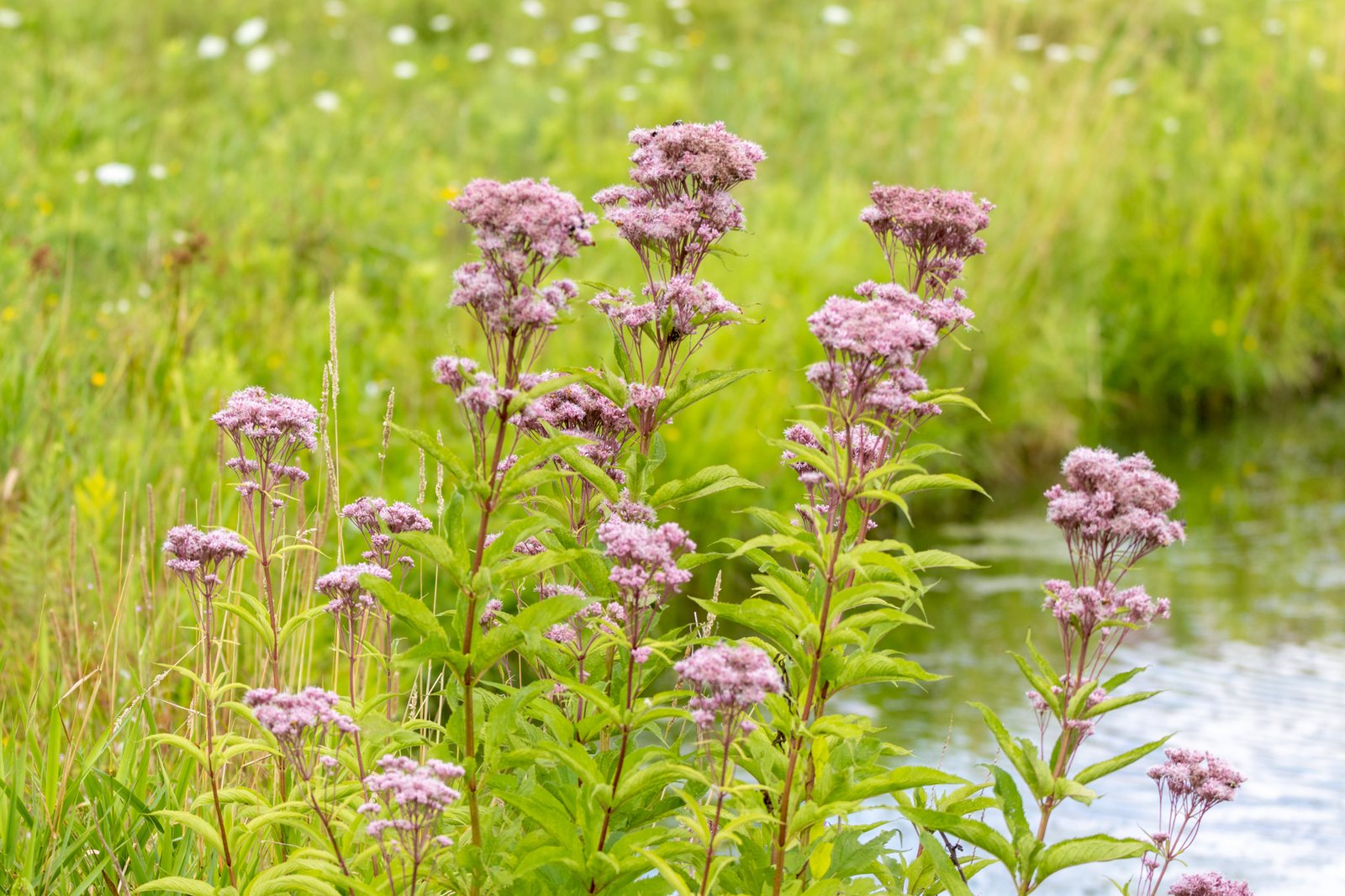
Spotted Joe-Pye weed is a tall, clump-forming perennial native to moist meadows, marsh edges and stream banks in North America. Gardeners grow it for its broad heads of dusty pink flowers, strong upright stems and late-season nectar for butterflies and other insects. It needs space and reliably moist soil rather than a dry border.
At a glance
- Sun
- Full sun to partial shade; flowers best and stands most firmly with at least six hours of direct sun.
- Water
- Keep consistently moist, especially during establishment and hot weather. Established plants tolerate wet soil and occasional flooding but perform poorly in prolonged drought.
- Soil
- Moisture-retentive, fertile soil rich in organic matter; tolerates clay and a broad range of soil pH.
- Height
- 4-7 ft (1.2-2.1 m)
- Spread
- 3-4 ft (0.9-1.2 m)
- Flowers
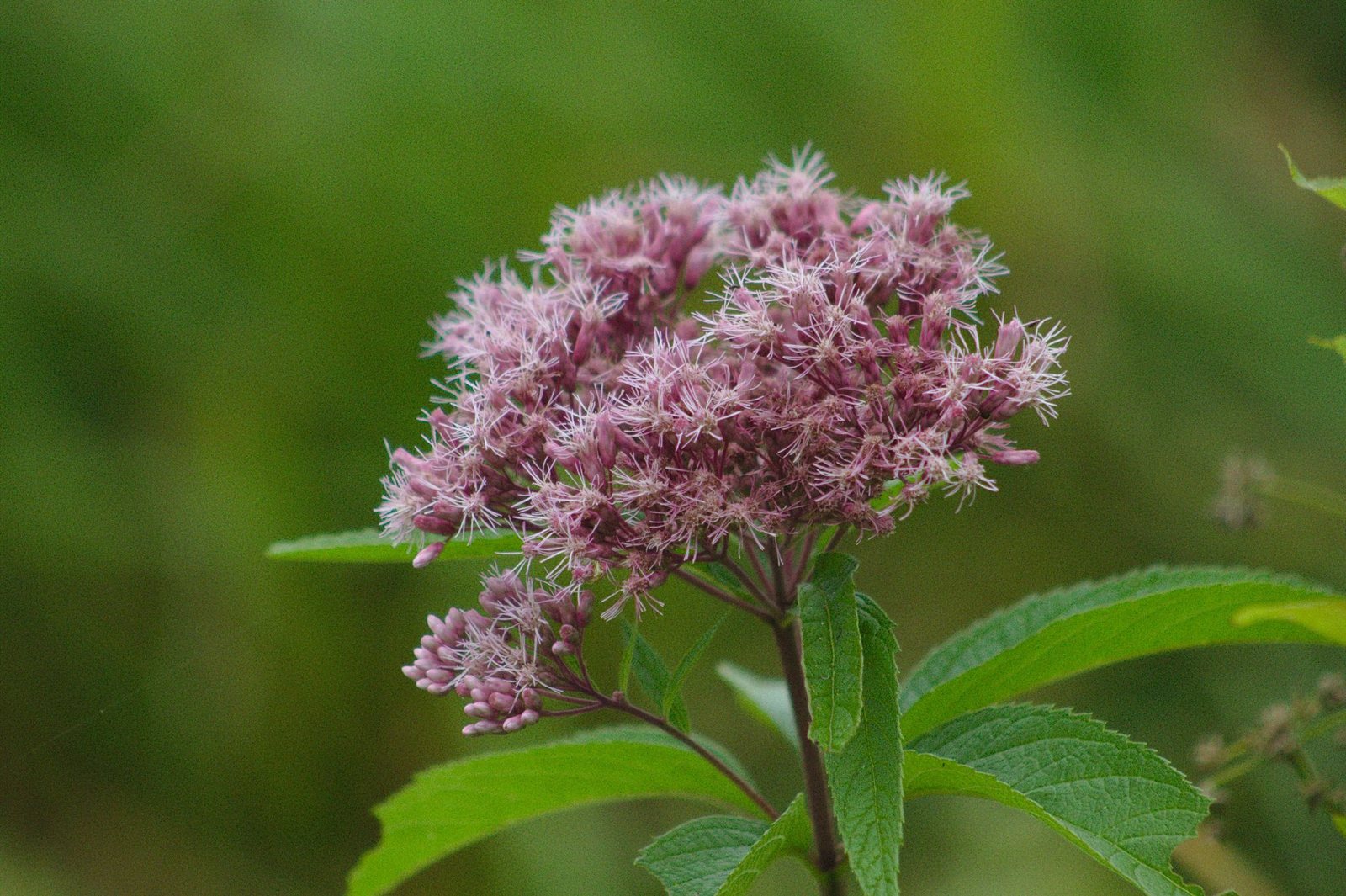
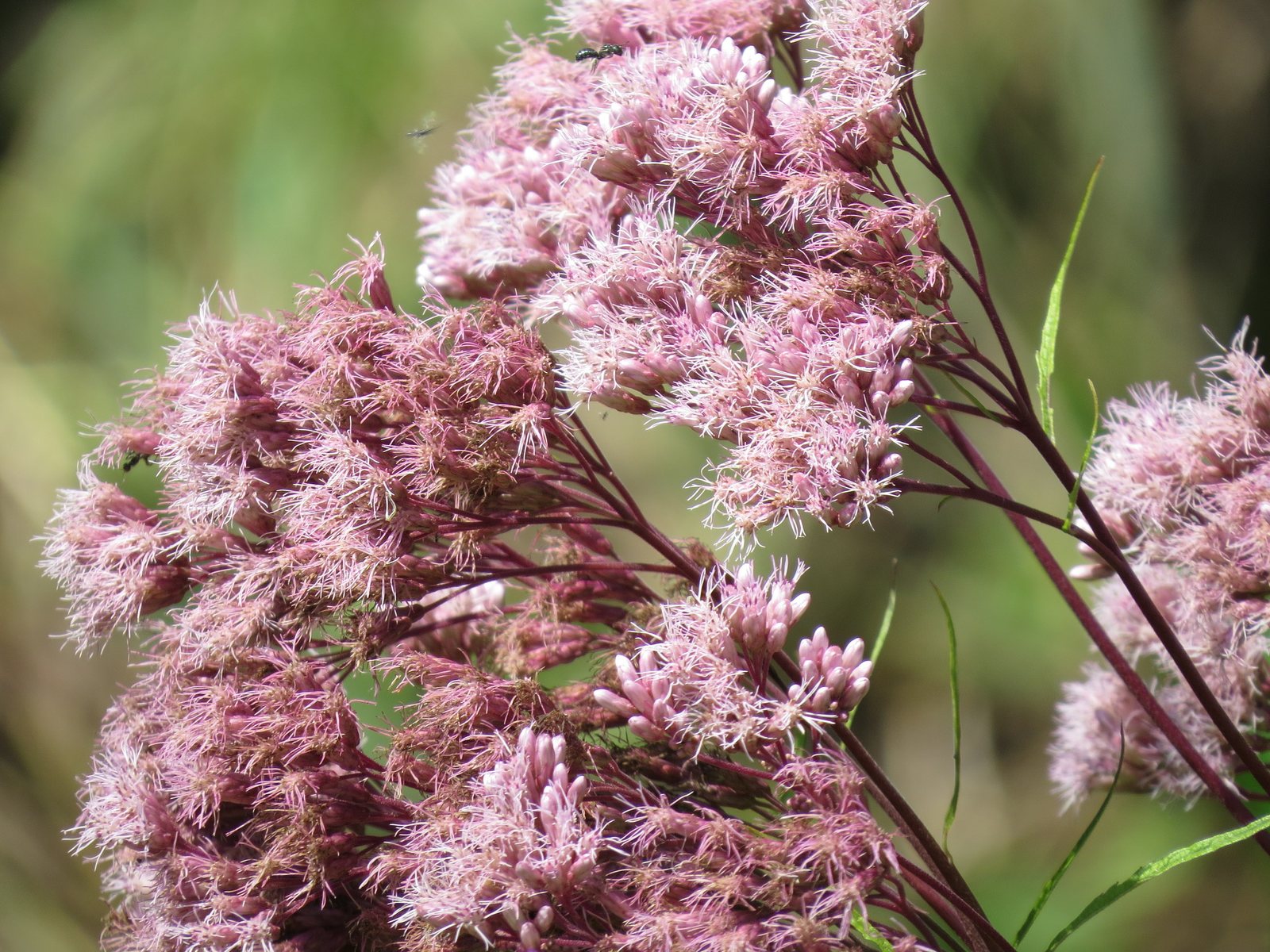
- Mid-summer to early autumn; broad, often flat-topped clusters of dusty pink to mauve flowers.
- Foliage
- Coarsely toothed, lance-shaped green leaves arranged in whorls, usually four or five around the stem. Stems are purple-spotted or sometimes almost entirely purple; foliage dies back in winter.
- Growth
- Moderate to fast; forms a substantial clump over several growing seasons.
- Care needed
- Low
The year at a glance
- Pollinators
- Deer resistant
- Cold hardy
- Wildlife
- Low allergen
| J | F | M | A | M | J | J | A | S | O | N | D | |
|---|---|---|---|---|---|---|---|---|---|---|---|---|
| Flowers | ||||||||||||
| Fruit | ||||||||||||
| Plant |
Northern hemisphere months. In Australia, shift them by six.
- Difficulty
- Easy
- Toughness
- Fairly tough
Will it suit your garden?
Pick your zone, country, light and whether you have pets.
Full sun is 6 or more hours of direct sun a day, part shade 3 to 6 hours, shade under 3.
How it grows
Planting day
1 ft (0.3 m)
After 1 year
2.8 ft (0.86 m)
After 2 years
5 ft (1.4 m)
After 3 years
5 ft (1.7 m)
full size
About 2 years to full size.
From a typical nursery size, at an average rate for this kind of plant. A rule of thumb, not a forecast.
Good to know
- Cats and dogs
- Safe
- Native to
- the US and Canada
- Growth rate
- Fast
Care
Jobs through the year
- WaterApr–May, Sep–Oct, every 7 days
- Water established clumps deeply when rainfall fails to keep soil moist; young plants need closer attention.
- WaterJun–Aug, every 4 days
- Check soil moisture and water deeply as needed before wilting; skip watering if soil remains moist.
- FeedMar–Apr
- Top-dress with compost rather than high-nitrogen fertilizer.
- MulchMar–Apr
- Apply 5-8 cm of organic mulch, keeping the crown clear.
- PruneFeb–Mar
- Cut overwintered stems to 10-15 cm before new shoots emerge.
- DivideMar–Apr
- Divide only when the clump is crowded or has outgrown its space.
- ProtectApr–May
- Support exposed or shaded clumps early if stems are likely to lean.
- DeadheadAug–Sep
- Remove fading heads only to prevent seedlings; otherwise retain them for wildlife and winter structure.
- Water deeply when rainfall is insufficient to keep the root zone moist; do not let newly planted clumps dry out.
- Apply a 2-3 in (5-8 cm) layer of organic mulch in spring, keeping it clear of the crown.
- Top-dress with compost in spring; avoid heavy nitrogen feeding, which can encourage floppy growth.
- Support exposed clumps early in the growing season if wind or partial shade makes stems lean.
- Divide in spring if the clump becomes crowded or outgrows its space; routine annual division is unnecessary.
Pruning. Leave stems and seedheads standing through winter, then cut them to 4-6 in (10-15 cm) above the ground in late winter or early spring before new growth develops. Remove spent flowerheads sooner if you want to limit self-seeding.
Through the year
- Late winter
- Cut down last year's stems before new shoots emerge.
- Spring
- Plant or divide clumps, water thoroughly, and apply compost and mulch.
- Late spring
- Install discreet supports where wind or shade is likely to cause leaning.
- Summer
- Check soil moisture during hot spells and water deeply before plants wilt.
- Late summer
- Enjoy the flowers and visiting insects; remove fading heads only where seedlings would be unwanted.
- Autumn
- Leave sturdy stems and seedheads for winter structure and wildlife.
In the garden
- Plant at the back of a large border with asters and tall grasses for late-season height and colour.
- Use in groups beside ponds or in rain gardens where the soil stays moist.
- Combine with ironweed and swamp milkweed in a North American native meadow planting.
- Repeat generous clumps through a naturalistic border to provide upright structure and broad flowerheads.
Garden styles it suits: Native meadow, New perennial (prairie), Wildlife garden, Pollinator garden, Bog garden and Cottage garden.
Plant it with: New England aster, Swamp milkweed, New York ironweed, Switchgrass, Turtlehead and Cardinal flower.
Wildlife: Flowers provide nectar for butterflies, bees and other pollinating insects. Standing stems offer overwintering habitat for insects, and seedheads may attract small seed-eating birds.
Problems to watch for
- Wilting and scorched leaf edges in dry soil: water deeply and mulch; move the plant if the site is consistently too dry.
- Flopping stems in shade or overly rich soil: provide more sun, reduce nitrogen feeding and support stems early.
- Powdery mildew in crowded plantings: improve spacing and airflow, maintain even soil moisture and remove affected fallen foliage.
- Unwanted seedlings in moist bare ground: remove spent flowerheads before seed disperses and pull seedlings while small.
Safety
Not generally known to be toxic to people, cats, dogs or horses, but species-specific information on ingestion is limited. No particular poisonous part is established; do not treat the leaves, stems, flowers or roots as food or home medicine, and seek veterinary or medical advice after substantial ingestion.
Easily confused with
Sweet Joe-Pye weed (Eutrochium purpureum)
Usually has mostly green stems with purple concentrated at the leaf joints, rather than extensive purple spotting, and more domed flower clusters. Its crushed leaves may smell of vanilla.
Hollow Joe-Pye weed (Eutrochium fistulosum)
Often grows taller, with hollow stems, usually more leaves per whorl and more strongly domed flower clusters. Spotted Joe-Pye weed generally has flatter flowerheads and solid stems.
Common boneset (Eupatorium perfoliatum)
Has white flowers and opposite pairs of leaves joined around the stem, rather than pinkish flowers and whorls of separate leaves.
The name
The species name maculatum means spotted, referring to the purple markings on the stems.
Propagation. Divide established clumps in early spring as shoots emerge. Sow fresh seed outdoors in autumn, or give stored seed a cold, moist period before spring sowing; seedlings may vary, so divide named cultivars to preserve their characteristics.
Checked against open data
- Accepted botanical name
- Eutrochium maculatum
- In the US and Canada
- Native in Canada, the lower 48 states and St. Pierre and Miquelon.
- Native range
- Alberta, Arizona, British Columbia, Colorado, Connecticut, Idaho, Illinois, Indiana, Iowa, Kansas, Maine and Manitoba.
- Measured
- Soil pH 5.5 to 7. Average height 83 cm.
Sources: GBIF (CC BY 4.0), USDA PLANTS and Trefle (CC BY 4.0). The care and design notes are LandscapeGPT's own.
See it in your own yard.
Upload a photo of your yard and see it redesigned with plants that suit your climate, each checked against your zone.