Staghorn sumac
Rhus typhina. Family Anacardiaceae. Tree.
Also called Velvet sumac, Stag's horn sumach.
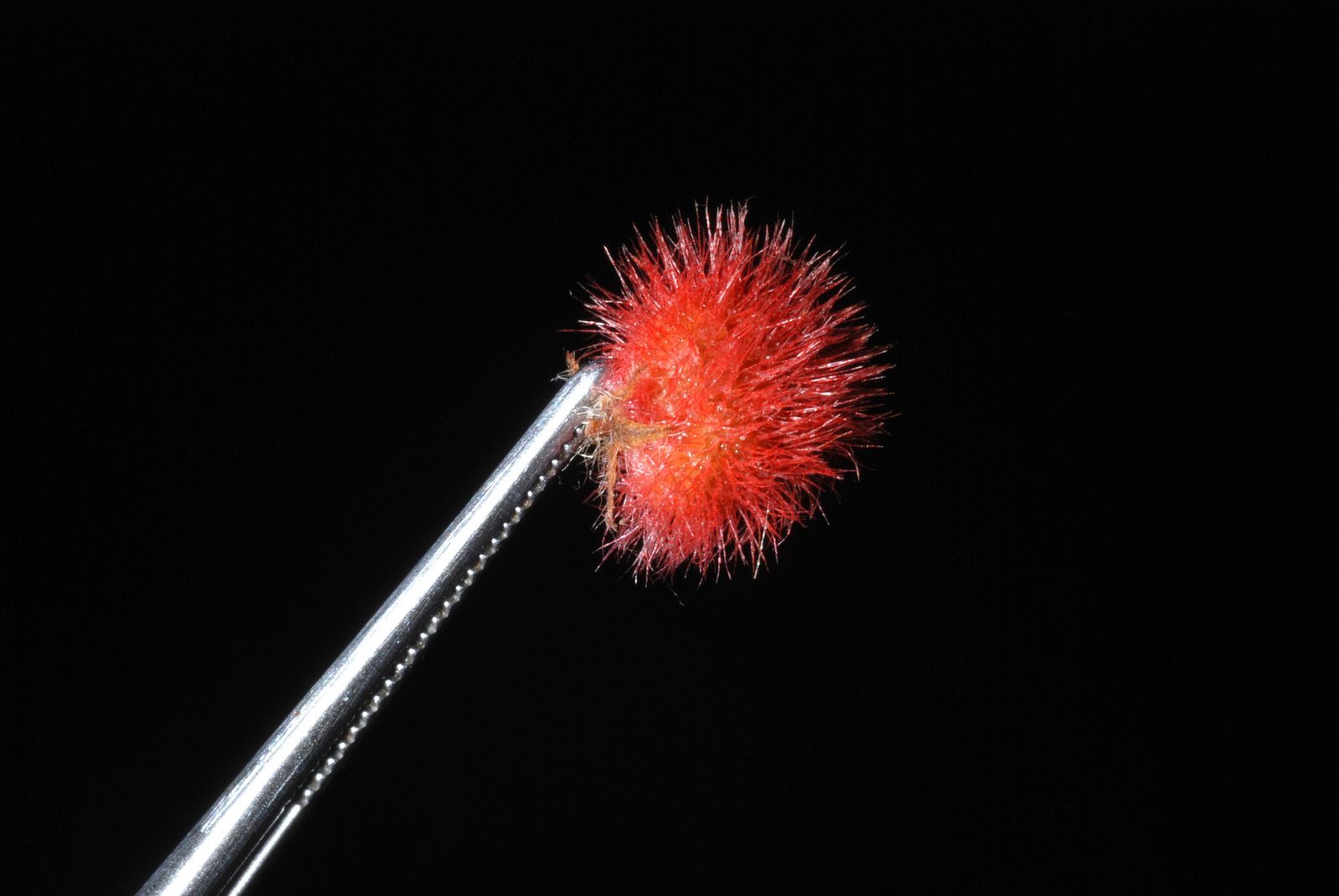
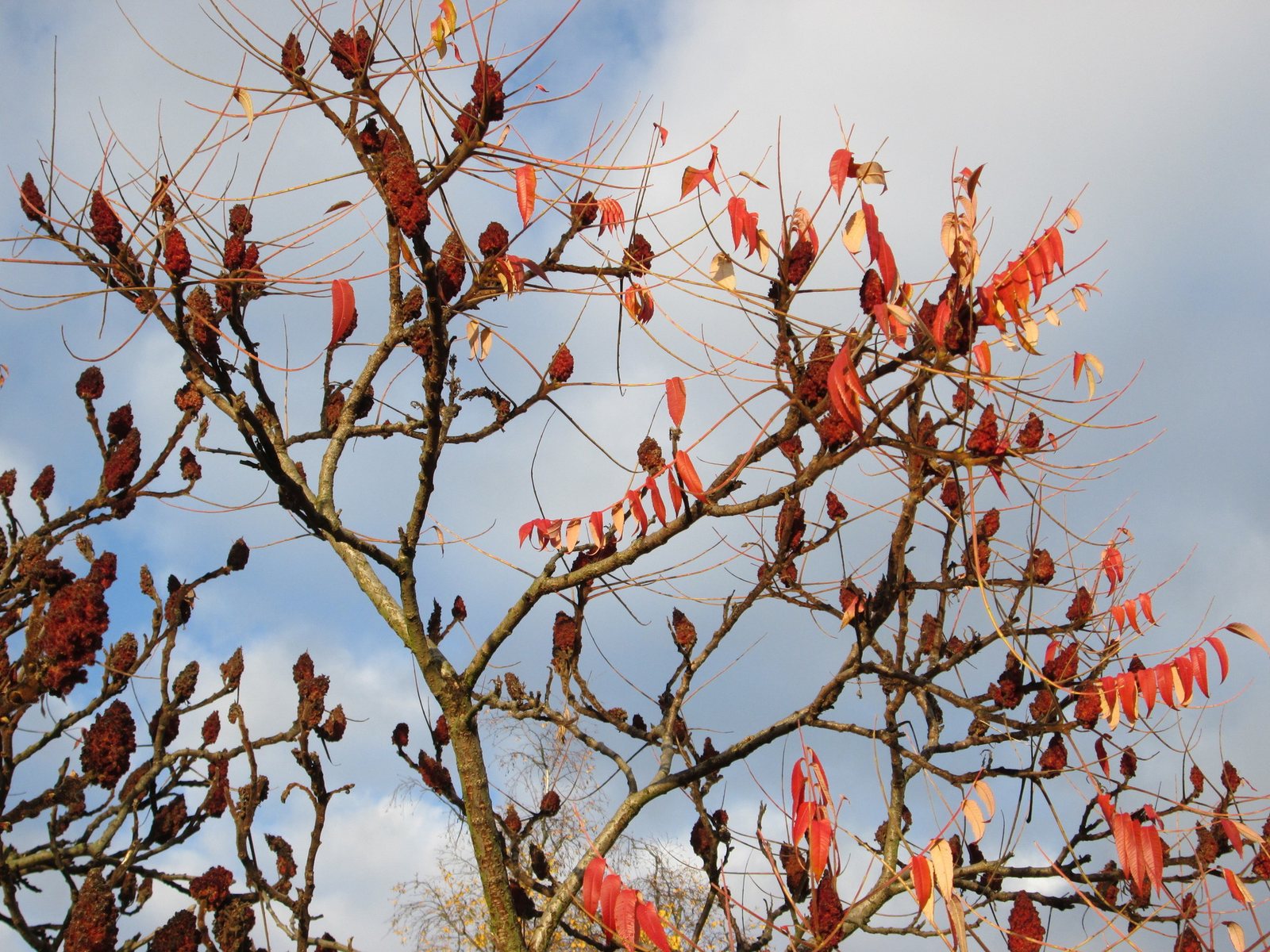
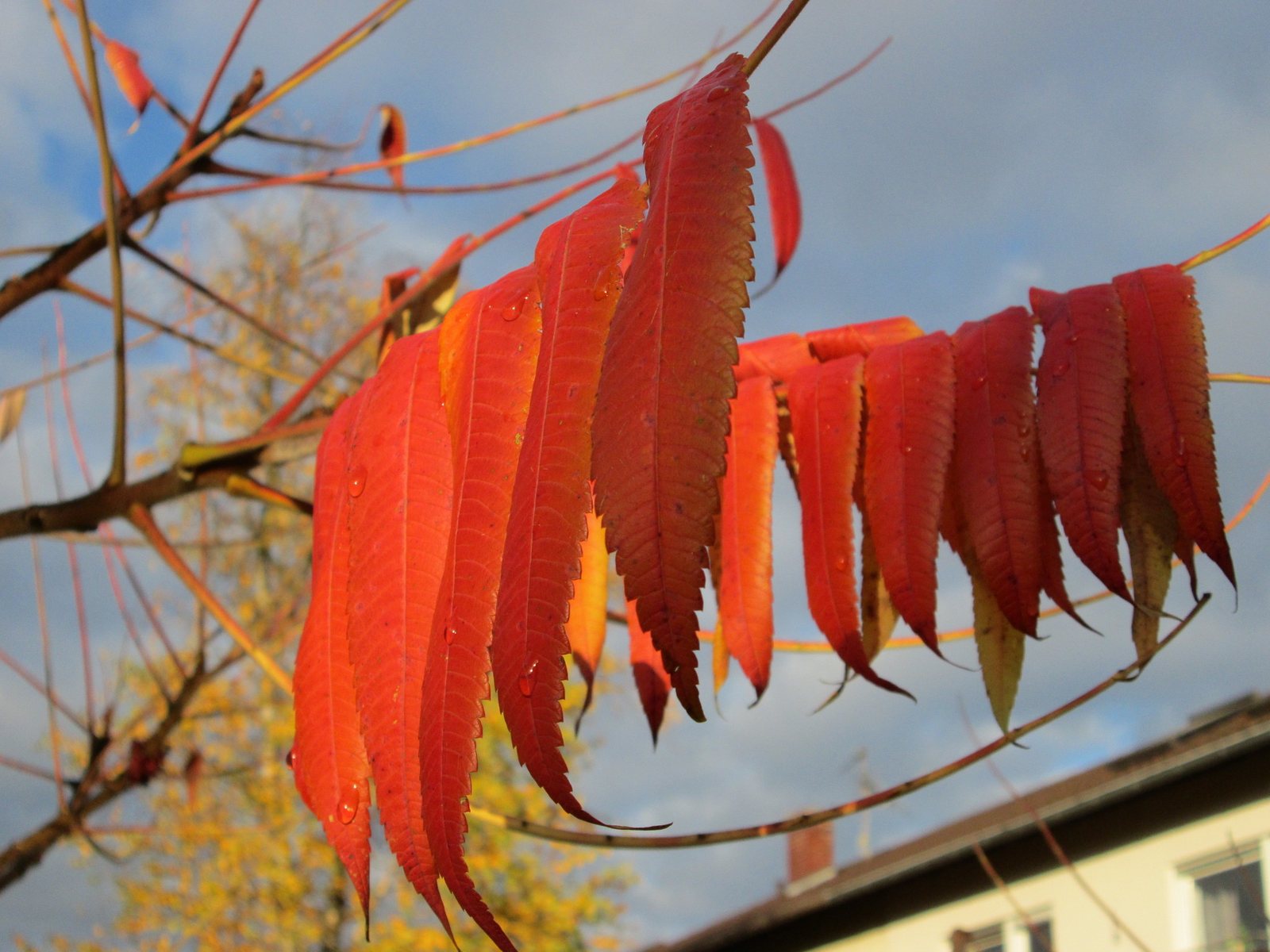
A deciduous, often multi-stemmed small tree native to eastern North America, grown for its fern-like leaves, brilliant autumn colour and velvety young branches. Female plants carry upright clusters of red fruit that persist into winter when pollinated by a nearby male. It spreads strongly by root suckers, so give it room away from lawns, paving and mixed borders.
At a glance
- Sun
- Full sun gives the strongest autumn colour; tolerates partial shade.
- Water
- Water regularly while establishing; drought-tolerant once established. Avoid persistently wet ground.
- Soil
- Most well-drained soils, including poor, sandy, gravelly and chalky ground; tolerates acidic to alkaline conditions.
- Height
- 15-25 ft (4.6-7.6 m)
- Spread
- 15-30 ft (4.6-9.1 m), with suckering colonies spreading farther
- Flowers
- Early summer; small yellow-green flowers in upright, branching clusters.
- Foliage
- Large, pinnate green leaves with numerous sharply toothed leaflets; turns yellow, orange and scarlet in autumn. Young branches are densely covered with soft hairs.
- Growth
- Fast
- Care needed
- Medium
The year at a glance
- Pollinators
- Deer resistant
- Drought tolerant
- Cold hardy
- Wildlife
| J | F | M | A | M | J | J | A | S | O | N | D | |
|---|---|---|---|---|---|---|---|---|---|---|---|---|
| Flowers | ||||||||||||
| Fruit | ||||||||||||
| Plant |
Northern hemisphere months. In Australia, shift them by six.
- Difficulty
- Moderate
- Toughness
- Very tough
Will it suit your garden?
Pick your zone, country, light and whether you have pets.
Full sun is 6 or more hours of direct sun a day, part shade 3 to 6 hours, shade under 3.
How it grows
Planting day
7 ft (2 m)
After 1 year
8 ft (2.3 m)
After 2 years
9 ft (2.6 m)
After 3 years
10 ft (2.9 m)
After 5 years
12 ft (3.6 m)
About 13 years to full size.
From a typical nursery size, at an average rate for this kind of plant. A rule of thumb, not a forecast.
Good to know
- Cats and dogs
- Safe
- Native to
- the US and Canada
- In the garden
- Spreads vigorously: plan to contain it.
- Growth rate
- Fast
Care
Jobs through the year
- WaterApr–May, Sep, every 21 days
- Established plants need water only in prolonged drought; water young plants more often.
- WaterJun–Aug, every 14 days
- Deep-water established plants only during prolonged drought; young plants need more regular water.
- PruneFeb–Mar
- Remove damaged or crossing branches and thin crowded stems at their base.
- PruneApr–Oct, every 30 days
- Remove unwanted suckers with their connecting root section where practical.
- MulchApr
- Apply a light organic mulch without digging around roots or covering trunks.
- Water deeply during dry spells for the first two growing seasons.
- Do not routinely feed; rich soil and nitrogen fertiliser encourage excessive growth.
- Apply a light organic mulch, keeping it clear of the trunks.
- Remove unwanted suckers promptly, tracing them back and removing the connecting root section where practical.
- Avoid digging or cultivating around established roots, which can encourage more suckers.
Pruning. In late winter, remove dead, damaged or crossing branches and thin unwanted stems at their base. Hard cutting produces vigorous leafy shoots but sacrifices the tree-like shape and reduces flowering and fruiting.
Through the year
- Late winter
- Prune damaged branches and thin crowded stems while the framework is visible.
- Spring
- Plant into well-drained ground and water thoroughly; allow space for a spreading colony.
- Late spring
- Check for suckers outside the intended planting area and remove them.
- Summer
- Water young plants during prolonged dry weather; established plants usually need little extra water.
- Autumn
- Check the colony's spread and remove unwanted young plants before they become woody.
- Winter
- Leave fruit clusters for birds and enjoy the exposed branching structure.
In the garden
- Use as an autumn-colour specimen in a large lawn or open garden where suckers can be managed.
- Allow a colony to develop on a sunny bank for soil cover and a bold, layered silhouette.
- Combine with switchgrass and asters in a broad naturalistic planting, leaving room for expansion.
- Place against a dark evergreen backdrop to highlight autumn foliage, red fruit and winter branches.
Garden styles it suits: Architectural minimal, Autumn colour, Winter interest, Wildlife garden, Rewilded and New perennial (prairie).
Plant it with: Switchgrass, Little bluestem, New England aster, Black-eyed Susan, Purple coneflower and Common juniper.
Wildlife: Flowers provide pollen and nectar for insects. Persistent fruit feeds birds, especially when other food is scarce, and thickets offer shelter and nesting cover. It supports native insects within its North American range.
Problems to watch for
- Unwanted suckers: remove promptly and avoid root disturbance; choose another tree where spreading growth cannot be accommodated.
- Verticillium wilt: sudden wilting or branch dieback can occur; remove affected wood, avoid drought stress and replace severely affected plants with a less susceptible species.
- Powdery mildew: improve airflow and avoid excessive feeding; light late-season infection rarely needs treatment.
- Root rot in wet soil: improve drainage before planting and avoid low, waterlogged sites.
Safety
Not known to be toxic to cats, dogs or horses, or generally poisonous to people. The red fruit has traditional food uses, but sap and plant contact can irritate the skin or eyes of susceptible people; wear gloves when pruning. Do not confuse it with poison sumac, and do not eat unidentified fruit.
Where it spreads. Spreads aggressively by root suckers, including within its native eastern North American range. It escapes cultivation in the UK and parts of continental Europe and is listed as invasive in Switzerland. In Australia and elsewhere outside its native range, keep it contained and check local restrictions before planting.
Easily confused with
Smooth sumac (Rhus glabra)
Has similar toothed leaflets and red fruit clusters, but its young twigs are smooth rather than densely velvety.
Tree of heaven (Ailanthus altissima)
Leaflets are mostly smooth-edged, with gland-bearing teeth near their bases; crushed foliage smells unpleasant. Seeds hang in winged clusters rather than upright, fuzzy red heads.
Poison sumac (Toxicodendron vernix)
Typically grows in swamps and wet ground, with smooth-edged leaflets and loose, drooping clusters of pale fruit rather than dense upright red clusters. Contact can cause severe dermatitis.
The name
The common name refers to the young branches, whose dense covering of soft hairs resembles the velvet on a stag's growing antlers.
Propagation. Lift rooted suckers during dormancy, taking a useful section of root, or take root cuttings in late winter. Vegetative propagation preserves the parent's sex; seed-grown plants vary and the seed needs pretreatment to germinate reliably.
Checked against open data
- Accepted botanical name
- Rhus typhina
- In the US and Canada
- Native in Canada and the lower 48 states.
- Native range
- Alabama, Connecticut, Delaware, District of Columbia, Georgia, Illinois, Indiana, Iowa, Kentucky, Maine, Maryland and Masachusettes.
- Measured
- Average height 159 cm.
Sources: GBIF (CC BY 4.0), USDA PLANTS and Trefle (CC BY 4.0). The care and design notes are LandscapeGPT's own.
See it in your own yard.
Upload a photo of your yard and see it redesigned with plants that suit your climate, each checked against your zone.