Star cluster
Pentas lanceolata. Family Rubiaceae. Perennial.
Also called Egyptian star cluster, Egyptian star flower, Pentas.
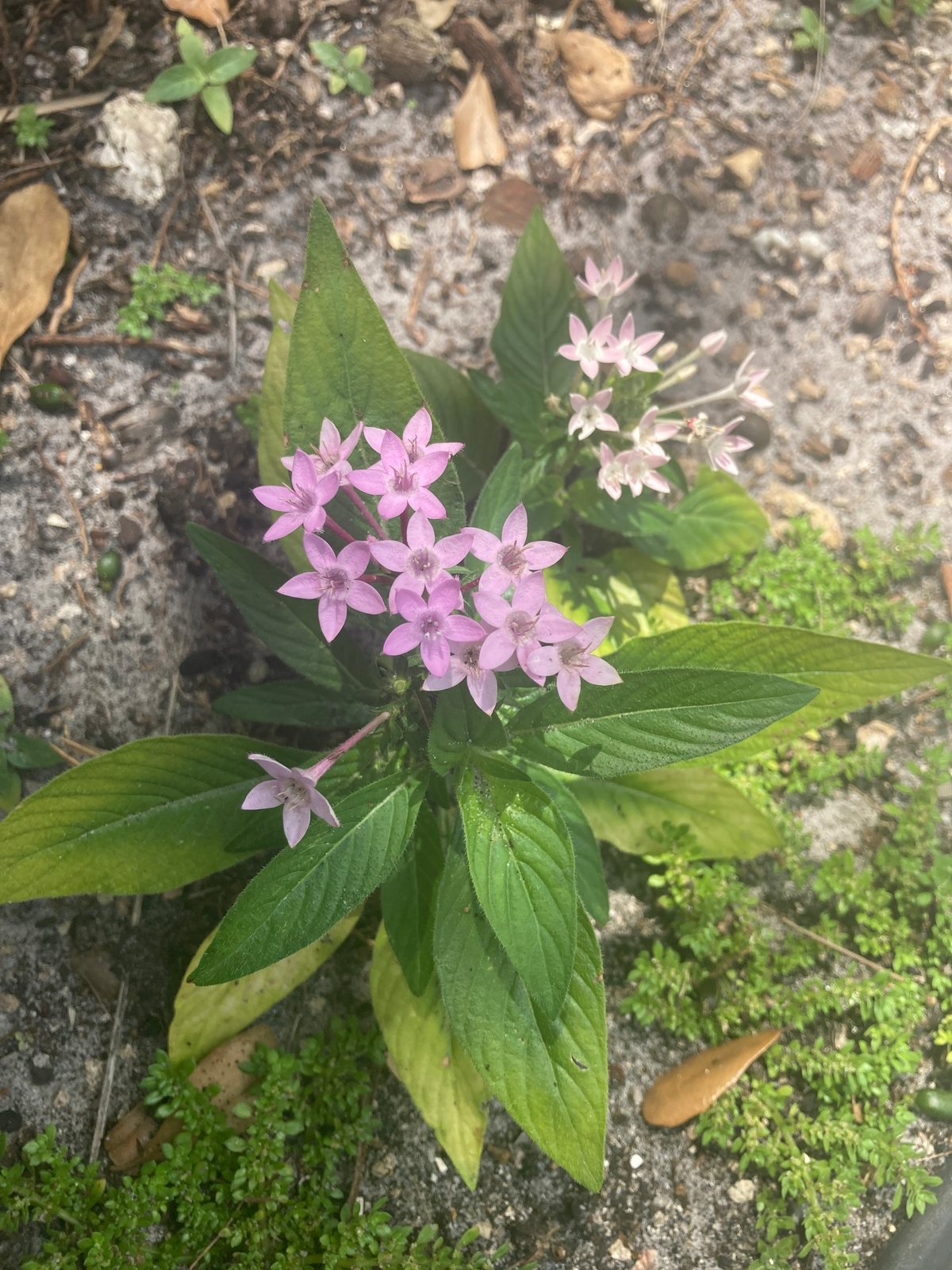
Star cluster is a frost-tender, evergreen perennial with clusters of small, star-shaped flowers that attract butterflies. It flowers for months in warm weather and is grown as an annual in colder climates, including most of the United States, Canada and the United Kingdom.
At a glance
- Sun
- Full sun for the most flowers; light afternoon shade is useful in very hot climates.
- Water
- Water regularly while establishing, then when the soil surface begins to dry. Keep container plants evenly moist but never waterlogged.
- Soil
- Fertile, well-drained soil; tolerates a range of soil types but struggles in cold, wet ground.
- Height
- 2-4 ft (0.6-1.2 m); compact cultivars are shorter
- Spread
- 1-3 ft (0.3-0.9 m)
- Flowers
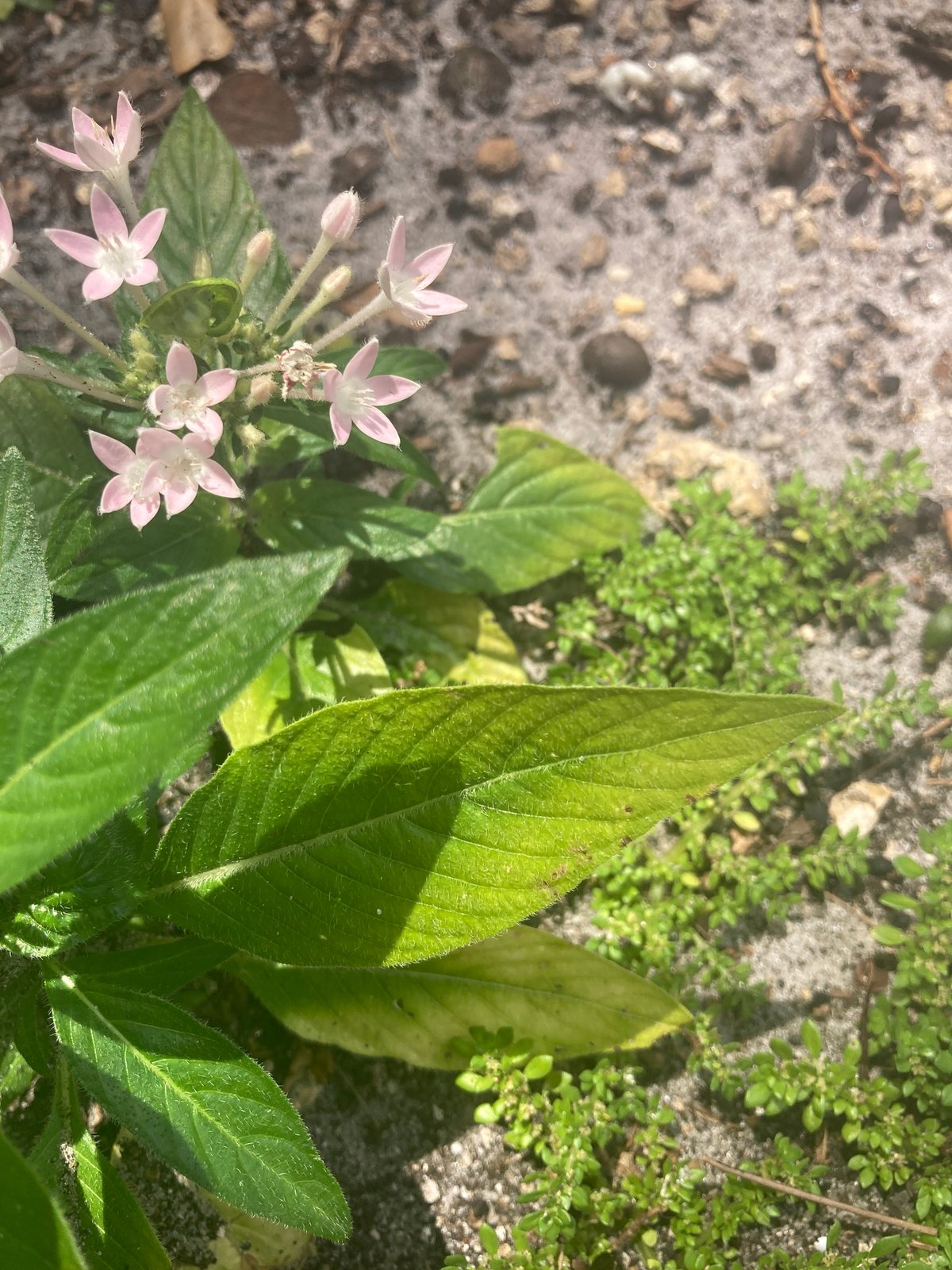
- Late spring to autumn, or almost year-round in frost-free warmth; red, pink, white, lilac or purple.
- Foliage
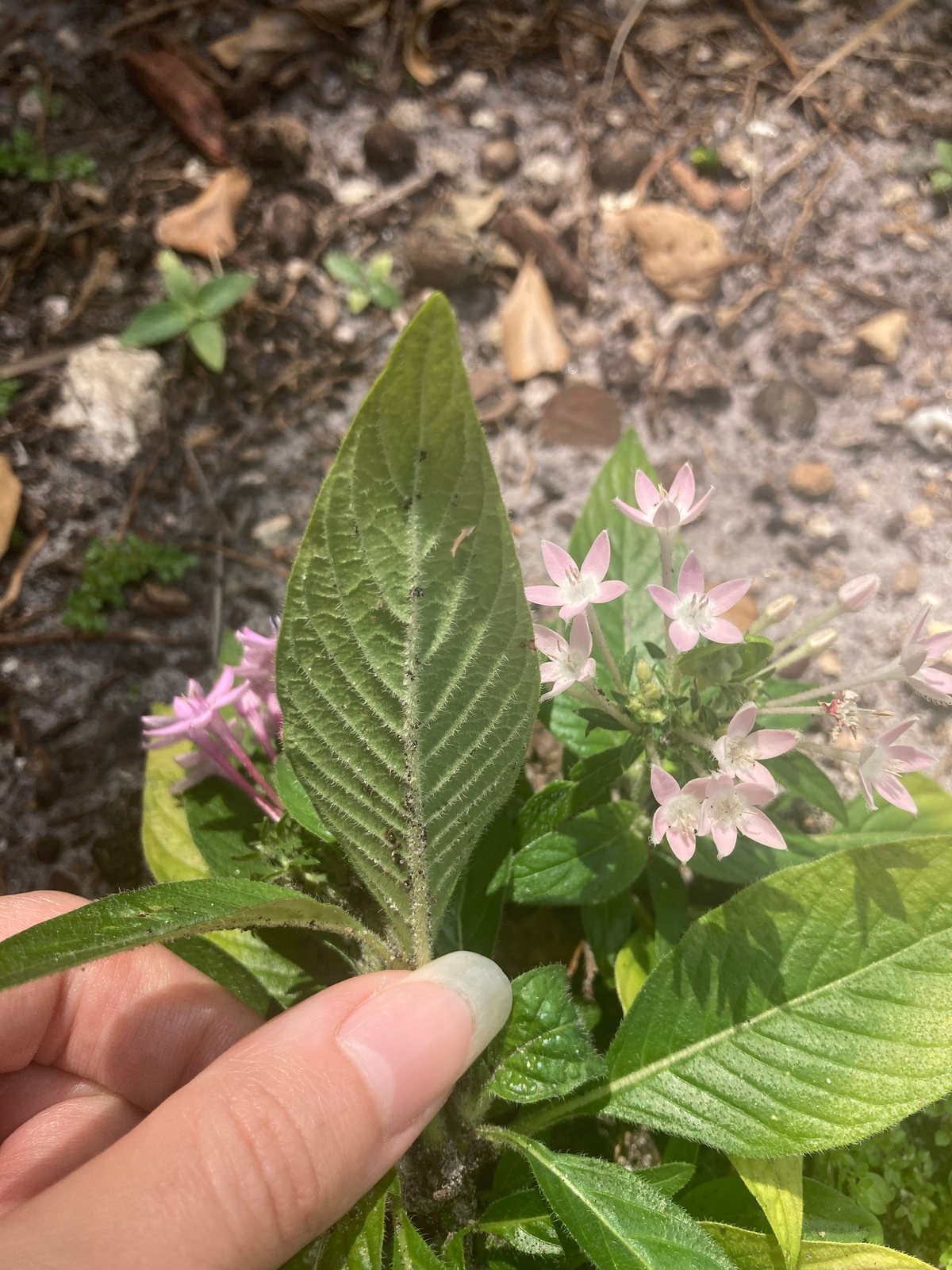
- Evergreen. Opposite, pointed, dark green leaves with noticeable veins and a softly hairy surface.
- Growth
- Fast in warm weather
- Care needed
- Low
The year at a glance
- Pollinators
- Heat tolerant
- Wildlife
- Low allergen
| J | F | M | A | M | J | J | A | S | O | N | D | |
|---|---|---|---|---|---|---|---|---|---|---|---|---|
| Flowers | ||||||||||||
| Plant |
Northern hemisphere months. In Australia, shift them by six.
- Difficulty
- Easy
- Toughness
- Fairly tough
Will it suit your garden?
Pick your zone, country, light and whether you have pets.
Full sun is 6 or more hours of direct sun a day, part shade 3 to 6 hours, shade under 3.
How it grows
Planting day
1 ft (0.3 m)
After 1 year
2 ft (0.61 m)
After 2 years
3 ft (0.9 m)
full size
About 2 years to full size.
From a typical nursery size, at an average rate for this kind of plant. A rule of thumb, not a forecast.
Good to know
- Cats and dogs
- Safe
- Invasive in
- Australia
- Growth rate
- Fast
Care
Jobs through the year
- WaterMay–Jun, Sep, every 7 days
- Water established in-ground plants as the surface dries; new plants and pots need more frequent checks.
- WaterJul–Aug, every 4 days
- Water at soil level when the surface dries, adjusting for rain; check pots daily in heat.
- WaterJan–Apr, Oct–Dec, every 14 days
- For plants overwintered indoors, water sparingly when partly dry without drying the root ball completely.
- FeedMay–Jun
- Apply balanced slow-release fertiliser once at planting, following the label.
- MulchJun
- Apply a light mulch after planting, keeping it away from stems.
- PruneApr–May
- Pinch young shoots to encourage branching; shorten leggy overwintered stems as growth resumes.
- DeadheadJun–Oct, every 7 days
- Remove faded flower clusters for a tidy display.
- ProtectMay–Jun
- Plant out only after frost risk passes and nights are consistently warm.
- ProtectJan–Apr, Sep–Dec
- If keeping plants for another year, move indoors before nights fall below 10°C and keep bright and frost-free.
- Plant outdoors after frost risk has passed and nights are consistently warm.
- Water at soil level when the surface begins to dry; empty saucers beneath pots.
- Apply a balanced slow-release fertiliser at planting, following the label rate.
- Mulch lightly to conserve moisture, keeping mulch away from the stems.
- Move plants you want to keep into a bright, frost-free place before autumn temperatures fall below 10°C.
Pruning. Pinch young shoots in spring to encourage branching, and remove faded flower clusters for a tidier display. In frost-free gardens, shorten leggy stems in early spring once strong growth resumes.
Through the year
- Late winter
- Sow seed indoors in warmth if raising your own plants; surface-sow because the seed needs light.
- Spring
- Pinch young plants and gradually acclimatise indoor-grown plants to outdoor conditions.
- Late spring
- Plant out after frost risk has passed, once nights are reliably warm.
- Summer
- Check pots frequently for water, remove faded flower clusters and inspect shoot tips for pests.
- Early autumn
- Take softwood cuttings or bring selected plants indoors before cold nights arrive.
- Winter
- Keep overwintered plants bright and frost-free; reduce watering without letting the root ball dry completely.
In the garden
- Plant groups through sunny summer borders for repeated blocks of flower colour.
- Use compact cultivars in patio pots with trailing bacopa or sweet potato vine.
- Combine with salvias and zinnias in a warm-season butterfly border.
- In frost-free gardens, use taller forms as a low flowering backdrop to bedding plants.
Garden styles it suits: Tropical, Modern tropical, Pollinator garden, Cottage garden, Modern courtyard and Florida subtropical.
Plant it with: Salvia, Zinnia, Angelonia, Bacopa, Sweet potato vine and Coleus.
Wildlife: Nectar-rich flowers attract butterflies and other pollinating insects; hummingbirds also visit where they occur.
Problems to watch for
- Aphids on soft shoots: wash off with water; use insecticidal soap if needed, avoiding open flowers and visiting insects.
- Whiteflies beneath leaves, especially indoors: inspect regularly and treat leaf undersides with insecticidal soap according to the label.
- Spider mites in hot, dry conditions: look for stippled leaves and fine webbing; rinse foliage and prevent drought stress.
- Root rot in wet soil: improve drainage, avoid standing water and discard badly rotted plants.
Safety
Not known to be toxic to cats, dogs, horses or people. No part is generally recognised as poisonous, but it is not an edible plant.
Where it spreads. Has escaped cultivation in Queensland, Australia, where it can become a local environmental weed. Avoid planting near bushland and remove unwanted seedlings.
Easily confused with
Ixora (Ixora coccinea)
Ixora has glossy, leathery leaves and flowers usually with four lobes; star cluster has softer, hairy leaves and five-pointed flowers.
Annual phlox (Phlox drummondii)
Annual phlox has flatter, broader flower faces and generally narrower leaves; star cluster has dense, rounded flower heads and strongly veined leaves.
The name
Pentas comes from the Greek for five, referring to the five flower lobes, while lanceolata describes the lance-shaped leaves.
Propagation. Sow seed on the surface of moist seed compost in warmth and light, or take softwood cuttings in spring or summer. Cuttings preserve a named cultivar's characteristics; seedlings may differ.
Checked against open data
- Accepted botanical name
- Pentas lanceolata
- In the US and Canada
- Introduced in Hawaii, the lower 48 states, Pacific Basin and Puerto Rico.
- Native range
- Bangladesh, Burundi, Comoros, Djibouti, Eritrea, Ethiopia, Kenya, Malawi, Mozambique, Rwanda, Saudi Arabia and Sudan.
Sources: GBIF (CC BY 4.0), USDA PLANTS and Trefle (CC BY 4.0). The care and design notes are LandscapeGPT's own.
See it in your own yard.
Upload a photo of your yard and see it redesigned with plants that suit your climate, each checked against your zone.