Stinking iris
Iris foetidissima. Family Iridaceae. Perennial.
Also called Gladwin iris, Roast-beef plant, Scarlet-seeded iris.
Stinking iris is a clump-forming evergreen perennial grown mainly for its upright leaves and autumn seedpods, which split open to reveal orange-red seeds. Its small, muted flowers are less noticeable, but it is useful in dry shade where many flowering plants struggle.
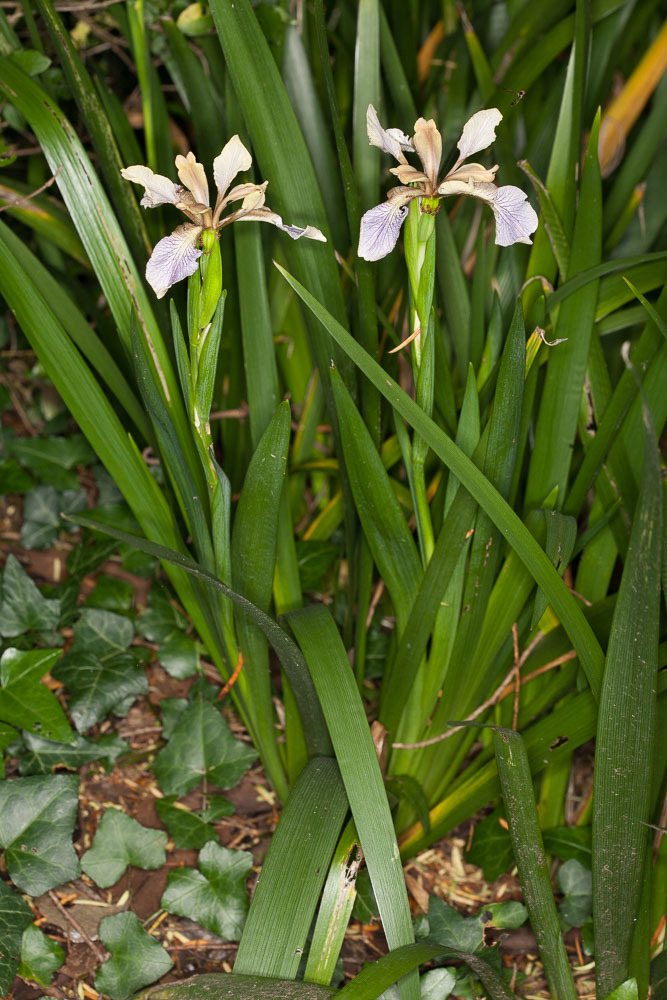
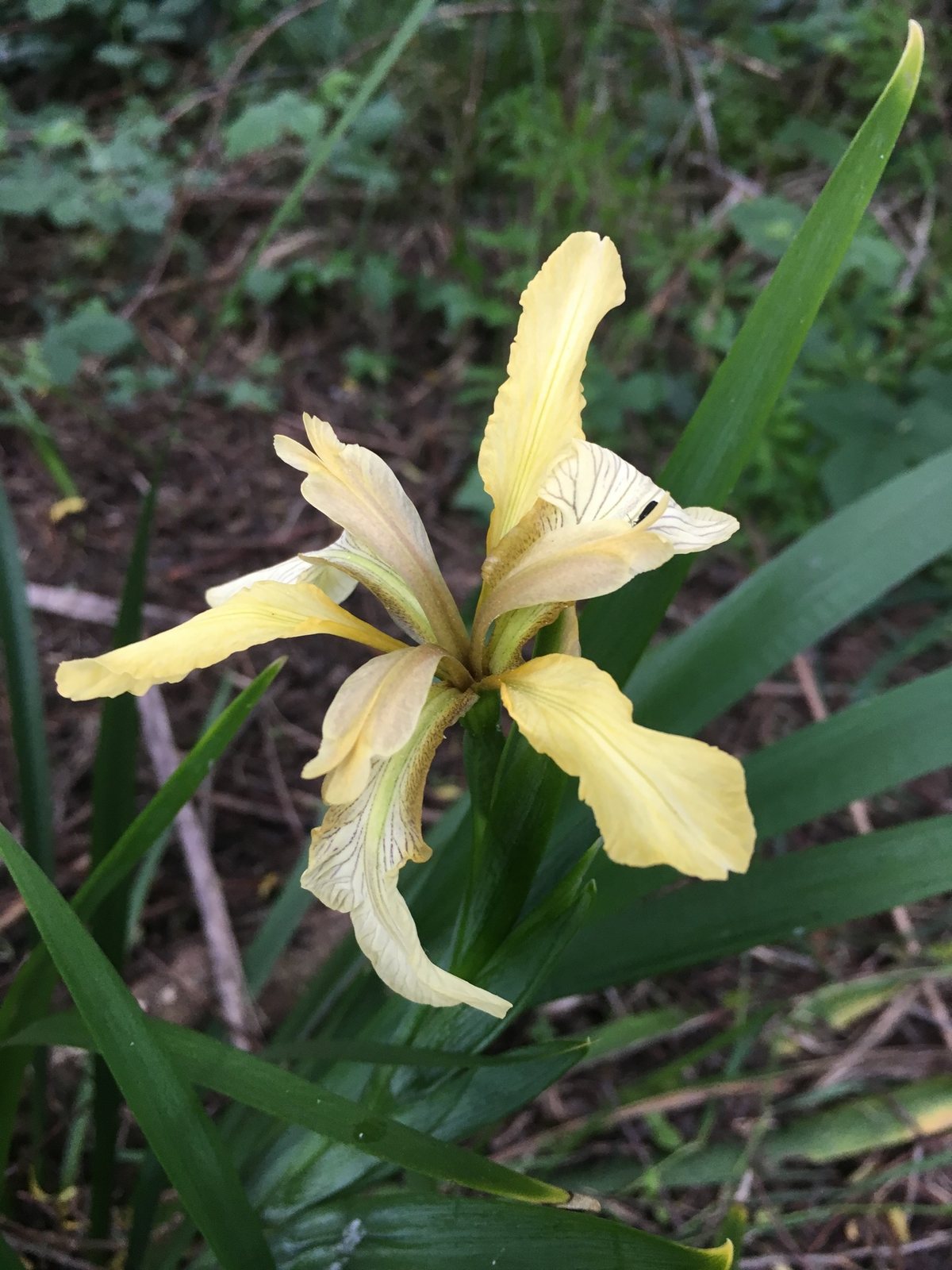
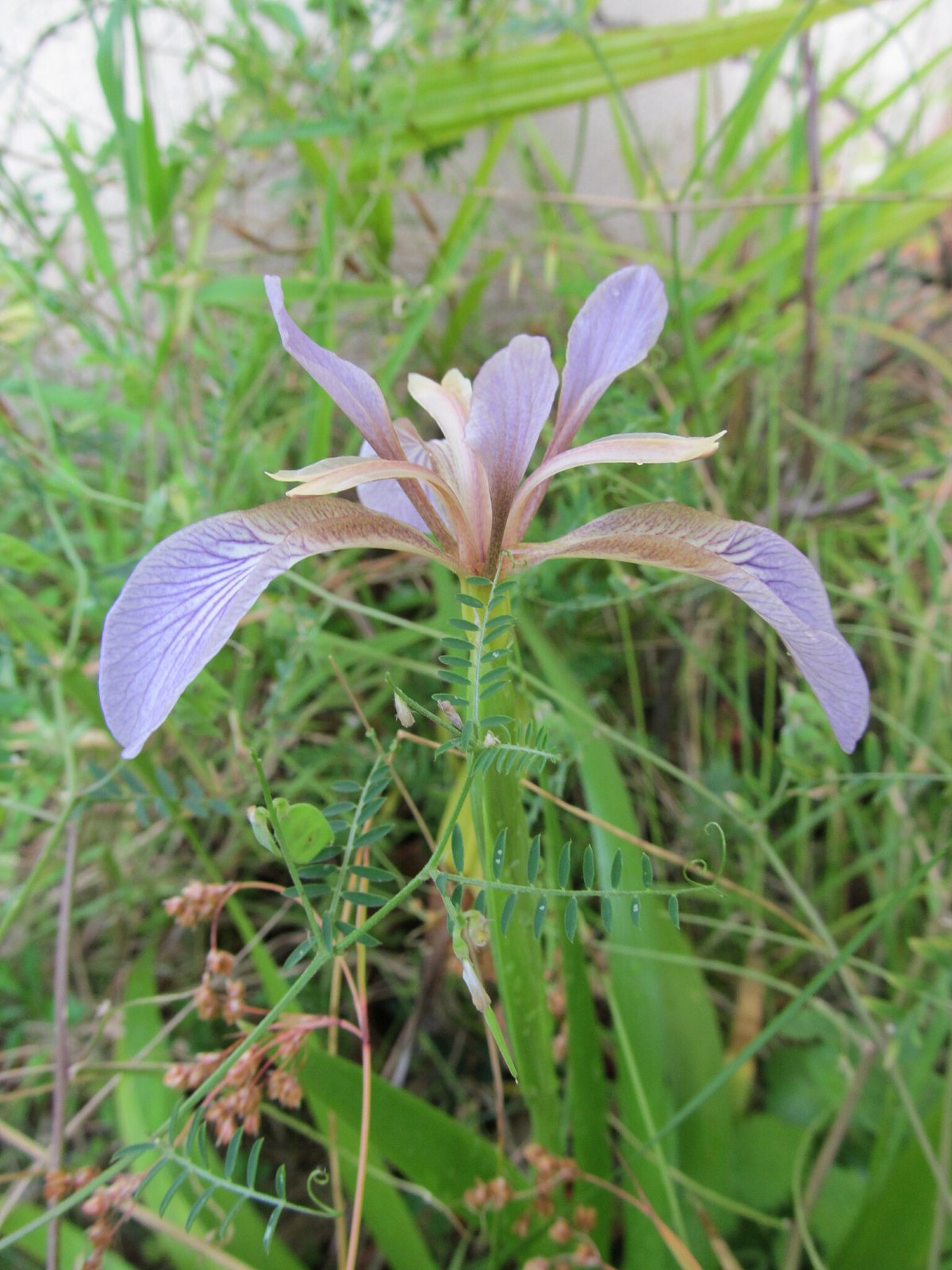
At a glance
- Sun
- Partial shade or full shade; tolerates sun where the soil does not become excessively dry.
- Water
- Water regularly while establishing. Established clumps tolerate dry shade, but benefit from occasional deep watering during prolonged drought.
- Soil
- Well-drained soil, including clay, loam and chalk; tolerates a broad pH range. Avoid persistently waterlogged ground.
- Height
- 1.5-3 ft (0.45-0.9 m)
- Spread
- 1-2 ft (0.3-0.6 m)
- Flowers
- Late spring to early summer; small, dull lilac-grey flowers, often with yellow-brown markings.
- Foliage
- Evergreen. Upright, leathery, dark green, sword-shaped leaves with an unpleasant smell when crushed. Leaves may become damaged or die back in severe winters.
- Growth
- Slow to moderate; gradually forms clumps and may self-seed.
- Care needed
- Low
The year at a glance
- Pollinators
- Deer resistant
- Drought tolerant
- Heat tolerant
- Wildlife
- Low allergen
| J | F | M | A | M | J | J | A | S | O | N | D | |
|---|---|---|---|---|---|---|---|---|---|---|---|---|
| Flowers | ||||||||||||
| Fruit | ||||||||||||
| Plant |
Northern hemisphere months. In Australia, shift them by six.
- Difficulty
- Easy
- Toughness
- Very tough
Will it suit your garden?
Pick your zone, country, light and whether you have pets.
Full sun is 6 or more hours of direct sun a day, part shade 3 to 6 hours, shade under 3.
How it grows
Planting day
1 ft (0.3 m)
After 1 year
1.3 ft (0.4 m)
After 2 years
1.6 ft (0.49 m)
After 3 years
1.9 ft (0.59 m)
After 5 years
2.2 ft (0.68 m)
full size
About 4 years to full size.
From a typical nursery size, at an average rate for this kind of plant. A rule of thumb, not a forecast.
Good to know
- Cats and dogs
- Toxic
- Native to
- the UK
- Invasive in
- Australia
- In the garden
- Spreads vigorously: plan to contain it.
- Growth rate
- Slow
Care
Jobs through the year
- WaterApr–May, Sep–Oct, every 21 days
- Water established clumps only in prolonged drought; water new plants regularly in their first season.
- WaterJun–Aug, every 14 days
- Deeply water established clumps only during prolonged drought, allowing the surface to dry.
- MulchMar–Apr
- Apply a light dressing of compost or leaf mould, keeping the crown clear.
- PruneFeb–Mar
- Remove dead or damaged leaves at the base; leave healthy evergreen foliage intact.
- DivideMar–Apr
- Divide only overcrowded clumps and replant promptly at their original depth.
- PruneAug–Sep
- Remove unopened seedpods if self-seeding is unwanted; otherwise retain them for autumn display.
- Water newly planted clumps through their first growing season, allowing the surface soil to dry between waterings.
- Apply a light mulch of leaf mould or compost in spring, keeping it away from the crown.
- Avoid heavy feeding; a modest annual compost dressing is usually sufficient.
- Divide overcrowded clumps in spring and replant promptly at their original depth.
- Remove seedpods before they open if seedlings or spread into nearby natural areas would be a problem.
Pruning. Cut damaged or dead leaves back to the base in late winter or early spring; do not shear healthy foliage. Leave flower stems for autumn seed display, or cut them down before the pods open to limit self-seeding.
Through the year
- Early spring
- Remove winter-damaged leaves and check that the crown is not sitting in wet soil.
- Spring
- Plant or divide clumps, water well and add a light mulch.
- Late spring
- Leave fading flower stems in place if you want ornamental seedpods.
- Summer
- Water new plants during dry spells; established clumps usually need little attention.
- Autumn
- Enjoy the opening seedpods, or remove them before seeds scatter.
- Winter
- Pull out unwanted seedlings and leave healthy evergreen foliage intact.
In the garden
- Plant beneath deciduous trees or tall shrubs for evergreen structure in dry shade.
- Combine with ferns and hellebores along a shaded path, using its upright leaves to contrast with softer foliage.
- Use small groups in woodland borders for orange-red autumn and winter seed displays.
- Plant against a shaded wall or fence where a durable foliage plant is needed.
Garden styles it suits: Woodland, Low-maintenance, Winter interest, Autumn colour, English country and Green on green.
Plant it with: Hellebores, Epimediums, Hart's-tongue fern, Soft shield fern, Hardy cyclamen and Bergenias.
Wildlife: Flowers provide some food for visiting insects, and birds can eat and disperse the seeds. Dense clumps offer shelter for small garden animals, but this is not a major nectar plant.
Problems to watch for
- Slugs and snails can damage young leaves: inspect during damp weather, remove by hand and use targeted controls if necessary.
- Leaf spots can mark older foliage: remove badly affected leaves, improve air circulation and avoid overhead watering.
- Rhizome or crown rot develops in waterlogged soil: improve drainage or move the plant, discarding soft, rotting tissue.
- Unwanted seedlings can spread beyond the clump: remove pods before they open and pull seedlings while small.
Safety
Toxic if eaten by people, cats, dogs and horses. All parts should be treated as harmful, particularly the rhizomes; keep the conspicuous seeds away from children and pets. Ingestion can cause mouth irritation, vomiting, abdominal pain and diarrhoea, and sap may irritate skin. Seek medical or veterinary advice after ingestion.
Where it spreads. Spreads by seed, including seed carried by birds. It is an environmental weed in parts of south-eastern Australia, including Victoria and Tasmania, and is invasive in New Zealand. It also escapes cultivation in coastal California. Check local guidance before planting near woodland or other natural areas.
Easily confused with
Yellow flag iris (Iris pseudacorus)
Usually taller, with bright yellow flowers and a strong preference for wet ground. It lacks the conspicuous orange-red seed display of stinking iris.
Bearded iris (Iris germanica)
Has larger, showier flowers with a fuzzy beard on the lower petals, often grey-green leaves, and thick rhizomes visible at the soil surface.
Siberian iris (Iris sibirica)
Has narrower, grass-like leaves that die back in winter and usually blue-violet flowers. Its seedpods do not display bright orange-red seeds.
The name
The Latin foetidissima means 'very foul-smelling', referring to the unpleasant smell released when the leaves are crushed.
Propagation. Divide established clumps in spring, retaining healthy roots and a fan of leaves on each division. Sow ripe seed in autumn in pots outdoors; germination can be slow and irregular, and seedlings take several years to flower.
Checked against open data
- Accepted botanical name
- Iris foetidissima
- In the US and Canada
- Introduced in Canada and the lower 48 states.
- Native range
- Algeria, Azores, Baleares, Corse, France, Great Britain, Italy, Morocco, Portugal, Sardegna, Sicilia and Spain.
- Measured
- Soil pH 6.5 to 7. Average height 65 cm.
Sources: GBIF (CC BY 4.0), USDA PLANTS and Trefle (CC BY 4.0). The care and design notes are LandscapeGPT's own.
See it in your own yard.
Upload a photo of your yard and see it redesigned with plants that suit your climate, each checked against your zone.