String of buttons
Crassula perforata. Family Crassulaceae. Succulent.
Also called Necklace vine, Stacked crassula.
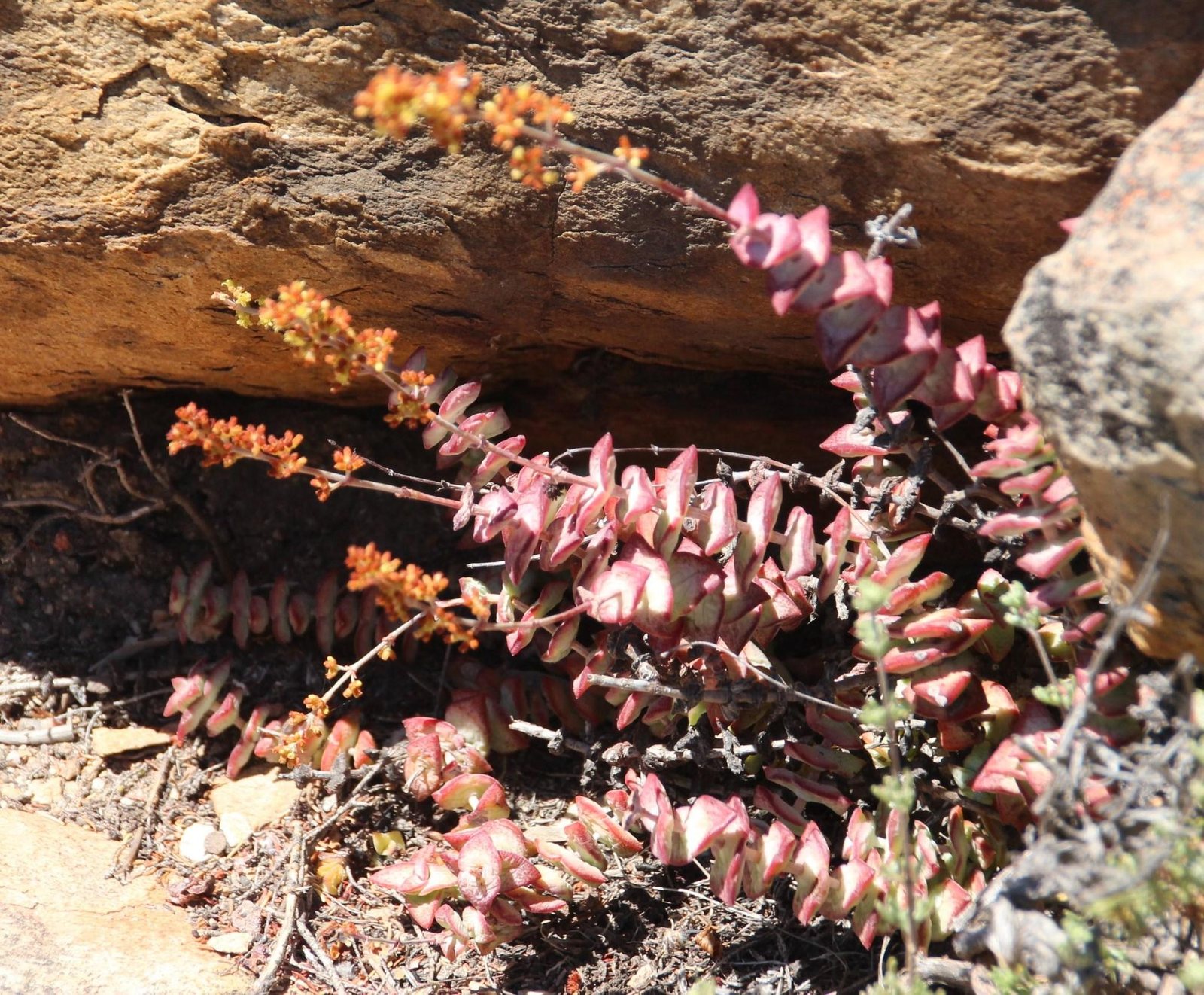
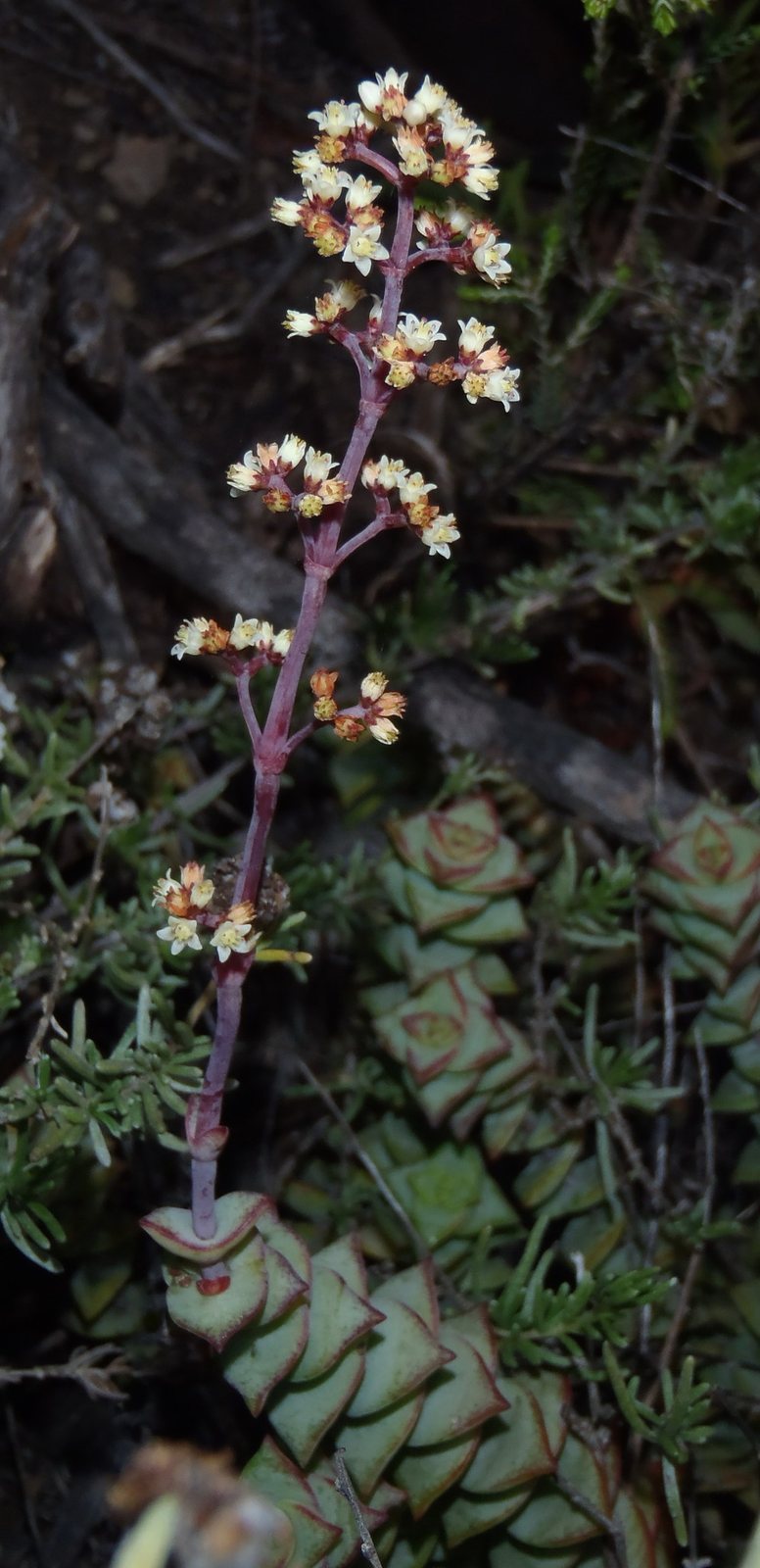
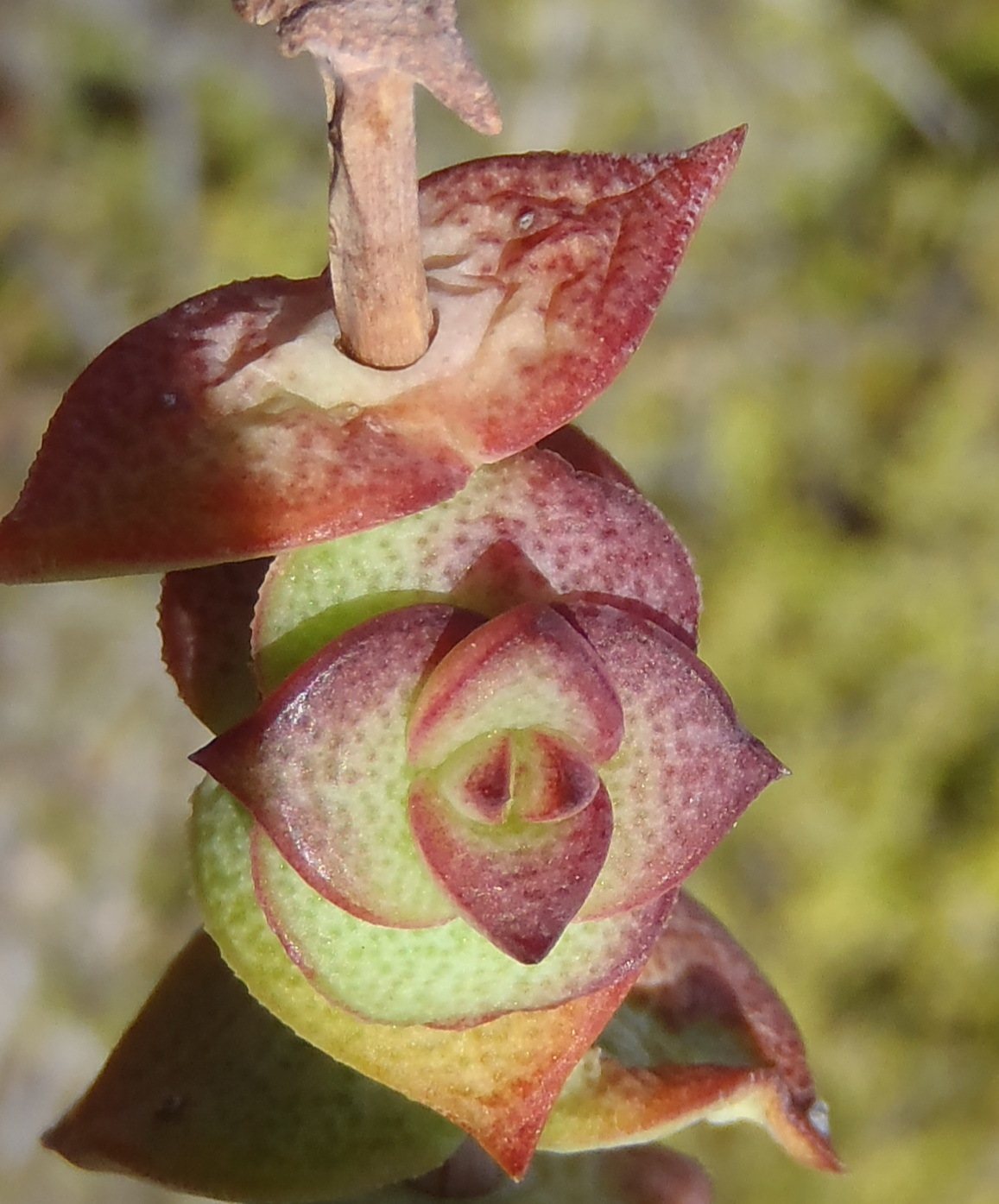
String of buttons is a small, evergreen South African succulent with paired leaves stacked around slender stems. Gardeners grow it for its geometric foliage and trailing habit in pots, hanging containers and frost-free rock gardens; in colder climates, keep it indoors over winter.
At a glance
- Sun
- Bright light to partial sun; morning sun and afternoon shade suit hot climates. Indoors, use a bright window and introduce direct sun gradually.
- Water
- Low water needs. Water thoroughly, then let the potting mix dry out before watering again; water much less in cool winter conditions.
- Soil
- Very free-draining, gritty soil or cactus compost with added pumice, grit or perlite. Avoid heavy soil and containers without drainage holes.
- Height
- 1-2 ft (0.3-0.6 m)
- Spread
- 1-2 ft (0.3-0.6 m)
- Flowers
- Small cream to pale yellow flowers in clusters, usually in spring; flowering is less dependable indoors.
- Foliage
- Evergreen. Fleshy, triangular, grey-green leaves grow in opposite pairs joined around the stem. The pairs alternate direction, creating a stacked effect; leaf margins may turn pink or red in bright light.
- Growth
- Moderate in warm, bright conditions
- Care needed
- Low
The year at a glance
- Pollinators
- Drought tolerant
- Heat tolerant
- Low allergen
| J | F | M | A | M | J | J | A | S | O | N | D | |
|---|---|---|---|---|---|---|---|---|---|---|---|---|
| Flowers | ||||||||||||
| Plant |
Northern hemisphere months. In Australia, shift them by six.
- Difficulty
- Easy
- Toughness
- Fairly tough
Will it suit your garden?
Pick your zone, country, light and whether you have pets.
Full sun is 6 or more hours of direct sun a day, part shade 3 to 6 hours, shade under 3.
How it grows
Planting day
0.8 ft (0.25 m)
After 1 year
0.9 ft (0.28 m)
After 2 years
1 ft (0.32 m)
After 3 years
1.1 ft (0.35 m)
After 5 years
1.4 ft (0.42 m)
About 6 years to full size.
From a typical nursery size, at an average rate for this kind of plant. A rule of thumb, not a forecast.
Good to know
- Cats and dogs
- Toxic
- Growth rate
- Moderate
Care
Jobs through the year
- WaterApr–May, Sep–Oct, every 21 days
- Water only after the mix dries completely; grow in a freely draining movable pot locally.
- WaterJun–Aug, every 14 days
- Soak thoroughly only when dry, then drain fully; check small pots more frequently.
- WaterJan–Mar, Nov–Dec, every 30 days
- In cool, bright frost-free shelter, water sparingly and only when completely dry.
- FeedMay, Jul
- Give a light feed of diluted cactus fertilizer during active growth.
- PruneApr–Jun
- Shorten lanky stems above a leaf pair and remove dead stems or spent flower stalks.
- ProtectJan–Apr, Sep–Dec
- Bring pots into bright, frost-free shelter before cold nights and protect from prolonged rain.
- ProtectMay–Jun
- After frost risk passes, introduce outdoor sun gradually to prevent scorching.
- Use a pot with drainage holes and empty any saucer after watering.
- Let the mix dry out between thorough waterings; do not keep it constantly damp.
- Give bright light, but acclimatise plants gradually to stronger outdoor sun.
- Feed lightly with a diluted cactus fertiliser once or twice during active spring and summer growth.
- Move containers under cover before frost and protect outdoor plants from prolonged winter rain.
Pruning. In spring or early summer, shorten lanky stems just above a leaf pair to encourage branching. Remove dead stems and spent flower stalks with clean scissors.
Through the year
- Spring
- Trim stretched stems and take cuttings from healthy growth.
- Spring
- Repot only if crowded, using a slightly larger pot and fresh, gritty succulent mix.
- Late spring
- Move indoor plants outside after frost risk has passed, gradually increasing their exposure to sunlight.
- Summer
- Water when the mix is dry and inspect leaf joints for mealybugs.
- Autumn
- Bring pots into a bright, frost-free position before cold nights arrive.
- Winter
- Keep in strong light and water sparingly, especially in cool rooms.
In the garden
- Let stems spill over a shallow terracotta pot to show off the stacked leaves.
- Combine with compact aloes, haworthias and echeverias in a well-drained succulent container.
- Use at the edge of raised gravel beds in frost-free gardens, where stems can drape over stone.
- Display in a simple indoor pot near a bright window for a small-scale architectural accent.
Garden styles it suits: Desert modern, Modern Mediterranean, Dry gravel garden, Desert / xeriscape, Small-space and Low-maintenance.
Plant it with: Echeveria, Zebra haworthia, Lace aloe, Elephant bush and Ghost plant.
Wildlife: The small flowers may attract visiting insects outdoors, but this is primarily a foliage plant rather than a substantial wildlife resource.
Problems to watch for
- Root and stem rot: soft, dark stems usually indicate prolonged wetness. Remove rotten growth, take healthy tip cuttings if needed, and improve drainage and watering intervals.
- Mealybugs: inspect leaf joints for white cottony deposits. Isolate affected plants and remove small infestations with a cotton bud lightly moistened with rubbing alcohol, testing a small area first.
- Leggy growth: widely spaced leaves indicate insufficient light. Move to a brighter position gradually and trim stretched stems.
- Sun scorch or frost injury: sudden strong sun causes bleached patches, while freezing can leave soft, translucent tissue. Acclimatise to sun and keep frost-free.
Safety
Often listed as toxic to cats and dogs, although species-specific toxicity information is limited. Keep all parts out of their reach and seek veterinary advice if eaten. Toxicity to horses and people is not well established, so do not regard it as edible; the seriousness of poisoning from this species is uncertain.
Easily confused with
Baby's necklace (Crassula rupestris subsp. marnieriana)
Its leaves are smaller, rounder and more tightly packed, making beadlike stems rather than the more angular, triangular stacks of string of buttons.
Rosary vine (Crassula rupestris)
Usually has thicker, more rounded or oval leaves and a more upright, shrubby habit. It is closely related, and nursery names are sometimes mixed.
The name
Crassula refers to the thick, fleshy leaves, while perforata means pierced, describing the way the stems appear to pass through the joined leaf pairs.
Propagation. Take stem cuttings in spring or summer. Remove the lowest leaves, let the cut end dry and callus for several days, then insert it into a gritty propagation mix. Keep in bright, indirect light and water lightly while roots develop.
Checked against open data
- Accepted botanical name
- Crassula perforata
- Native range
- Cape Provinces and KwaZulu-Natal.
Sources: GBIF (CC BY 4.0) and Trefle (CC BY 4.0). The care and design notes are LandscapeGPT's own.
See it in your own yard.
Upload a photo of your yard and see it redesigned with plants that suit your climate, each checked against your zone.