Sundance Mexican orange
Choisya ternata 'Sundance'. Family Rutaceae. Shrub.
Also called Golden Mexican orange blossom, Choisya ternata 'Lich'.
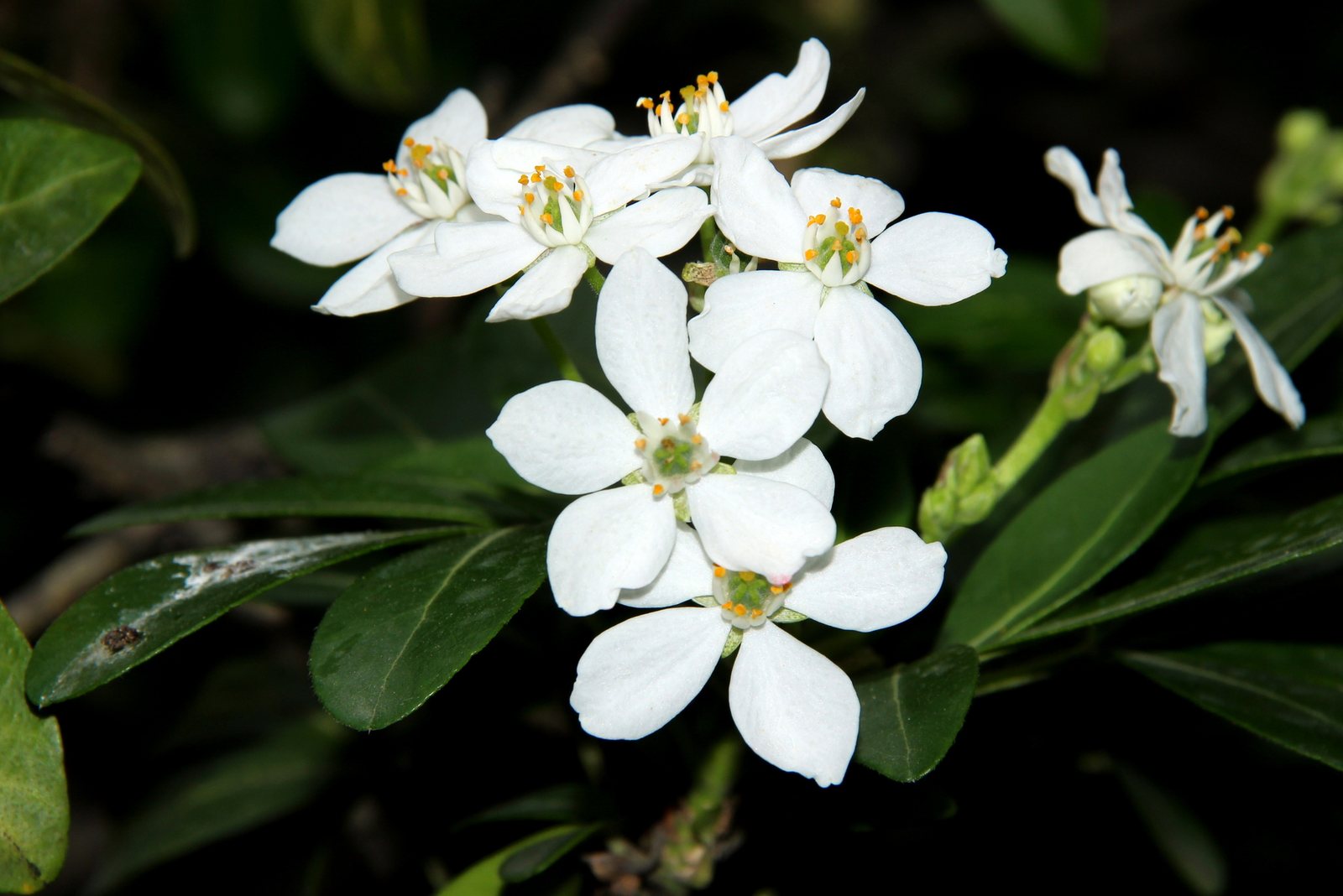
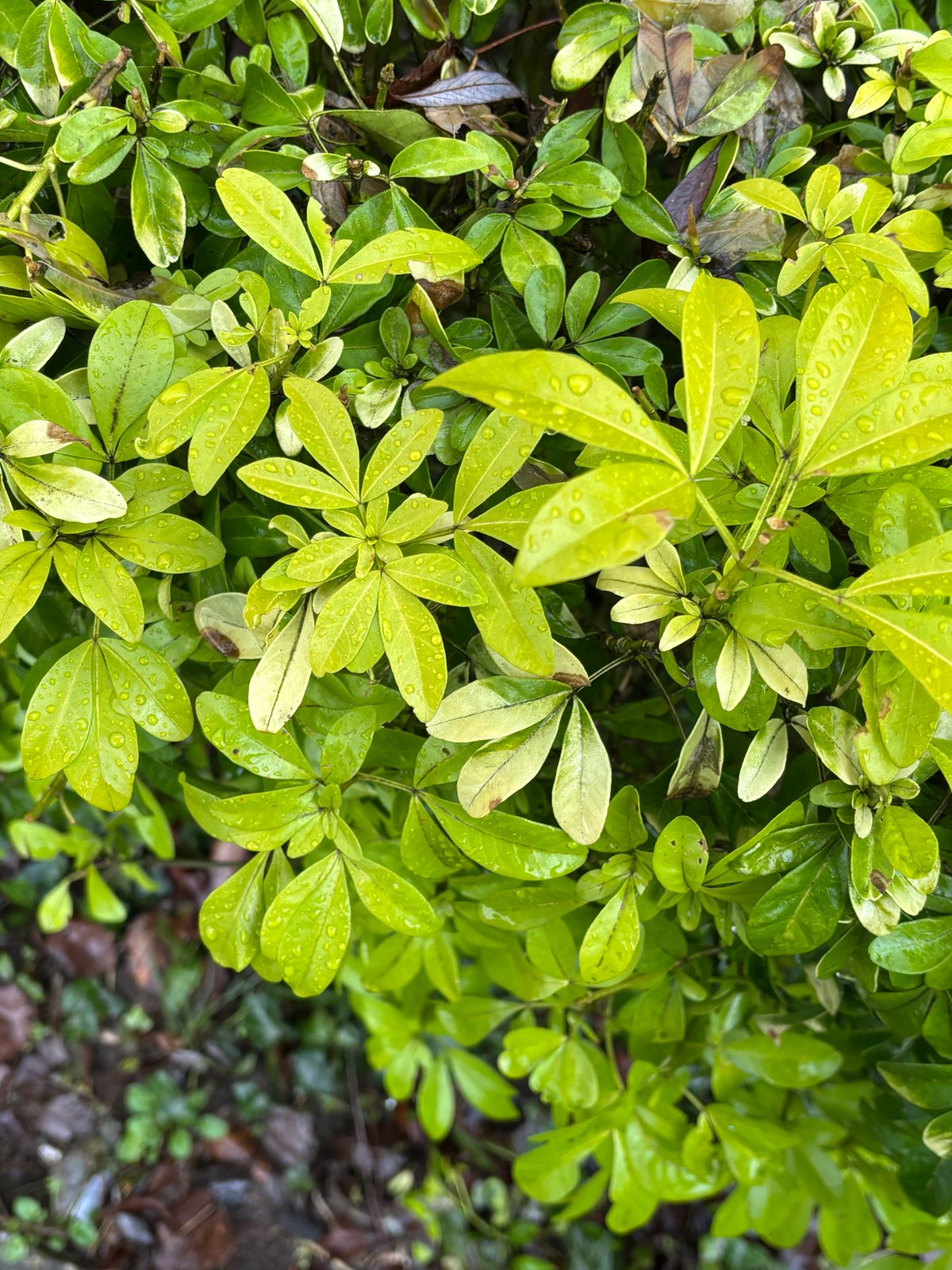
An evergreen shrub grown mainly for its golden-yellow leaves, which bring year-round colour to borders and sheltered gardens. Its scented white flowers attract pollinating insects, although it often flowers less freely than green-leaved Mexican orange.
At a glance
- Sun
- Full sun to partial shade; morning sun and afternoon shade suit hot climates. Deep shade makes the foliage greener, while fierce sun can scorch it.
- Water
- Water regularly during establishment, then during prolonged dry spells. Established plants tolerate some drought, but not persistently wet roots.
- Soil
- Well-drained soil, including sandy, loamy or chalky soils; tolerates a range of soil pH. Avoid waterlogged clay.
- Height
- 5-8 ft (1.5-2.4 m)
- Spread
- 5-8 ft (1.5-2.4 m)
- Flowers
- Clusters of fragrant white flowers in late spring to early summer, sometimes followed by a smaller autumn flush.
- Foliage
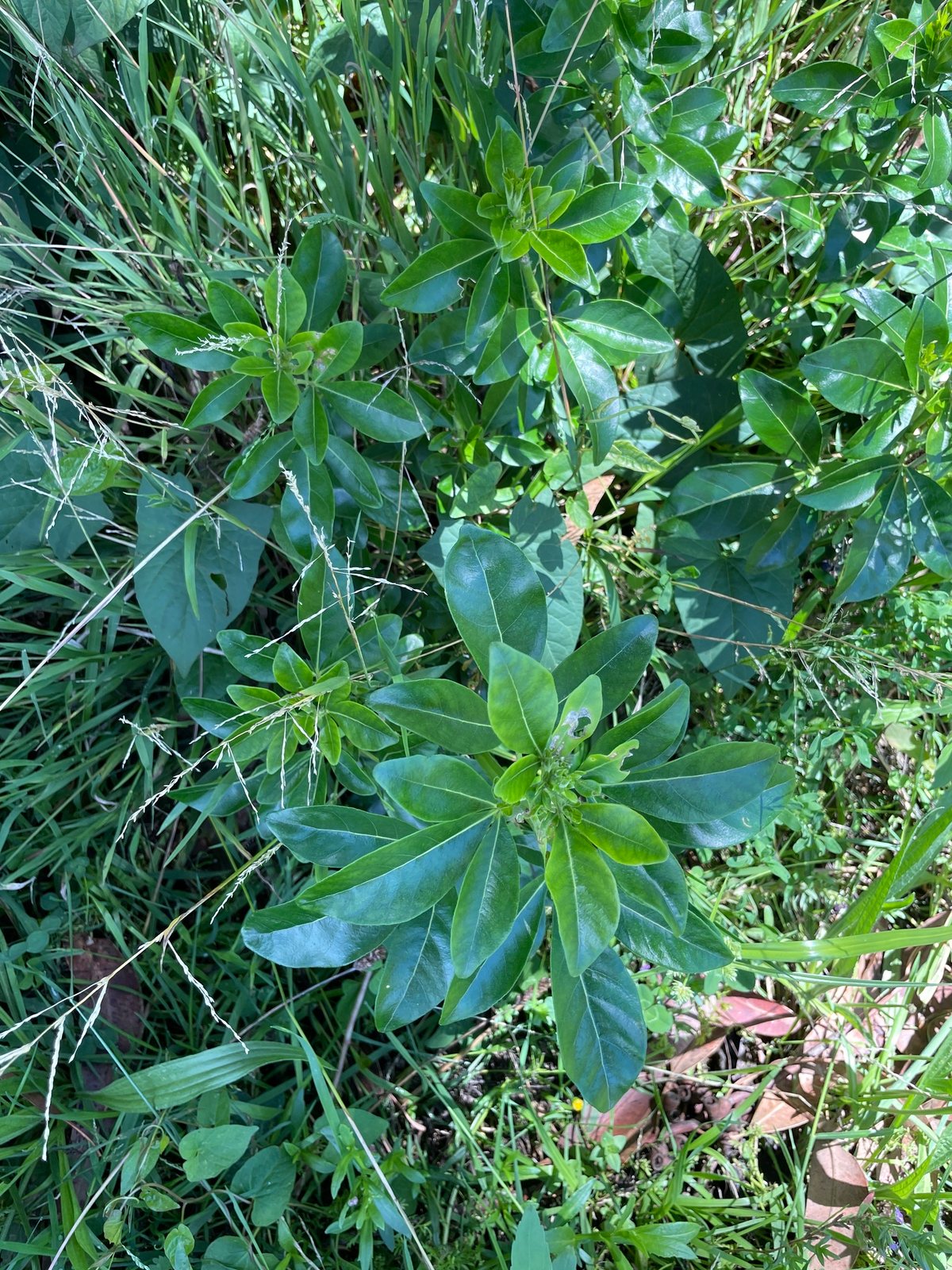
- Evergreen. Aromatic leaves with three broad leaflets; bright yellow when young, often becoming yellow-green as they mature, especially in shade.
- Growth
- Moderate
- Care needed
- Low
The year at a glance
- Pollinators
- Deer resistant
- Drought tolerant
- Heat tolerant
- Wildlife
- Low allergen
- Fragrant
| J | F | M | A | M | J | J | A | S | O | N | D | |
|---|---|---|---|---|---|---|---|---|---|---|---|---|
| Flowers | ||||||||||||
| Plant |
Northern hemisphere months. In Australia, shift them by six.
- Difficulty
- Moderate
- Toughness
- Fairly tough
Will it suit your garden?
Pick your zone, country, light and whether you have pets.
Full sun is 6 or more hours of direct sun a day, part shade 3 to 6 hours, shade under 3.
How it grows
Planting day
1.6 ft (0.5 m)
After 1 year
2.6 ft (0.79 m)
After 2 years
4 ft (1.1 m)
After 3 years
4 ft (1.4 m)
After 5 years
6 ft (2 m)
full size
About 5 years to full size.
From a typical nursery size, at an average rate for this kind of plant. A rule of thumb, not a forecast.
Good to know
- Cats and dogs
- Safe
- Growth rate
- Moderate
Care
Jobs through the year
- WaterApr–May, Sep–Oct, every 21 days
- Water established shrubs only if soil is dry; water newly planted shrubs more frequently.
- WaterJun–Aug, every 14 days
- Water deeply during prolonged dry spells; skip watering when soil remains moist.
- MulchApr
- Apply 5–8 cm of compost or bark, keeping it clear of the stems.
- FeedApr
- Use a modest balanced feed only if growth is weak; avoid heavy feeding.
- PruneApr–May
- Remove frost-killed shoots once new growth reveals which stems have survived.
- PruneJun
- After the main flowering, lightly shorten wayward shoots; avoid autumn pruning.
- ProtectJan–Mar, Nov–Dec
- Shelter from cold winds and cover during severe freezes; in zone 6, overwinter containers frost-free.
- Plant in a sheltered position away from cold, drying winds.
- Water deeply during the first growing season whenever the root zone begins to dry.
- Apply compost or a modest dose of balanced fertiliser in spring if growth is weak; avoid heavy feeding.
- Mulch annually with 2-3 in (5-8 cm) of compost or bark, keeping it clear of the stems.
- In containers, use free-draining potting mix and check moisture regularly.
Pruning. Prune lightly just after the main spring flowering, shortening wayward shoots to maintain a rounded shape. Remove frost-damaged growth in spring once new growth shows which stems are alive; avoid autumn pruning in cold areas.
Through the year
- Spring
- Check for winter damage and remove dead shoots once new growth begins.
- Spring
- Plant where winters are cold; mulch and feed lightly if needed.
- Late spring
- After the main flowers fade, lightly prune any shoots that spoil the shape.
- Summer
- Water young plants during dry weather and check exposed foliage for sun scorch.
- Late summer
- Take semi-ripe cuttings from healthy, non-flowering shoots.
- Autumn
- Plant in mild regions while the soil is still warm, but avoid pruning or feeding.
- Winter
- Protect exposed young plants during severe freezes and make sure pots drain freely.
In the garden
- Use as a golden evergreen anchor in a mixed border with purple salvias and hardy geraniums.
- Plant against a dark hedge or fence to make the yellow foliage stand out.
- Group as an informal low hedge or screen in a sheltered garden.
- Grow in a large, well-drained container near a patio where the flowers' scent can be enjoyed.
Garden styles it suits: English country, Modern courtyard, Cottage garden, Low-maintenance, Sensory garden and Winter interest.
Plant it with: Hardy geranium, Purple sage, Lavender, Catmint, Purple-leaved Japanese barberry and Daffodil.
Wildlife: The scented flowers provide nectar and pollen for bees and other pollinating insects. Dense evergreen growth offers some shelter for small garden animals.
Problems to watch for
- Leaf scorch: pale leaves may develop dry brown patches in strong sun or drying winds; provide afternoon shade, shelter and adequate water.
- Root rot: wilting and dieback can follow prolonged waterlogging; improve drainage and avoid frequent watering of already moist soil.
- Frost damage: severe cold can blacken leaves and kill shoot tips; shelter the plant and prune damaged growth after spring growth starts.
- Slugs and snails: young shoots can be chewed; check after dark, remove pests and protect vulnerable new plants.
Safety
Not known to be toxic to people, cats, dogs or horses; no plant parts are generally recognised as poisonous. It is ornamental rather than edible, and eating foliage may still cause stomach upset.
Easily confused with
Mexican orange blossom (Choisya ternata)
The ordinary species has green rather than golden-yellow leaves and generally flowers more freely.
Aztec Pearl Mexican orange (Choisya 'Aztec Pearl')
Its green leaves have much narrower leaflets, usually three to five per leaf, giving a finer texture.
Mock orange (Philadelphus coronarius)
Also has fragrant white flowers, but its leaves are simple, toothed and deciduous rather than evergreen and divided into three leaflets.
The name
Choisya honours Swiss botanist Jacques Denis Choisy, ternata refers to the three leaflets, and Mexican orange describes the plant's origin and orange-blossom-like scent.
Propagation. Take semi-ripe cuttings in late summer and root them in a free-draining medium under humid, sheltered conditions. Cuttings preserve the golden foliage; seedlings will not reliably match the parent.
Checked against open data
- Accepted botanical name
- Choisya ternata
- Native range
- Mexico Central, Mexico Gulf, Mexico Northeast and Mexico Southwest.
Sources: GBIF (CC BY 4.0) and Trefle (CC BY 4.0). The care and design notes are LandscapeGPT's own.
See it in your own yard.
Upload a photo of your yard and see it redesigned with plants that suit your climate, each checked against your zone.