Sunset hyssop
Agastache rupestris. Family Lamiaceae. Perennial.
Also called Threadleaf giant hyssop, Licorice mint, Rock anise hyssop.
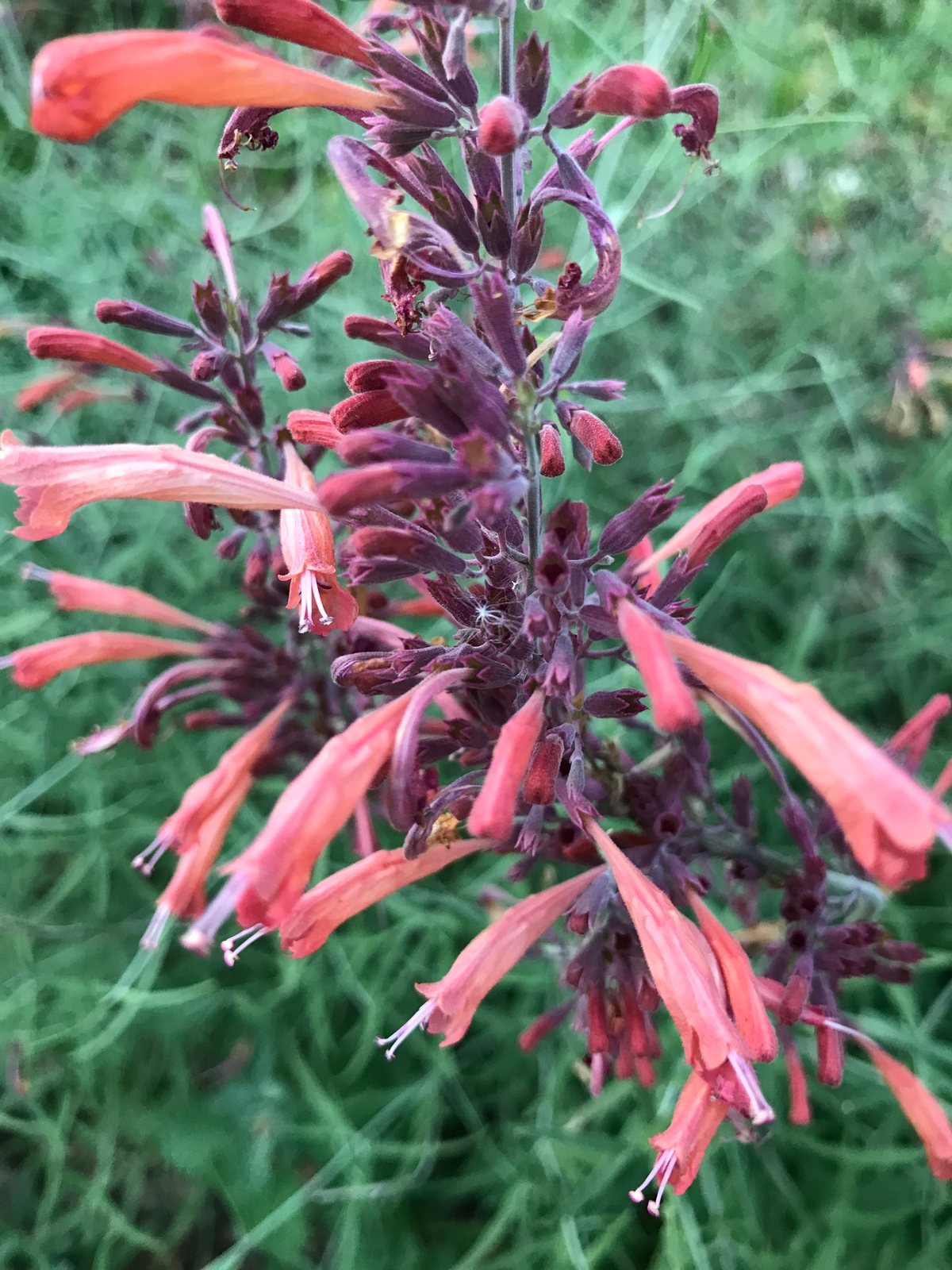
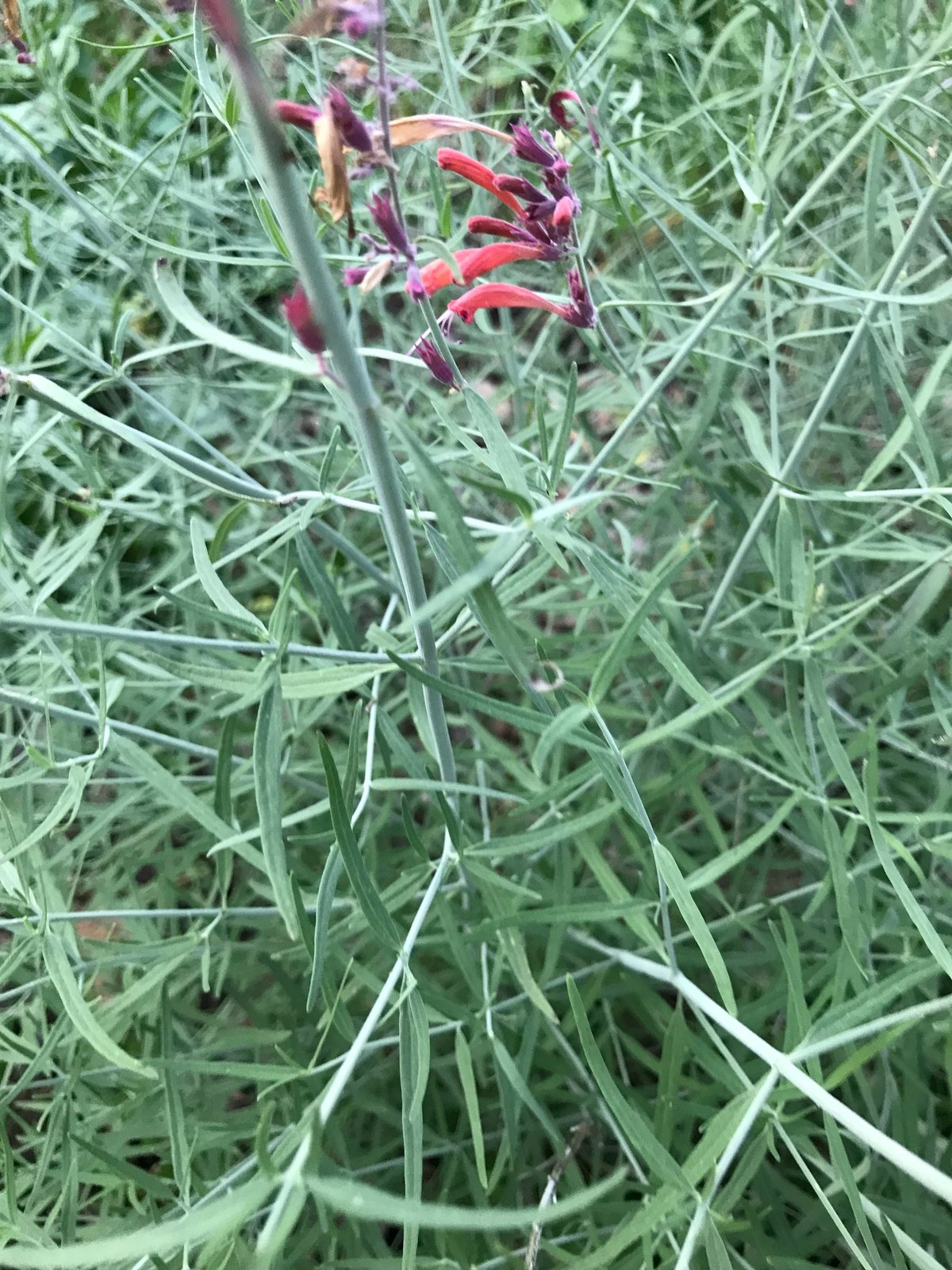
Sunset hyssop is an upright, often short-lived perennial from the southwestern United States and northern Mexico, grown for its slender orange flowers, purple-tinged calyces and aromatic grey-green leaves. It flowers for months in sunny, dry gardens, but needs excellent drainage, especially through winter.
At a glance
- Sun
- Full sun; flowering and winter survival are best in a warm, open position.
- Water
- Water regularly while establishing, allowing the soil to dry between waterings. Once established, water deeply during prolonged drought rather than little and often.
- Soil
- Lean, sharply drained sandy, gravelly or rocky soil. Avoid heavy clay, persistently damp ground and heavily enriched planting holes.
- Height
- 2-3 ft (0.6-0.9 m)
- Spread
- 1-2 ft (0.3-0.6 m)
- Flowers
- Summer to early autumn; slender orange to salmon flowers emerge from lavender-purple calyces.
- Foliage
- Fine, narrow grey-green leaves with a strong licorice or root-beer scent when rubbed; usually dies back in winter.
- Growth
- Moderate to fast during the growing season; often flowers in its first year from an early sowing.
- Care needed
- Low
The year at a glance
- Pollinators
- Deer resistant
- Drought tolerant
- Heat tolerant
- Low allergen
- Fragrant
| J | F | M | A | M | J | J | A | S | O | N | D | |
|---|---|---|---|---|---|---|---|---|---|---|---|---|
| Flowers | ||||||||||||
| Fruit | ||||||||||||
| Plant |
Northern hemisphere months. In Australia, shift them by six.
- Difficulty
- Moderate
- Toughness
- Fairly tough
Will it suit your garden?
Pick your zone, country, light and whether you have pets.
Full sun is 6 or more hours of direct sun a day, part shade 3 to 6 hours, shade under 3.
How it grows
Planting day
1 ft (0.3 m)
After 1 year
1.6 ft (0.49 m)
After 2 years
2.2 ft (0.68 m)
After 3 years
2.5 ft (0.75 m)
full size
About 2 years to full size.
From a typical nursery size, at an average rate for this kind of plant. A rule of thumb, not a forecast.
Good to know
- Cats and dogs
- Safe
- Native to
- the US
- Growth rate
- Fast
Care
Jobs through the year
- WaterApr–May, Sep, every 21 days
- Water established plants only during prolonged drought; water new plants more often, allowing soil to dry between soakings.
- WaterJun–Aug, every 14 days
- Deeply water established plants only during prolonged drought, keeping irrigation away from crowns.
- MulchApr–May
- Apply a thin gravel mulch; avoid moisture-holding organic mulch around crowns.
- PruneApr–May
- After hard frosts, cut old stems just above healthy basal growth.
- DeadheadJul–Sep, every 14 days
- Optionally remove spent spikes for tidiness and repeat bloom; retain some for seed.
- ProtectMar–May, every 7 days
- Check emerging shoots for slug and snail damage.
- ProtectOct–Nov
- Leave stems standing, clear wet leaves from crowns and maintain sharp winter drainage.
- Plant in spring in colder or wetter climates so roots establish before winter.
- Let the soil dry between waterings; keep irrigation away from the crown.
- Avoid routine feeding; rich soil produces soft, floppy growth.
- Use a thin gravel mulch rather than moisture-holding organic mulch around the crown.
- Keep neighbouring plants from crowding or shading the base.
Pruning. Leave the old stems standing through winter, then cut them back to just above healthy basal growth in spring once hard frosts have passed. Remove spent flower spikes during summer if you want a tidier plant and further flowering.
Through the year
- Late winter
- Sow seed under cover in bright conditions, pressing it onto the surface of free-draining seed compost.
- Spring
- Cut back old stems once new basal growth appears and hard frosts have passed.
- Late spring
- Plant out after the main frost risk, choosing full sun and sharply drained soil.
- Summer
- Water new plants during dry spells and remove spent flower spikes if desired.
- Early autumn
- Collect seed from dry flower spikes before it falls.
- Late autumn
- Leave stems standing and clear wet leaves away from the crown.
In the garden
- Plant in gravel gardens with low grasses and drought-tolerant perennials for fine texture and a long season of colour.
- Repeat small groups through a sunny border with purple-flowered salvias for an orange-and-purple contrast.
- Place beside a sunny path where you can brush the scented foliage without trampling the crown.
- Use in a freely draining container with other sun-loving plants; protect the pot from prolonged winter saturation.
Garden styles it suits: Dry gravel garden, Desert / xeriscape, Southwestern, Pollinator garden, Sensory garden and Hot border.
Plant it with: Lavender, Russian sage, Yarrow, Blanket flower, Blue grama and Pineleaf penstemon.
Wildlife: Flowers attract bees and butterflies, and hummingbirds where these occur in the Americas. The aromatic foliage is often avoided by deer and rabbits, although browsing is still possible.
Problems to watch for
- Winter crown and root rot: improve drainage, keep wet mulch away from the base and avoid low spots where water collects.
- Floppy stems and sparse flowering: move to full sun, stop feeding and reduce unnecessary watering.
- Spider mites in hot, dry conditions: inspect leaves for fine stippling and webbing, then rinse leaf undersides while avoiding repeated soaking of the crown.
- Slugs and snails damaging spring shoots: check emerging growth and use hand-picking or suitable barriers.
Safety
Not known to be toxic to people, cats, dogs or horses. Species-specific safety information is limited, and no part should be assumed safe to eat solely because it is aromatic.
Easily confused with
Texas hummingbird mint (Agastache cana)
Usually has rose-pink flowers and broader, more triangular grey-green leaves rather than the very narrow leaves and orange flowers of sunset hyssop.
Orange hummingbird mint (Agastache aurantiaca)
Also bears orange flowers, but its leaves are generally broader and more oval; sunset hyssop has a distinctly fine, almost threadlike foliage texture.
The name
The species name rupestris means growing among rocks, referring to its rocky native habitat.
Propagation. Grow from seed sown under cover in late winter or spring; surface-sow because light aids germination. Take softwood cuttings from healthy, non-flowering shoots in late spring or early summer.
Checked against open data
- Accepted botanical name
- Agastache rupestris
- In the US and Canada
- Native in the lower 48 states.
- Native range
- Arizona and New Mexico.
Sources: GBIF (CC BY 4.0), USDA PLANTS and Trefle (CC BY 4.0). The care and design notes are LandscapeGPT's own.
See it in your own yard.
Upload a photo of your yard and see it redesigned with plants that suit your climate, each checked against your zone.