Sweet black-eyed Susan
Rudbeckia subtomentosa. Family Asteraceae. Perennial.
Also called Sweet coneflower, Fragrant coneflower.
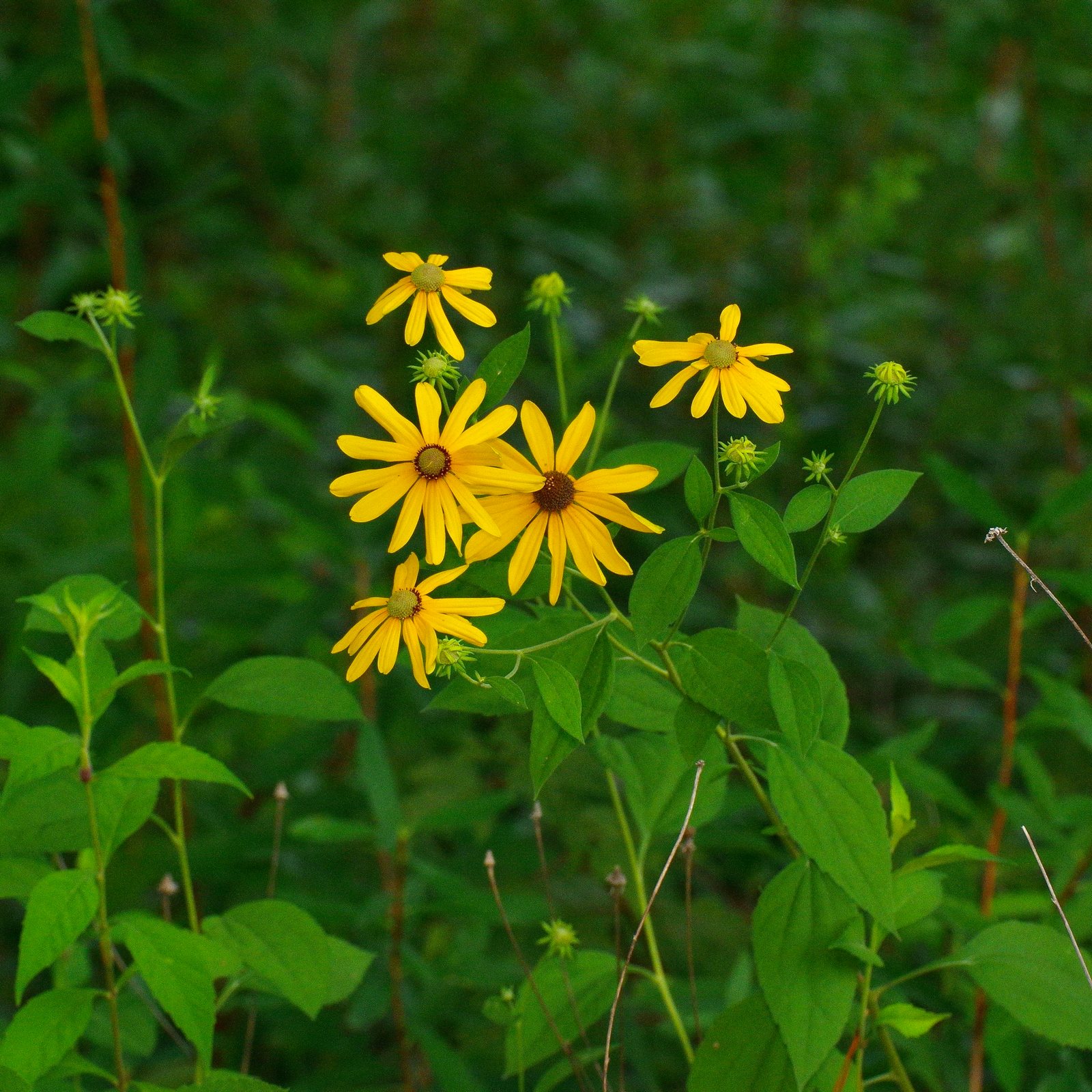
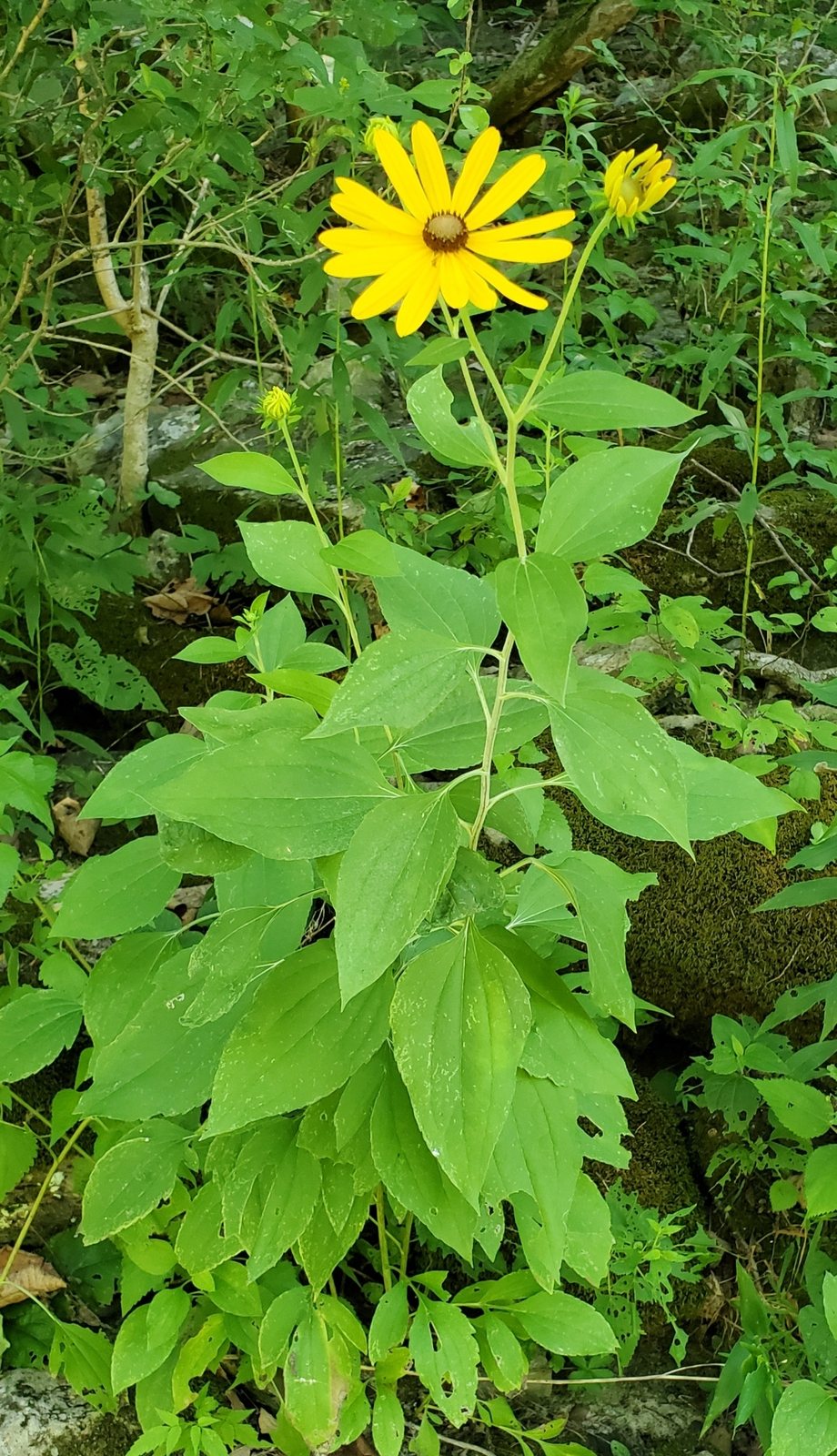
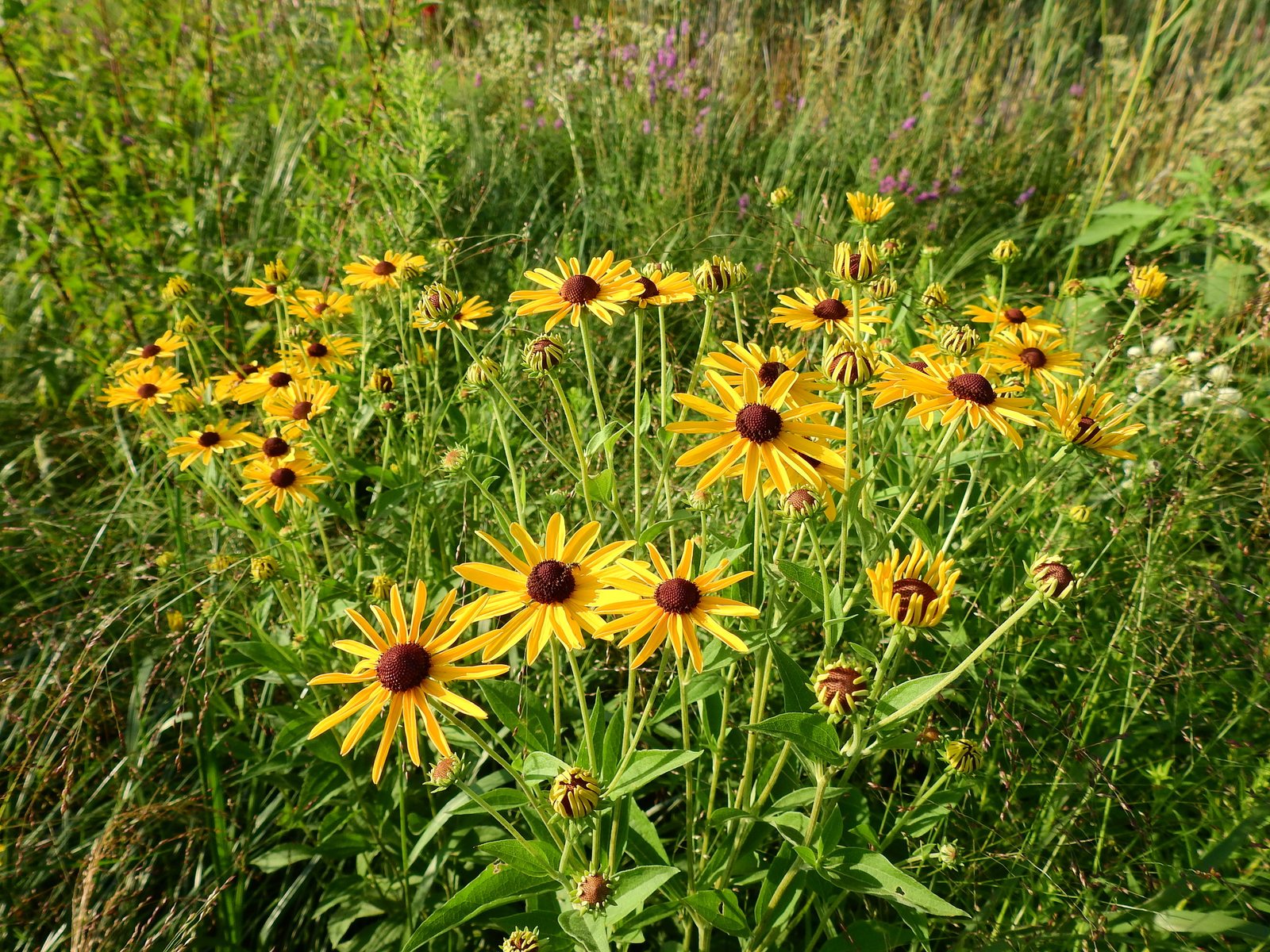
Sweet black-eyed Susan is a tall, clump-forming perennial native to central parts of the United States, with golden-yellow daisies and dark brown centres. Gardeners grow it for its long summer-to-autumn flowering, lightly fragrant blooms and value to pollinators.
At a glance
- Sun
- Full sun is best; tolerates light partial shade but may become floppy and flower less.
- Water
- Moderate; prefers evenly moist soil but tolerates some drought once established.
- Soil
- Average to fertile, well-drained soil, including clay that does not remain waterlogged; tolerates a broad range of soil pH.
- Height
- 3-5 ft (0.9-1.5 m)
- Spread
- 2-3 ft (0.6-0.9 m)
- Flowers
- Summer to early autumn; golden-yellow rays around dark brown central cones.
- Foliage
- Deciduous, rough-textured green leaves; lower leaves are often three-lobed, with fine hairs beneath.
- Growth
- Moderate to fast
- Care needed
- Low
The year at a glance
- Pollinators
- Deer resistant
- Drought tolerant
- Cold hardy
- Wildlife
- Low allergen
- Fragrant
| J | F | M | A | M | J | J | A | S | O | N | D | |
|---|---|---|---|---|---|---|---|---|---|---|---|---|
| Flowers | ||||||||||||
| Fruit | ||||||||||||
| Plant |
Northern hemisphere months. In Australia, shift them by six.
- Difficulty
- Easy
- Toughness
- Very tough
Will it suit your garden?
Pick your zone, country, light and whether you have pets.
Full sun is 6 or more hours of direct sun a day, part shade 3 to 6 hours, shade under 3.
How it grows
Planting day
1 ft (0.3 m)
After 1 year
2.2 ft (0.68 m)
After 2 years
3 ft (1.1 m)
After 3 years
4 ft (1.2 m)
full size
About 2 years to full size.
From a typical nursery size, at an average rate for this kind of plant. A rule of thumb, not a forecast.
Good to know
- Cats and dogs
- Safe
- Native to
- the US
- Growth rate
- Fast
Care
Jobs through the year
- WaterApr–May, Sep–Oct, every 14 days
- Water established plants deeply when soil is dry; water new plants more often.
- WaterJun–Aug, every 7 days
- Water established plants during prolonged dry weather; skip when rainfall keeps soil moist.
- PruneFeb–Mar
- Cut dead stems just above ground level before shoots lengthen.
- MulchApr
- Apply a thin compost dressing and moisture-conserving mulch, keeping shoots clear.
- DivideMar–Apr
- Divide congested clumps every three to five years if flowering declines.
- ProtectMay–Jun
- Support tall stems early in exposed or partly shaded positions.
- DeadheadAug–Oct, every 14 days
- Remove faded heads to limit seedlings, leaving some cones for birds.
- Water deeply during the first growing season and during prolonged dry spells.
- Apply a thin layer of compost in spring; avoid heavy feeding, which encourages weak stems.
- Mulch around the clump to conserve moisture, keeping mulch clear of emerging shoots.
- Support tall stems early in exposed sites or where plants receive partial shade.
- Divide congested clumps in spring every three to five years if flowering declines.
Pruning. Remove faded flower heads to reduce self-seeding, or leave them for birds and winter structure. Cut dead stems to just above ground level in late winter or early spring before new growth develops.
Through the year
- Early spring
- Cut back old stems before new shoots lengthen.
- Spring
- Plant or divide clumps, water thoroughly and add a light compost dressing.
- Late spring
- Install discreet supports where tall stems are likely to lean.
- Summer
- Water during prolonged dry weather, especially while plants are establishing.
- Late summer
- Remove faded flowers if you want fewer seedlings, leaving some seed heads for birds.
- Autumn
- Leave healthy stems standing for winter interest and wildlife.
In the garden
- Plant in repeated groups through prairie-style borders with switchgrass and little bluestem.
- Use toward the back of a sunny mixed border for height and late-season yellow flowers.
- Combine with purple coneflowers and asters for contrasting flower shapes and colours.
- Include in wildlife plantings where flowers can feed insects and seed heads can remain through winter.
Garden styles it suits: Cottage garden, Native meadow, New perennial (prairie), Pollinator garden, Midwest prairie and Autumn colour.
Plant it with: Switchgrass, Little bluestem, Purple coneflower, New England aster, Wild bergamot and Blazing star.
Wildlife: Flowers attract bees, butterflies and other pollinating insects. Finches and other seed-eating birds use the mature seed heads.
Problems to watch for
- Flopping stems: give plants more sun, avoid nitrogen-rich fertiliser and support stems before flowering.
- Powdery mildew: improve air circulation, water the soil rather than the leaves and remove badly affected foliage.
- Slugs and snails on young shoots: check emerging growth after dark and use barriers or locally approved iron-phosphate bait if needed.
- Wilting and shortened flowering in drought: water deeply during extended dry spells and mulch to slow moisture loss.
Safety
Not known to be toxic to people, cats, dogs or horses. Species-specific safety information is limited, so do not treat it as edible or allow pets or livestock to eat substantial quantities.
Easily confused with
Black-eyed Susan (Rudbeckia hirta)
Usually shorter and often annual or short-lived, with conspicuously bristly stems and unlobed leaves; sweet black-eyed Susan forms a lasting clump and often has three-lobed lower leaves.
Brown-eyed Susan (Rudbeckia triloba)
Has numerous smaller flower heads on finely branching stems and is usually a short-lived perennial or biennial; sweet black-eyed Susan has larger flowers and a more persistent clump.
Cutleaf coneflower (Rudbeckia laciniata)
Usually has more deeply divided leaves, greenish rather than dark brown cones, and more strongly drooping yellow rays.
The name
Rudbeckia honours the Swedish botanists Olof Rudbeck the elder and younger, while subtomentosa means somewhat woolly, referring to the fine hairs on the plant.
Propagation. Divide established clumps in spring. Sow seed outdoors in autumn, or give spring-sown seed a period of cold, moist treatment to improve germination; seedlings from named cultivars may differ from the parent.
Checked against open data
- Accepted botanical name
- Rudbeckia subtomentosa
- In the US and Canada
- Native in the lower 48 states.
- Native range
- Arkansas, Connecticut, Illinois, Indiana, Iowa, Kansas, Kentucky, Louisiana, Masachusettes, Michigan, Minnesota and Mississippi.
- Measured
- Average height 97 cm.
Sources: GBIF (CC BY 4.0), USDA PLANTS and Trefle (CC BY 4.0). The care and design notes are LandscapeGPT's own.
See it in your own yard.
Upload a photo of your yard and see it redesigned with plants that suit your climate, each checked against your zone.