Thyme honey myrtle
Melaleuca thymifolia. Family Myrtaceae. Shrub.
Also called Thyme-leaved honey myrtle, Thyme-leaf honey myrtle.
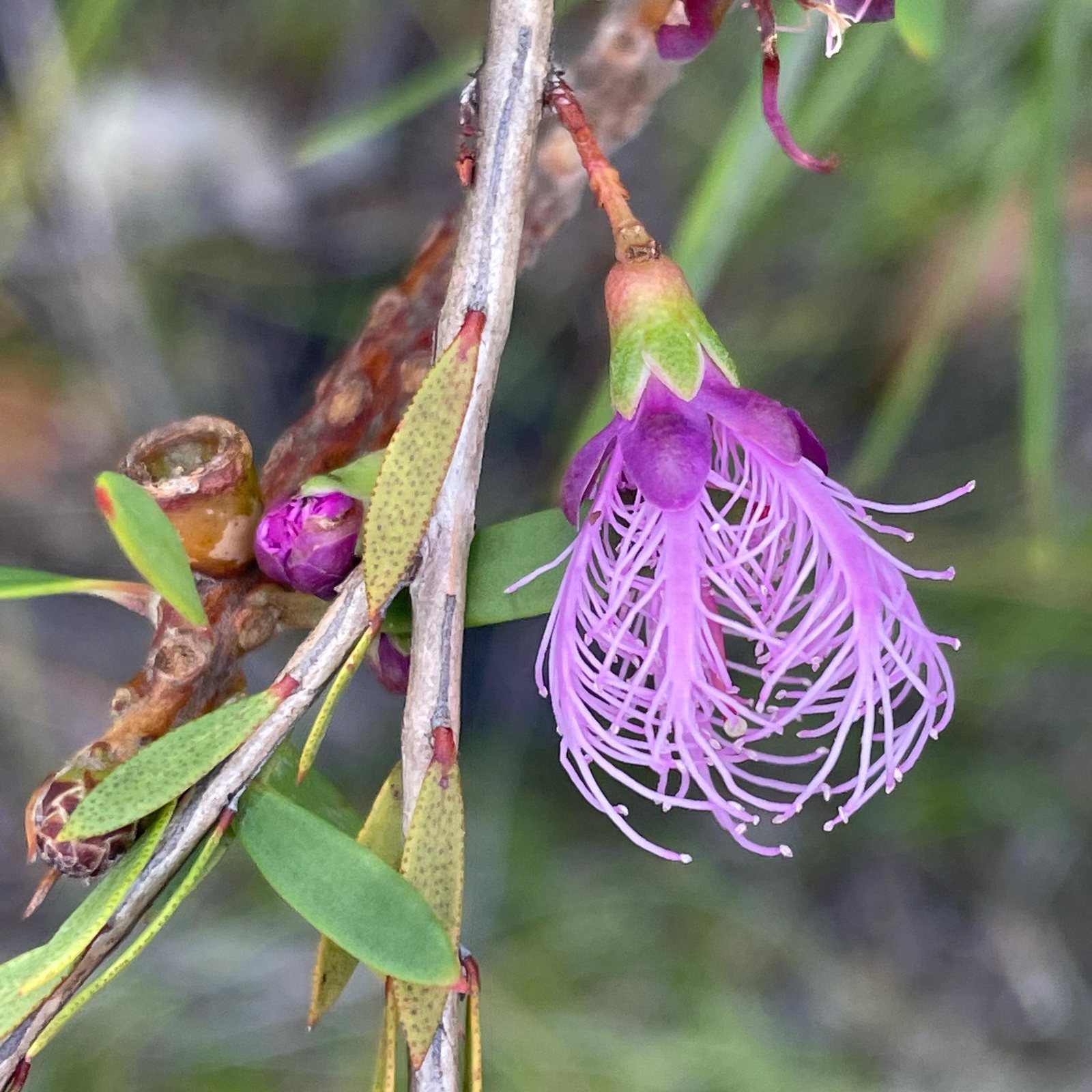
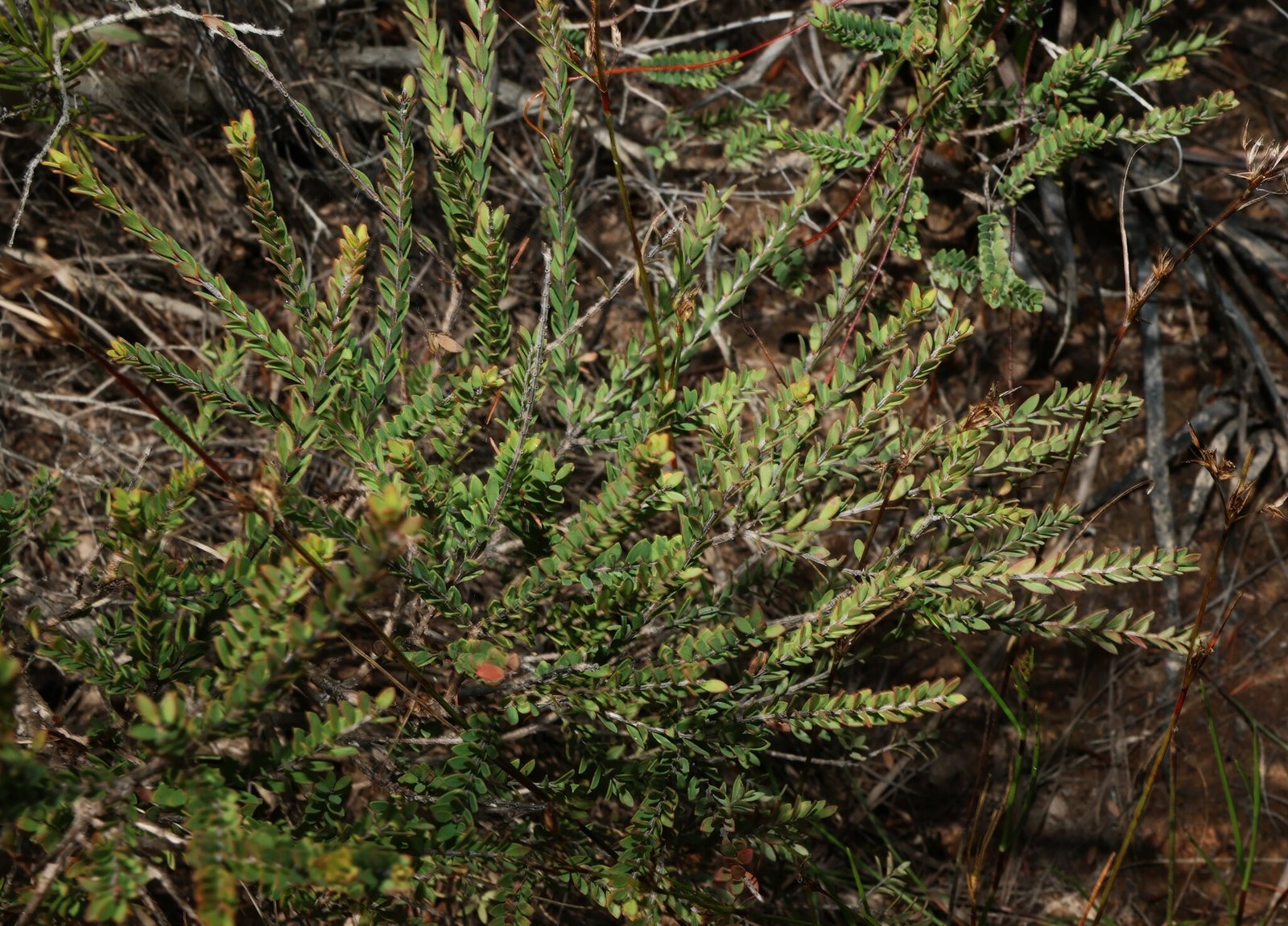
An evergreen shrub from eastern Australia, thyme honey myrtle has small aromatic leaves and pink-purple flowers with curled, feathery stamens. Gardeners grow it for its long flowering season, compact size and tolerance of moist soils; in colder climates it needs a container and frost-free winter shelter.
At a glance
- Sun
- Full sun to light partial shade; flowering is best in sun.
- Water
- Water regularly while establishing. Once established, it tolerates short dry spells but grows better with occasional deep watering during prolonged drought.
- Soil
- Adaptable to sandy, loamy or clay soils, preferably acidic to neutral. Tolerates periodically wet ground, but use a freely draining mix in containers.
- Height
- 2-5 ft (0.6-1.5 m)
- Spread
- 3-5 ft (0.9-1.5 m)
- Flowers
- Mainly spring through autumn, with scattered flowers possible in mild weather; usually mauve to pink-purple.
- Foliage
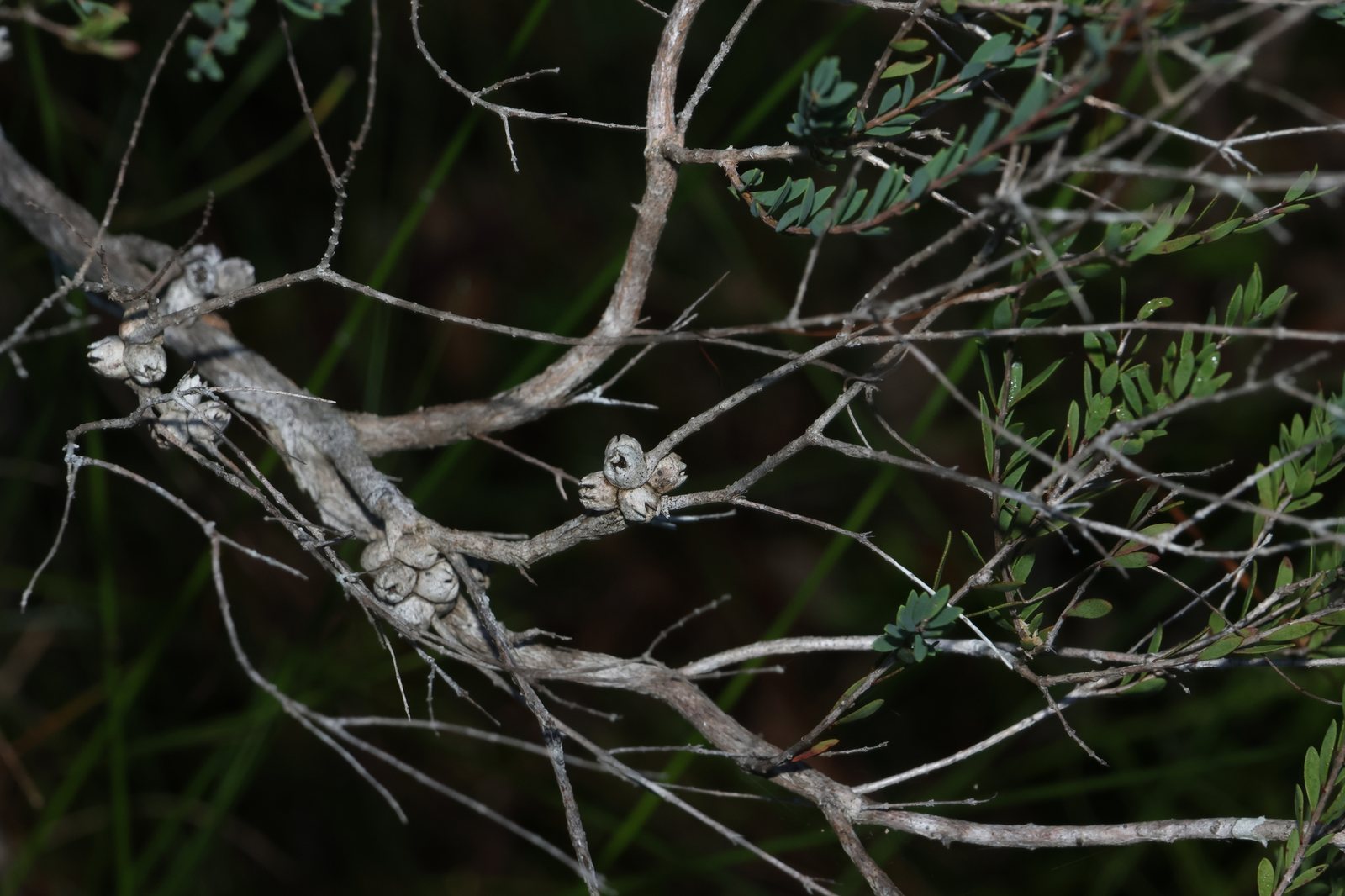
- Evergreen. Small, opposite, oval to narrowly oval blue-green leaves, aromatic when crushed.
- Growth
- Moderate
- Care needed
- Low
The year at a glance
- Pollinators
- Heat tolerant
- Wildlife
- Low allergen
- Fragrant
| J | F | M | A | M | J | J | A | S | O | N | D | |
|---|---|---|---|---|---|---|---|---|---|---|---|---|
| Flowers | ||||||||||||
| Plant |
Northern hemisphere months. In Australia, shift them by six.
- Difficulty
- Moderate
- Toughness
- Fairly tough
Will it suit your garden?
Pick your zone, country, light and whether you have pets.
Full sun is 6 or more hours of direct sun a day, part shade 3 to 6 hours, shade under 3.
How it grows
Planting day
1.6 ft (0.5 m)
After 1 year
2 ft (0.61 m)
After 2 years
2.4 ft (0.72 m)
After 3 years
2.7 ft (0.83 m)
After 5 years
3 ft (1.1 m)
full size
About 5 years to full size.
From a typical nursery size, at an average rate for this kind of plant. A rule of thumb, not a forecast.
Good to know
- Cats and dogs
- Safe
- Native to
- Australia
- Growth rate
- Moderate
Care
Jobs through the year
- WaterApr–May, Sep–Oct, every 14 days
- Check established ground plants and water if dry; water new plants more often.
- WaterJun–Aug, every 7 days
- Deep-water established ground plants during prolonged dry weather; check pots more frequently.
- FeedApr–May
- Apply a light dose of low-phosphorus native-plant fertiliser only if growth is weak.
- MulchMay
- Mulch the root zone, keeping stems uncovered.
- PruneApr–May
- Remove winter-damaged shoots once new growth reveals what has survived.
- PruneJul–Aug
- Lightly trim after the main flowering flush, staying within leafy growth.
- ProtectJan–Apr, Oct–Dec
- Move pots into bright, ventilated, frost-free shelter; keep compost lightly moist over winter.
- Water deeply through the first growing season, allowing the surface soil to begin drying between waterings.
- Apply an organic mulch around the root zone, keeping it clear of the stems.
- If growth is weak, apply a light dose of low-phosphorus native-plant fertiliser in spring.
- Water container plants before the root ball dries out completely, and keep drainage holes clear.
- Where winters are cold, move containers into a bright, frost-free place before the first frost.
Pruning. Lightly trim after the main flowering flush to encourage dense growth, and remove dead or damaged stems in spring. Avoid cutting hard into bare old wood.
Through the year
- Spring
- Plant after damaging frosts have passed, water thoroughly and mulch the root zone.
- Spring
- Check for winter damage and remove dead shoots once new growth shows.
- Summer
- Water young plants during dry weather and check containers frequently.
- Late summer
- Take semi-ripe cuttings from healthy, non-flowering shoots.
- Autumn
- Move container plants under bright, frost-free cover where outdoor winters are too cold.
- Winter
- Keep sheltered container plants lightly moist rather than wet, and provide good ventilation.
In the garden
- Plant in an informal Australian native border with lomandra and flax lilies for contrasting leaf shapes.
- Use several shrubs as a loose, low screen along a path or boundary.
- Place beside a rain garden where soil is periodically wet but not permanently submerged.
- Grow in a large patio container where the fine foliage and unusual flowers can be seen closely.
Garden styles it suits: Australian native, Wildlife garden, Pollinator garden, Coastal, Low-maintenance and Small-space.
Plant it with: Lomandra, Flax lily, Dwarf bottlebrush and Swamp banksia.
Wildlife: Flowers attract bees and other nectar-feeding insects. Dense branching provides shelter for small garden animals.
Problems to watch for
- Frost damage: young shoots may blacken after cold weather; shelter vulnerable plants and wait until spring growth begins before pruning damaged wood.
- Sparse growth and few flowers: move container plants into stronger light and avoid heavy nitrogen feeding.
- Root decline in containers: stagnant, airless compost can damage roots; use a freely draining mix and never leave the pot standing in water.
- Scale insects: inspect stems and leaf undersides, remove small infestations by hand and use a labelled horticultural oil if needed.
Safety
This species is not well documented as poisonous to people, cats, dogs or horses, but species-specific safety information is limited. Do not treat its aromatic leaves or flowers as food, and do not give extracted oils to people or pets; concentrated oils can be harmful.
Easily confused with
Claw honey myrtle (Melaleuca pulchella)
It also has claw-like pink-purple flowers, but its small leaves are arranged alternately along the stems rather than in opposite pairs.
Grey honey myrtle (Melaleuca incana)
It has distinctly grey, hairy foliage, often drooping branches, and cream to pale yellow flowers rather than the usual purple flowers of thyme honey myrtle.
The name
The name thymifolia means thyme-leaved, referring to the small leaves that resemble those of thyme.
Propagation. Take semi-ripe cuttings in late summer and root them in a moist, airy propagation mix. Seed can also be surface-sown in spring; seedlings may differ from the parent, so use cuttings to preserve named forms.
Checked against open data
- Accepted botanical name
- Melaleuca thymifolia
- Native range
- New South Wales and Queensland.
Sources: GBIF (CC BY 4.0) and Trefle (CC BY 4.0). The care and design notes are LandscapeGPT's own.
See it in your own yard.
Upload a photo of your yard and see it redesigned with plants that suit your climate, each checked against your zone.