Toothless desert spoon
Dasylirion quadrangulatum. Family Asparagaceae. Shrub.
Also called Mexican grass tree, Toothless sotol.
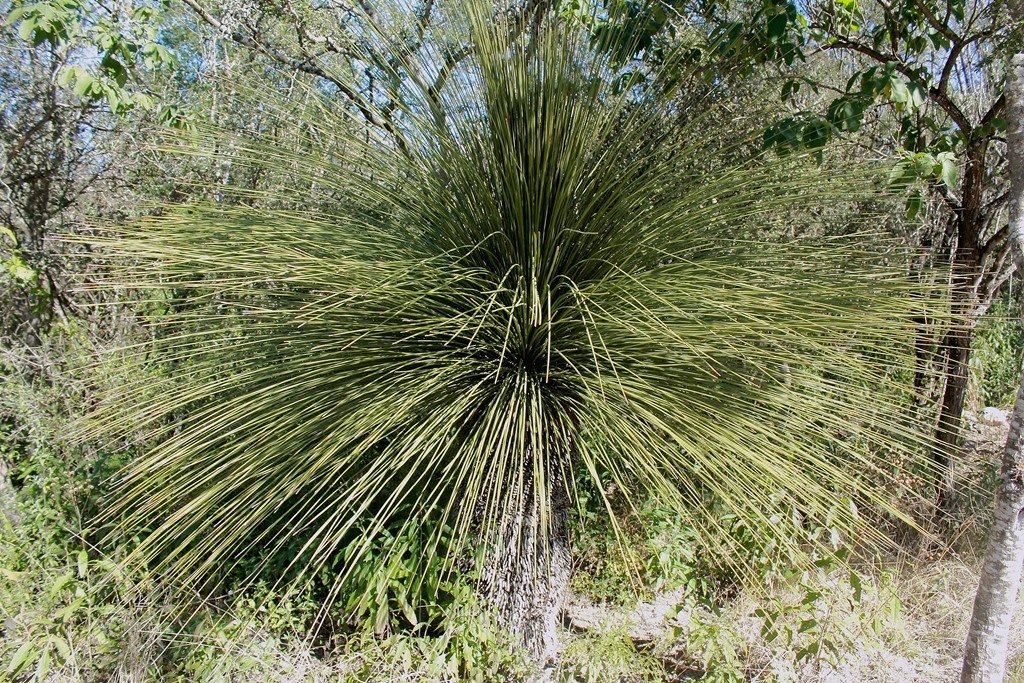
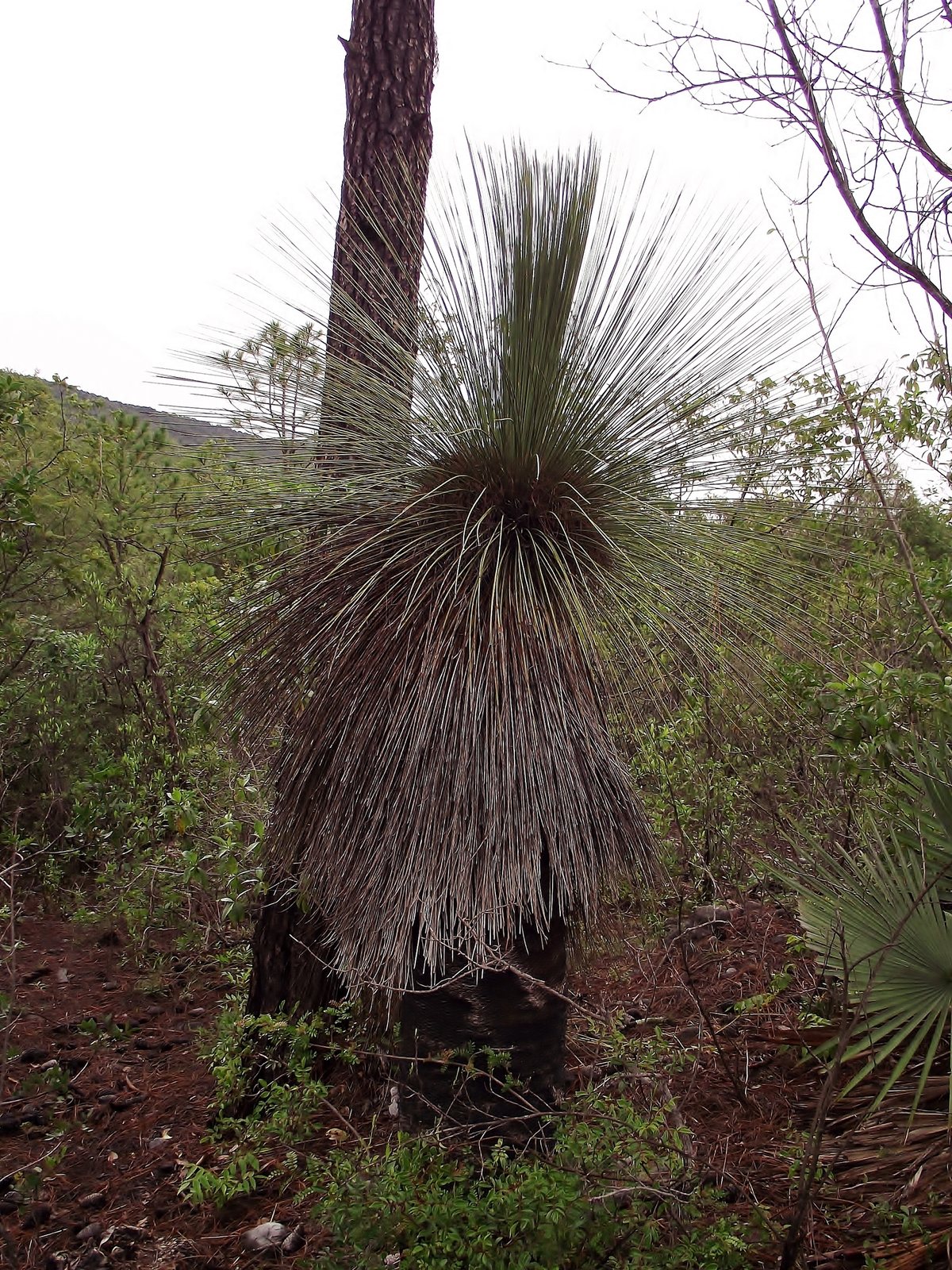
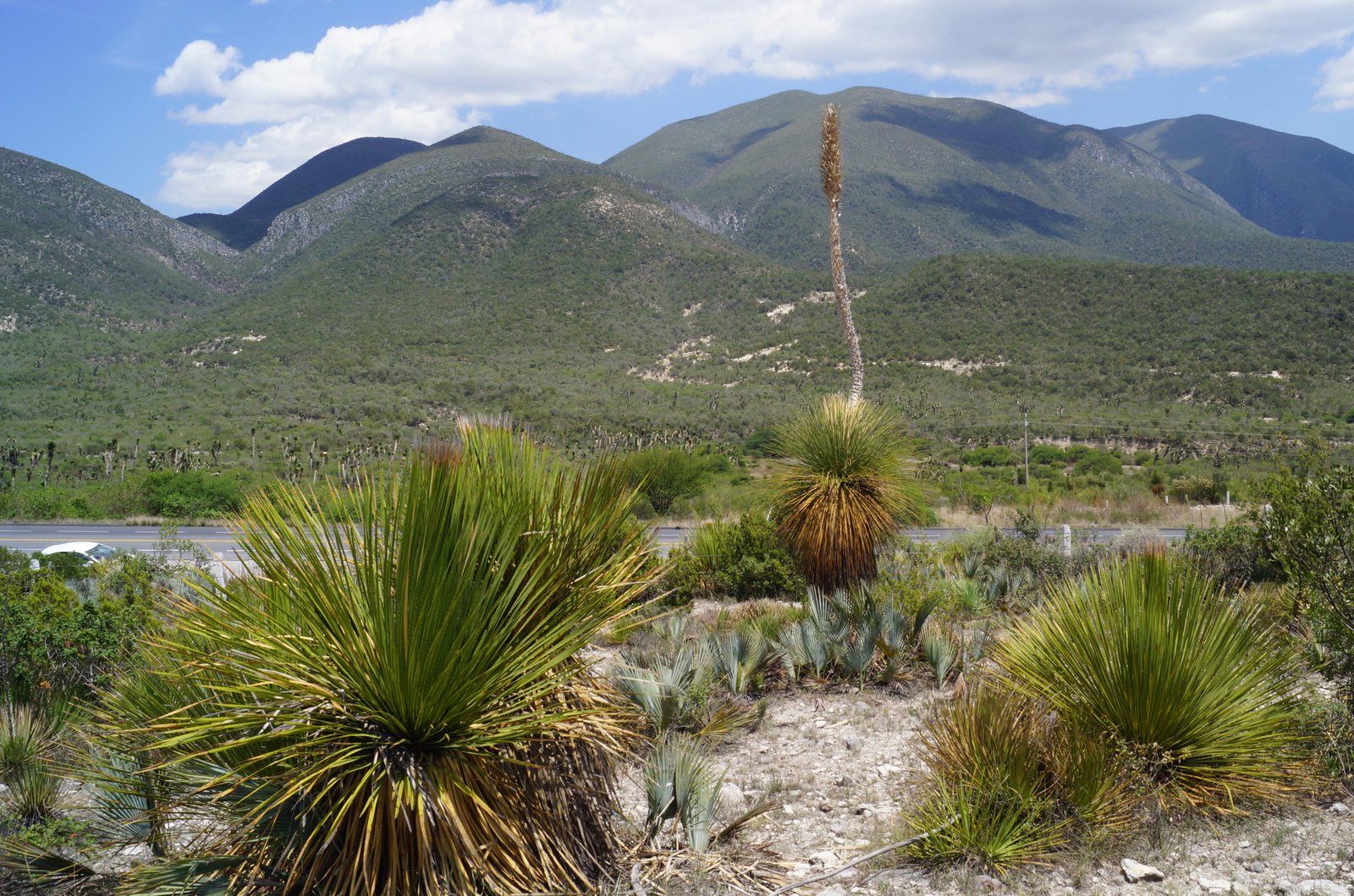
This slow-growing evergreen from northeastern Mexico forms a rounded fountain of very narrow leaves, eventually carried on a stout trunk. Gardeners grow it for its strong outline, fine-textured foliage and drought tolerance; it needs excellent drainage and protection from prolonged wet cold.
At a glance
- Sun
- Full sun; tolerates light shade in hot climates, but develops its best shape in strong light.
- Water
- Low once established. Water during establishment and occasionally during prolonged summer drought; keep much drier in winter.
- Soil
- Sharply drained sandy, gritty or stony soil. Avoid waterlogged clay and sites where winter rain collects.
- Height
- 10-15 ft (3-4.6 m) over many decades, excluding flower stalks; usually much shorter in gardens.
- Spread
- 5-8 ft (1.5-2.4 m)
- Flowers
- Mature plants flower intermittently in summer, producing tall stalks of small creamy-white flowers above the leaves.
- Foliage
- Evergreen. Long, very narrow green leaves radiate in all directions. They are roughly square in cross-section and lack the hooked marginal teeth found on many other desert spoons, although their tips can still be sharp.
- Growth
- Slow, especially when young or grown in containers.
- Care needed
- Low
The year at a glance
- Pollinators
- Deer resistant
- Drought tolerant
- Heat tolerant
- Low allergen
| J | F | M | A | M | J | J | A | S | O | N | D | |
|---|---|---|---|---|---|---|---|---|---|---|---|---|
| Flowers | ||||||||||||
| Plant |
Northern hemisphere months. In Australia, shift them by six.
- Difficulty
- Moderate
- Toughness
- Fairly tough
Will it suit your garden?
Pick your zone, country, light and whether you have pets.
Full sun is 6 or more hours of direct sun a day, part shade 3 to 6 hours, shade under 3.
How it grows
Planting day
1.6 ft (0.5 m)
After 1 year
3 ft (0.91 m)
After 2 years
4 ft (1.3 m)
After 3 years
6 ft (1.7 m)
After 5 years
8 ft (2.6 m)
About 8 years to full size.
From a typical nursery size, at an average rate for this kind of plant. A rule of thumb, not a forecast.
Good to know
- Cats and dogs
- Safe
- Growth rate
- Slow
Care
Jobs through the year
- WaterApr–May, Sep, every 21 days
- Water established plants only when soil is dry; check young plants and containers more often.
- WaterJun–Aug, every 21 days
- Soak established plants during prolonged drought, allowing soil to dry between waterings.
- WaterJan–Mar, Oct–Dec, every 42 days
- In frost-free winter shelter, water containers minimally and only when thoroughly dry.
- FeedMay
- Feed sparingly only for weak growth or container-grown plants.
- MulchMay
- Use shallow gravel mulch, leaving the crown and trunk clear.
- PruneMay–Jun
- Remove fully dead leaves with gloves and eye protection; preserve green leaves and the growing point.
- DeadheadAug–Sep
- Remove dry flower stalks if accessible without damaging the crown.
- ProtectJan–Apr, Oct–Dec
- Use a container in zone 6–7 and overwinter bright, frost-free and relatively dry.
- Plant in spring after frost, setting the crown at its original soil level.
- Water deeply during establishment, then let the soil dry before watering again.
- Use a raised bed or mound where drainage is doubtful; do not rely on gravel in the planting hole.
- Keep mulch away from the crown and trunk; a shallow gravel mulch suits dry sites.
- Feed sparingly in spring only if growth is weak or the plant is container-grown.
- In colder climates, grow in a freely draining container and overwinter somewhere bright, frost-free and relatively dry.
Pruning. In late spring, remove fully dead leaves close to their bases with clean secateurs, wearing gloves and eye protection. Leave green leaves and the central growing point intact; remove spent flower stalks when dry.
Through the year
- Spring
- Plant or repot after frost risk has passed, using a sharply drained growing medium.
- Late spring
- Remove dead leaves and check that mulch has not accumulated against the crown.
- Summer
- Water establishing plants deeply, allowing the soil to dry between waterings.
- Late summer
- Remove dry flower stalks if accessible; do not cut into the leafy crown.
- Autumn
- Reduce watering as growth slows and move containers under cover before damaging frost.
- Winter
- Keep sheltered plants bright and relatively dry, and check outdoor plants for standing water around their roots.
In the garden
- Use as a single focal plant in a gravel courtyard, with space for its mature leaf spread.
- Repeat widely spaced specimens along a sunny wall to create a strong architectural rhythm.
- Combine with low succulents and silver-leaved shrubs for contrasting shapes in a dry border.
- Grow in a large, stable container on a sunny terrace where winter shelter is available.
Garden styles it suits: Desert modern, Architectural minimal, Desert / xeriscape, Dry gravel garden, Modern Mediterranean and Southwestern.
Plant it with: Red yucca, Whale's tongue agave, Lavender, Santolina, Upright stonecrop and Blue fescue.
Wildlife: The flowers attract bees and other flower-visiting insects. Flowering is irregular, so it is not a dependable annual source of nectar.
Problems to watch for
- Root or crown rot in wet soil: improve drainage, keep the crown clear and reduce watering, especially in cool weather.
- Frost damage to leaves or the growing point: choose a sheltered site and protect young plants during cold spells; overwinter containers under cover outside its reliable range.
- Scale insects on leaves or sheltered leaf bases: inspect regularly, remove small infestations by hand and use a labelled treatment if needed.
- Mealybugs on container plants: isolate affected plants, remove visible insects and treat persistent infestations with a product labelled for ornamental plants.
Safety
Not known to be toxic to people, cats, dogs or horses, although species-specific safety information is limited. No part is established as poisonous; the main household hazard is physical injury from the stiff leaf tips. Avoid planting beside narrow paths or play areas.
Easily confused with
Blue desert spoon (Dasylirion wheeleri)
Has broader, flatter, usually blue-grey leaves with conspicuous hooked teeth along their edges.
Green desert spoon (Dasylirion serratifolium)
Has flatter, broader leaves with toothed margins and often conspicuous frayed fibres at the tips.
Ponytail palm (Beaucarnea recurvata)
Has a conspicuously swollen trunk base and flat, softer leaves that droop in long ribbons rather than forming a stiff, rounded fountain.
The name
The epithet quadrangulatum refers to the roughly four-sided leaves, while 'toothless' describes their lack of marginal spines.
Propagation. Usually grown from seed sown in warmth in a freely draining medium. Seedlings grow slowly; division is generally unsuitable because plants usually form a single trunk.
Checked against open data
- Accepted botanical name
- Dasylirion quadrangulatum
- Native range
- Mexico Northeast.
Sources: GBIF (CC BY 4.0) and Trefle (CC BY 4.0). The care and design notes are LandscapeGPT's own.
See it in your own yard.
Upload a photo of your yard and see it redesigned with plants that suit your climate, each checked against your zone.