Traveller's palm
Ravenala madagascariensis. Family Strelitziaceae. Tree.
Also called Traveler's palm, Traveller's tree.
Traveller's palm is a large, evergreen plant from Madagascar, grown for its enormous paddle-shaped leaves arranged in a flat fan. It belongs to the bird-of-paradise family, not the palm family, and needs a spacious, sheltered tropical garden. In the UK, Canada and colder parts of the United States and Australia, it needs heated indoor accommodation and soon outgrows ordinary rooms.
At a glance
- Sun
- Full sun to partial shade; young plants benefit from light shade in very hot locations. Shelter from strong winds.
- Water
- Keep the root zone evenly moist during active growth, without leaving it waterlogged. Water less in cool weather, allowing the surface to dry slightly.
- Soil
- Deep, fertile, moisture-retentive but well-drained soil. For containers, use a rich potting mix with added coarse material for drainage.
- Height
- 30-50 ft (9-15 m)
- Spread
- 15-25 ft (4.5-7.5 m)
- Flowers
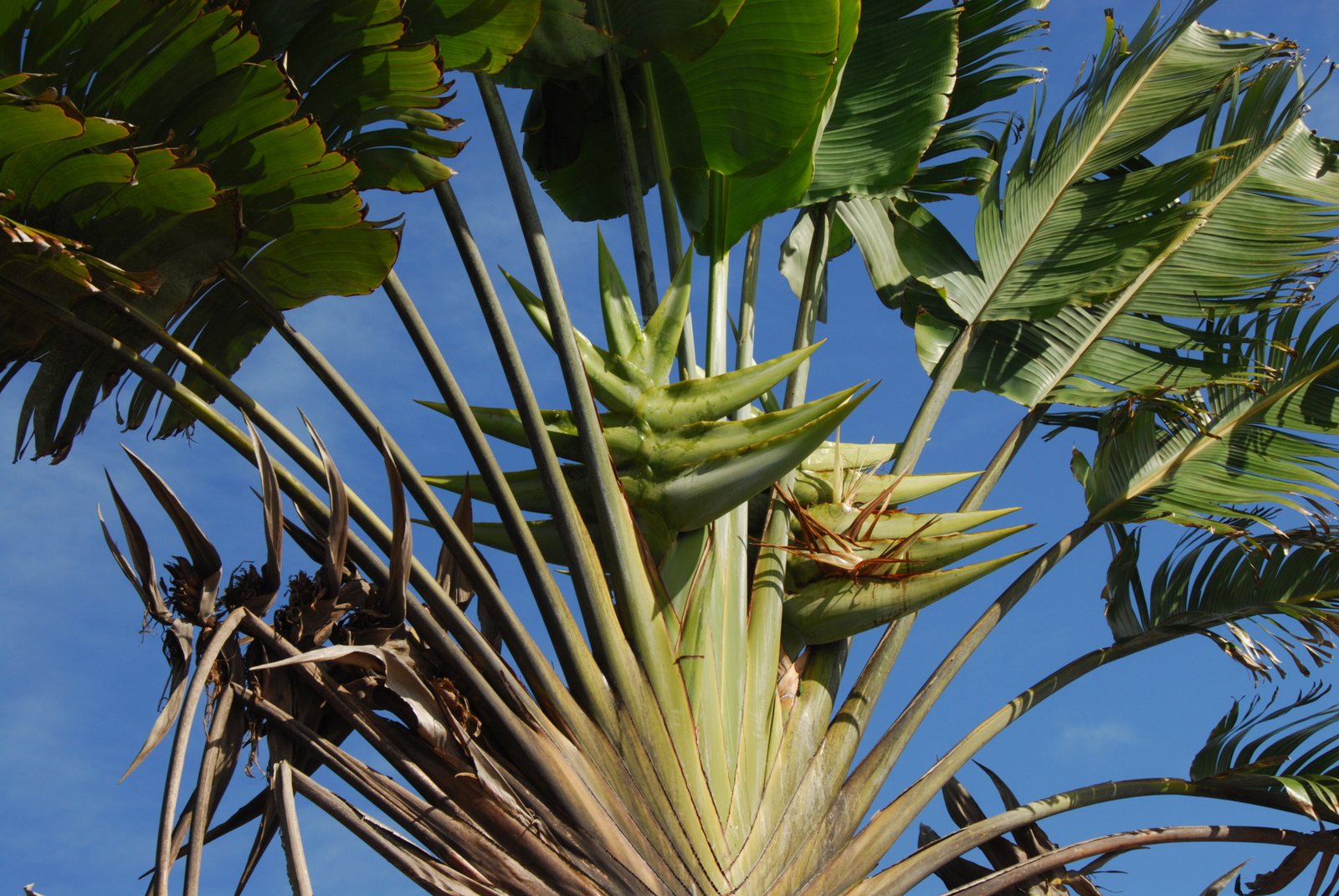
- Mature plants produce creamy-white flowers held in stout green, boat-shaped bracts, mainly during warmer months; flowering can be irregular in tropical climates.
- Foliage
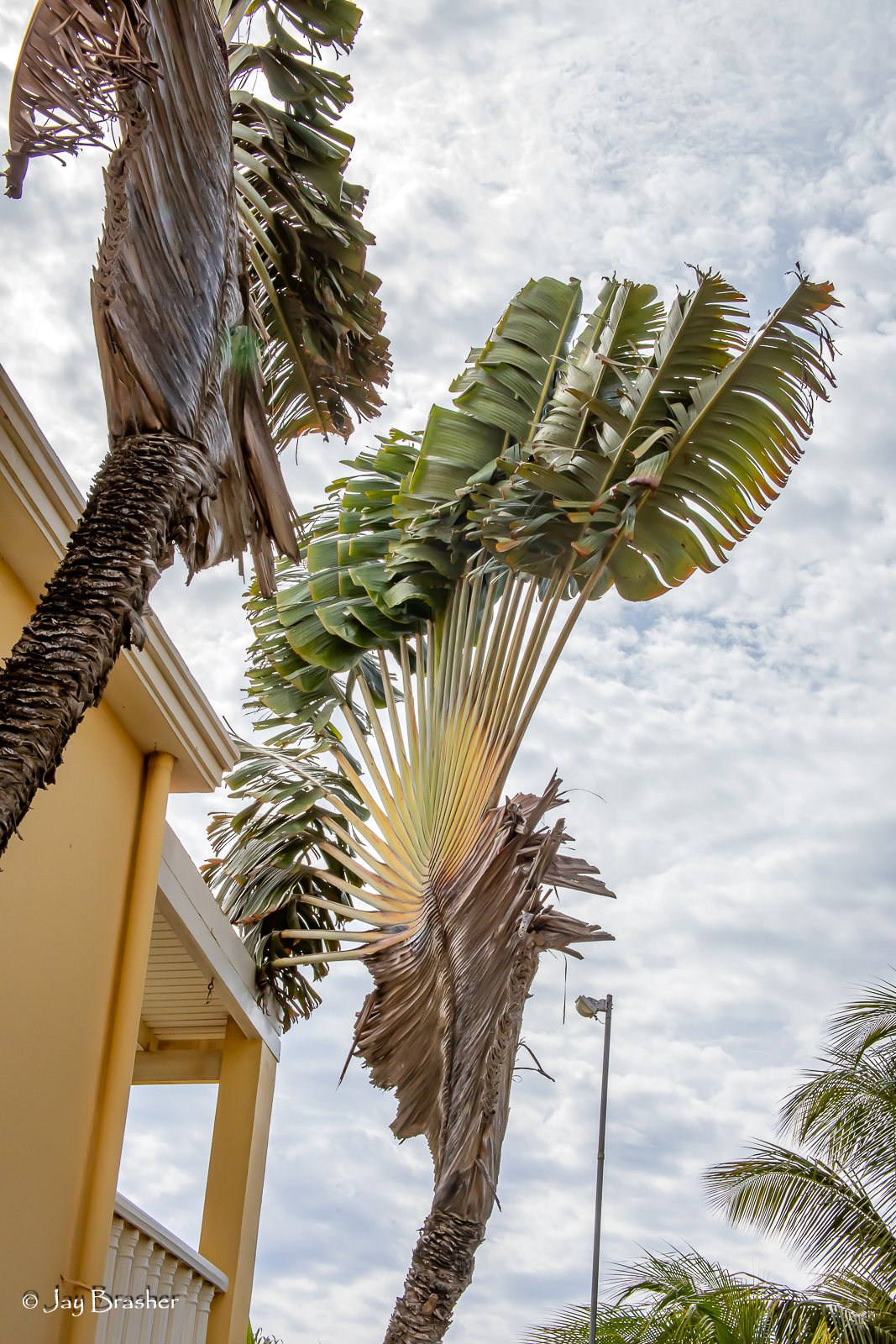
- Evergreen. Huge, long-stalked green leaves form a distinctive two-dimensional fan above a trunk. Older leaves naturally split along their veins, especially in wind.
- Growth
- Fast in warm, moist conditions; much slower in containers or cool climates.
- Care needed
- Medium
The year at a glance
- Heat tolerant
- Low allergen
| J | F | M | A | M | J | J | A | S | O | N | D | |
|---|---|---|---|---|---|---|---|---|---|---|---|---|
| Flowers | ||||||||||||
| Plant |
Northern hemisphere months. In Australia, shift them by six.
- Difficulty
- Hard
- Toughness
- Needs looking after
Will it suit your garden?
Pick your zone, country, light and whether you have pets.
Full sun is 6 or more hours of direct sun a day, part shade 3 to 6 hours, shade under 3.
How it grows
Planting day
7 ft (2 m)
After 1 year
8 ft (2.5 m)
After 2 years
10 ft (3 m)
After 3 years
11 ft (3.5 m)
After 5 years
15 ft (4.5 m)
About 20 years to full size.
From a typical nursery size, at an average rate for this kind of plant. A rule of thumb, not a forecast.
Good to know
- Cats and dogs
- Safe
- In the garden
- Spreads vigorously: plan to contain it.
- Growth rate
- Moderate
Care
Jobs through the year
- WaterApr–May, Sep–Oct, every 7 days
- In this climate grow in a movable container; water when the surface starts drying and let excess drain.
- WaterJun–Aug, every 3 days
- Check container moisture frequently and water thoroughly before the root ball dries; never leave it standing in water.
- WaterJan–Mar, Nov–Dec, every 14 days
- Under heated cover, water sparingly when the surface dries slightly; adjust to indoor warmth.
- FeedApr
- Apply balanced slow-release container fertiliser at the label rate.
- MulchMay
- Add a shallow organic mulch, leaving the trunk base exposed.
- PruneJun–Aug
- Remove dead leaves and unwanted suckers without cutting the central growing point.
- ProtectSep–Oct
- Move into bright heated shelter before nights fall below 10°C; mature flowering is unlikely in ordinary home conditions.
- ProtectJan–May, Nov–Dec
- Keep above 10°C in bright light; return outdoors gradually only once nights are reliably warm.
- Water deeply during warm weather and dry spells, checking that excess water drains away.
- Apply a balanced slow-release fertiliser in spring according to the label; feed container plants during active growth.
- Mulch the root zone with organic material, keeping it clear of the trunk.
- Choose a wind-sheltered position with room for the full leaf fan, away from narrow paths and overhead wires.
- Move container plants into bright, heated shelter before cold nights; aim to keep them above 50°F (10°C).
Pruning. Remove dead or badly damaged leaves in warm weather, cutting their stalks close to the trunk without cutting into it. Never cut out the central growing point; remove basal suckers if you want a single-trunked specimen.
Through the year
- Spring
- Plant or repot once conditions are consistently warm, using a container with generous drainage holes.
- Spring
- Apply fertiliser and renew mulch, leaving the trunk base exposed.
- Summer
- Water deeply during dry weather and check containers frequently.
- Summer
- Remove dead leaves and unwanted suckers; inspect sheltered plants for scale and spider mites.
- Autumn
- Bring container plants under heated cover before temperatures fall, and reduce feeding as growth slows.
- Winter
- Provide the brightest sheltered position available and water sparingly enough to prevent soggy roots.
In the garden
- Use as a single architectural specimen in a broad lawn or large planting bed, with the flat face of the fan towards the main viewpoint.
- Place against a plain wall or building facade to show the leaf silhouette, allowing ample clearance for mature growth.
- Combine with gingers, philodendrons and ferns for layered tropical planting.
- Use in a large courtyard or beside a terrace in frost-free climates, set back far enough that leaves do not obstruct circulation.
Garden styles it suits: Architectural minimal, Modern tropical, Tropical, Luxury resort, Balinese and Brazilian tropical modernism.
Plant it with: Shell ginger, Philodendron, Monstera, Bird's nest fern, Cordyline and Bromeliads.
Wildlife: In Madagascar, the flowers are visited and pollinated by lemurs. Outside its native range, its wildlife value varies; do not expect it to provide the same support as locally native trees.
Problems to watch for
- Wind-torn leaves: some splitting is normal, but severe shredding calls for a more sheltered position; damaged leaves do not repair themselves.
- Cold damage: frost and prolonged chilling brown leaves and may kill the growing point; grow under heated cover outside reliably warm climates.
- Root rot: yellowing and collapse in wet soil require better drainage and less watering; do not leave containers standing in water.
- Scale insects and spider mites: inspect leaf undersides and stalks, wipe off small infestations, and use a labelled insecticidal soap or horticultural oil if needed.
Safety
Not known to be toxic to people, cats, dogs or horses, but reliable species-specific ingestion information is limited. Treat it as ornamental rather than edible, and do not drink water collected in the leaf bases: it can contain debris and microbes.
Where it spreads. Reported invasive in Mauritius and Réunion, where it can spread into disturbed vegetation. Check local restrictions before planting in tropical island regions.
Easily confused with
Giant white bird of paradise (Strelitzia nicolai)
Usually forms a clump of several stems and bears white flowers with dark blue floral parts; traveller's palm typically develops a broader, more regular fan and stout green flower bracts.
Banana (Musa spp.)
Banana leaves emerge around a fleshy pseudostem rather than forming the persistent, sharply defined flat fan of traveller's palm.
The name
Ravenala comes from its Malagasy name, madagascariensis means 'from Madagascar', and traveller's palm refers to the water held in its leaf bases.
Propagation. Sow fresh seed in a warm propagator; germination can be slow and uneven. Basal suckers can be separated during warm weather once they have their own roots, although large divisions are heavy and difficult to handle.
Checked against open data
- Accepted botanical name
- Ravenala madagascariensis
- In the US and Canada
- Introduced in Pacific Basin and Puerto Rico.
- Native range
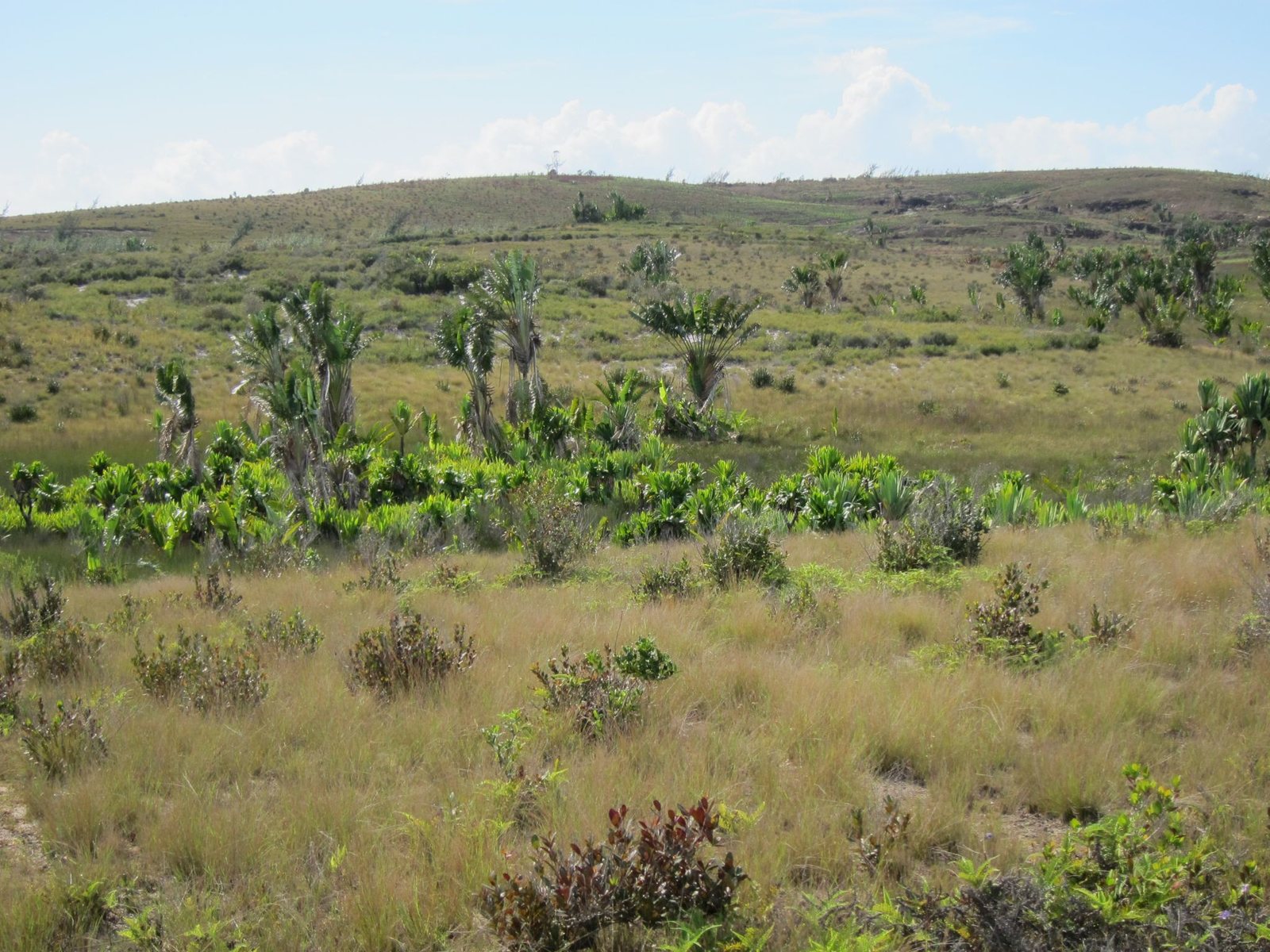
- Madagascar.
Sources: GBIF (CC BY 4.0), USDA PLANTS and Trefle (CC BY 4.0). The care and design notes are LandscapeGPT's own.
See it in your own yard.
Upload a photo of your yard and see it redesigned with plants that suit your climate, each checked against your zone.