Triangle palm
Dypsis decaryi. Family Arecaceae. Tree.
Also called Three-sided palm, Chrysalidocarpus decaryi.
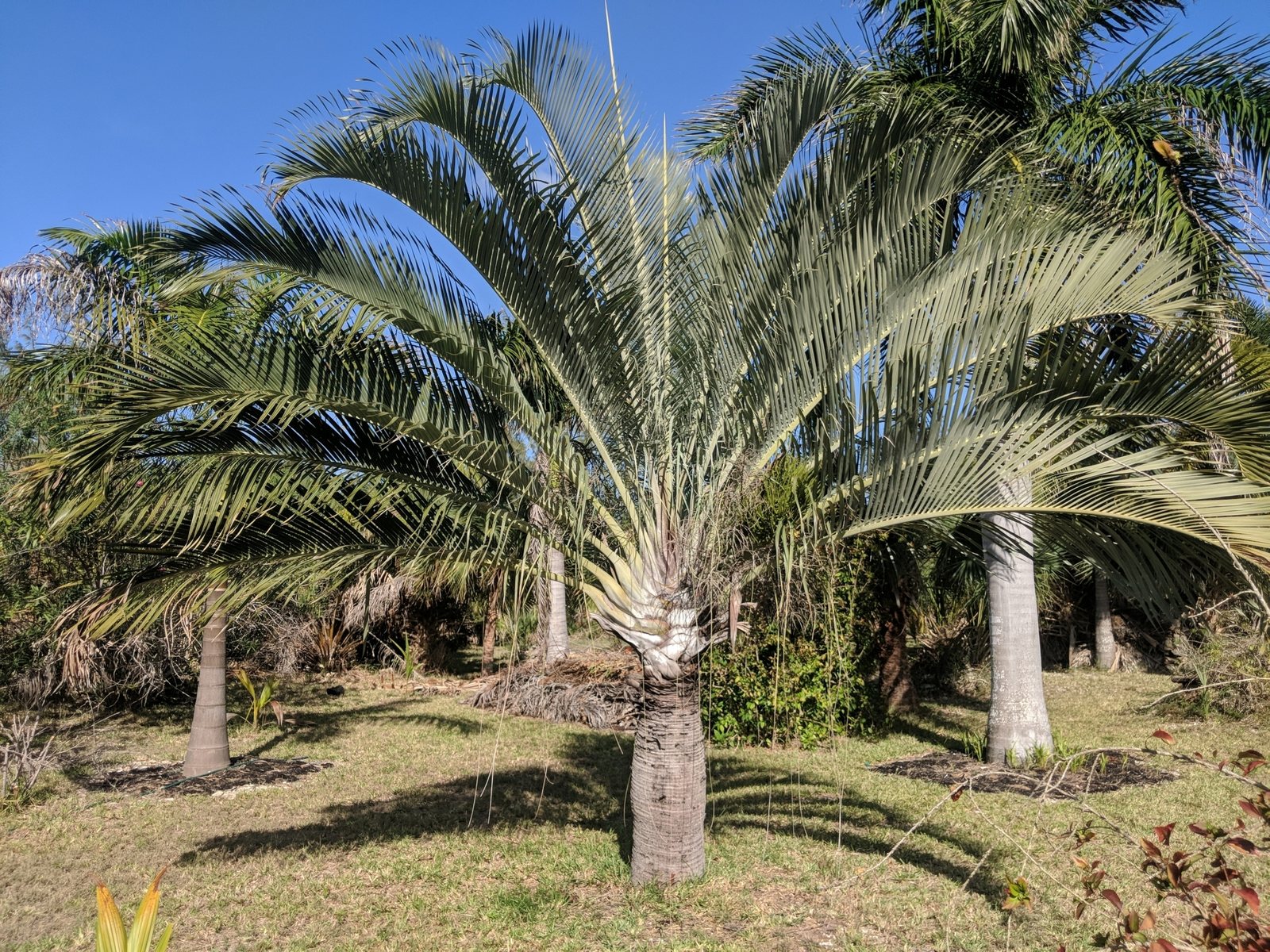
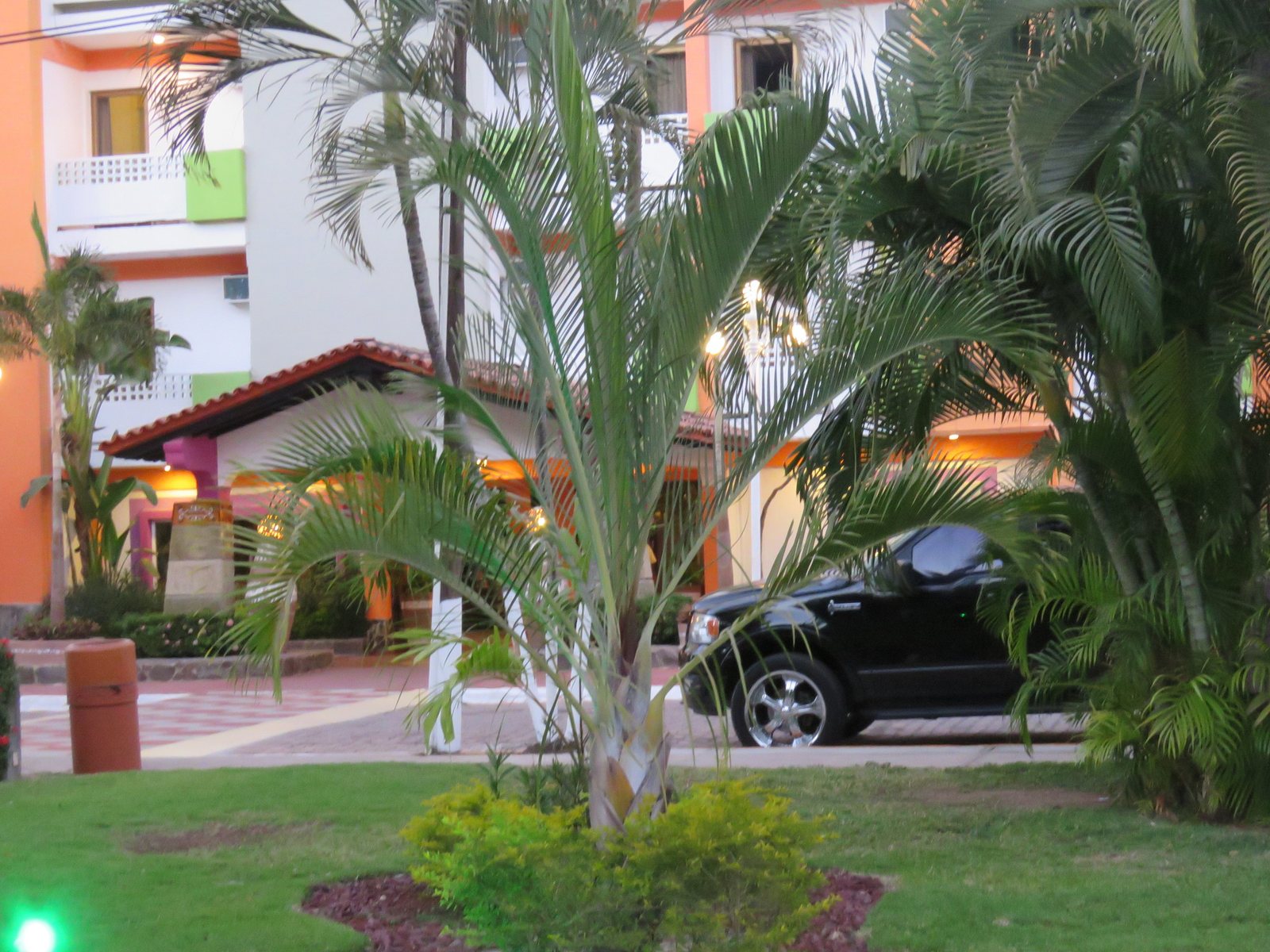
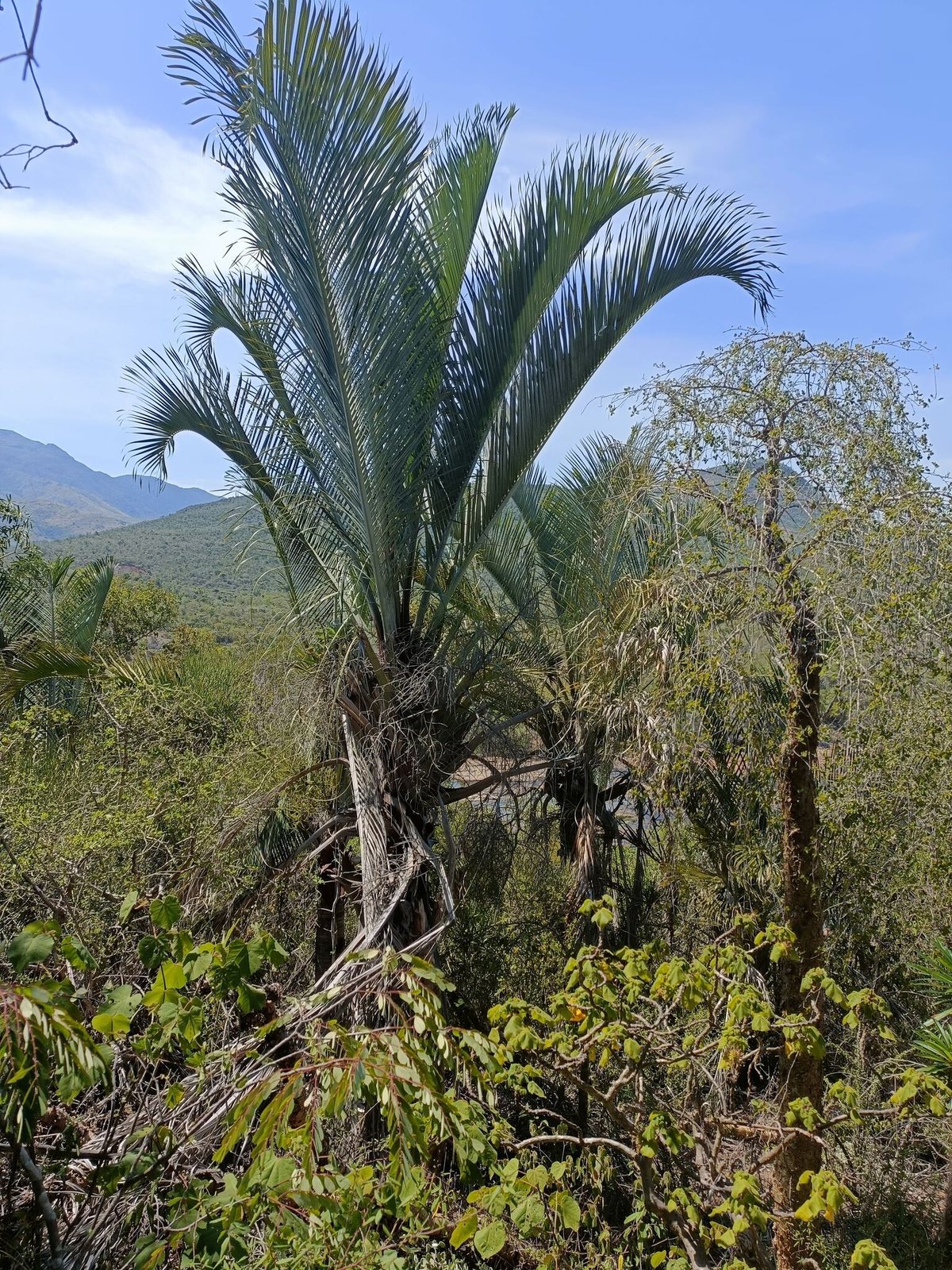
Triangle palm is a single-trunked palm from Madagascar with grey-green, arching fronds arranged in three distinct ranks, giving the crown a triangular shape. It makes a strong architectural specimen in warm, nearly frost-free gardens; in the UK, Canada and colder regions, it needs a bright, heated conservatory or greenhouse for winter.
At a glance
- Sun
- Full sun; young plants tolerate light shade. Acclimatise greenhouse-grown plants gradually before placing them in direct sun.
- Water
- Water regularly while establishing, allowing the surface soil to dry between waterings. Established palms tolerate some drought but look better with deep watering during prolonged dry spells.
- Soil
- Well-drained sandy or loamy soil. Avoid waterlogged ground; use a freely draining palm compost in containers.
- Height
- 25-35 ft (7.6-10.7 m)
- Spread
- 12-16 ft (3.7-4.9 m)
- Foliage
- Evergreen. Long, feather-shaped, grey-green fronds with narrow leaflets, held upright before arching outward. The swollen leaf bases overlap in three ranks around the trunk.
- Growth
- Moderate in warm climates; slow in cool conditions or containers.
- Care needed
- Medium
The year at a glance
- Drought tolerant
- Heat tolerant
| J | F | M | A | M | J | J | A | S | O | N | D | |
|---|---|---|---|---|---|---|---|---|---|---|---|---|
| Plant |
Northern hemisphere months. In Australia, shift them by six.
- Difficulty
- Moderate
- Toughness
- Fairly tough
Will it suit your garden?
Pick your zone, country, light and whether you have pets.
Full sun is 6 or more hours of direct sun a day, part shade 3 to 6 hours, shade under 3.
How it grows
Planting day
7 ft (2 m)
After 1 year
7 ft (2.3 m)
After 2 years
8 ft (2.6 m)
After 3 years
9 ft (2.8 m)
After 5 years
11 ft (3.4 m)
About 26 years to full size.
From a typical nursery size, at an average rate for this kind of plant. A rule of thumb, not a forecast.
Good to know
- Cats and dogs
- Safe
- Growth rate
- Slow
Care
Jobs through the year
- WaterJun–Aug, every 7 days
- Grow in a pot in this climate; water deeply when the upper compost dries, checking young plants more often.
- WaterMar–May, Sep–Oct, every 10 days
- Check pot moisture before watering; let the surface dry and drain thoroughly.
- WaterJan–Feb, Nov–Dec, every 21 days
- Check overwintering pots; keep relatively dry but water before the whole root ball dries out.
- FeedMay
- Apply slow-release palm fertiliser with potassium, magnesium and trace elements; repeat only as labelled.
- PruneJun–Aug
- Remove fully brown fronds without damaging the trunk; retain partly green leaves and never cut the growing spear.
- ProtectJan–May, Sep–Dec
- Keep under bright, frost-free cover and protect the crown from cold and persistent damp.
- ProtectJun
- Move summer pots outside once nights are warm and acclimatise gradually to full sun.
- Plant in spring or early summer, keeping the root ball at its original depth and leaving room for the full crown.
- Water deeply during establishment, but never leave the roots standing in water.
- Feed during the warm growing season with a slow-release palm fertiliser containing potassium, magnesium and trace elements, following the label.
- Spread organic mulch over the root zone, keeping it clear of the trunk.
- Move container plants into bright, frost-free shelter before cold weather; keep them drier in winter without letting the root ball dry out completely.
Pruning. Remove fully brown fronds as needed during warm weather, cutting the stalk without damaging the trunk. Leave green or partly green fronds in place, and never cut the central growing spear or top the palm.
Through the year
- Spring
- Check drainage, refresh mulch and resume feeding as active growth begins.
- Late spring
- Plant outdoors once the soil is warm, or gradually acclimatise container plants to outdoor sun.
- Summer
- Water deeply during dry weather and inspect new growth for nutrient-deficiency symptoms.
- Late summer
- Remove fully dead fronds and check sheltered or container-grown palms for spider mites.
- Autumn
- Move container plants under bright, frost-free cover before cold nights arrive.
- Winter
- Reduce watering as growth slows, keeping the root zone aerated and the crown protected from frost.
In the garden
- Use as a specimen in an open lawn or gravel bed where its three-sided crown can be seen from several angles.
- Set against a plain wall to emphasise the silhouette and grey-green foliage.
- Combine with low succulents and grasses in a warm, freely draining architectural planting.
- Grow a young specimen in a large container beside a sunny terrace, with provision for winter shelter in cooler climates.
Garden styles it suits: Architectural minimal, Contemporary minimal, Modern tropical, Luxury resort, Modern Mediterranean and Tropical.
Plant it with: Bird of paradise, Foxtail agave, Blue chalk sticks, Society garlic and Lomandra.
Wildlife: Small flowers attract visiting insects in warm climates. This Madagascan palm has limited value as a food plant for native wildlife in the countries where it is commonly cultivated.
Problems to watch for
- Cold damage: frost can scorch fronds and damage the growing point. Choose a sheltered, frost-free site and move container plants indoors before freezing weather.
- Root rot: persistent wet soil causes yellowing and decline. Improve drainage, reduce watering and never leave a container standing in a saucer of water.
- Nutrient deficiencies: yellow bands or orange spotting on older fronds can indicate magnesium or potassium shortages. Use a balanced palm fertiliser with micronutrients rather than removing affected living fronds.
- Spider mites: fine webbing and stippled leaves are most likely under cover. Rinse foliage thoroughly and use a labelled insecticidal soap if needed, reaching the undersides of leaflets.
Safety
Not known to be toxic to people, cats, dogs or horses, although species-specific safety information is limited. Do not treat the fruit or other parts as edible; fallen fruits can also be a choking hazard for small children and pets.
Easily confused with
Triangle teddy bear palm (Dypsis leptocheilos)
Usually sold as teddy bear palm, it has a conspicuous reddish-brown, velvety crownshaft and lacks the triangle palm's strongly three-ranked leaf bases.
Majesty palm (Ravenea rivularis)
Its greener fronds form a rounded crown rather than three distinct ranks, and it generally needs more moisture.
Bismarck palm (Bismarckia nobilis)
It has large, fan-shaped leaves rather than feather-shaped fronds and develops a much broader crown.
The name
The common name describes the triangular arrangement of the leaf bases, while decaryi honours the French naturalist Raymond Decary.
Propagation. Grow from fresh seed, removing the fruit pulp and sowing in a warm, moist but freely draining medium. Germination can be slow and uneven; this single-stemmed palm cannot be divided or propagated from trunk cuttings.
Checked against open data
- Accepted botanical name
- Dypsis decaryi
Sources: GBIF (CC BY 4.0). The care and design notes are LandscapeGPT's own.
See it in your own yard.
Upload a photo of your yard and see it redesigned with plants that suit your climate, each checked against your zone.