Tuscan kale
Brassica oleracea 'Lacinato'. Family Brassicaceae. Annual.
Also called Cavolo nero, Lacinato kale, Dinosaur kale, Black Tuscan kale.
Tuscan kale is grown as an annual vegetable for its long, dark, heavily textured leaves, which are picked repeatedly for cooking. It is naturally biennial and can keep cropping through winter in mild climates, but severe freezes may kill it; cool weather generally gives the best leaf quality.

At a glance
- Sun
- Full sun; light afternoon shade helps in hot climates.
- Water
- Keep the root zone evenly moist, especially while seedlings establish and during dry weather. Water deeply when the soil surface begins to dry, without leaving the ground waterlogged.
- Soil
- Fertile, moisture-retentive, well-drained soil, ideally pH 6.0-7.5. Avoid acidic soil and beds with a history of clubroot.
- Height
- 2-3 ft (0.6-0.9 m)
- Spread
- 1.5-2 ft (0.45-0.6 m)
- Foliage
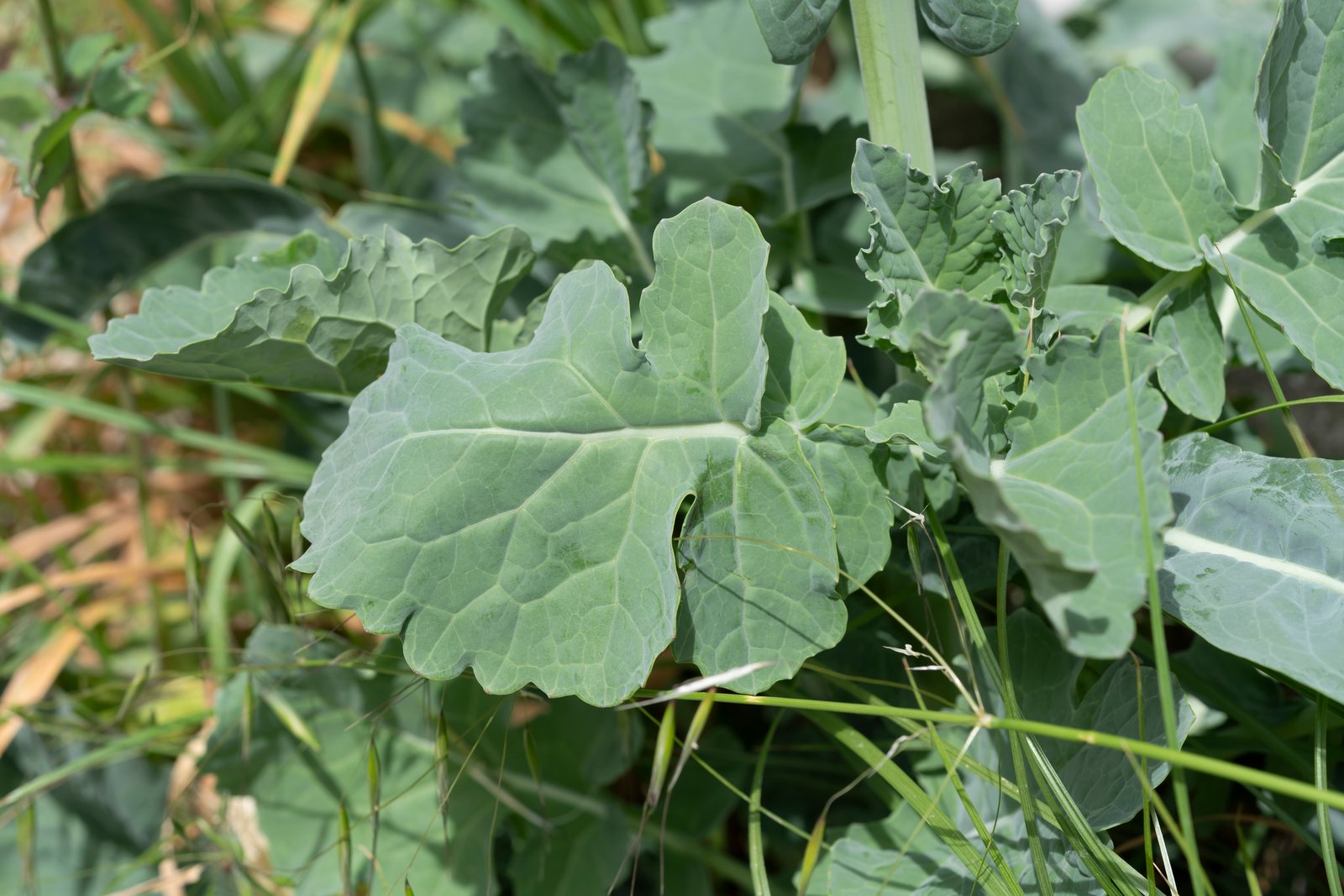
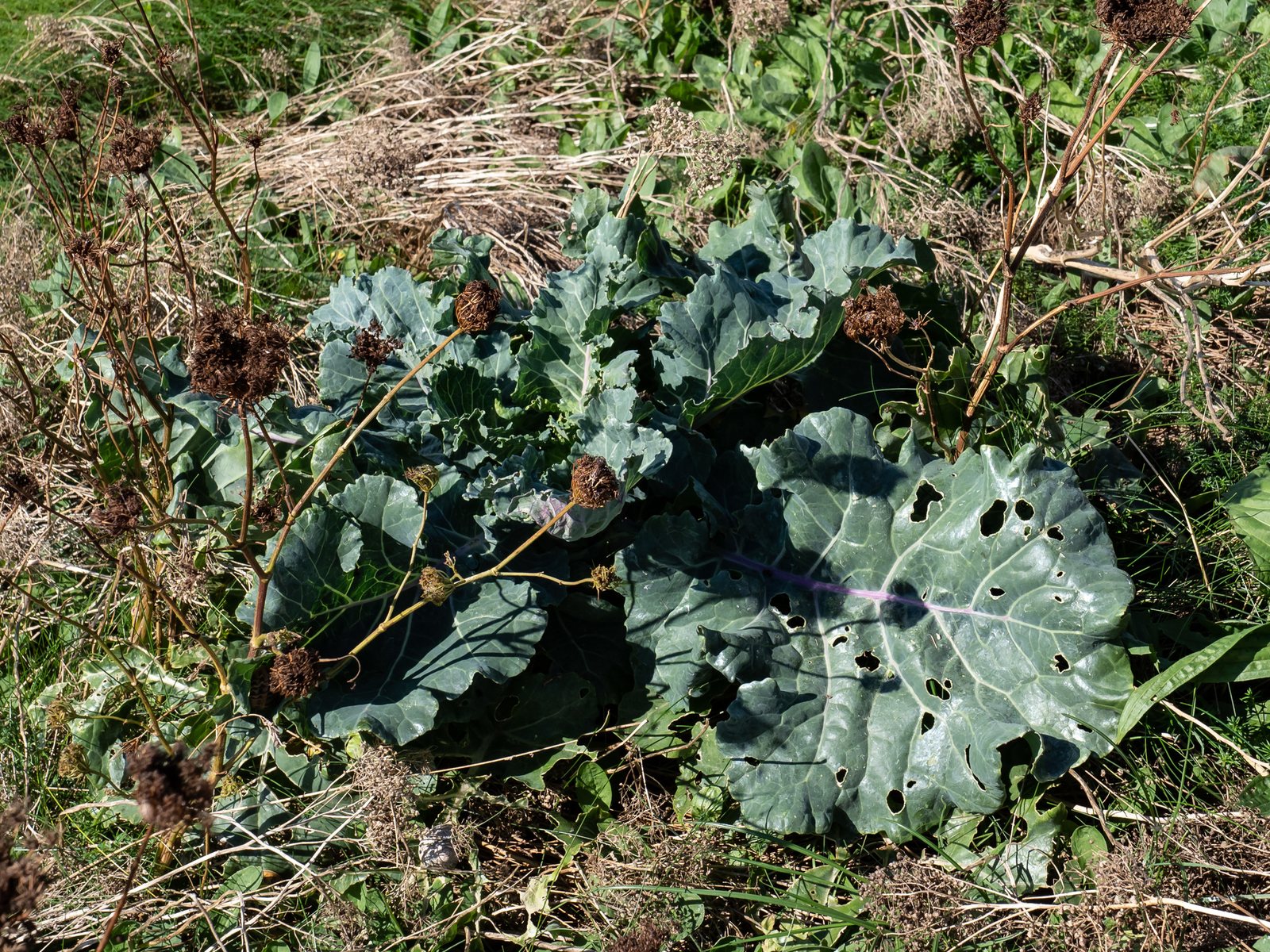
- Long, narrow, blue-green to nearly black leaves with deeply blistered surfaces and prominent pale midribs; leaves grow along an upright stem.
- Growth
- Fast in cool, moist conditions.
- Care needed
- Medium
The year at a glance
- Low allergen
- Edible
| J | F | M | A | M | J | J | A | S | O | N | D | |
|---|---|---|---|---|---|---|---|---|---|---|---|---|
| Fruit | ||||||||||||
| Plant |
Northern hemisphere months. In Australia, shift them by six.
- Difficulty
- Moderate
- Toughness
- Fairly tough
Will it suit your garden?
Pick your zone, country, light and whether you have pets.
Full sun is 6 or more hours of direct sun a day, part shade 3 to 6 hours, shade under 3.
How it grows
Planting day
0.5 ft (0.15 m)
After 1 year
2.5 ft (0.75 m)
full size
Full size in one season.
From a typical nursery size, at an average rate for this kind of plant. A rule of thumb, not a forecast.
Good to know
- Cats and dogs
- Mildly toxic: may upset a stomach
- Native to
- the UK
- Growth rate
- Fast
Care
Jobs through the year
- WaterMar–May, Sep–Oct, every 7 days
- Water established plants deeply if rainfall is insufficient; seedlings need more frequent checks.
- WaterJun–Aug, every 3 days
- Water at soil level when the surface begins to dry, keeping roots evenly moist.
- WaterJan–Feb, Nov–Dec, every 14 days
- Water overwintering plants only during dry, frost-free weather, especially beneath rain-excluding covers.
- FeedMar–Apr, Jun–Aug
- Work compost in before planting; use a light nitrogen-rich feed only if growth slows or leaves pale.
- MulchMay–Jun
- Mulch established plants to conserve moisture, keeping material clear of stems.
- ProtectMar–Oct
- Fit securely sealed insect mesh and check underneath for caterpillars, aphids and slugs.
- ProtectJan–Mar, Oct–Dec
- Stake tall plants and use fleece or a tunnel against severe frost; winter survival varies.
- PruneApr–Nov
- Remove yellow or damaged lower leaves without cutting the central growing tip.
- HarvestMay–Oct, every 7 days
- Pick outer leaves from established plants, leaving the central rosette and several healthy leaves.
- HarvestJan–Feb, Nov–Dec, every 14 days
- Pick sparingly from surviving plants because winter replacement growth is slow.
- Space plants 18-24 in (45-60 cm) apart so leaves have room and air can circulate.
- Work mature compost into the bed before planting; feed lightly with a nitrogen-rich vegetable fertilizer if growth slows or older leaves become pale.
- Water at soil level during dry spells to maintain steady leaf growth.
- Mulch established plants to conserve moisture, keeping mulch clear of the stems.
- Cover young plants with insect mesh, sealing the edges against cabbage butterflies and other pests.
- Stake tall plants in exposed gardens before autumn winds loosen their roots.
Pruning. Remove yellowing or damaged lower leaves as they appear. For continued leaf harvest, leave the central growing tip intact; remove flowering shoots if you want a short extension of cropping, although bolting plants are usually replaced.
Harvest
Pick baby leaves when about 4-6 in (10-15 cm) long, or harvest larger outer leaves once the plant is well established, often around 8-12 weeks after sowing. Snap or cut individual leaves from the bottom upward, leaving the central rosette and several healthy leaves to support new growth. Leaves are often sweeter after light frost; remove tough midribs from mature leaves before cooking.
Through the year
- Early spring
- Sow under cover in cool climates, or directly outdoors once the soil is workable; protect seedlings from hard freezes.
- Mid-spring
- Harden off indoor-grown seedlings, plant them out at their final spacing and fit insect mesh.
- Late spring
- Begin picking outer leaves when plants are established; check leaf undersides for caterpillars and aphids.
- Summer
- Water and mulch during dry weather. Sow another batch for autumn and winter cropping; in hot regions, delay sowing until late summer.
- Autumn
- Continue harvesting, stake tall plants and use fleece or a tunnel where severe frost is likely.
- Winter
- Pick sparingly from surviving plants because replacement growth is slow. Remove failed plants and plan next season's brassica rotation.
In the garden
- Plant in rows or blocks in a kitchen garden for a strong upright shape and repeated harvests.
- Repeat among herbs and flowers in a potager, where dark leaves contrast with calendulas and pale foliage.
- Use as a temporary architectural accent in an edible border with chard and lettuces.
- Grow in a large container near the kitchen, allowing enough room for its spreading leaves.
Garden styles it suits: Potager (kitchen garden), Edible landscape, Cottage garden, Homestead, Architectural minimal and Winter interest.
Plant it with: Swiss chard, Lettuce, Calendula, Dill, Chives and Nasturtium.
Wildlife: Leaves feed cabbage butterfly and moth caterpillars. If plants are allowed to flower in their second year, the yellow flowers provide food for bees and other insects; birds may also peck the foliage.
Problems to watch for
- Cabbage caterpillars: inspect leaf undersides and hand-pick eggs and larvae; prevent egg-laying with securely fitted insect mesh.
- Cabbage aphids: check crowded young leaves, wash small colonies off with water and remove heavily infested leaves.
- Clubroot: swollen roots and wilting despite moist soil indicate trouble; remove affected plants, avoid moving contaminated soil and use a long brassica rotation.
- Slugs and snails: protect seedlings, remove nearby hiding places and use wildlife-conscious slug controls where needed.
Safety
The leaves are edible for people and are not known to be toxic in normal food portions. Small amounts are not generally considered poisonous to cats or dogs, but larger amounts can cause digestive upset. Do not offer it as bulk feed to horses: large quantities of brassicas can cause digestive and blood disorders.
Easily confused with
Curly kale (Brassica oleracea (curly-leaved cultivars))
Curly kale has frilled or tightly curled leaf margins; Tuscan kale has long, narrow leaves with relatively smooth margins and blistered surfaces.
Collard greens (Brassica oleracea (Collard Group))
Collards generally have broader, flatter, smoother leaves rather than the narrow, deeply textured leaves of Tuscan kale.
The name
Cavolo nero is Italian for 'black cabbage', referring to the plant's very dark leaves, while Tuscan kale refers to its association with Tuscany.
Propagation. Grow from seed, sown about 0.5 in (1 cm) deep in modules or a prepared seedbed. Seed saved from flowering plants may not come true because kale readily cross-pollinates with other flowering Brassica oleracea crops.
Checked against open data
- Accepted botanical name
- Brassica oleracea
- In the US and Canada
- Introduced in the lower 48 states, Pacific Basin and Puerto Rico.
- Native range
- France, Great Britain and Spain.
- Measured
- Soil pH 7 to 7.5. Average height 50 cm.
Sources: GBIF (CC BY 4.0), USDA PLANTS and Trefle (CC BY 4.0). The care and design notes are LandscapeGPT's own.
See it in your own yard.
Upload a photo of your yard and see it redesigned with plants that suit your climate, each checked against your zone.