Twinspur
Diascia barberae. Family Scrophulariaceae. Annual.
Also called Barber's twinspur.
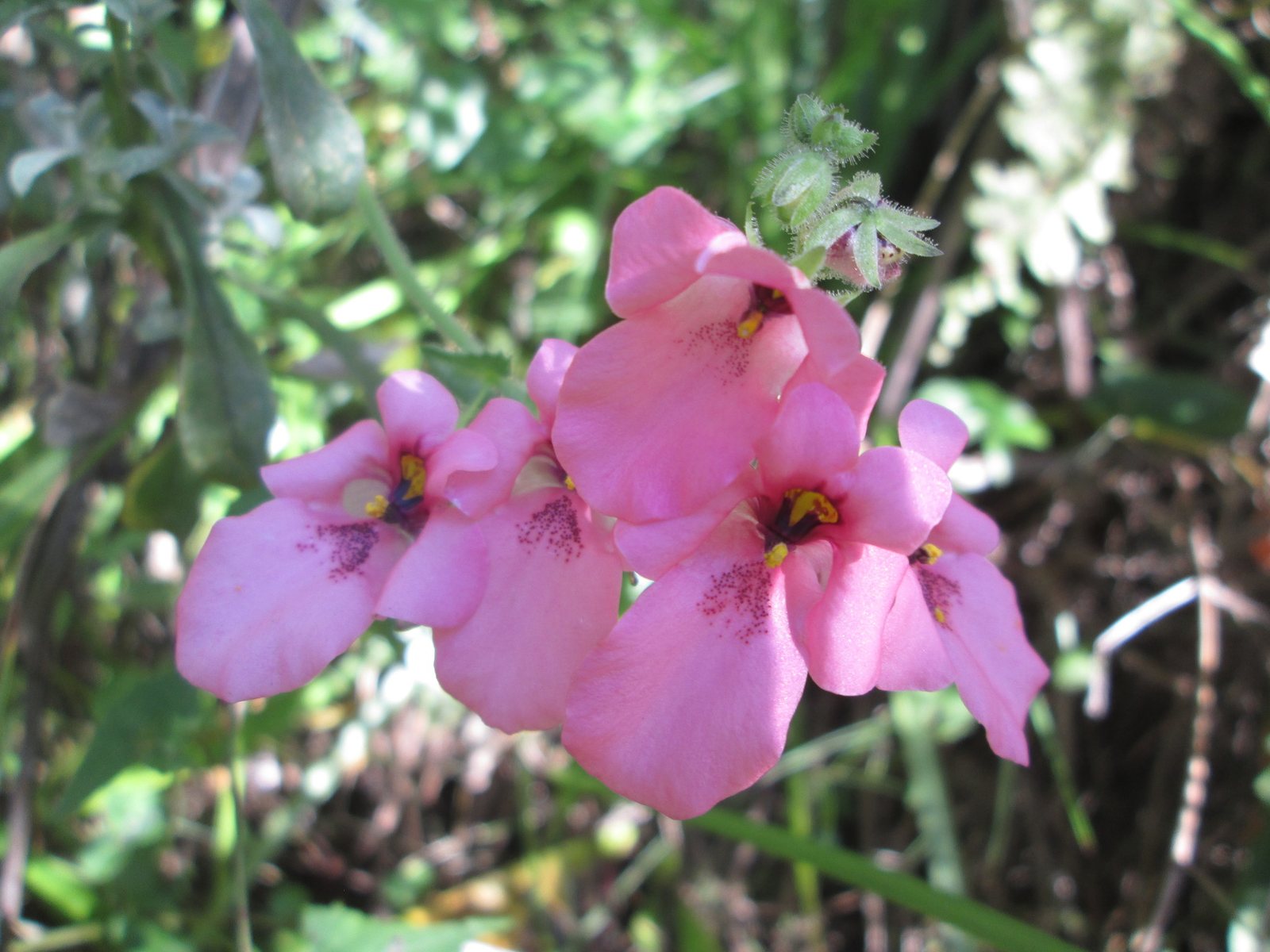
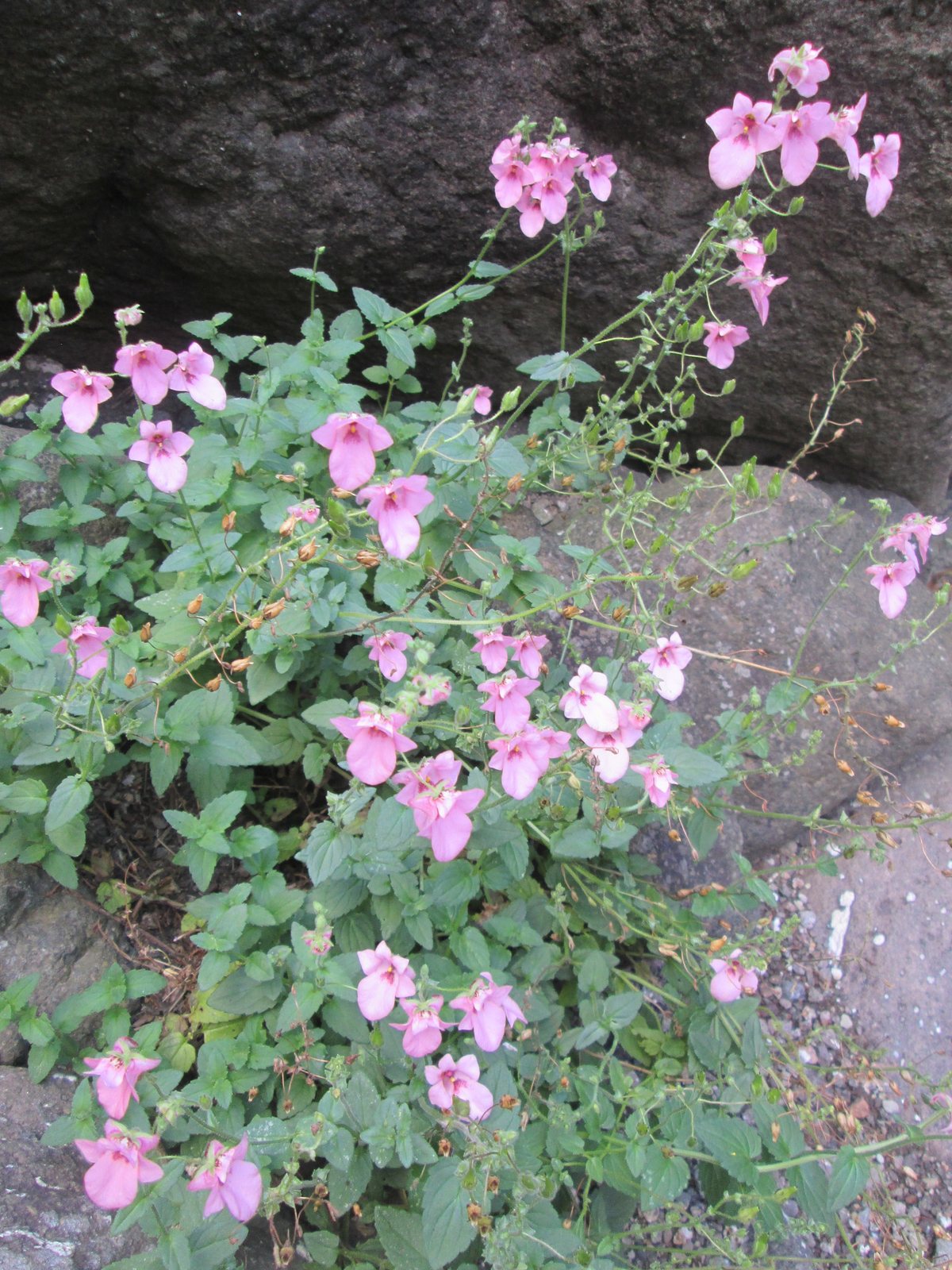
Twinspur is a low-growing, short-lived South African perennial usually grown as an annual. Its loose sprays of small pink flowers soften container edges and border fronts, flowering best in mild weather rather than intense summer heat.
At a glance
- Sun
- Full sun in cool climates; light afternoon shade where summers are hot.
- Water
- Keep evenly moist but not waterlogged. Containers may need daily checks in warm or windy weather.
- Soil
- Well-drained soil enriched with compost, or a free-draining container mix. Avoid heavy, wet ground.
- Height
- 0.5-1 ft (0.15-0.3 m)
- Spread
- 0.75-1.5 ft (0.23-0.45 m)
- Flowers
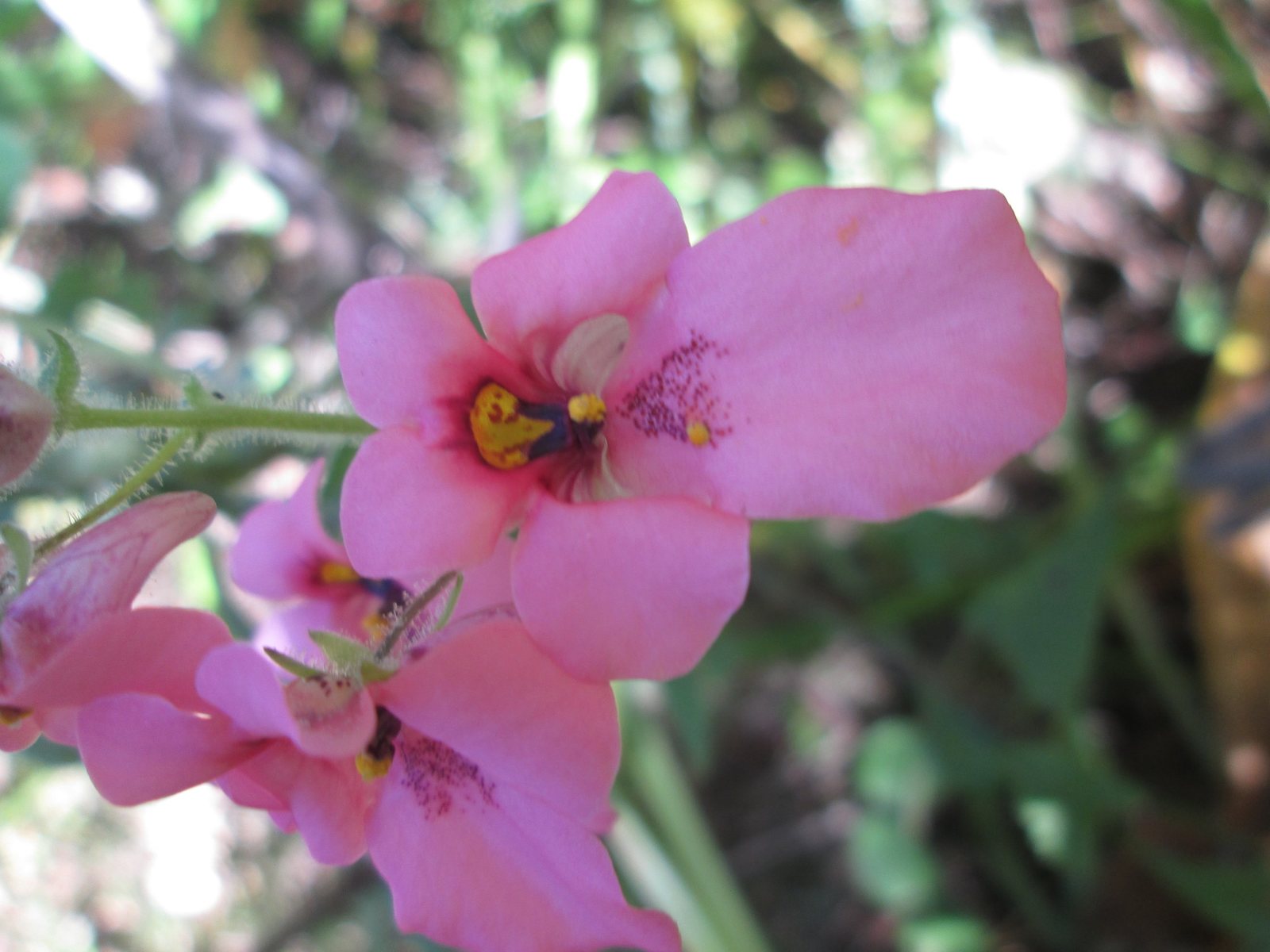
- Pink to rose-pink flowers from late spring into autumn, often with a pause during hot weather; flowering can begin earlier in frost-free climates.
- Foliage
- Small, green, oval to heart-shaped leaves with toothed edges. Foliage may persist through mild, frost-free winters.
- Growth
- Fast during cool to mild weather.
- Care needed
- Medium
The year at a glance
- Low allergen
| J | F | M | A | M | J | J | A | S | O | N | D | |
|---|---|---|---|---|---|---|---|---|---|---|---|---|
| Flowers | ||||||||||||
| Plant |
Northern hemisphere months. In Australia, shift them by six.
- Difficulty
- Moderate
- Toughness
- Needs looking after
Will it suit your garden?
Pick your zone, country, light and whether you have pets.
Full sun is 6 or more hours of direct sun a day, part shade 3 to 6 hours, shade under 3.
How it grows
Planting day
0.5 ft (0.15 m)
After 1 year
0.7 ft (0.22 m)
full size
Full size in one season.
From a typical nursery size, at an average rate for this kind of plant. A rule of thumb, not a forecast.
Good to know
- Cats and dogs
- Safe
- Growth rate
- Fast
Care
Jobs through the year
- WaterMay, Sep–Oct, every 7 days
- Keep established ground plants evenly moist; skip after rain and water new plants more often.
- WaterJun–Aug, every 3 days
- Water established ground plants when the surface begins drying; avoid saturated soil.
- PruneJun–Sep
- After a flowering flush, shorten faded stems by one-third to encourage rebloom.
- ProtectMay–Jun
- Protect young growth from slugs and snails.
- ProtectJul–Aug
- Provide temporary afternoon shade during severe heat; flowering may pause.
- ProtectSep–Oct
- If keeping plants for next year, pot up and move to bright, frost-free shelter before frost.
- Plant outdoors after frost danger has passed, spacing plants about 9-12 inches (23-30 cm) apart.
- Water when the surface begins to dry; do not leave pots standing in water.
- Feed container plants every two to four weeks with a balanced liquid fertilizer at the label rate.
- Provide afternoon shade during hot spells, but do not compensate for heat-related wilting by keeping the soil saturated.
- To retain plants over winter, move pots into a bright, frost-free place and water sparingly.
Pruning. After a flowering flush, trim faded stems back by about one-third to encourage branching and more flowers. Remove dead or damaged growth whenever it appears.
Through the year
- Late winter
- Sow seed indoors in bright conditions if raising your own plants.
- Spring
- Harden off young plants and plant outside after the last frost.
- Late spring
- Begin regular container feeding and check moisture as growth increases.
- Summer
- Trim after flowering flushes and protect plants from severe afternoon heat.
- Early autumn
- Take cuttings from healthy, nonflowering shoots if you want plants for next year.
- Late autumn
- Compost frost-killed plants or move selected pots into bright, frost-free shelter.
In the garden
- Trail over the edges of window boxes and hanging baskets with lobelia and sweet alyssum.
- Edge sunny paths with a low ribbon of pink flowers.
- Fill gaps at the front of cottage borders beside compact geraniums and pinks.
- Soften the rims of courtyard pots beneath taller seasonal flowers.
Garden styles it suits: Cottage garden, English country, Romantic rose garden, Pastel border, Small-space and Modern courtyard.
Plant it with: Lobelia, Sweet alyssum, Nemesia, Pansies, Hardy geraniums and Pinks.
Wildlife: In its native southern Africa, the flowers provide floral oils for specialized oil-collecting bees. Do not rely on it as a nectar source for garden pollinators elsewhere.
Problems to watch for
- Slugs and snails can strip young growth; inspect after dark, remove hiding places and use suitable barriers or labelled slug controls.
- Aphids gather on soft tips; rinse them off with water or use insecticidal soap according to the label.
- Root rot develops in persistently wet soil; improve drainage, empty saucers and replace badly affected plants.
- High heat can stop flowering and make plants straggly; provide afternoon shade, maintain steady moisture and trim lightly when cooler weather returns.
Safety
Not known to be toxic to people, cats, dogs or horses. No particular plant part is recognized as poisonous, but it is not a food plant and safety information is limited.
Easily confused with
Nemesia (Nemesia spp.)
Nemesia has similar small, two-lipped flowers, but lacks the distinctive pair of rear-facing spurs found on twinspur.
Common toadflax (Linaria vulgaris)
Common toadflax has narrow leaves and upright spikes of yellow flowers, each with one long spur rather than two.
The name
Twinspur refers to the two spurs behind each flower, while barberae honours the South African naturalist Mary Elizabeth Barber.
Propagation. Sow seed indoors before your local spring planting season, pressing it onto the surface and covering only very lightly. Take softwood cuttings in spring or late summer; cuttings are the better choice for preserving a named cultivar because seedlings may differ.
Checked against open data
- Accepted botanical name
- Diascia barberae
- Native range
- Free State, KwaZulu-Natal and Lesotho.
Sources: GBIF (CC BY 4.0) and Trefle (CC BY 4.0). The care and design notes are LandscapeGPT's own.
See it in your own yard.
Upload a photo of your yard and see it redesigned with plants that suit your climate, each checked against your zone.