Umbrella bamboo
Fargesia murielae. Family Poaceae. Ornamental grass.
Also called Muriel's bamboo.
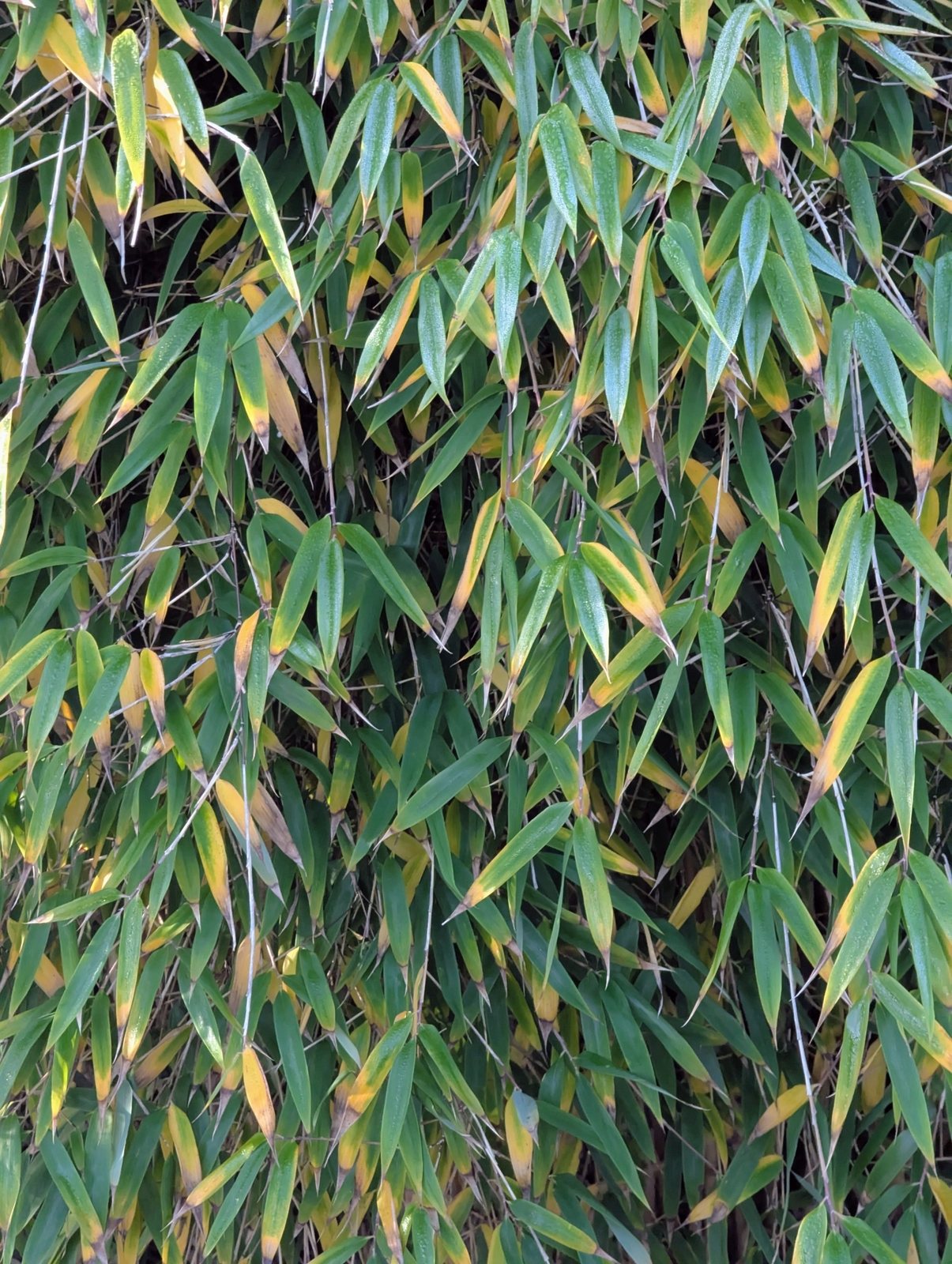
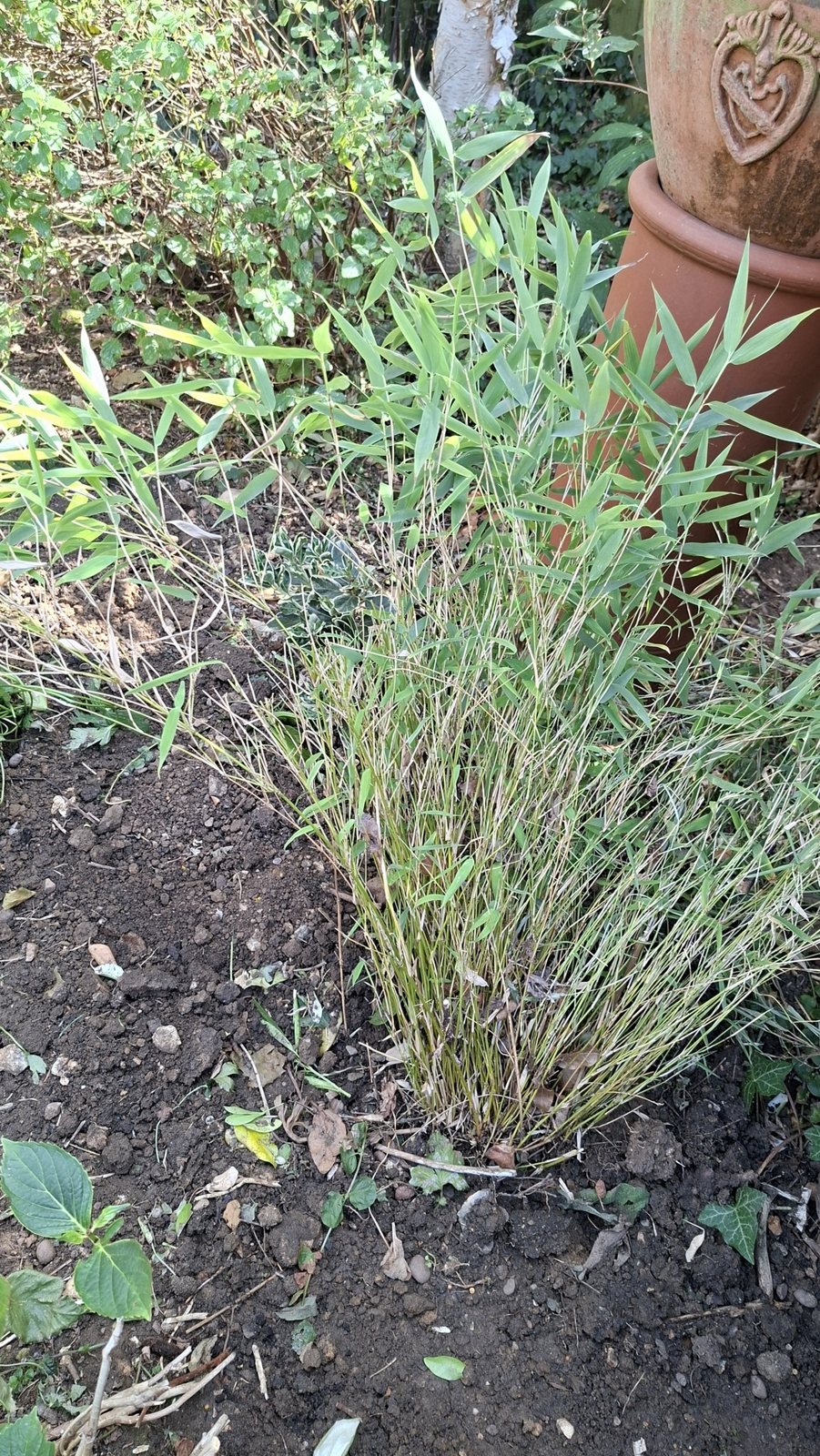
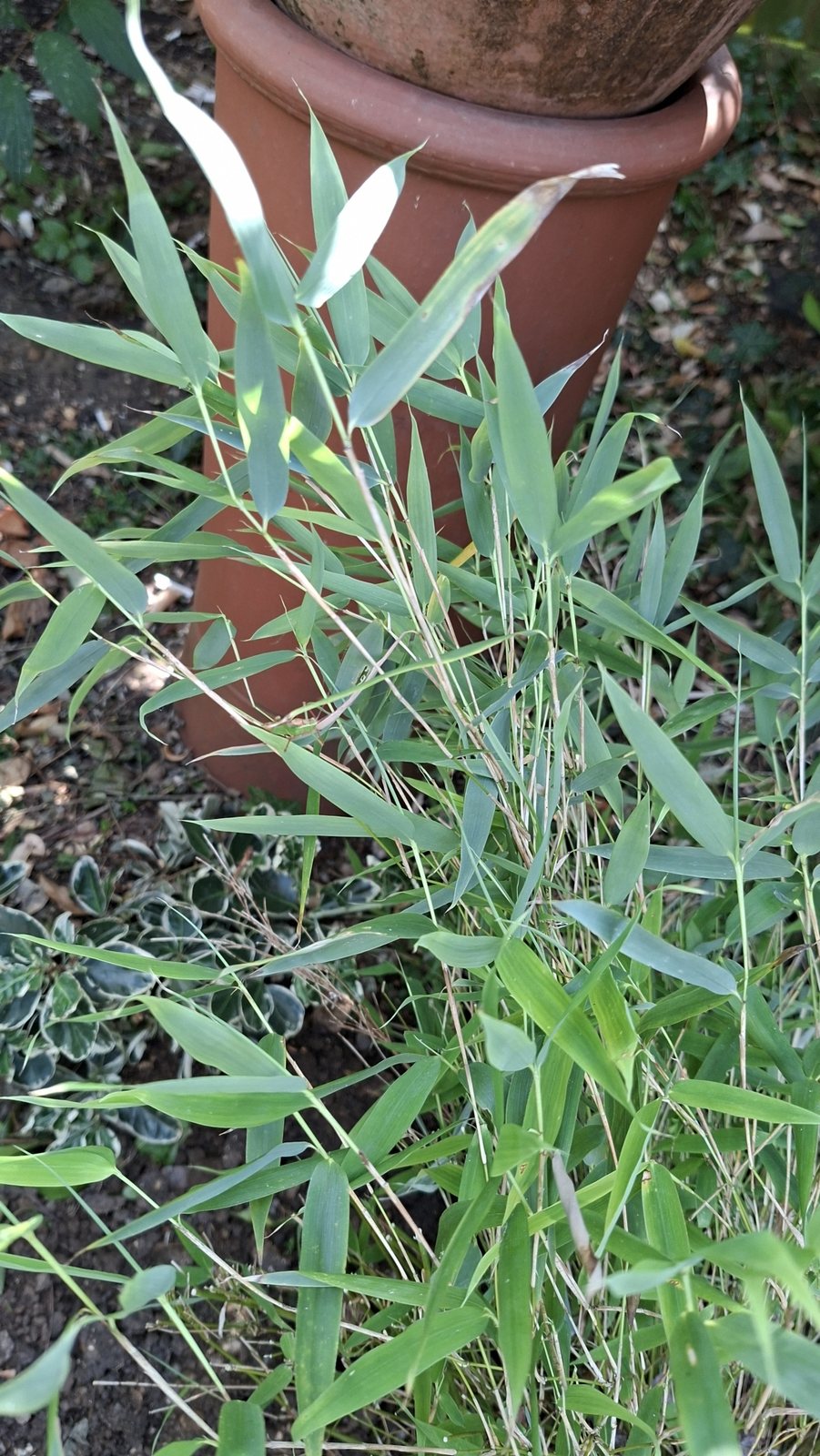
Umbrella bamboo is an evergreen, clump-forming bamboo with slender canes that arch outwards under a mass of small leaves. Gardeners grow it for soft screening and year-round foliage without the long-running rhizomes of many other bamboos. It performs best in cool, moist climates and struggles with prolonged heat, especially hot, humid summers.
At a glance
- Sun
- Partial shade or light, dappled shade; tolerates full sun in cool climates if the roots stay moist. Shelter from hot afternoon sun and drying winds.
- Water
- Keep evenly moist but not waterlogged. Water deeply during dry spells, particularly while establishing and when grown in containers.
- Soil
- Humus-rich, moisture-retentive but well-drained soil, preferably slightly acidic to neutral. Avoid persistently waterlogged ground.
- Height
- 10-15 ft (3-4.5 m)
- Spread
- 5-10 ft (1.5-3 m)
- Foliage
- Evergreen. Small, narrow green leaves on fine branches; green canes age towards yellow-green and bend into an umbrella-like outline. Leaves may curl during drought, cold or strong sun.
- Growth
- Moderate; forms a gradually widening clump rather than sending out distant runners.
- Care needed
- Low
The year at a glance
- Wildlife
| J | F | M | A | M | J | J | A | S | O | N | D | |
|---|---|---|---|---|---|---|---|---|---|---|---|---|
| Plant |
Northern hemisphere months. In Australia, shift them by six.
- Difficulty
- Easy
- Toughness
- Fairly tough
Will it suit your garden?
Pick your zone, country, light and whether you have pets.
Full sun is 6 or more hours of direct sun a day, part shade 3 to 6 hours, shade under 3.
How it grows
Planting day
1.5 ft (0.45 m)
After 1 year
6 ft (1.8 m)
After 2 years
10 ft (3.1 m)
After 3 years
12 ft (3.8 m)
full size
About 3 years to full size.
From a typical nursery size, at an average rate for this kind of plant. A rule of thumb, not a forecast.
Good to know
- Cats and dogs
- Safe
- Growth rate
- Moderate
Care
Jobs through the year
- WaterJan–Mar, Nov–Dec, every 21 days
- Water established clumps only during frost-free dry spells if soil is drying.
- WaterApr–May, Sep–Oct, every 7 days
- Water established clumps deeply when rain is insufficient; monitor young plants more often.
- WaterJun–Aug, every 4 days
- During dry weather, keep established clumps evenly moist without waterlogging.
- PruneFeb–Mar
- Remove dead, damaged and a few old canes at ground level; preserve arching tips.
- DivideMar–Apr
- Divide only if propagation or size reduction is needed; replant and water thoroughly.
- MulchApr
- Add compost or leaf mould clear of cane bases and retain healthy fallen bamboo leaves.
- FeedApr
- Apply a light balanced feed only if growth is weak.
- ProtectJun–Aug
- Provide temporary shade or wind shelter if hot sun or drying winds cause persistent leaf curling.
- Water deeply through the first two growing seasons and during prolonged dry weather.
- Apply a layer of compost or leaf mould in spring, keeping it clear of the cane bases.
- Feed lightly with a balanced fertiliser in spring if growth is weak; avoid heavy late-season feeding.
- Leave fallen bamboo leaves beneath the clump as mulch unless they are diseased.
- Check container plants frequently for drying out and move them to a larger pot when roots become congested.
Pruning. In late winter or early spring, cut dead, damaged and a few of the oldest canes to ground level. Preserve the arching tips unless you need to restrict height; a shortened cane will not grow its tip back.
Through the year
- Late winter
- Remove dead or broken canes and thin congested growth at the base.
- Spring
- Plant or divide in workable soil, then water thoroughly.
- Mid-spring
- Refresh the organic mulch and feed lightly if needed.
- Summer
- Water during dry spells and check curled leaves for dry soil or excessive sun.
- Autumn
- Check drainage and retain fallen leaves beneath the clump.
- Winter
- Keep container compost slightly moist and protect pots from severe freezing and drying winds.
In the garden
- Plant as a soft, informal screen along a sheltered boundary, allowing room for the arching canes.
- Use behind ferns and hostas in a shaded border for contrasting leaf shapes.
- Place beside a seating area where the moving leaves and rustling sound can be appreciated.
- Grow in a large container in a cool courtyard, with dependable watering and space for the canopy.
Garden styles it suits: Japanese, Woodland, Modern courtyard, Zen dry garden, Green on green and Pacific Northwest woodland.
Plant it with: Hostas, Japanese painted fern, Soft shield fern, Japanese forest grass, Hellebores and Japanese maple.
Wildlife: Dense foliage provides cover for small birds and other garden animals. It offers little nectar or pollen because flowering is very infrequent.
Problems to watch for
- Leaf curling and brown tips: check soil moisture and exposure; water deeply if dry and provide shelter from hot sun or drying wind.
- Yellowing leaves and weak growth in wet soil: improve drainage or move the plant; do not leave container roots standing in water.
- Spider mites in hot, dry conditions: look for fine stippling and webbing, rinse foliage thoroughly and reduce drought stress.
- Mass flowering followed by decline: flowering is rare but can weaken or kill a clump; maintain normal care, watch for surviving shoots and replace it if recovery fails.
Safety
Not known to be toxic to cats, dogs, horses or people. No part is recognised as a common poisoning hazard, but this ornamental bamboo should not be treated as a food plant or its raw shoots eaten.
Easily confused with
Fountain bamboo (Fargesia nitida)
Usually has more upright canes that often mature to dark purple, rather than the green to yellow-green, broadly arching canes of umbrella bamboo.
Rufa bamboo (Fargesia rufa)
Usually forms a shorter, wider clump and has conspicuous orange-red or rusty cane sheaths around new growth.
The name
The species name murielae honours Muriel, daughter of plant collector Ernest Henry Wilson, while umbrella bamboo describes its arching canopy.
Propagation. Divide an established clump in spring, taking a substantial section with several canes and plenty of roots. Replant promptly, water thoroughly and shelter divisions while they establish; seed is rarely available because flowering is infrequent.
Checked against open data
- Accepted botanical name
- Fargesia murielae
- Native range
- China South-Central.
Sources: GBIF (CC BY 4.0) and Trefle (CC BY 4.0). The care and design notes are LandscapeGPT's own.
See it in your own yard.
Upload a photo of your yard and see it redesigned with plants that suit your climate, each checked against your zone.