Vietnamese coriander
Persicaria odorata. Family Polygonaceae. Perennial.
Also called Rau ram, Vietnamese mint, Laksa leaf, Cambodian mint.
Vietnamese coriander is a tender, spreading herb grown for its peppery, coriander-scented leaves, used in salads, soups and Southeast Asian cooking. It thrives in warmth and consistently moist soil; in cold-winter regions, grow it as an annual or overwinter a pot indoors.
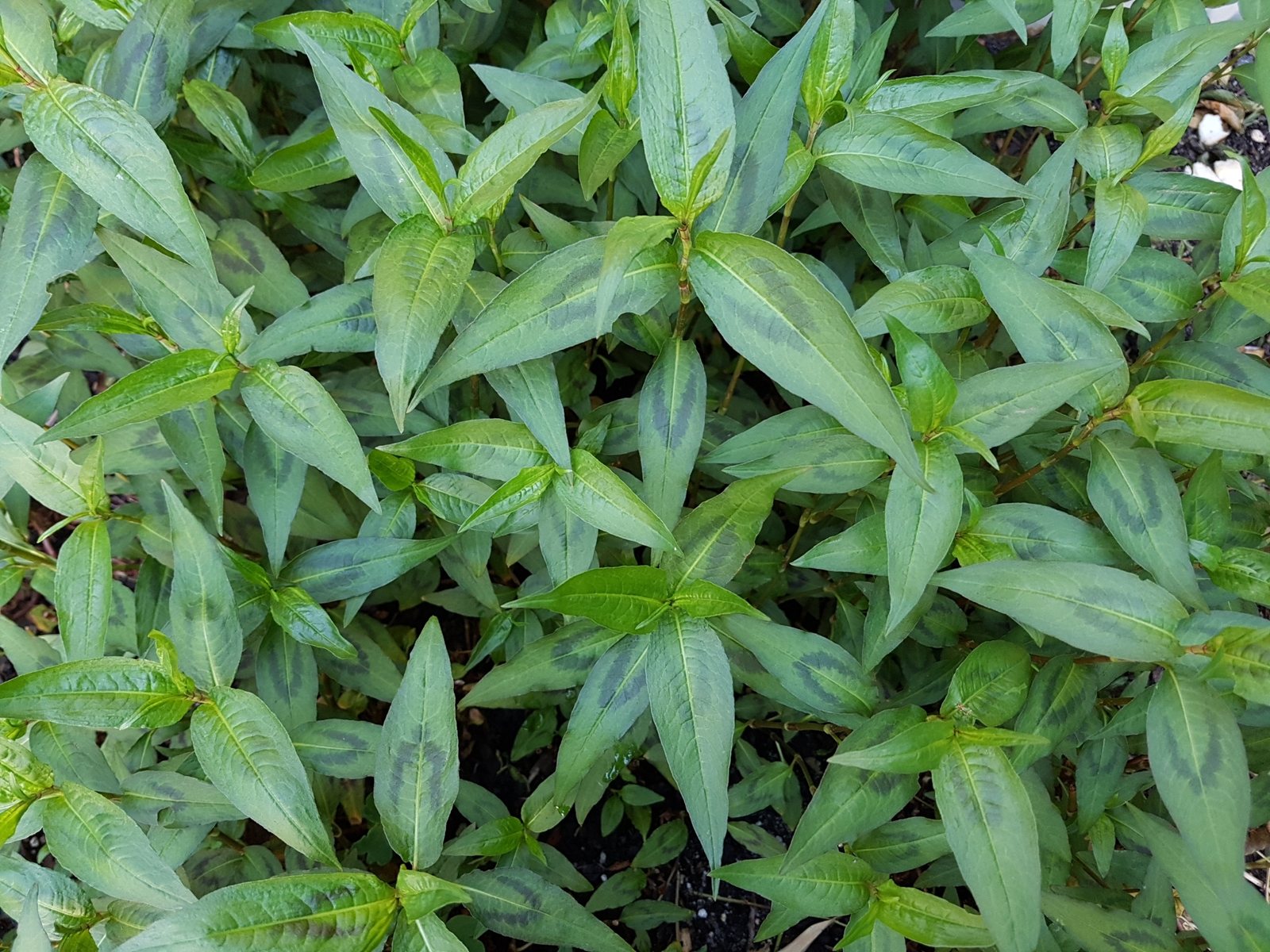
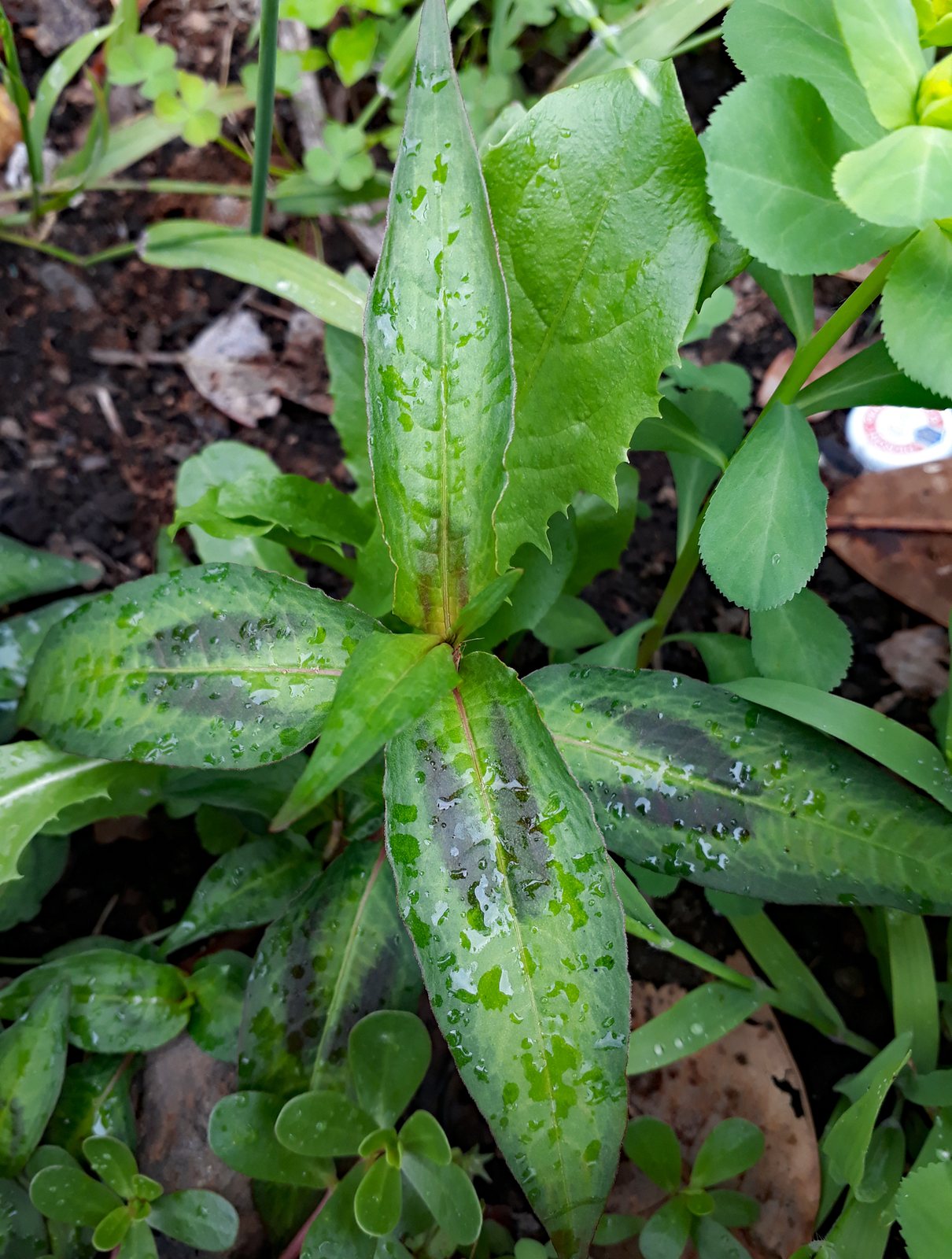
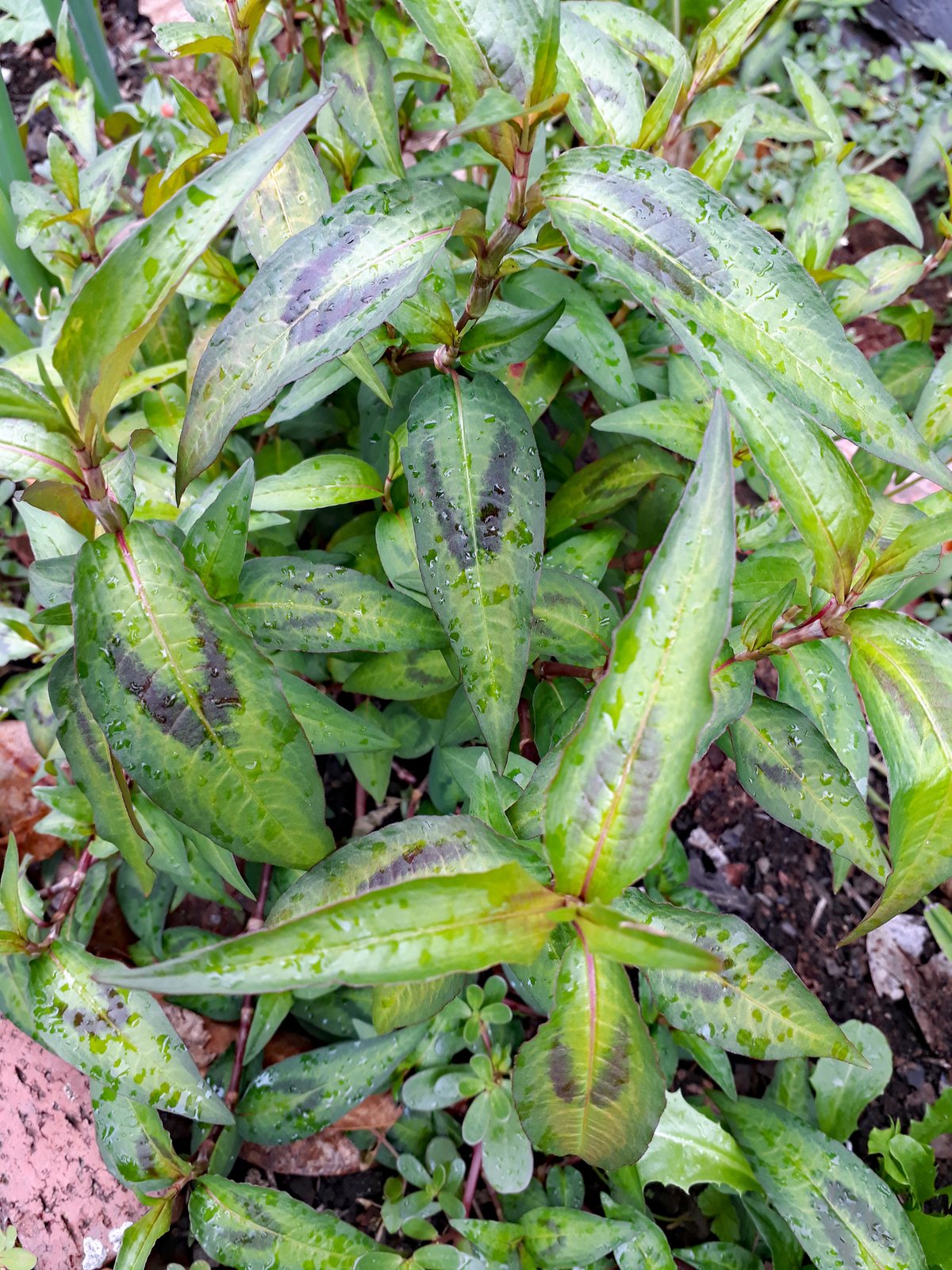
At a glance
- Sun
- Partial shade to full sun; afternoon shade is helpful in hot, dry climates.
- Water
- Keep consistently moist. Water containers whenever the surface begins to dry; drought quickly causes wilting and leaf loss.
- Soil
- Fertile, moisture-retentive soil rich in organic matter. Tolerates wet ground, but indoor pots should drain freely.
- Height
- 1-2 ft (0.3-0.6 m)
- Spread
- 1-3 ft (0.3-0.9 m), spreading farther where stems root into moist ground
- Foliage
- Evergreen. Narrow, pointed green leaves often carry a dark maroon chevron. Jointed stems may be reddish and root where they touch moist soil; crushed leaves have a strong, spicy coriander scent.
- Growth
- Fast in warm weather
- Care needed
- Medium
The year at a glance
- Heat tolerant
- Low allergen
- Fragrant
- Edible
| J | F | M | A | M | J | J | A | S | O | N | D | |
|---|---|---|---|---|---|---|---|---|---|---|---|---|
| Fruit | ||||||||||||
| Plant |
Northern hemisphere months. In Australia, shift them by six.
- Difficulty
- Moderate
- Toughness
- Needs looking after
Will it suit your garden?
Pick your zone, country, light and whether you have pets.
Full sun is 6 or more hours of direct sun a day, part shade 3 to 6 hours, shade under 3.
How it grows
Planting day
1 ft (0.3 m)
After 1 year
1.2 ft (0.38 m)
After 2 years
1.5 ft (0.45 m)
full size
About 2 years to full size.
From a typical nursery size, at an average rate for this kind of plant. A rule of thumb, not a forecast.
Good to know
- Cats and dogs
- Safe
- In the garden
- Spreads vigorously: plan to contain it.
- Growth rate
- Fast
Care
Jobs through the year
- WaterMay, Sep, every 4 days
- Keep established outdoor plants consistently moist; young plants and pots need closer checks.
- WaterJun–Aug, every 2 days
- Water established plants before soil dries; check pots daily in hot weather.
- WaterJan–Apr, Oct–Dec, every 7 days
- Check overwintering indoor pots and water enough to prevent the root ball drying.
- FeedMay
- Mix compost into outdoor planting soil.
- FeedMay–Aug, every 28 days
- Feed container plants lightly with balanced liquid fertilizer during active growth.
- MulchJun
- Apply a thin organic mulch, keeping crowded stem bases clear.
- PruneMar–Apr
- Trim overwintered plants above leafy nodes as fresh growth begins.
- HarvestMay–Oct, every 7 days
- Snip small amounts of tender tips above leaf joints to encourage bushiness.
- ProtectSep–Oct
- Lift into a pot or save rooted cuttings indoors before cold nights; outdoor winters are too cold.
- ProtectJan–Apr, Nov–Dec
- Keep warm and brightly lit indoors; acclimatize outdoors only after frost and cold nights end.
- Plant outdoors after frost danger has passed and nights are consistently warm.
- Keep the root zone moist; check pots daily during hot weather.
- Mix compost into the soil before planting and feed container plants lightly with a balanced liquid fertiliser during active growth.
- Use a thin organic mulch to slow moisture loss, keeping it away from crowded stem bases.
- Bring a pot or rooted cuttings indoors before cold autumn nights; provide bright light and reduce watering as growth slows.
Pruning. Pinch out shoot tips regularly during warm weather to keep plants bushy. Cut long, bare stems back just above a leafy node, and remove cold-damaged growth once warm conditions return.
Harvest
Pick healthy leaves and tender shoot tips once the plant is established and producing fresh growth. Snip above a leaf joint to encourage branching, taking small amounts regularly rather than stripping the plant; the leaves are best used fresh.
Through the year
- Early spring
- Trim overwintered plants and take stem cuttings indoors in a warm, bright place.
- Late spring
- Plant out after frost danger has passed, gradually acclimatising indoor plants to outdoor conditions.
- Summer
- Harvest shoot tips regularly, keep soil moist and feed container plants lightly.
- Late summer
- Root spare cuttings as insurance against winter losses.
- Autumn
- Move pots indoors before cold nights; do not wait for frost.
- Winter
- Keep protected plants warm and brightly lit, watering enough to prevent the root ball drying out.
In the garden
- Grow in a kitchen-door container for frequent picking and easy winter protection.
- Use as a low edible edging in warm, moist kitchen gardens, trimming wandering stems.
- Combine with taro and other moisture-loving foliage plants for contrasting leaf shapes.
- Let stems trail over a raised bed or broad pot where their spread is easy to control.
Garden styles it suits: Potager (kitchen garden), Edible landscape, Tropical, Sensory garden, Small-space and Modern tropical.
Plant it with: Taro, Gotu kola, Water celery, Lemongrass and Thai basil.
Wildlife: Its small flowers may attract visiting insects, but it is usually grown and regularly cut for foliage rather than as a wildlife plant.
Problems to watch for
- Cold damage: leaves blacken and stems collapse after frost; move containers under cover before cold weather.
- Drought stress: wilting, scorched edges and leaf drop follow dry soil; water thoroughly and provide afternoon shade.
- Spider mites indoors: fine webbing and pale stippling develop in warm, dry rooms; rinse foliage and use insecticidal soap labelled for edible herbs if needed.
- Aphids: clusters gather on soft shoot tips; wash them off with water and remove badly infested tips.
Safety
Leaves and tender stems are edible and are not known to be toxic to people in normal culinary amounts. It is not known to be toxic to cats, dogs or horses, but species-specific safety information is limited; do not offer it as animal feed.
Where it spreads. Rooting stems can spread aggressively through moist beds in frost-free climates, including tropical and subtropical Australia. Use containers where space is limited and do not dump cuttings beside waterways.
Easily confused with
Lady's thumb (Persicaria maculosa)
Also has pointed leaves with dark blotches, but lacks the strong coriander scent and produces conspicuous pink flower spikes. It is an annual weed rather than a tender perennial culinary herb.
Water pepper (Persicaria hydropiper)
Has similar narrow leaves but usually lacks the maroon chevron and bears slender, drooping flower spikes. Do not rely on leaf shape alone to identify edible Vietnamese coriander.
The name
Persicaria refers to leaves resembling those of peach, odorata means scented, and Vietnamese coriander describes the herb's culinary association and coriander-like aroma.
Propagation. Take soft stem cuttings in spring or summer, remove the lower leaves and place the nodes in water or moist potting mix. Keep warm and out of strong sun until rooted; established clumps can also be divided.
Checked against open data
- Accepted botanical name
- Persicaria odorata
- Native range
- Cambodia, China South-Central, Hainan, China North-Central, China Southeast, Japan, Korea, Laos, Malaya, Myanmar, Nansei-shoto and Taiwan.
Sources: GBIF (CC BY 4.0) and Trefle (CC BY 4.0). The care and design notes are LandscapeGPT's own.
See it in your own yard.
Upload a photo of your yard and see it redesigned with plants that suit your climate, each checked against your zone.