Virgin's bower
Clematis virginiana. Family Ranunculaceae. Climber.
Also called Devil's darning needles, Old man's beard, Woodbine.
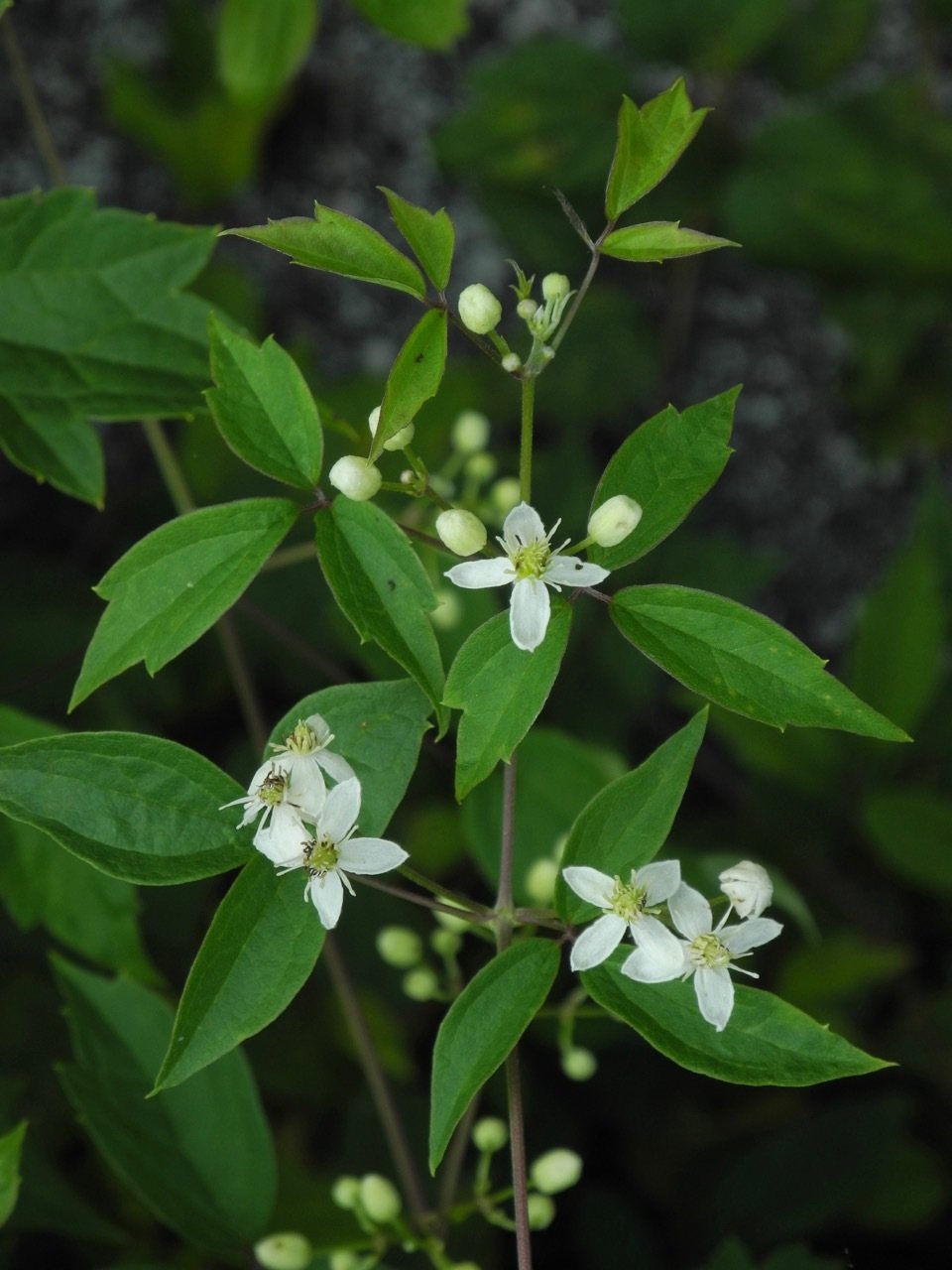
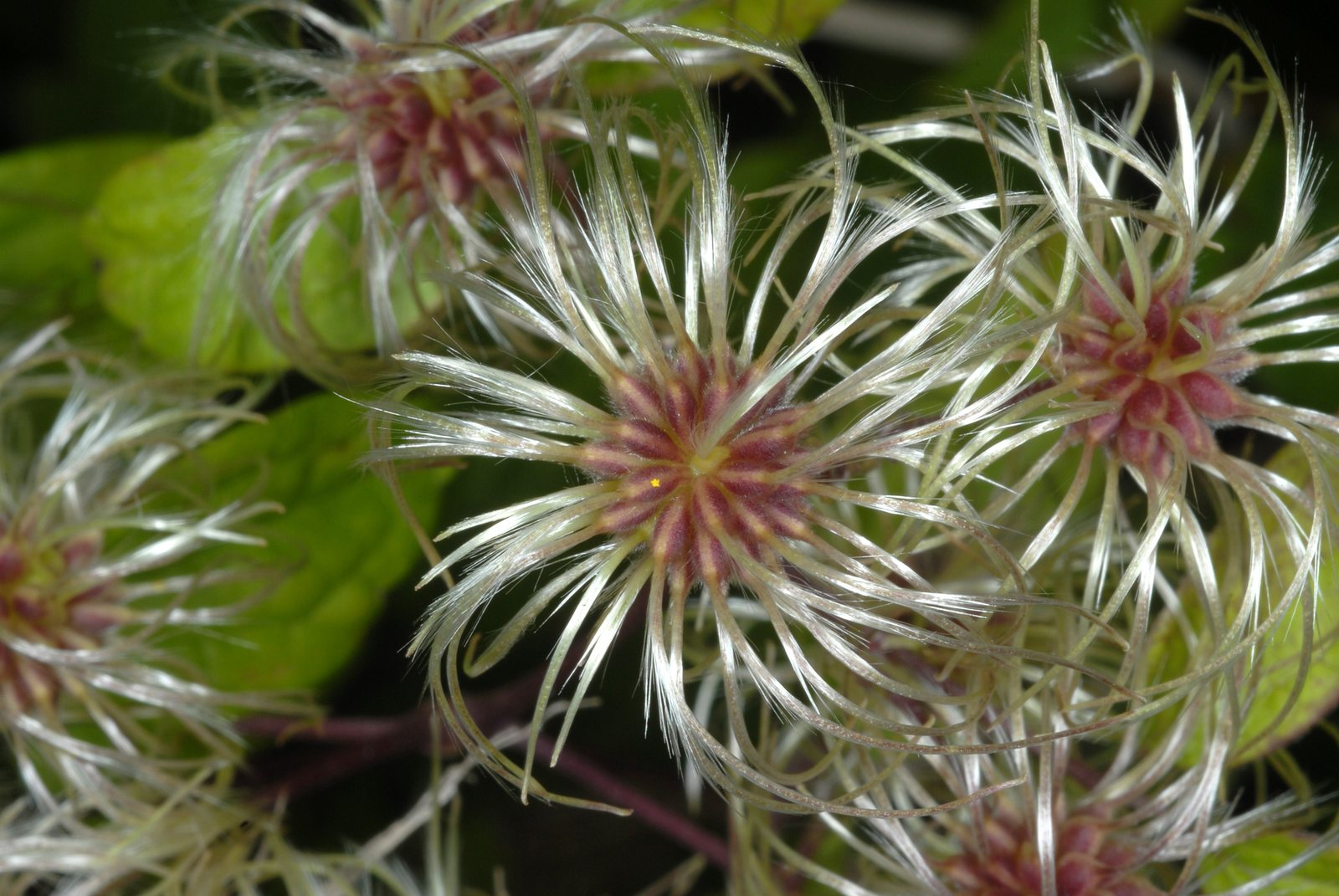
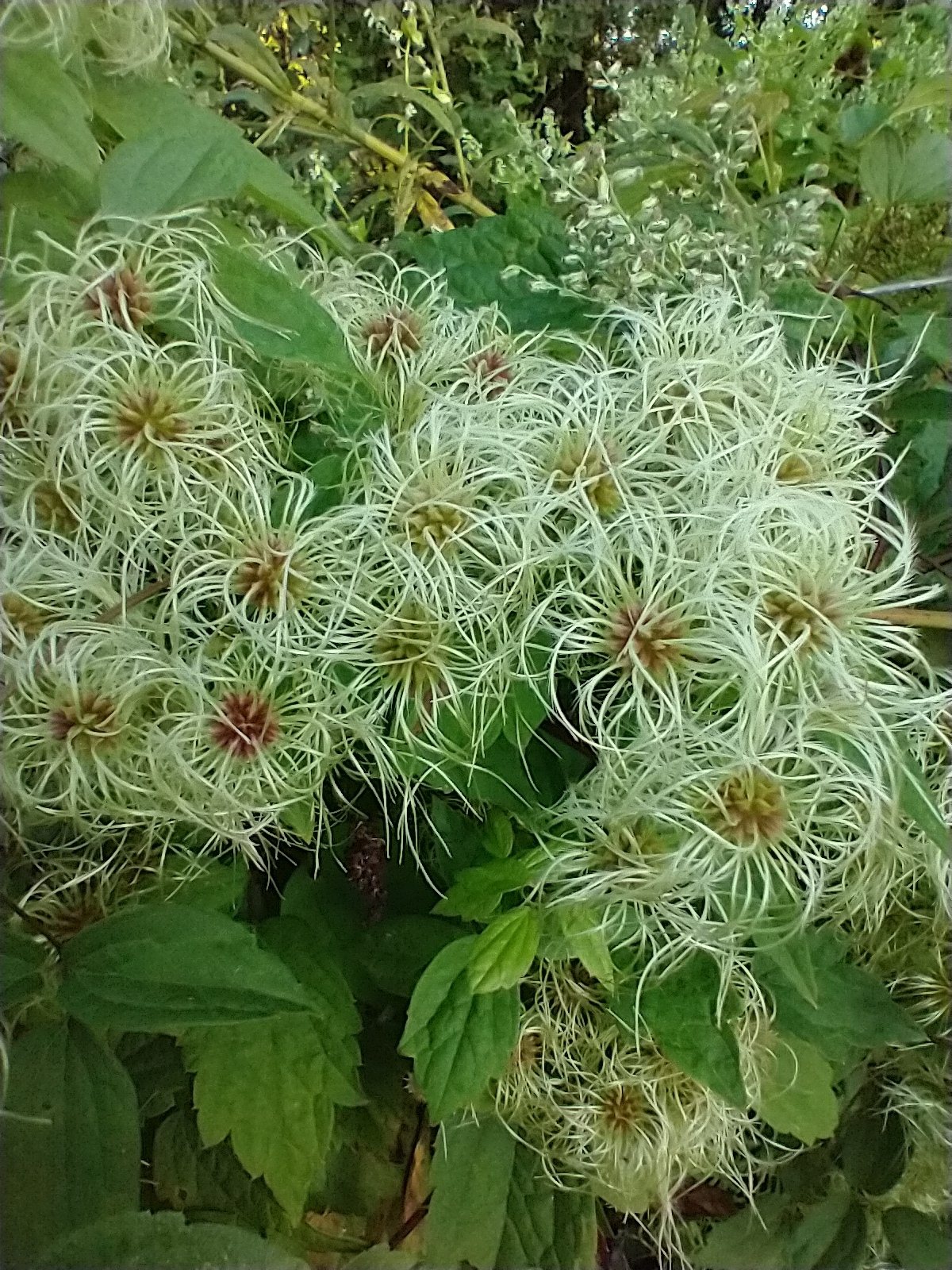
A vigorous deciduous vine native to eastern and central North America, virgin's bower bears clouds of small white flowers followed by feathery seed heads on seed-producing plants. Grow it on a sturdy fence or trellis where its spreading stems have room and its late-season flowers can support pollinating insects.
At a glance
- Sun
- Full sun to partial shade; tolerates more shade but flowers less freely.
- Water
- Moderate; prefers consistently moist soil but tolerates brief dry periods once established.
- Soil
- Moist, well-drained soil enriched with organic matter; tolerates clay and a broad range of soil pH.
- Height
- 12-20 ft (3.7-6.1 m)
- Spread
- 3-6 ft (0.9-1.8 m), potentially wider if stems scramble or root along the ground
- Flowers
- Late summer to early autumn; clusters of small, often fragrant white flowers.
- Foliage
- Opposite leaves usually divided into three toothed green leaflets; leaf stalks curl around supports.
- Growth
- Fast
- Care needed
- Medium
The year at a glance
- Pollinators
- Cold hardy
- Wildlife
- Low allergen
- Fragrant
| J | F | M | A | M | J | J | A | S | O | N | D | |
|---|---|---|---|---|---|---|---|---|---|---|---|---|
| Flowers | ||||||||||||
| Fruit | ||||||||||||
| Plant |
Northern hemisphere months. In Australia, shift them by six.
- Difficulty
- Moderate
- Toughness
- Very tough
Will it suit your garden?
Pick your zone, country, light and whether you have pets.
Full sun is 6 or more hours of direct sun a day, part shade 3 to 6 hours, shade under 3.
How it grows
Planting day
2 ft (0.6 m)
After 1 year
3 ft (1.1 m)
After 2 years
5 ft (1.5 m)
After 3 years
6 ft (1.8 m)
full size
About 3 years to full size.
From a typical nursery size, at an average rate for this kind of plant. A rule of thumb, not a forecast.
Good to know
- Cats and dogs
- Toxic
- Native to
- the US and Canada
- In the garden
- Spreads vigorously: plan to contain it.
- Growth rate
- Fast
Care
Jobs through the year
- WaterApr–May, Sep–Oct, every 14 days
- Water established vines when the root zone starts drying; water young vines more often.
- WaterJun–Aug, every 7 days
- Water deeply during dry weather to maintain even root moisture.
- MulchMar–Apr
- Top-dress with compost and maintain 5–8 cm of organic mulch clear of the crown.
- PruneFeb–Mar
- Cut stems to strong buds 30–45 cm above ground before new growth starts.
- PruneMay–Aug, every 30 days
- Contain unwanted growth and guide retained stems onto sturdy supports.
- DeadheadSep–Oct, every 14 days
- Remove developing seed heads only if self-seeding needs limiting.
- Provide a sturdy trellis or fence with thin wires or mesh that the leaf stalks can grip.
- Water deeply during dry spells in the first growing season; thereafter, water when the root zone begins to dry.
- Apply 2-3 in (5-8 cm) of organic mulch, keeping it clear of the crown.
- Top-dress with compost in spring; avoid heavy nitrogen feeding, which encourages leafy growth.
- Guide young stems onto their support and remove unwanted seedlings or rooted stems promptly.
Pruning. In late winter or early spring, cut stems back to strong buds about 12-18 in (30-45 cm) above ground; flowers form on the current season's growth. Remove unwanted growth during the growing season and trim off developing seed heads if self-seeding is a concern.
Through the year
- Late winter
- Cut back established vines before new growth starts and check the support for damage.
- Spring
- Plant when the soil is workable, water thoroughly, and add compost and mulch.
- Late spring
- Guide new shoots onto wires or mesh and pull out unwanted seedlings.
- Summer
- Water during prolonged dry spells and keep stems out of nearby small shrubs.
- Late summer
- Enjoy the flowers; remove spent clusters before seeds mature if spread needs limiting.
- Autumn
- Leave some feathery seed heads for seasonal interest where self-seeding is acceptable.
In the garden
- Cover a substantial wire fence at the edge of a wildlife garden.
- Train over a sturdy trellis behind tall perennials for a late-season layer of white flowers.
- Use along a roomy woodland edge, keeping it away from young trees and delicate shrubs.
- Grow against dark fencing or evergreen planting so the flowers and silky seed heads stand out.
Garden styles it suits: Woodland, Wildlife garden, Pollinator garden, Cottage garden, Native hedgerow and White garden.
Plant it with: Joe-Pye weed, Wild bergamot, New England aster, Goldenrod, Switchgrass and Red-osier dogwood.
Wildlife: Flowers attract bees, flies and other pollinating insects. Dense growth provides shelter for small wildlife, and birds may use the silky seed fibres as nesting material.
Problems to watch for
- Excessive growth and self-seeding: prune annually, remove developing seed heads, and pull seedlings while small.
- Powdery mildew: improve airflow, avoid crowding, and water the soil rather than wetting foliage.
- Dry roots causing wilted or scorched foliage: water deeply and maintain an organic mulch without covering the crown.
- Sparse flowering in deep shade or after heavy feeding: provide more light where practical and stop high-nitrogen fertilizer.
Safety
Toxic to people, cats, dogs and horses if eaten. All parts, especially fresh leaves and sap, contain irritating compounds that can cause mouth irritation, drooling, vomiting or diarrhoea; larger amounts can cause more serious illness. Sap may irritate skin, so wear gloves when pruning and keep it away from grazing animals.
Where it spreads. Can spread aggressively by self-seeding and sprawling stems in suitable moist sites in the eastern United States and eastern Canada, within its native range. It can overwhelm small shrubs; this behaviour is distinct from the invasive status of some introduced clematis species.
Easily confused with
Sweet autumn clematis (Clematis terniflora)
Usually has three to five leaflets with smooth margins, unlike the conspicuously toothed leaflets of virgin's bower. It is introduced and invasive in parts of the United States.
Old man's beard (Clematis vitalba)
Usually has five toothed leaflets rather than three and develops a much heavier woody framework. The shared common name can cause confusion; check the botanical name.
The name
Clematis comes from a Greek word for a climbing or vine-like shoot, and virginiana means 'of Virginia'.
Propagation. Take softwood cuttings in late spring or early summer, or layer a low stem into soil. Sow ripe seed outdoors in autumn for natural cold treatment; germination can be slow and uneven. Plants may bear male, female or bisexual flowers, and seed heads develop only from seed-producing flowers.
Checked against open data
- Accepted botanical name
- Clematis virginiana
- In the US and Canada
- Native in Canada and the lower 48 states.
- Native range
- Alabama, Arkansas, Connecticut, Delaware, Florida, Georgia, Illinois, Indiana, Iowa, Kansas, Kentucky and Louisiana.
- Measured
- Soil pH 5 to 6.8. Average height 129 cm.
Sources: GBIF (CC BY 4.0), USDA PLANTS and Trefle (CC BY 4.0). The care and design notes are LandscapeGPT's own.
See it in your own yard.
Upload a photo of your yard and see it redesigned with plants that suit your climate, each checked against your zone.