Western maidenhair fern
Adiantum aleuticum. Family Pteridaceae. Fern.
Also called Aleutian maidenhair fern, Five-finger fern.
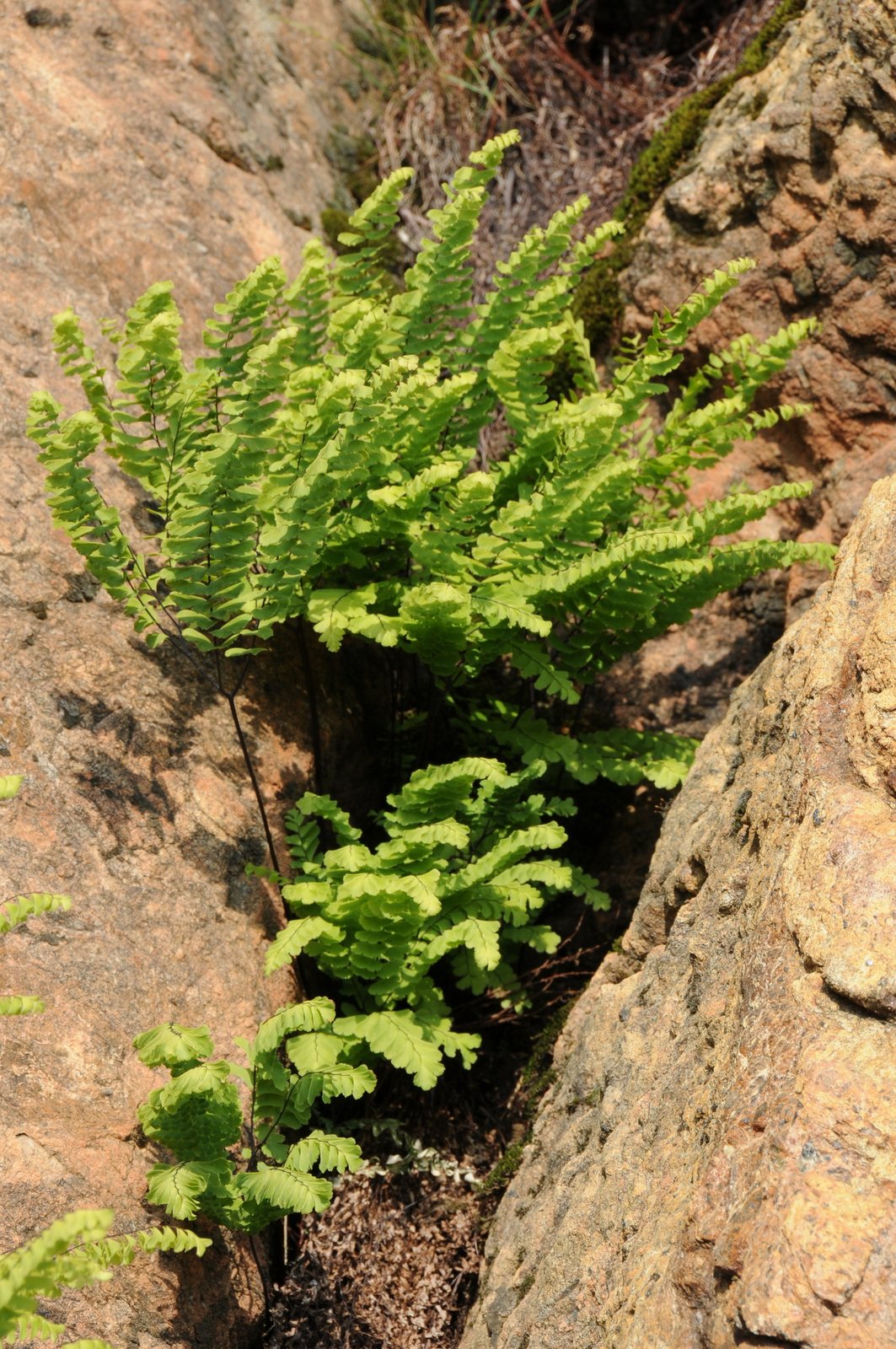
Western maidenhair fern forms graceful clumps of finely divided green fronds held on slender, dark stems. Native to western North America, it brings delicate texture to cool, shaded gardens where the soil stays moist without becoming waterlogged.
At a glance
- Sun
- Partial to full shade; gentle morning sun is suitable where the soil stays moist. Protect from hot afternoon sun and drying winds.
- Water
- Keep the root zone consistently moist, particularly during establishment and summer dry spells. Avoid both prolonged drought and stagnant, waterlogged soil.
- Soil
- Humus-rich, well-drained soil that holds moisture. Tolerates a range of soil pH; good drainage and a cool root zone matter more than acidity.
- Height
- 1-2.5 ft (0.3-0.75 m)
- Spread
- 1-2 ft (0.3-0.6 m)
- Foliage
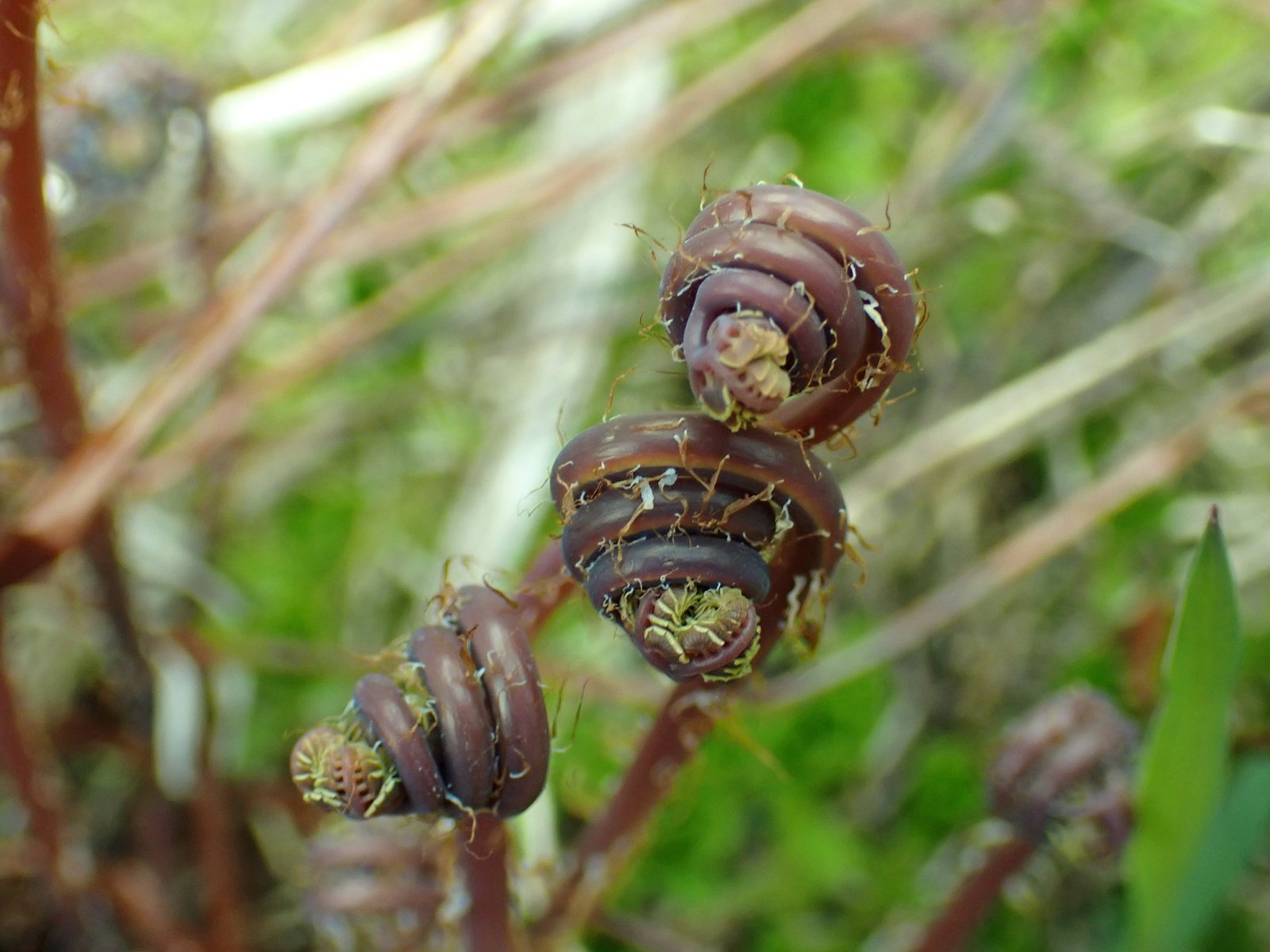
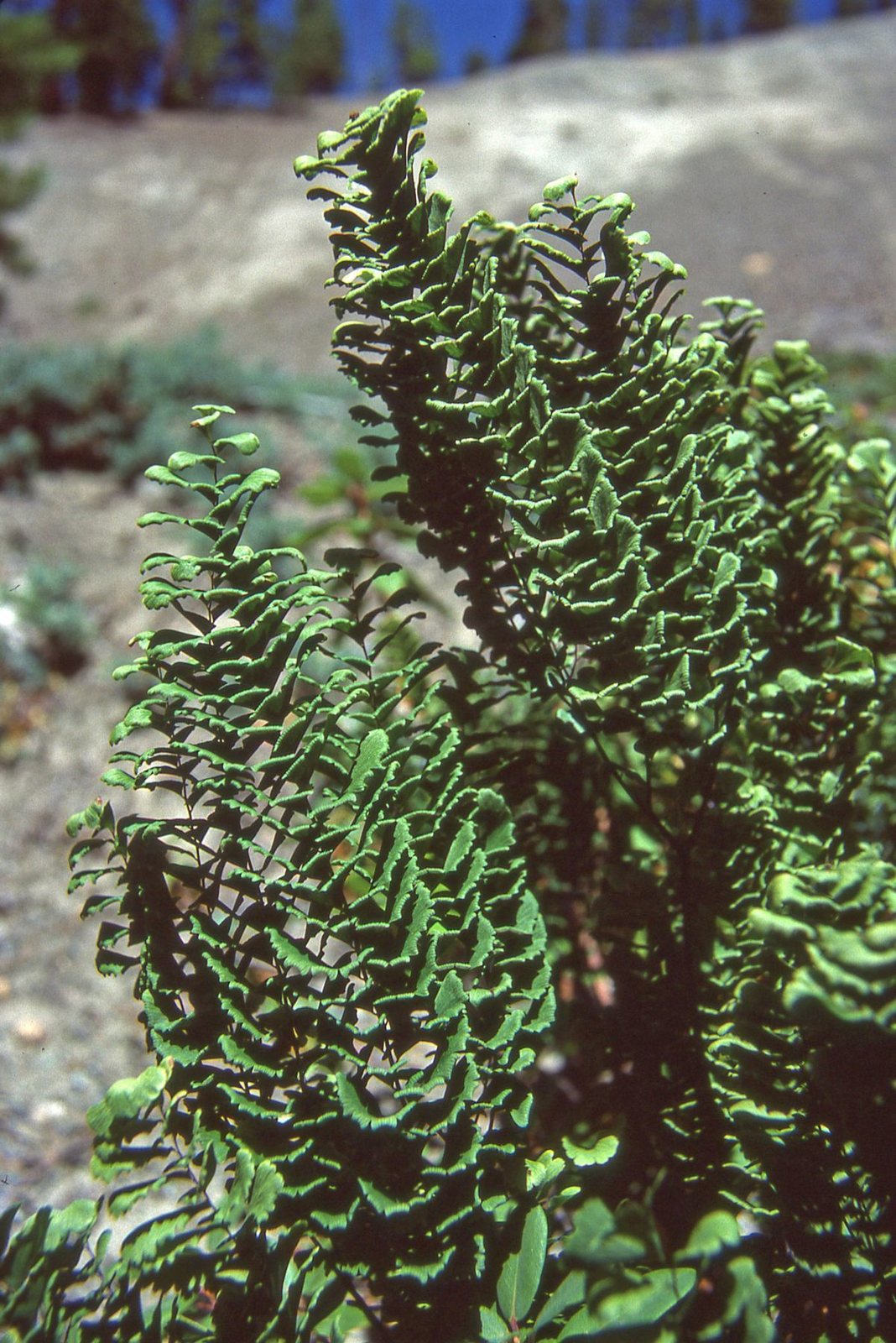
- Bright to medium-green, fan-shaped leaflets on branching, wiry black stems; the frond branches spread like fingers from a hand. Usually deciduous, though some foliage may persist in mild winters.
- Growth
- Slow to moderate, gradually widening through short rhizomes.
- Care needed
- Medium
The year at a glance
- Deer resistant
- Cold hardy
- Wildlife
- Low allergen
| J | F | M | A | M | J | J | A | S | O | N | D | |
|---|---|---|---|---|---|---|---|---|---|---|---|---|
| Plant |
Northern hemisphere months. In Australia, shift them by six.
- Difficulty
- Moderate
- Toughness
- Fairly tough
Will it suit your garden?
Pick your zone, country, light and whether you have pets.
Full sun is 6 or more hours of direct sun a day, part shade 3 to 6 hours, shade under 3.
How it grows
Planting day
1 ft (0.3 m)
After 1 year
1.2 ft (0.36 m)
After 2 years
1.4 ft (0.42 m)
After 3 years
1.6 ft (0.47 m)
After 5 years
1.7 ft (0.53 m)
full size
About 4 years to full size.
From a typical nursery size, at an average rate for this kind of plant. A rule of thumb, not a forecast.
Good to know
- Cats and dogs
- Mildly toxic: may upset a stomach
- Native to
- the US and Canada
- Growth rate
- Slow
Care
Jobs through the year
- WaterApr–May, Sep–Oct, every 7 days
- For established ground plants, water if the surface starts drying; young clumps need more frequent checks.
- WaterJun–Aug, every 4 days
- Water established ground plants deeply when the surface starts drying; skip if rain keeps soil moist.
- PruneFeb–Mar
- Cut dead fronds near ground level before new shoots unfurl, avoiding the crown.
- MulchMar–Apr
- Spread 2.5–5 cm of leaf mould or compost, keeping the crown clear.
- MulchOct–Nov
- Renew loose leaf mould around the clump without burying its crown.
- DivideMar–Apr
- Divide established clumps only for propagation or when they outgrow their space.
- ProtectMar–May
- Cover emerging fronds with fleece when late frost is forecast.
- ProtectJun–Aug
- Shelter fronds from hot afternoon sun and drying winds.
- Water deeply whenever the soil surface begins to dry; do not let newly planted clumps dry out.
- Apply 1-2 in (2.5-5 cm) of leaf mould or compost in spring, keeping it clear of the crown.
- Shelter the fronds from hot sun and drying winds.
- Avoid heavy feeding; an annual compost dressing is usually sufficient.
- Divide established clumps in early spring only when you need more plants or the clump has outgrown its space.
Pruning. Cut dead fronds back near ground level in late winter or early spring, before the new shoots unfurl. Remove damaged fronds individually without cutting into the crown.
Through the year
- Late winter
- Remove dead fronds before new growth emerges.
- Early spring
- Plant or divide clumps while the soil is moist and workable.
- Spring
- Top-dress with leaf mould or compost and check that mulch does not bury the crown.
- Summer
- Check soil moisture during dry weather and water before fronds wilt or develop brown edges.
- Autumn
- Plant in mild regions and renew the leaf-mould mulch as surrounding trees shed their leaves.
- Winter
- Check that runoff is not pooling around dormant crowns.
In the garden
- Plant beneath deciduous trees where irrigation can offset competition from tree roots.
- Combine with hostas and broad-leaved woodland perennials for contrasting foliage textures.
- Edge a shaded path with small groups so the dark stems and spreading fronds can be seen closely.
- Use beside a shaded stream or pond, above the permanently saturated margin.
- Grow in a sheltered courtyard container with reliable watering and free drainage.
Garden styles it suits: Woodland, Pacific Northwest woodland, Japanese, Moss and fern garden, Secret garden and Green on green.
Plant it with: Hostas, Barrenwort, Foamflower, Western sword fern, Siberian bugloss and Trilliums.
Wildlife: Provides low shelter for small woodland animals and invertebrates. It produces neither flowers nor nectar and is not a direct food source for pollinating insects.
Problems to watch for
- Brown, crisp frond edges usually indicate dry soil, hot sun or drying wind; restore steady moisture and improve shade or shelter.
- Slugs and snails can damage emerging fronds; inspect young growth and use hand-picking or a locally approved iron-phosphate bait as directed.
- Crown or root rot can develop in stagnant, saturated soil; improve drainage and keep mulch away from the crown.
- Late frost may blacken newly emerging fronds; cover emerging growth when frost is forecast and remove damaged fronds after the cold spell.
Safety
Not known to be toxic to people, cats, dogs or horses. No part is generally recognized as poisonous, but it is an ornamental fern rather than a food plant, and eating foliage may cause digestive upset.
Easily confused with
Northern maidenhair fern (Adiantum pedatum)
Usually has a more horizontal, semicircular arrangement of frond branches, while western maidenhair often has more ascending branches.
Himalayan maidenhair fern (Adiantum venustum)
Forms a low, creeping carpet with broadly triangular fronds rather than the taller, finger-branched fronds of western maidenhair.
Delta maidenhair fern (Adiantum raddianum)
Has triangular, repeatedly branched fronds rather than a hand-like arrangement and is frost-tender, usually grown indoors in colder climates.
The name
Adiantum comes from Greek meaning 'unwetted', referring to the water-shedding foliage, and aleuticum refers to the Aleutian Islands.
Propagation. Divide established clumps in early spring, retaining roots and several growing points on each division. It can also be raised from spores, but this is slow and requires consistently humid, clean growing conditions.
Checked against open data
- Accepted botanical name
- Adiantum aleuticum
- In the US and Canada
- Native in Alaska, Canada and the lower 48 states.
- Native range
- Alaska, Alberta, Aleutian Is., Arizona, British Columbia, California, Colorado, Idaho, Maine, Mexico Northeast, Mexico Northwest and Michigan.
- Measured
- Soil pH 4.6 to 6.6.
Sources: GBIF (CC BY 4.0), USDA PLANTS and Trefle (CC BY 4.0). The care and design notes are LandscapeGPT's own.
See it in your own yard.
Upload a photo of your yard and see it redesigned with plants that suit your climate, each checked against your zone.