Wild quinine
Parthenium integrifolium. Family Asteraceae. Perennial.
Also called American feverfew, Eastern wild quinine.
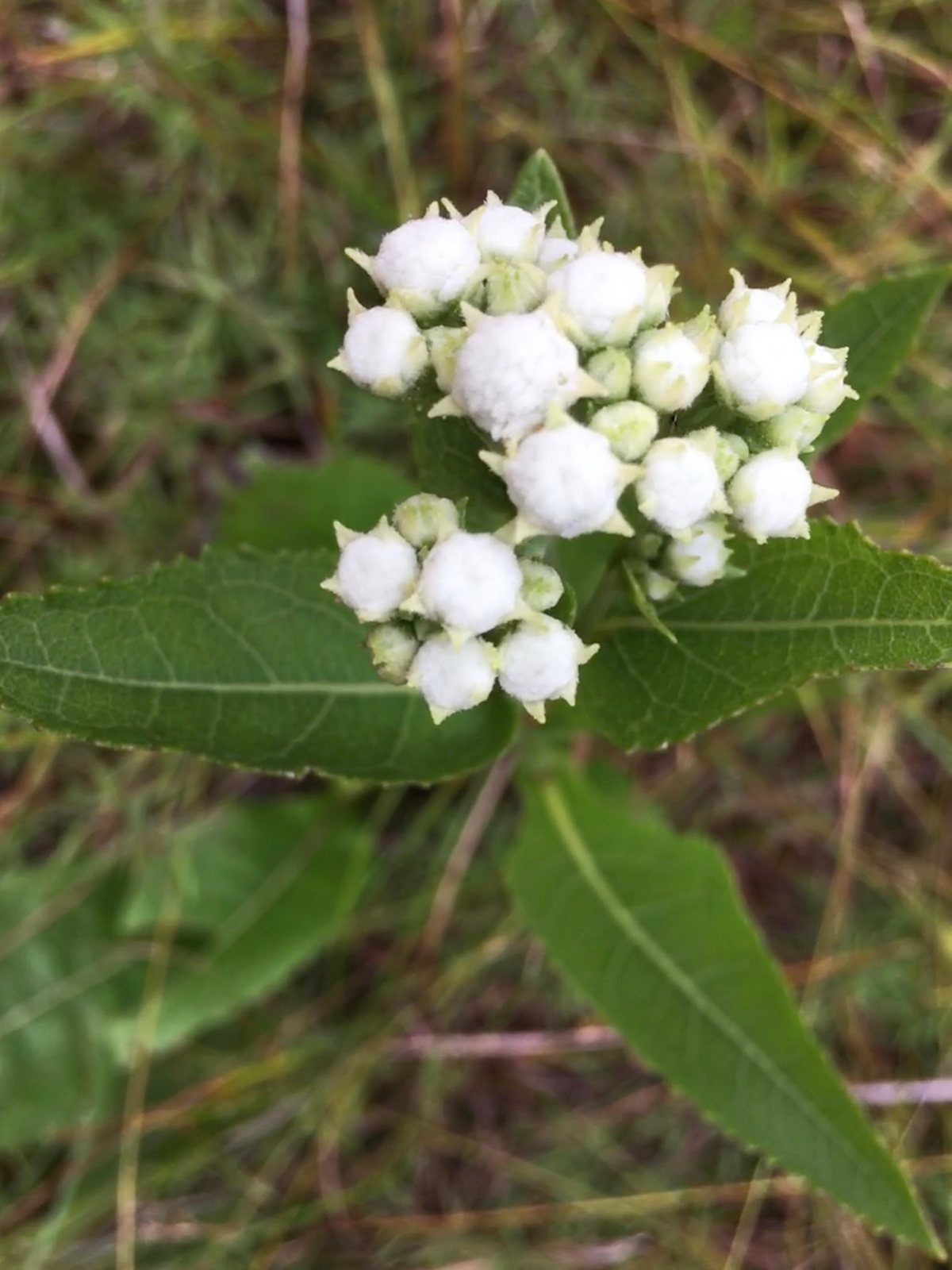
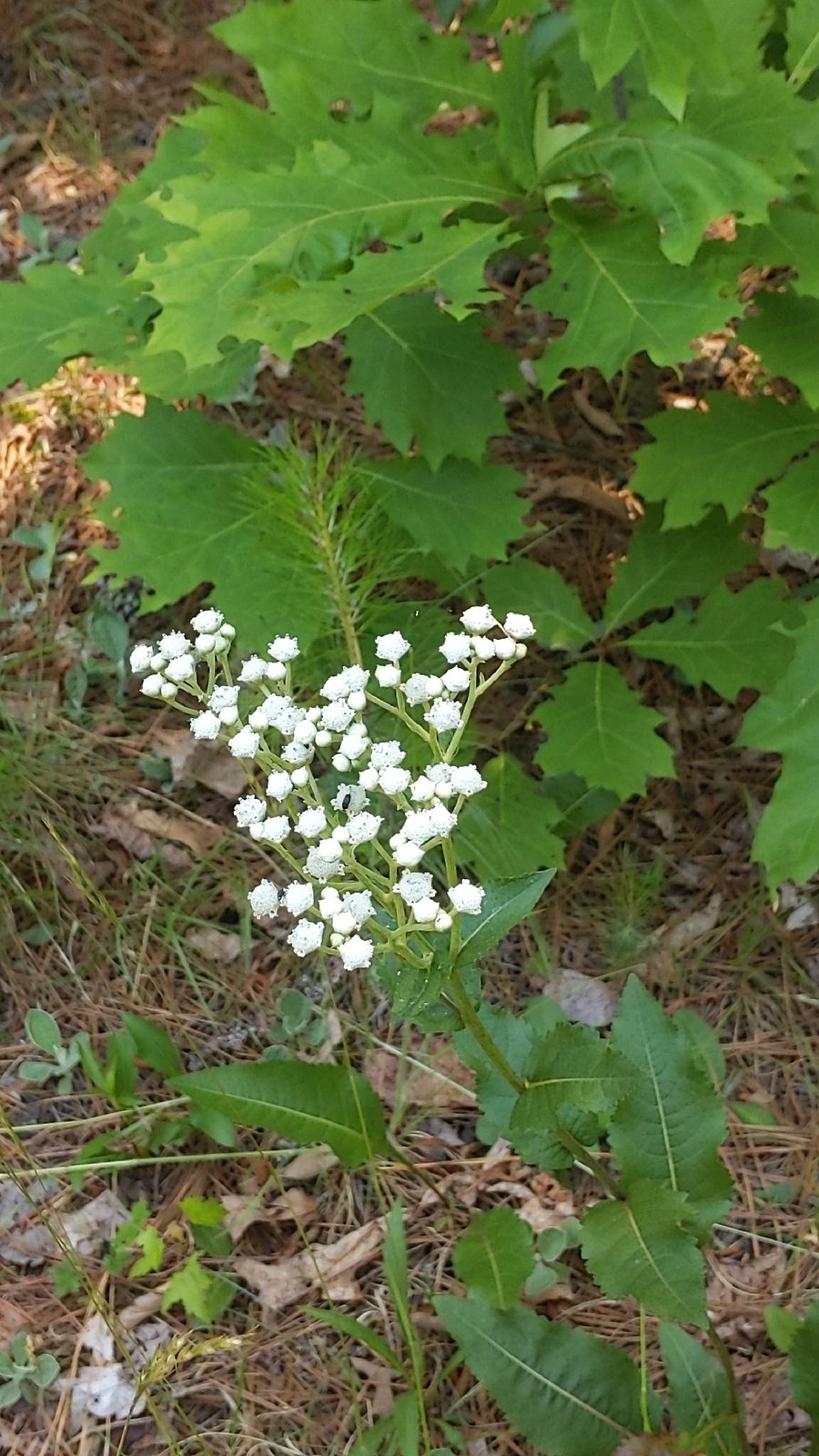
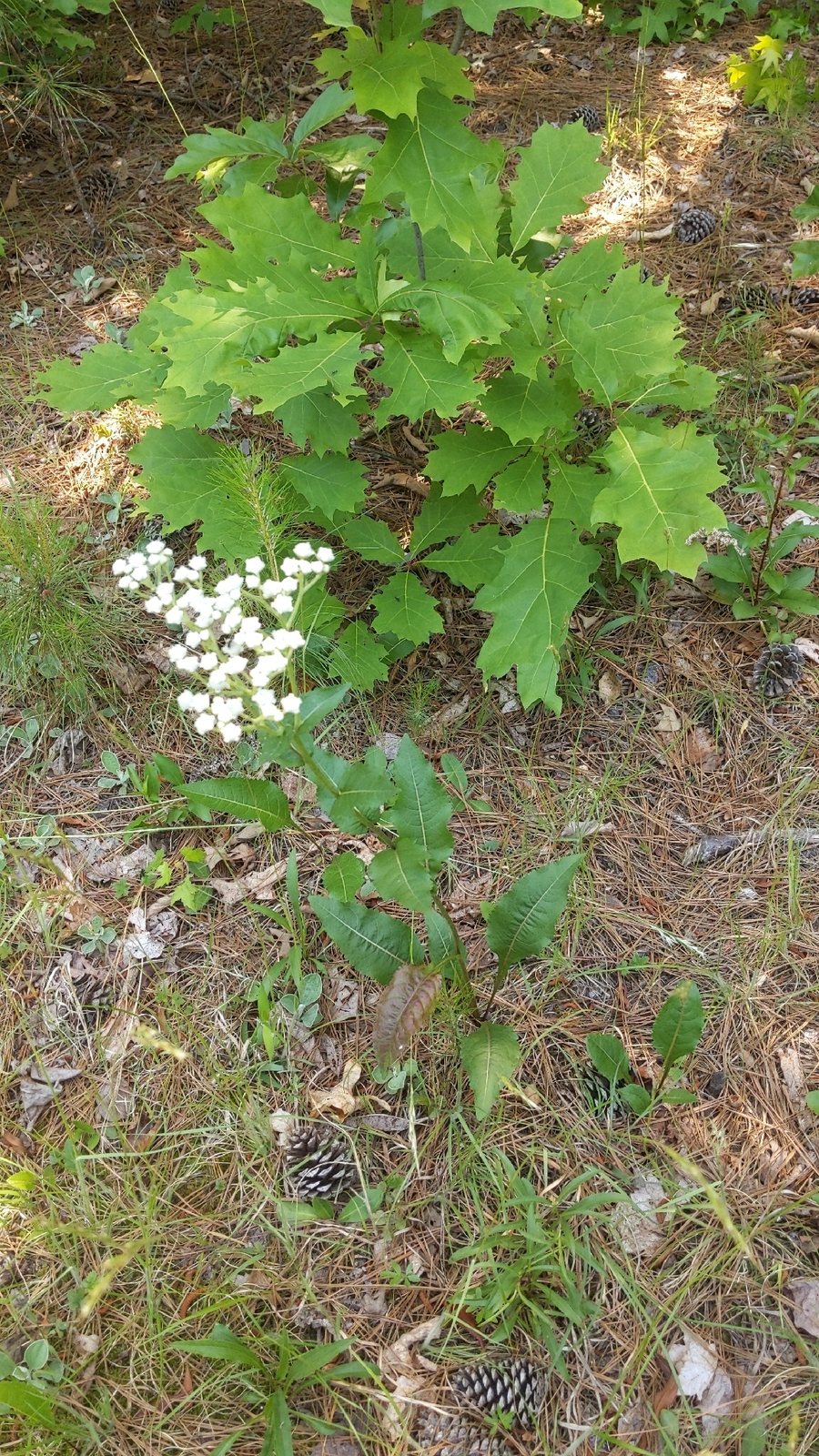
Wild quinine is a long-lived perennial native to the central and eastern United States, with rough leaves and flat-topped clusters of small white flower heads. Gardeners grow it for its long flowering season, sturdy upright shape and value to pollinating insects.
At a glance
- Sun
- Full sun is best; tolerates light partial shade but may flower less and lean.
- Water
- Moderate while establishing; tolerates dry spells once well rooted.
- Soil
- Well-drained loam, clay loam or sandy soil; tolerates relatively poor soil but dislikes prolonged winter wet.
- Height
- 2-4 ft (0.6-1.2 m)
- Spread
- 1-2 ft (0.3-0.6 m)
- Flowers
- Late spring through summer, sometimes into early autumn; small, creamy-white flower heads in broad clusters.
- Foliage
- Coarse, rough-textured green leaves, with large, toothed basal leaves and smaller leaves up the stems.
- Growth
- Moderate; young plants can take a few seasons to form substantial clumps.
- Care needed
- Low
The year at a glance
- Pollinators
- Deer resistant
- Drought tolerant
- Cold hardy
- Wildlife
| J | F | M | A | M | J | J | A | S | O | N | D | |
|---|---|---|---|---|---|---|---|---|---|---|---|---|
| Flowers | ||||||||||||
| Fruit | ||||||||||||
| Plant |
Northern hemisphere months. In Australia, shift them by six.
- Difficulty
- Easy
- Toughness
- Very tough
Will it suit your garden?
Pick your zone, country, light and whether you have pets.
Full sun is 6 or more hours of direct sun a day, part shade 3 to 6 hours, shade under 3.
How it grows
Planting day
1 ft (0.3 m)
After 1 year
1.6 ft (0.5 m)
After 2 years
2.3 ft (0.7 m)
After 3 years
3 ft (0.9 m)
full size
About 3 years to full size.
From a typical nursery size, at an average rate for this kind of plant. A rule of thumb, not a forecast.
Good to know
- Cats and dogs
- Mildly toxic: may upset a stomach
- Native to
- the US
- Growth rate
- Moderate
Care
Jobs through the year
- WaterApr–May, Sep, every 21 days
- Established plants need water only in extended drought; water new plants more frequently.
- WaterJun–Aug, every 14 days
- Check established plants during prolonged drought and water deeply only if needed.
- MulchApr–May
- Apply light mulch if needed for weed control, keeping the crown clear.
- PruneFeb–Mar
- Cut old stems just above ground before fresh basal growth develops.
- Water deeply during dry spells in the first growing season; established plants usually need little supplementary water.
- Avoid rich feeding, which can produce softer stems that lean or flop.
- Apply a light mulch if needed for weed control, keeping it clear of the crown.
- Plant in full sun to encourage upright stems; staking is rarely needed in a suitable site.
- Leave established clumps undisturbed unless division is necessary; their deep roots make moving difficult.
Pruning. Leave dry stems standing through winter if you want seed heads and insect shelter. Cut them back to just above ground level in late winter or early spring before new growth develops.
Through the year
- Late winter
- Cut down old stems before fresh basal growth becomes difficult to avoid.
- Spring
- Plant container-grown plants in well-drained soil and water thoroughly.
- Late spring
- Weed around young clumps and apply a light mulch without covering the crown.
- Summer
- Water new plants during prolonged dry weather; established clumps generally need less attention.
- Autumn
- Leave seed heads standing, or collect ripe seed when the heads become dry and brown.
- Late autumn
- Sow fresh seed outdoors in a protected pot or prepared nursery bed for natural winter chilling.
In the garden
- Plant in small groups through prairie-style borders for white flowers among grasses and stronger flower colours.
- Use in the middle of a sunny mixed border, where its upright stems rise above lower plants.
- Combine with purple coneflowers and blazing stars for a long-flowering pollinator planting.
- Include in a white garden for small, textured flowers rather than large, showy blooms.
Garden styles it suits: Native meadow, Midwest prairie, New perennial (prairie), Pollinator garden, Low-maintenance and White garden.
Plant it with: Purple coneflower, Butterfly weed, Prairie blazing star, Little bluestem, Prairie dropseed and Black-eyed Susan.
Wildlife: Flowers attract a wide range of small bees, wasps, flies and other beneficial insects. Standing stems can provide overwintering shelter for insects. Deer and rabbits generally leave the coarse foliage alone, although browsing is still possible.
Problems to watch for
- Weak or leaning stems in shade or overly rich soil: move to a sunnier position and stop feeding.
- Crown or root rot in persistently wet ground: improve drainage or replant on higher ground.
- Poor establishment after moving mature plants: transplant only when necessary, retain as much root as possible and water carefully while roots recover.
- Occasional leaf spots: remove badly affected foliage and improve spacing; treatment is seldom necessary.
Safety
Poisoning risk from this species is not well documented for people, cats, dogs or horses. Do not eat any part or use it as a home remedy. Contact with foliage may cause skin irritation in sensitive people, particularly those allergic to daisy-family plants.
Easily confused with
Feverfew (Tanacetum parthenium)
Feverfew has conspicuous white daisy petals around yellow centres and deeply lobed leaves; wild quinine has compact white heads without obvious daisy petals and mostly undivided leaves.
Parthenium weed (Parthenium hysterophorus)
This invasive annual has deeply divided leaves and a more finely branched habit. Wild quinine is a clump-forming perennial with broad, mostly undivided basal leaves.
Pearly everlasting (Anaphalis margaritacea)
Pearly everlasting has narrow leaves with woolly, pale undersides and papery white flower heads; wild quinine has broader, coarse green leaves.
The name
The common name refers to its historical use as a substitute for quinine, while integrifolium refers to its mostly undivided leaves.
Propagation. Grow from seed sown outdoors in autumn, or give seed about 60 days of cold, moist treatment before spring sowing. Divide clumps in early spring only when needed, retaining substantial roots on each division; seedlings are usually easier to establish than divisions from old plants.
Checked against open data
- Accepted botanical name
- Parthenium integrifolium
- In the US and Canada
- Native in the lower 48 states.
- Native range
- Alabama, Arkansas, Connecticut, Georgia, Illinois, Indiana, Iowa, Kansas, Kentucky, Louisiana, Maryland and Masachusettes.
- Measured
- Average height 84 cm.
Sources: GBIF (CC BY 4.0), USDA PLANTS and Trefle (CC BY 4.0). The care and design notes are LandscapeGPT's own.
See it in your own yard.
Upload a photo of your yard and see it redesigned with plants that suit your climate, each checked against your zone.