Wild teasel
Dipsacus fullonum. Family Caprifoliaceae. Perennial.
Also called Common teasel, Fuller's teasel.
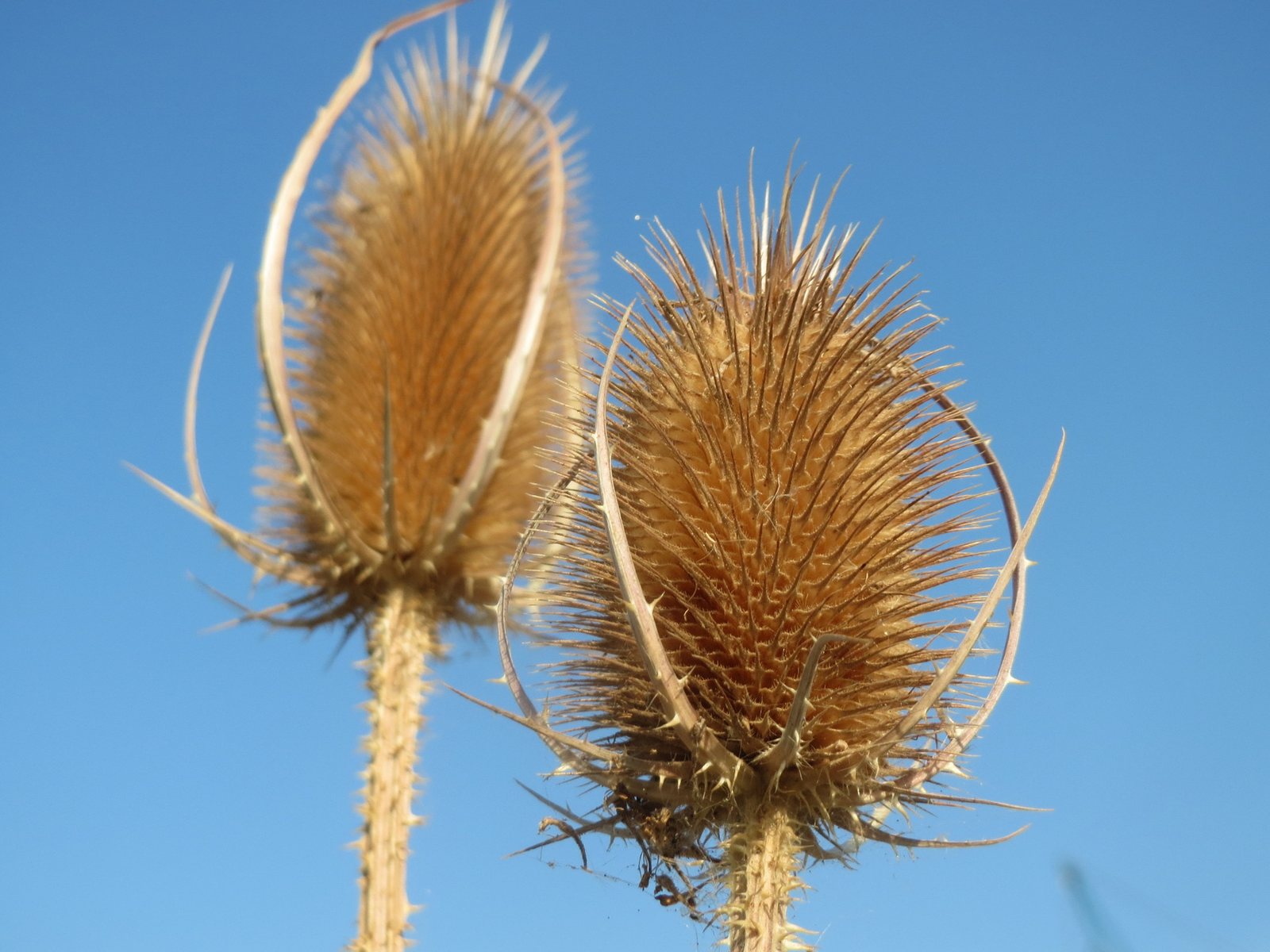
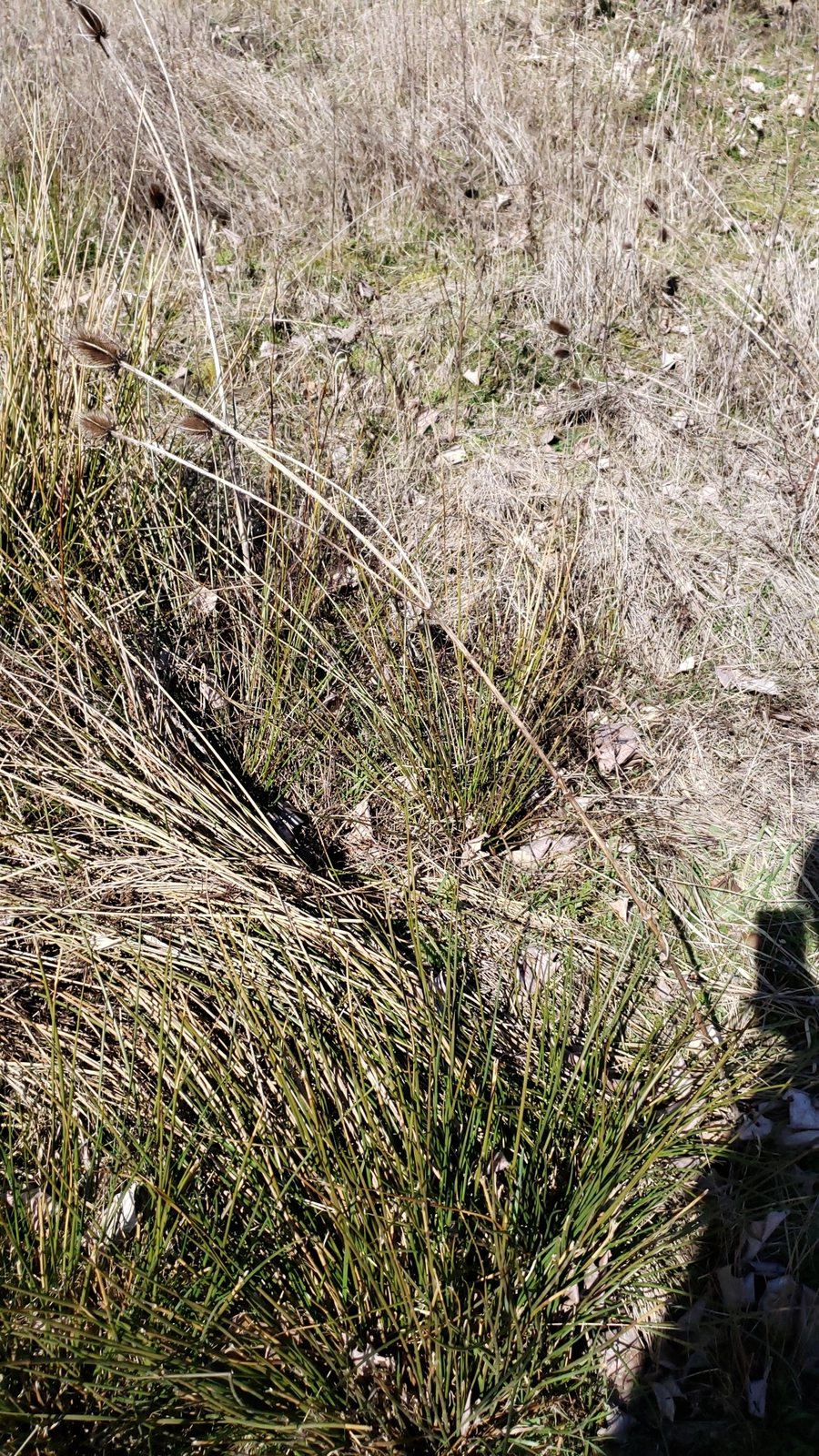
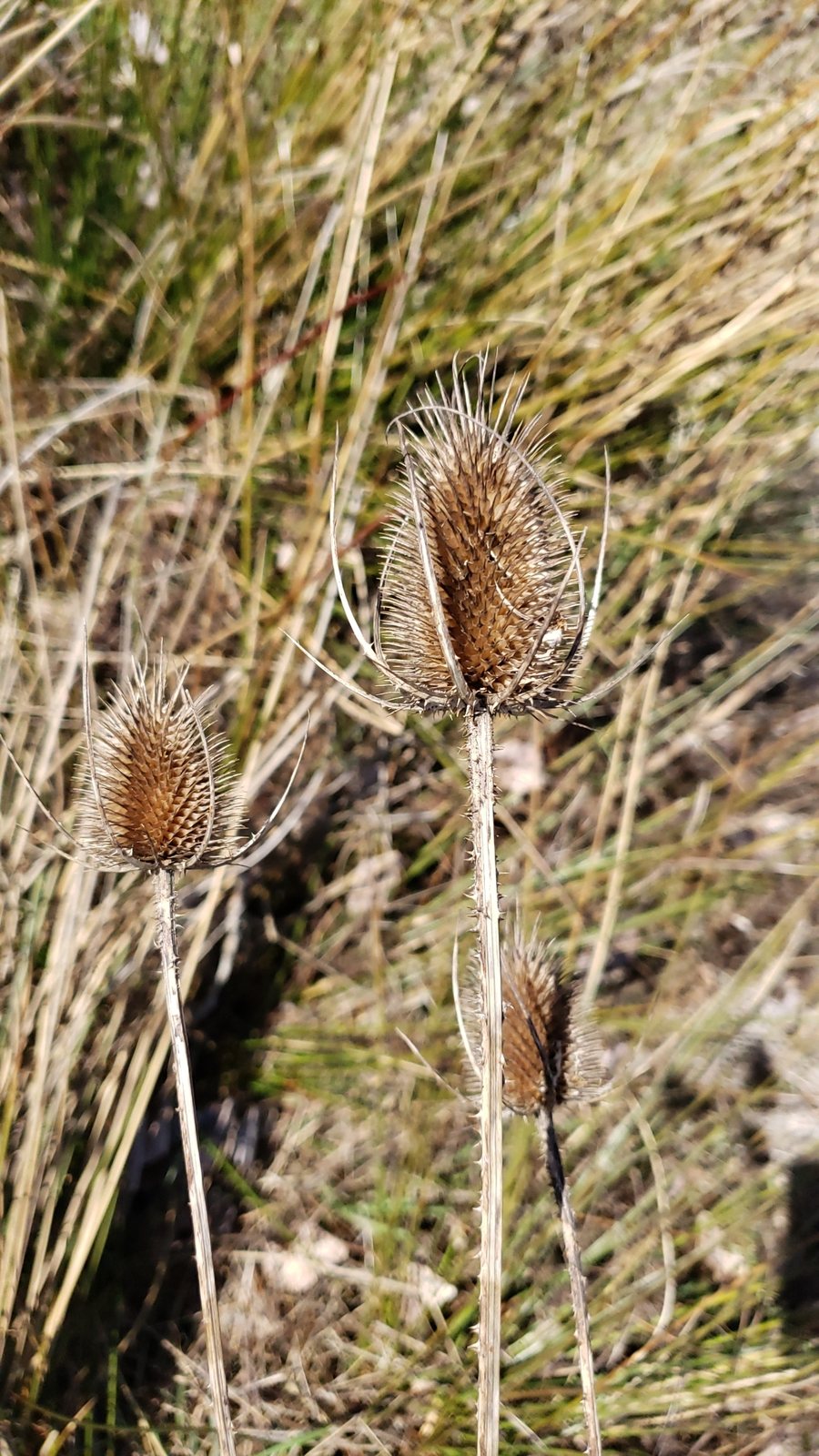
Wild teasel is a tall, prickly biennial or short-lived perennial, usually making a leaf rosette in its first year and flowering in its second before dying. Gardeners grow it for its sculptural flower heads, summer pollinators and seed-eating birds, but it seeds freely and should not be planted where it is invasive or regulated.
At a glance
- Sun
- Full sun; tolerates light shade but flowers best in an open position.
- Water
- Moderate; water young plants during dry spells. Established plants tolerate some drought, but grow best with occasional moisture.
- Soil
- Most well-drained soils, including clay, loam and chalk; tolerates relatively poor soil but dislikes prolonged waterlogging.
- Height
- 4-7 ft (1.2-2.1 m)
- Spread
- 1.5-3 ft (0.45-0.9 m)
- Flowers
- Summer into early autumn; small pale lilac to pinkish-purple flowers open in bands around oval, prickly heads.
- Foliage
- Coarse, wrinkled, lance-shaped leaves with prickly midribs. Opposite stem leaves join at their bases to form cups that collect rainwater; basal rosettes often remain green through winter.
- Growth
- Fast once flowering stems develop; usually flowers in its second year.
- Care needed
- Medium
The year at a glance
- Pollinators
- Deer resistant
- Drought tolerant
- Cold hardy
- Wildlife
- Low allergen
| J | F | M | A | M | J | J | A | S | O | N | D | |
|---|---|---|---|---|---|---|---|---|---|---|---|---|
| Flowers | ||||||||||||
| Fruit | ||||||||||||
| Plant |
Northern hemisphere months. In Australia, shift them by six.
- Difficulty
- Moderate
- Toughness
- Very tough
Will it suit your garden?
Pick your zone, country, light and whether you have pets.
Full sun is 6 or more hours of direct sun a day, part shade 3 to 6 hours, shade under 3.
How it grows
Planting day
1 ft (0.3 m)
After 1 year
3 ft (0.99 m)
After 2 years
5 ft (1.7 m)
full size
About 2 years to full size.
From a typical nursery size, at an average rate for this kind of plant. A rule of thumb, not a forecast.
Good to know
- Cats and dogs
- Safe
- Native to
- the UK
- Invasive in
- the US
- In the garden
- Spreads vigorously: plan to contain it.
- Growth rate
- Fast
Care
Jobs through the year
- WaterApr–May, Sep, every 21 days
- Water established plants only during prolonged drought; seedlings and young rosettes need more.
- WaterJun–Aug, every 14 days
- Water deeply during extended dry spells, allowing soil to drain between waterings.
- ProtectApr–Jun, every 7 days
- Check seedlings for slugs and snails and use suitable barriers if needed.
- PruneMar–May, Sep–Oct, every 14 days
- Dig out unwanted rosettes with their taproots; do not grow where locally restricted.
- DeadheadJul–Sep, every 7 days
- Where spread must be prevented, bag every fading head before seeds ripen; otherwise retain for birds.
- PruneFeb
- Cut any retained dead stems to ground level before surrounding plants resume growth.
- Check local invasive-plant restrictions before sowing or planting.
- Water seedlings and first-year rosettes during prolonged dry weather.
- Avoid routine feeding; rich soil encourages excessive height and flopping.
- Give plants room away from paths because stems, leaves and flower heads are prickly.
- Pull unwanted seedlings promptly, removing the taproot before plants become established.
- Stake flowering stems only in exposed sites, using a discreet support before they lean.
Pruning. Where spread is a concern, cut off all flower heads as flowering finishes, before seeds mature, and bag them rather than composting them. Only where self-seeding is acceptable should you leave heads for birds and winter structure, then cut dead stems to ground level in late winter.
Through the year
- Spring
- Check for unwanted rosettes and remove them while the soil is moist.
- Late spring
- Where growing it is appropriate, sow seed shallowly in its final position and thin seedlings to allow room for broad rosettes.
- Early summer
- Water young plants in dry spells and support tall stems in exposed positions.
- Summer
- Watch flowering heads closely and remove them as flowers fade if seed spread must be prevented.
- Autumn
- Remove escaped seedlings and check nearby bare ground for new rosettes.
- Late winter
- Cut down any retained dead stems before surrounding plants begin active growth.
In the garden
- Use occasional tall stems at the back of a large informal border for vertical structure.
- Combine with ornamental grasses and airy flowers for contrasting solid, oval flower heads.
- In its native range, include small numbers in managed wildlife planting for insects and seed-eating birds.
- Where seed spread is acceptable, retain dry heads as winter silhouettes against low planting.
Garden styles it suits: Cottage garden, Wildflower, Wildlife garden, Pollinator garden, New perennial (prairie) and Winter interest.
Plant it with: Tufted hair grass, Meadow cranesbill, Yarrow, Field scabious and Purple coneflower.
Wildlife: Flowers provide nectar and pollen for bees, butterflies and other insects. Goldfinches and other seed-eating birds use the ripe heads, especially in Britain and Europe; these benefits do not justify planting it where it displaces native vegetation.
Problems to watch for
- Excessive self-seeding: remove every flower head before seed ripens and dig out young rosettes, including their taproots.
- Flopping stems: avoid rich feeding, provide full sun and stake early in windy positions.
- Powdery mildew: improve airflow and avoid allowing plants to become severely drought-stressed.
- Slugs and snails damaging seedlings: inspect after dark and protect young plants with barriers or locally approved controls.
Safety
Not known to be toxic to people, cats, dogs or horses, though species-specific information is limited and it is not a food plant. Prickles on the stems, leaves and flower heads can scratch skin or injure mouths; wear gloves when handling.
Where it spreads. Spreads aggressively by seed outside its native European, North African and western Asian range. It is invasive across parts of the United States, particularly the Midwest and Pacific Northwest, and is regulated in states including Colorado, Minnesota and Oregon.
Easily confused with
Cut-leaved teasel (Dipsacus laciniatus)
Has deeply divided stem leaves and usually white flowers; wild teasel has mostly undivided leaves and usually pale purple flowers.
Small teasel (Dipsacus pilosus)
Has much smaller, rounded heads of whitish flowers and a more loosely branched habit, rather than the large oval heads of wild teasel.
Cultivated fuller's teasel (Dipsacus sativus)
Its flower-head scales have stiff, hooked tips suited to raising the nap of cloth; wild teasel has straighter, more flexible tips. Some classifications treat it as a cultivated form of Dipsacus fullonum.
The name
Dipsacus comes from the Greek for thirst, referring to water held in the joined leaf bases, while fullonum means 'of fullers', recalling the use of cultivated teasel heads to raise the nap of woollen cloth.
Propagation. Propagate by seed only where planting is appropriate and permitted. Sow shallowly outdoors in spring or early autumn; plants develop a taproot and are best sown in place or moved while very young. Do not divide.
Checked against open data
- Accepted botanical name
- Dipsacus fullonum
- In the US and Canada
- Introduced in Canada and the lower 48 states.
- Native range
- Albania, Algeria, Austria, Baleares, Belgium, Bulgaria, Corse, Czechoslovakia, East Aegean Is., France, Germany and Great Britain.
- Measured
- Average height 120 cm.
Sources: GBIF (CC BY 4.0), USDA PLANTS and Trefle (CC BY 4.0). The care and design notes are LandscapeGPT's own.
See it in your own yard.
Upload a photo of your yard and see it redesigned with plants that suit your climate, each checked against your zone.