Wolf willow
Elaeagnus commutata. Family Elaeagnaceae. Shrub.
Also called Silverberry, American silverberry.
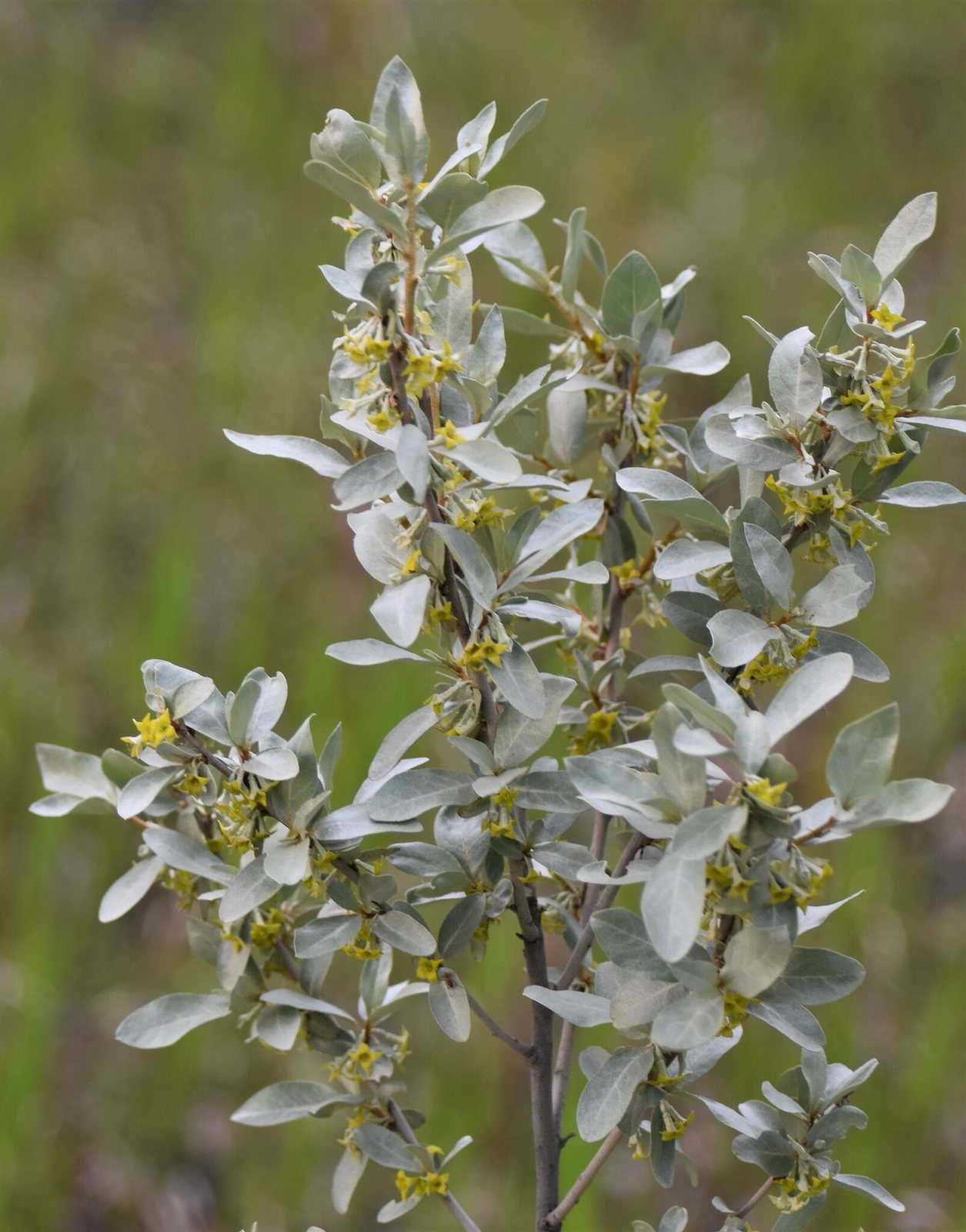
Wolf willow is a deciduous North American shrub grown for its silvery leaves, fragrant flowers and ability to thrive in cold, exposed gardens. It forms thickets through root suckers, making it useful for informal screens and naturalistic planting but difficult to contain in a small border.
At a glance
- Sun
- Full sun is best; tolerates light partial shade but becomes more open.
- Water
- Water regularly during the first growing season. Once established, it tolerates drought, though prolonged dryness can cause leaf loss.
- Soil
- Well-drained sandy, gravelly or loamy soil, including poor and alkaline soils. Tolerates some clay provided it does not remain waterlogged.
- Height
- 6-12 ft (1.8-3.7 m)
- Spread
- 6-12 ft (1.8-3.7 m), eventually wider through root suckers
- Flowers
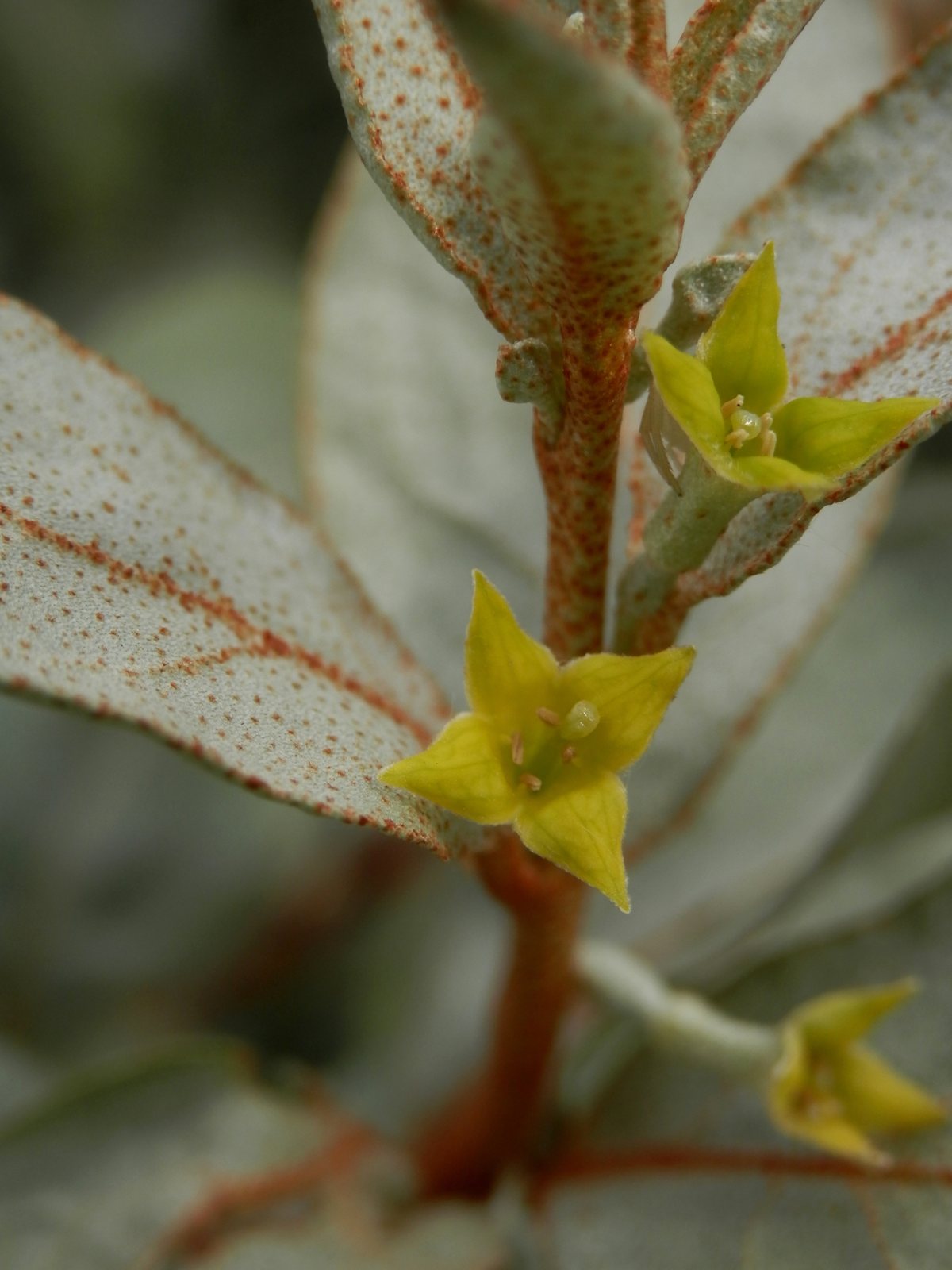
- Late spring to early summer; small, fragrant flowers with silvery outsides and yellow interiors.
- Foliage
- Oval to narrowly oval leaves covered in silvery scales on both surfaces; usually little autumn colour.
- Growth
- Moderate; established plants can spread steadily by suckering.
- Care needed
- Medium
The year at a glance
- Pollinators
- Drought tolerant
- Cold hardy
- Wildlife
- Low allergen
- Fragrant
| J | F | M | A | M | J | J | A | S | O | N | D | |
|---|---|---|---|---|---|---|---|---|---|---|---|---|
| Flowers | ||||||||||||
| Fruit | ||||||||||||
| Plant |
Northern hemisphere months. In Australia, shift them by six.
- Difficulty
- Easy
- Toughness
- Very tough
Will it suit your garden?
Pick your zone, country, light and whether you have pets.
Full sun is 6 or more hours of direct sun a day, part shade 3 to 6 hours, shade under 3.
How it grows
Planting day
1.6 ft (0.5 m)
After 1 year
3 ft (0.95 m)
After 2 years
5 ft (1.4 m)
After 3 years
6 ft (1.8 m)
After 5 years
9 ft (2.8 m)
full size
About 5 years to full size.
From a typical nursery size, at an average rate for this kind of plant. A rule of thumb, not a forecast.
Good to know
- Cats and dogs
- Safe
- Native to
- Canada
- In the garden
- Spreads vigorously: plan to contain it.
- Growth rate
- Moderate
Care
Jobs through the year
- WaterApr–May, Sep–Oct, every 21 days
- Check established shrubs and water only during prolonged drought; first-year plants need more regular watering.
- WaterJun–Aug, every 14 days
- Water established shrubs deeply during prolonged drought to reduce premature leaf loss; skip if soil remains moist.
- MulchApr
- Apply a light organic mulch, leaving stem bases clear.
- PruneFeb–Mar
- Remove dead or damaged wood and a few oldest stems if crowded; avoid shearing.
- PruneMay–Oct, every 30 days
- Remove unwanted root suckers while small, cutting back to their origin where practical.
- Water deeply during dry spells in the first growing season, allowing the soil surface to dry between waterings.
- Apply a light organic mulch, keeping it clear of the stem bases.
- Avoid routine nitrogen feeding; this shrub fixes nitrogen through bacteria associated with its roots.
- Remove unwanted suckers while small, cutting them back to their point of origin where practical.
- Give it room away from small perennials, paving and tightly managed borders.
Pruning. In late winter or early spring, remove dead or damaged wood and cut a few of the oldest stems to ground level if the shrub is crowded. Avoid regular shearing, which spoils its loose shape and encourages dense regrowth.
Through the year
- Late winter
- Thin crowded stems and remove dead or damaged wood before growth starts.
- Spring
- Plant while conditions are cool, water thoroughly and mulch around the root area.
- Late spring
- Check the edges of the planting and remove unwanted root suckers.
- Summer
- Water young plants during dry weather; established plants usually need little supplementary watering.
- Autumn
- Leave the silvery fruit for wildlife and check whether the colony needs containing.
- Late autumn
- Move rooted suckers after leaf fall if you want to start another planting.
In the garden
- Plant as an informal silver-leaved screen where a spreading thicket has room to develop.
- Combine with prairie grasses and drought-tolerant flowers for contrasting colour and texture.
- Use in sunny wildlife hedges in its native North American range, allowing space for nesting cover.
- Plant on well-drained banks where its suckering roots can help hold the soil.
Garden styles it suits: Native meadow, Midwest prairie, Wildlife garden, Native hedgerow, Desert / xeriscape and Sensory garden.
Plant it with: Little bluestem, Switchgrass, Purple coneflower, Yarrow, Prairie smoke and Blanket flower.
Wildlife: The fragrant flowers attract bees and other pollinating insects. Birds eat the fruit, and established thickets provide shelter and nesting cover.
Problems to watch for
- Unwanted suckers: remove shoots promptly and avoid planting beside small beds where spreading roots will be difficult to manage.
- Root decline in waterlogged ground: improve drainage or move the plant to a better-drained position; do not keep watering wet soil.
- Leaf spots: usually minor; clear fallen affected leaves and avoid overhead watering if spotting recurs.
- Stem dieback or canker: prune affected stems back to healthy wood in dry weather and clean tools between cuts.
Safety
Not known to be toxic to people, cats, dogs or horses. The fruit flesh is edible but dry and mealy; the hard seed is not normally eaten. Specific veterinary safety information is limited.
Where it spreads. Spreads aggressively by root suckers in suitable gardens, including in its native range across Canada and the northern and western United States. Allow for thicket formation; this is not the same species as invasive Russian olive.
Easily confused with
Russian olive (Elaeagnus angustifolia)
Usually develops into a larger shrub or small tree, often with thorny branches. Its leaves are generally longer and narrower; wolf willow is normally unarmed and forms a lower suckering thicket.
Autumn olive (Elaeagnus umbellata)
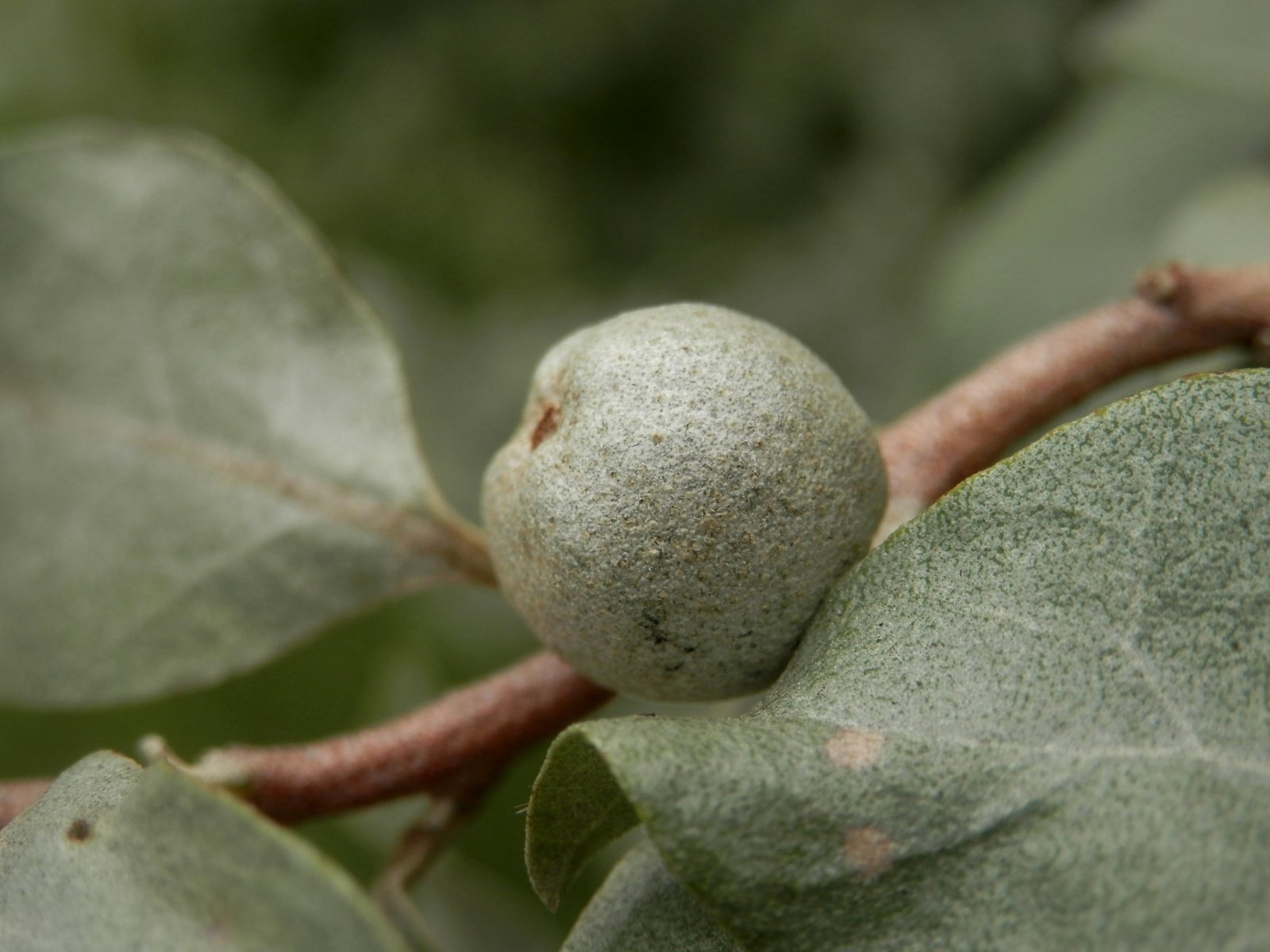
Leaves are green above and silvery beneath, and ripe fruit is red with pale speckles. Wolf willow has silvery leaves on both sides and silvery fruit.
Silver buffaloberry (Shepherdia argentea)
Has opposite leaves, often thorny branches and red or yellow-orange fruit. Wolf willow has alternate leaves and silvery fruit.
The name
The common name silverberry refers to the silvery scales covering the fruit.
Propagation. Lift rooted suckers during dormancy, retaining as much root as possible, and replant promptly. Seed can also be used, but germination is slow and generally requires a period of cold, moist stratification.
Checked against open data
- Accepted botanical name
- Elaeagnus commutata
- Native range
- Alaska, Alberta, British Columbia, California, Colorado, Idaho, Manitoba, Minnesota, Montana, North Dakota, Northwest Territorie and Nunavut.
- Measured
- Soil pH 5 to 7.9. Average height 250 cm.
Sources: GBIF (CC BY 4.0) and Trefle (CC BY 4.0). The care and design notes are LandscapeGPT's own.
See it in your own yard.
Upload a photo of your yard and see it redesigned with plants that suit your climate, each checked against your zone.