Woodland stonecrop
Sedum ternatum. Family Crassulaceae. Groundcover.
Also called Three-leaved stonecrop, Wild stonecrop.
Woodland stonecrop is a low, creeping succulent perennial native to eastern North America. Gardeners grow it for its small, rounded leaves and clusters of starry white spring flowers, especially in lightly shaded rock gardens and woodland edges.
At a glance
- Sun
- Partial shade is best. Tolerates morning sun with adequate moisture; protect from strong afternoon sun in hot climates.
- Water
- Keep lightly moist while establishing. Established plants tolerate short dry spells, but prolonged drought can thin the mat.
- Soil
- Well-drained, humus-rich soil, including shallow or rocky ground. Avoid sites that stay waterlogged, particularly in winter.
- Height
- 0.25-0.5 ft (0.08-0.15 m)
- Spread
- 0.5-1 ft (0.15-0.3 m), eventually wider where stems root
- Flowers
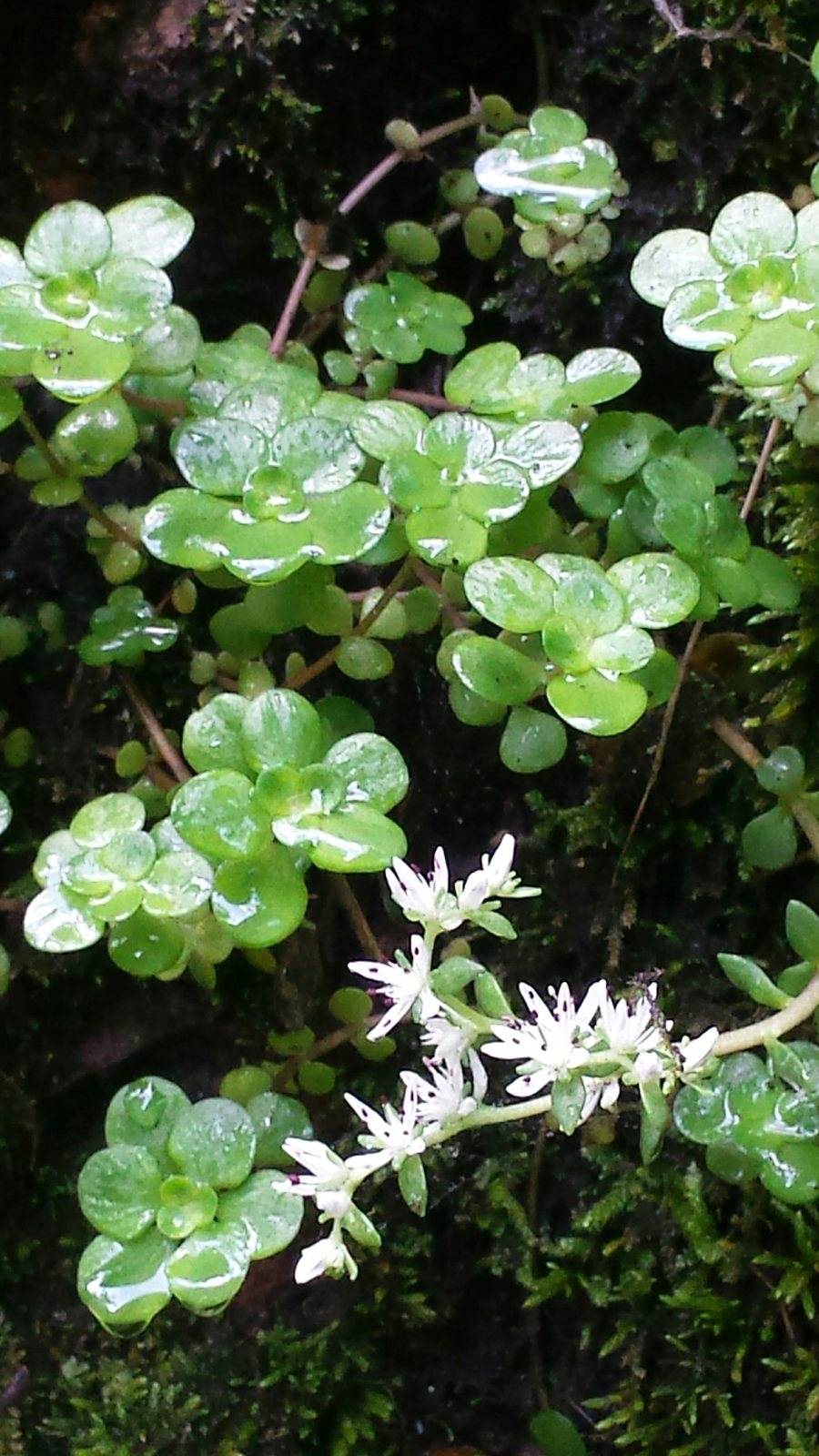
- Spring to early summer; small, white, usually four-petalled flowers in branching clusters.
- Foliage
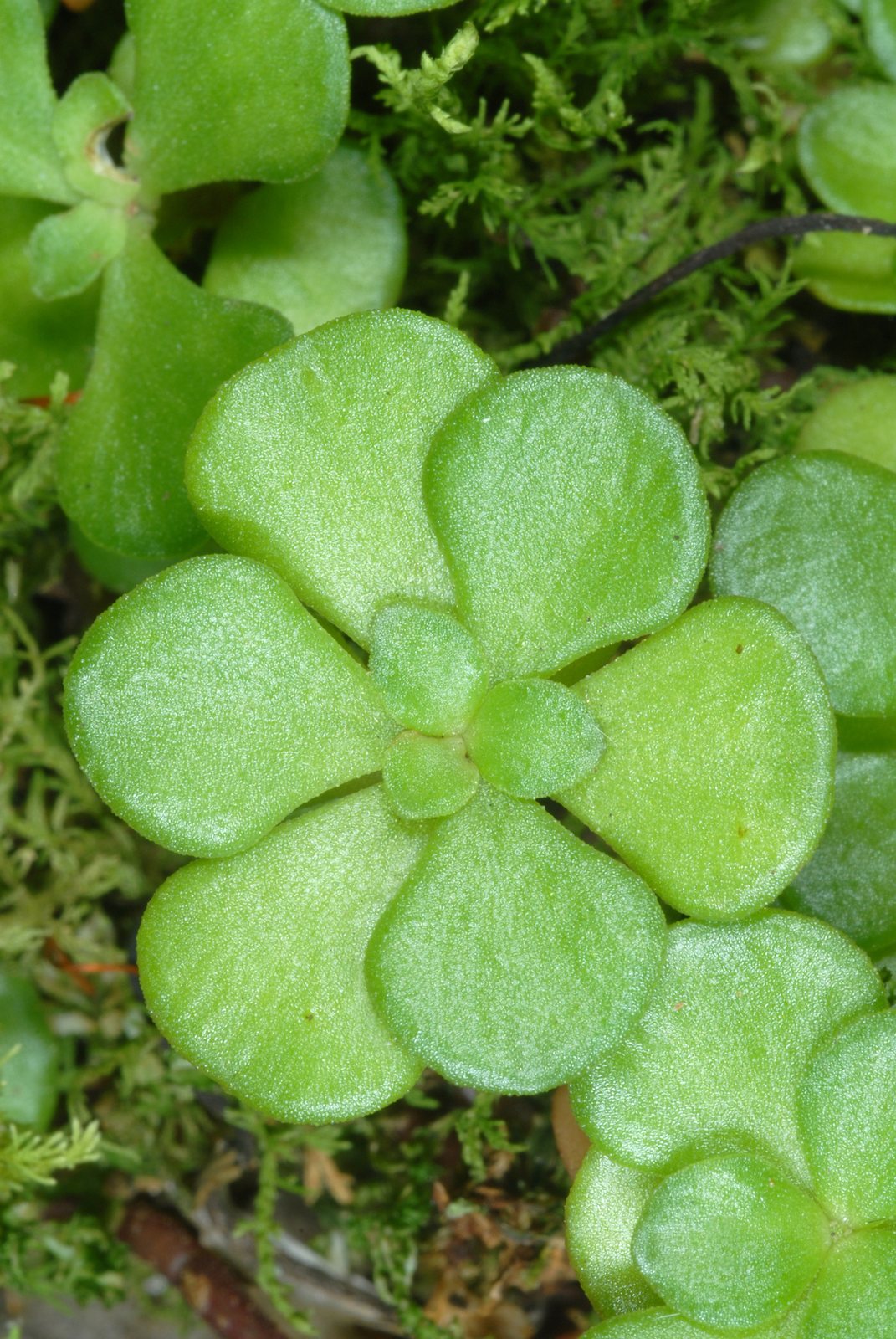
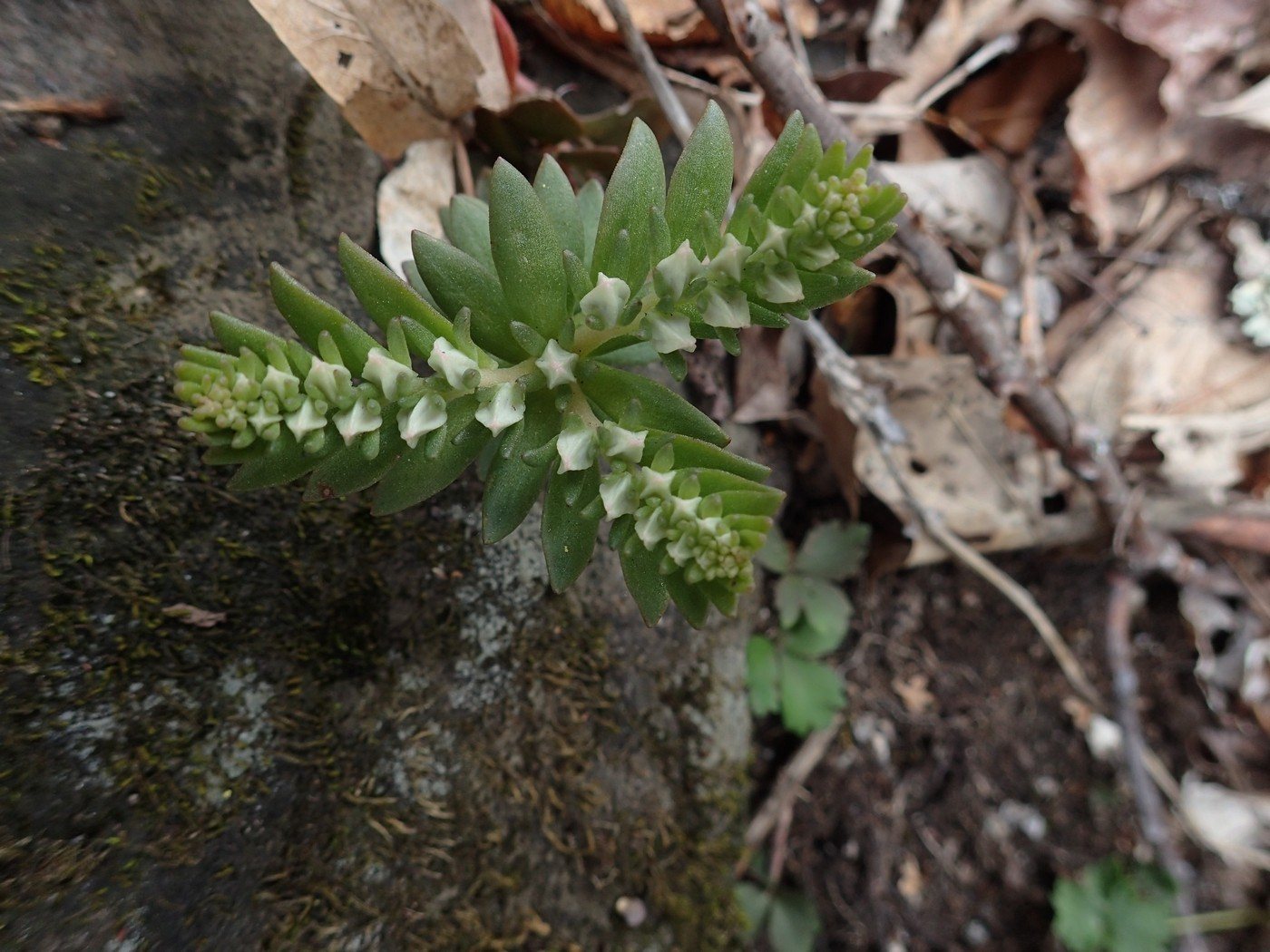
- Small, fleshy, rounded green leaves, commonly arranged in groups of three along creeping stems. Evergreen to semi-evergreen, with some winter loss in colder climates.
- Growth
- Moderate; creeping stems gradually form a mat.
- Care needed
- Low
The year at a glance
- Pollinators
- Cold hardy
- Wildlife
- Low allergen
| J | F | M | A | M | J | J | A | S | O | N | D | |
|---|---|---|---|---|---|---|---|---|---|---|---|---|
| Flowers | ||||||||||||
| Plant |
Northern hemisphere months. In Australia, shift them by six.
- Difficulty
- Easy
- Toughness
- Fairly tough
Will it suit your garden?
Pick your zone, country, light and whether you have pets.
Full sun is 6 or more hours of direct sun a day, part shade 3 to 6 hours, shade under 3.
How it grows
Planting day
0.1 ft (0.03 m)
After 1 year
0.2 ft (0.06 m)
After 2 years
0.3 ft (0.1 m)
After 3 years
0.4 ft (0.12 m)
full size
About 3 years to full size.
From a typical nursery size, at an average rate for this kind of plant. A rule of thumb, not a forecast.
Good to know
- Cats and dogs
- Safe
- Native to
- the US and Canada
- In the garden
- Spreads vigorously: plan to contain it.
- Growth rate
- Moderate
Care
Jobs through the year
- WaterApr–May, Sep–Oct, every 14 days
- Water established mats when dry; keep new plants lightly moist while rooting.
- WaterJun–Aug, every 7 days
- Water during prolonged dry weather, especially under trees; avoid saturating the roots.
- MulchMar–Apr
- Add a light dressing of leaf mould around plants without covering crowns.
- PruneMar–Apr
- Remove winter-damaged growth and trim wandering stems where needed.
- DeadheadMay–Jun
- Snip off spent flower stems after flowering if a tidier mat is wanted.
- DivideJun, Sep
- Divide only crowded or thinning patches after flowering or in early autumn.
- ProtectOct–Dec
- Clear dense, wet leaf piles from foliage and maintain free drainage.
- Water new plants when the soil surface begins to dry, without leaving the roots saturated.
- Water established patches during prolonged dry weather, especially beneath trees.
- Apply a light dressing of leaf mould around plants in spring; keep their crowns uncovered.
- Avoid routine feeding; rich soil and heavy fertilising encourage loose growth.
- Remove heavy accumulations of fallen leaves and hand-weed until the mat fills in.
- Divide crowded or thinning patches after flowering or in early autumn.
Pruning. After flowering, snip off spent flower stems if you want a tidier mat. Trim wandering stems as needed and remove winter-damaged growth in spring.
Through the year
- Early spring
- Remove damaged stems and any heavy covering of fallen leaves.
- Spring
- Plant in well-drained soil and water regularly while roots establish.
- Late spring
- After flowering, tidy spent stems and divide patches if needed.
- Summer
- Check moisture during long dry spells and water before the mat shrivels severely.
- Early autumn
- Replant rooted stem sections to fill gaps or extend a patch.
- Winter
- Check drainage and clear dense, wet leaf piles from the foliage.
In the garden
- Use as a low carpet along a lightly shaded woodland path, away from foot traffic.
- Tuck into shaded rock crevices or beside boulders where its stems can trail.
- Plant beneath deciduous shrubs with small spring bulbs for successive flowers at ground level.
- Combine with ferns and small hostas for contrasting leaf shapes in a moist but well-drained border.
- Edge a shaded container where the foliage can spill over the rim.
Garden styles it suits: Woodland, Cottage garden, Wildlife garden, Low-maintenance, White garden and Small-space.
Plant it with: Christmas fern, Wild columbine, Foamflower, Small hostas, Snowdrops and Dwarf crested iris.
Wildlife: Flowers provide nectar and pollen for small bees and other insects. The low mat offers shelter for small invertebrates.
Problems to watch for
- Root or stem rot in waterlogged soil: improve drainage or move plants to a raised, freely draining position.
- Slugs and snails eating tender growth: remove hiding places, hand-pick at dusk, and use wildlife-conscious controls if needed.
- Scorched or shrivelled foliage in hot sun or drought: provide afternoon shade and water during prolonged dry spells.
- Sparse growth under dense shade or thick leaf litter: move to brighter shade and gently clear accumulated debris.
Safety
Not known to be toxic to cats, dogs, horses or people. No part is recognised as a significant poisoning hazard, but it is not a food plant; eating large amounts may cause stomach upset.
Easily confused with
White stonecrop (Sedum album)
Has more cylindrical, bead-like leaves and usually five-petalled white flowers; woodland stonecrop has flatter, rounded leaves often grouped in threes and usually four-petalled flowers.
Two-row stonecrop (Phedimus spurius)
Has opposite leaves with noticeably toothed or scalloped edges and usually pink to reddish flowers; woodland stonecrop has mostly smooth-edged leaves and white flowers.
The name
The species name ternatum means 'in threes', referring to the characteristic groups of three leaves along the stems.
Propagation. Divide rooted patches in spring or early autumn. Short, non-flowering stem cuttings root readily in a lightly moist, freely draining medium; stems also root naturally where they touch the soil.
Checked against open data
- Accepted botanical name
- Sedum ternatum
- In the US and Canada
- Native in the lower 48 states. Introduced in Canada.
- Native range
- Alabama, Arkansas, Connecticut, Delaware, District of Columbia, Georgia, Illinois, Indiana, Iowa, Kentucky, Maine and Maryland.
Sources: GBIF (CC BY 4.0), USDA PLANTS and Trefle (CC BY 4.0). The care and design notes are LandscapeGPT's own.
See it in your own yard.
Upload a photo of your yard and see it redesigned with plants that suit your climate, each checked against your zone.