Dwarf crested iris
Iris cristata. Family Iridaceae. Perennial.
Also called Crested iris.
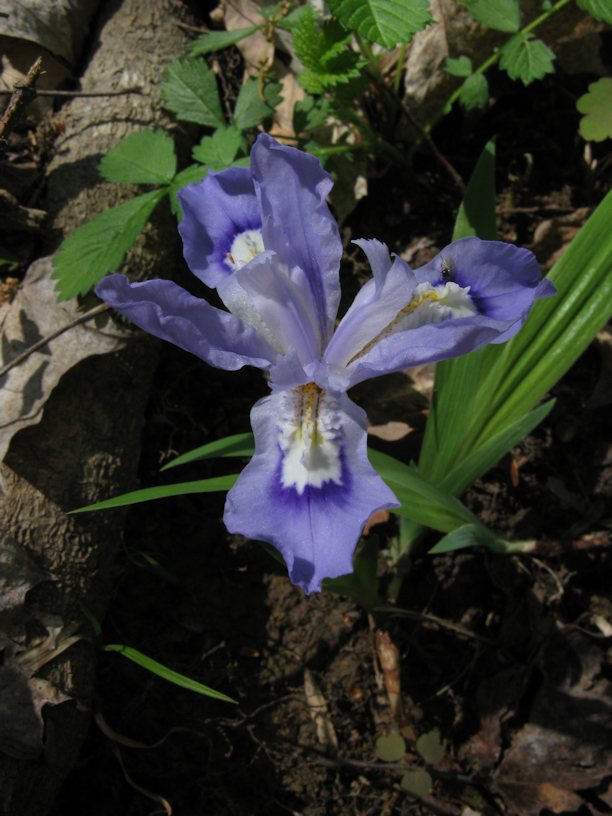
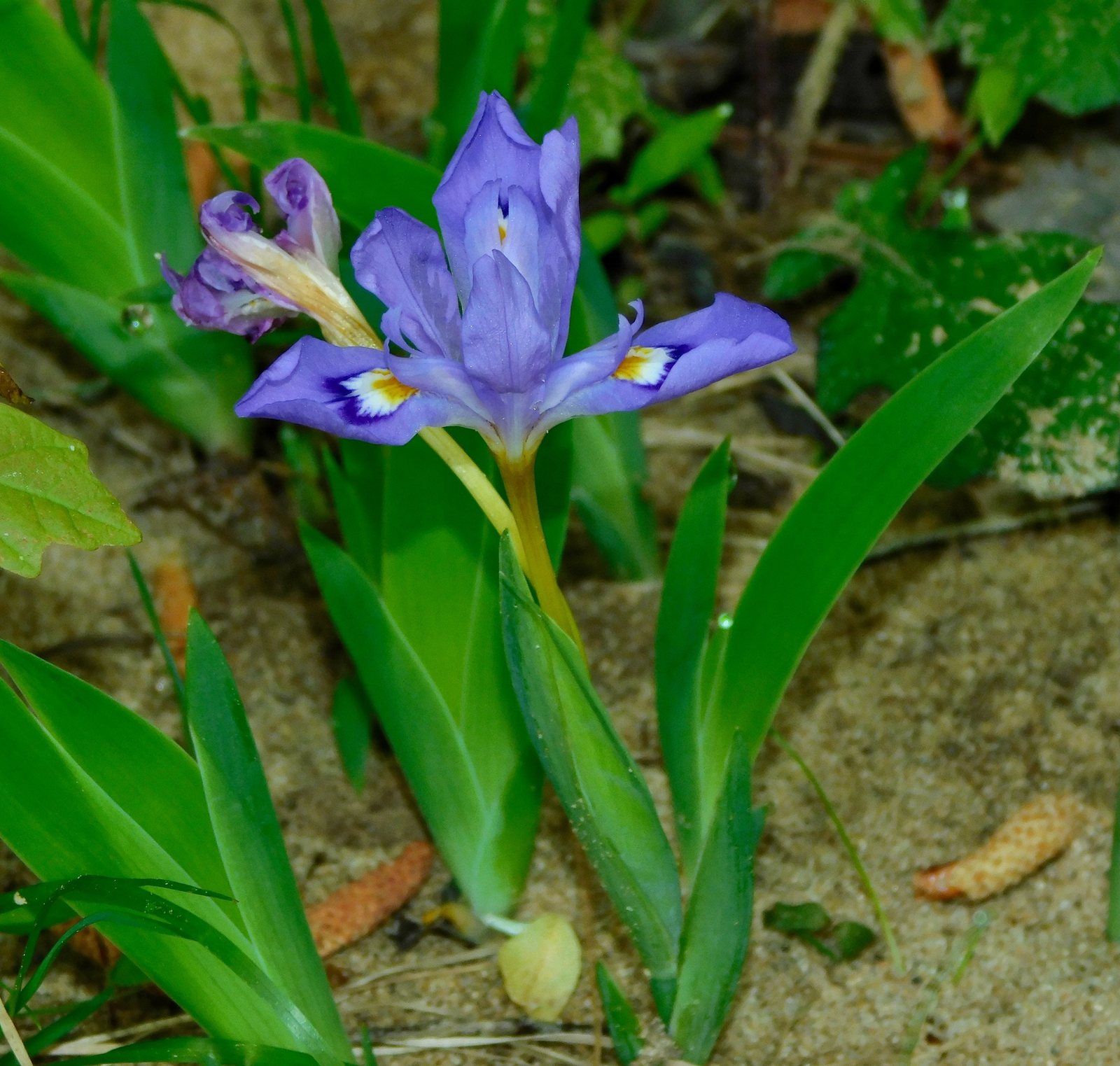
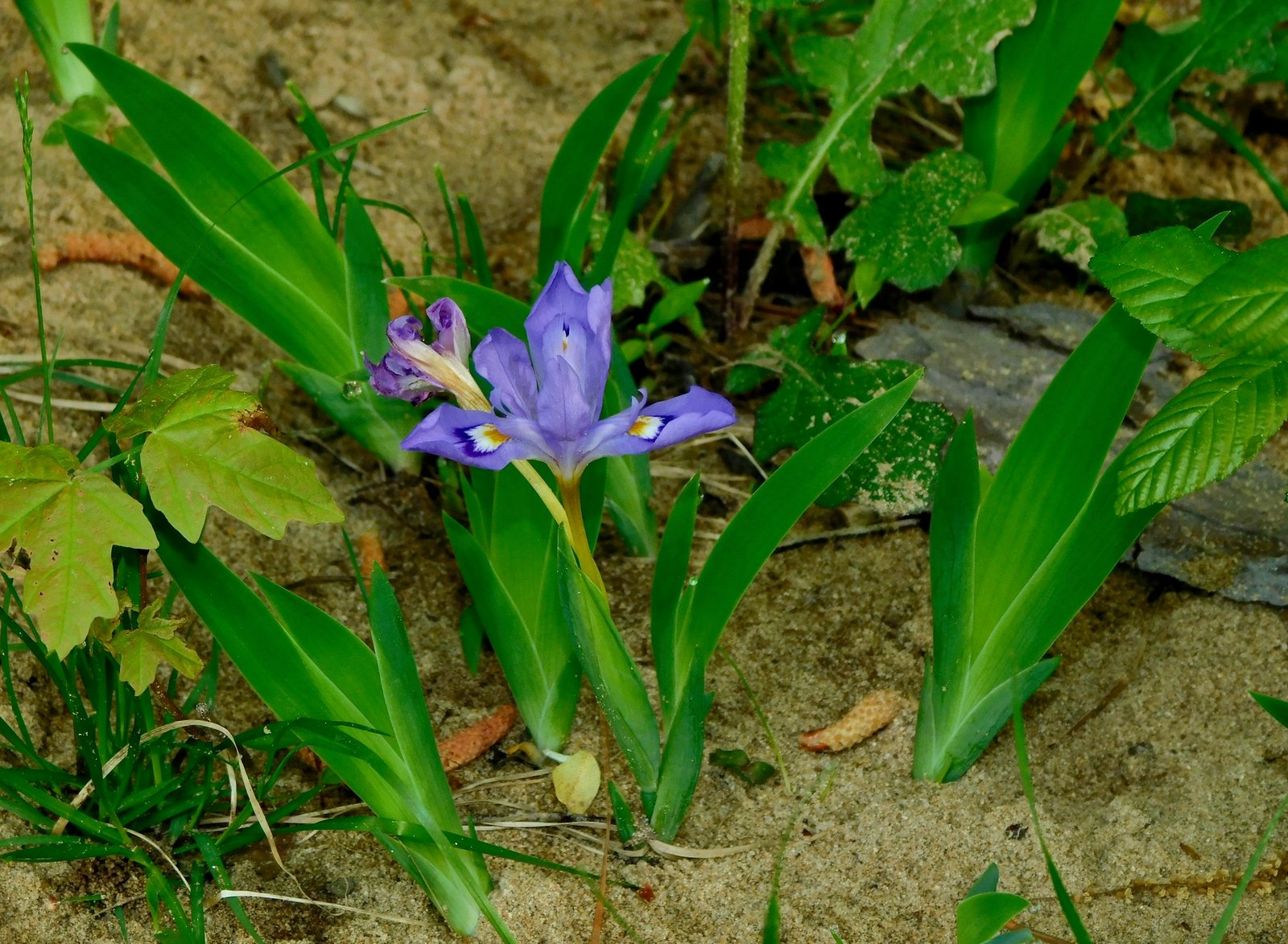
Dwarf crested iris is a low-growing, spreading perennial native to the eastern United States. Gardeners grow it for its blue to violet spring flowers, each marked with a raised crest, and its neat fans of leaves beneath deciduous trees.
At a glance
- Sun
- Partial shade or dappled shade; tolerates morning sun if the soil stays moist. Deep shade reduces flowering.
- Water
- Keep moderately moist during establishment and spring growth. Established patches tolerate brief dry spells, but prolonged drought can make the foliage die back early.
- Soil
- Humus-rich, well-drained soil, preferably slightly acidic to neutral. Avoid waterlogged ground and heavy soil that stays wet in winter.
- Height
- 0.25-0.75 ft (0.08-0.23 m)
- Spread
- 0.5-1 ft (0.15-0.3 m) per clump, gradually forming wider colonies
- Flowers
- Mid- to late spring; pale blue, lavender or violet flowers with white patches and yellow to orange crests. White-flowered forms also occur.
- Foliage
- Small fans of narrow, sword-shaped green leaves; deciduous, sometimes dying back early during drought.
- Growth
- Moderate; shallow rhizomes spread outward to form patches.
- Care needed
- Low
The year at a glance
- Pollinators
- Deer resistant
- Cold hardy
- Low allergen
| J | F | M | A | M | J | J | A | S | O | N | D | |
|---|---|---|---|---|---|---|---|---|---|---|---|---|
| Flowers | ||||||||||||
| Plant |
Northern hemisphere months. In Australia, shift them by six.
- Difficulty
- Easy
- Toughness
- Fairly tough
Will it suit your garden?
Pick your zone, country, light and whether you have pets.
Full sun is 6 or more hours of direct sun a day, part shade 3 to 6 hours, shade under 3.
How it grows
Planting day
0.5 ft (0.16 m)
full size
About 3 years to full size.
From a typical nursery size, at an average rate for this kind of plant. A rule of thumb, not a forecast.
Good to know
- Cats and dogs
- Toxic
- Native to
- the US
- In the garden
- Spreads vigorously: plan to contain it.
- Growth rate
- Moderate
Care
Jobs through the year
- WaterMar–May, Sep–Oct, every 14 days
- Water established patches if soil is drying; water new plants more often through their first season.
- WaterJun–Aug, every 7 days
- Water established patches during dry spells, especially beneath trees; avoid soggy soil.
- MulchMar–Apr
- Apply a thin layer of leaf mould around plants, leaving shallow rhizomes uncovered.
- DivideMay–Jun
- Divide crowded or poorly flowering patches just after flowering and replant shallowly.
- DeadheadApr–May
- Optionally remove spent flower stems, leaving green leaves intact.
- PruneFeb–Mar, Nov
- Remove dead foliage and heavy leaf litter without damaging the surface rhizomes.
- ProtectMar–May
- Check young growth for slugs and snails; hand-pick or use labelled iron-phosphate bait if needed.
- Plant the shallow rhizomes at the soil surface or only lightly covered; do not bury them deeply.
- Water new plants regularly through their first growing season, letting excess water drain away.
- Apply a thin layer of leaf mould around the plants in spring, keeping the rhizomes uncovered.
- Avoid heavy feeding; a light compost dressing is usually enough.
- Divide crowded or poorly flowering patches just after flowering, and water the divisions until established.
Pruning. Remove spent flower stems if you want a tidy patch, but leave green leaves intact. Clear away dead foliage in late autumn or before new growth starts in spring.
Through the year
- Early spring
- Remove dead leaves and any heavy leaf litter covering the rhizomes.
- Spring
- Plant new clumps shallowly and water during dry weather.
- Late spring
- After flowering, divide crowded patches or move rooted sections to new positions.
- Summer
- Water during prolonged drought, especially beneath thirsty trees.
- Early autumn
- Plant container-grown plants while the soil is still warm, allowing time for roots to establish.
- Late autumn
- Remove collapsed foliage and check that winter rain drains freely from the planting.
In the garden
- Plant in drifts beneath deciduous trees for a low carpet of spring flowers.
- Edge a shaded path where the small flowers can be seen close up.
- Combine with fine-textured ferns and larger-leaved hostas for contrasting foliage.
- Tuck into humus-filled pockets in a lightly shaded rock garden or beside mossy stones.
Garden styles it suits: Woodland, Cottage garden, Wildlife garden, Blues and silvers, Moss and fern garden and Low-maintenance.
Plant it with: Christmas fern, Foamflower, Woodland phlox, Wild ginger, Hosta and Virginia bluebells.
Wildlife: Flowers provide spring nectar and pollen for visiting insects, including bees. Deer usually leave the foliage alone, though browsing is still possible.
Problems to watch for
- Slugs and snails can chew young leaves and flowers; inspect at dusk, remove them by hand, and use iron-phosphate bait according to the label if needed.
- Rhizome rot develops in soggy soil or deeply buried plants; remove rotten sections and replant healthy pieces shallowly in better-drained ground.
- Poor flowering usually follows deep shade or overcrowding; provide brighter dappled light and divide congested patches after flowering.
- Leaf spotting can occur in damp, crowded patches; remove affected dead foliage, improve air circulation, and water the soil rather than the leaves.
Safety
Treat all parts as toxic to people, cats, dogs and horses, especially the rhizomes. Eating them can cause mouth irritation, vomiting and diarrhoea; horses may develop digestive upset or colic. Sap can irritate skin. Small accidental exposures are often limited to irritation or stomach upset, but seek medical or veterinary advice after ingestion.
Easily confused with
Dwarf lake iris (Iris lacustris)
A close relative that is usually smaller, with shorter leaves and more compact flowers. The two can be difficult to distinguish reliably without checking detailed botanical characters and provenance.
Dwarf bearded iris (Iris pumila)
Its outer flower segments carry a fuzzy beard rather than a raised crest. It generally prefers sunnier, drier conditions.
Japanese roof iris (Iris tectorum)
Also has crested flowers, but produces much taller flower stems, larger flowers and broad, conspicuous fans of leaves.
The name
The species name cristata means crested, referring to the raised ridges on the outer flower segments.
Propagation. Divide rooted sections of rhizome just after flowering, retaining healthy roots and at least one leaf fan on each piece. Replant shallowly and keep moist while they establish. Seed is possible but slow and may require seasonal temperature changes before germination.
Checked against open data
- Accepted botanical name
- Iris cristata
- In the US and Canada
- Native in the lower 48 states.
- Native range
- Alabama, Arkansas, District of Columbia, Georgia, Illinois, Indiana, Iowa, Kentucky, Maryland, Mississippi, Missouri and New York.
Sources: GBIF (CC BY 4.0), USDA PLANTS and Trefle (CC BY 4.0). The care and design notes are LandscapeGPT's own.
See it in your own yard.
Upload a photo of your yard and see it redesigned with plants that suit your climate, each checked against your zone.