Yellow coneflower
Echinacea paradoxa. Family Asteraceae. Perennial.
Also called Bush's coneflower, Ozark coneflower.
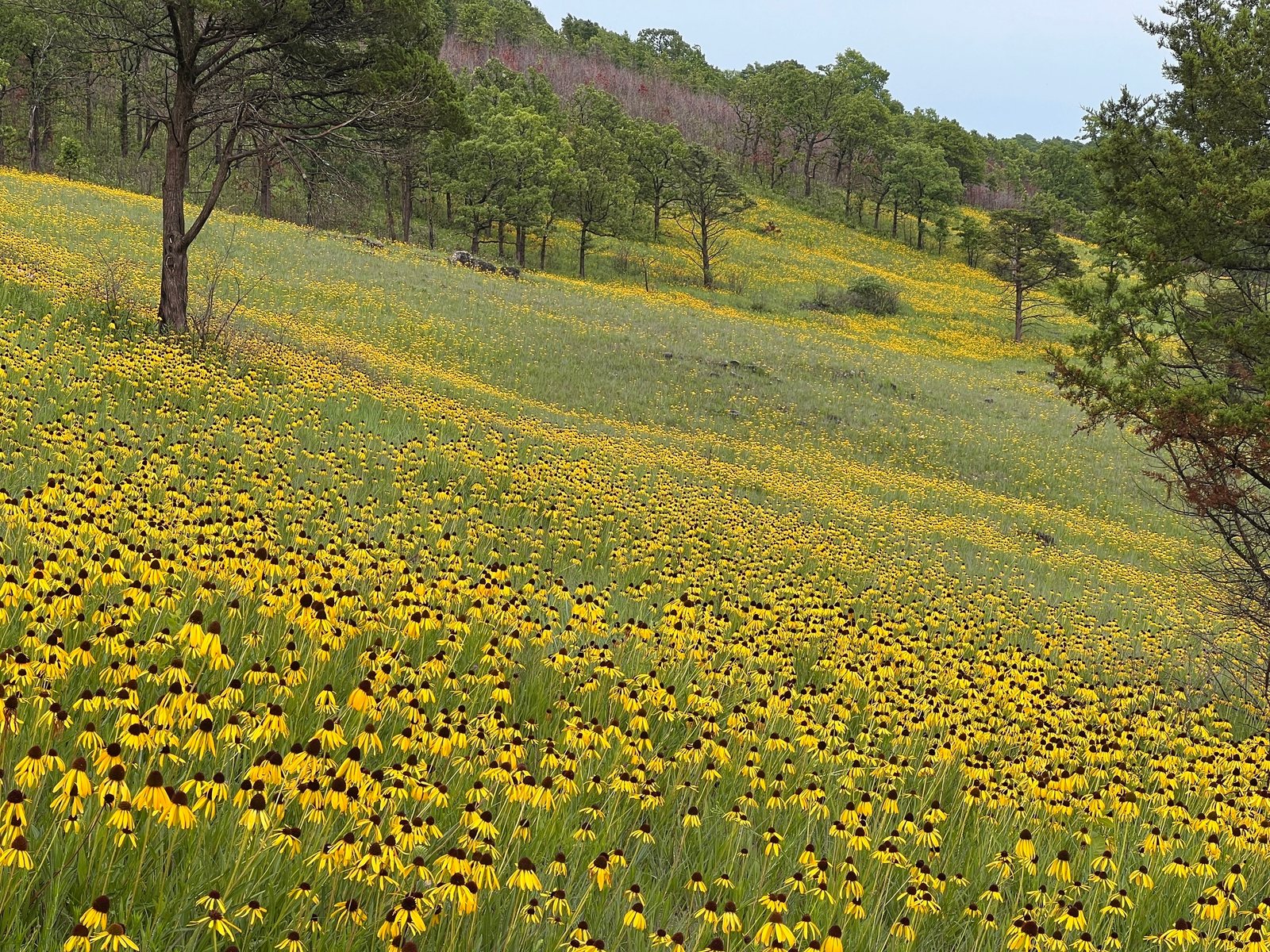
This clump-forming perennial from the south-central United States has drooping yellow petals around a raised, dark brown cone. Gardeners grow it for its early-summer flowers, drought tolerance once established, and value to pollinators and seed-eating birds.
At a glance
- Sun
- Full sun; tolerates light shade but flowers less and may lean.
- Water
- Water regularly during establishment. Once established, water during prolonged drought; avoid persistently wet soil.
- Soil
- Well-drained sandy, gravelly or loamy soil, including limestone-derived soils. Tolerates lean soil but dislikes waterlogged ground, especially in winter.
- Height
- 2-3 ft (0.6-0.9 m)
- Spread
- 1-1.5 ft (0.3-0.45 m)
- Flowers
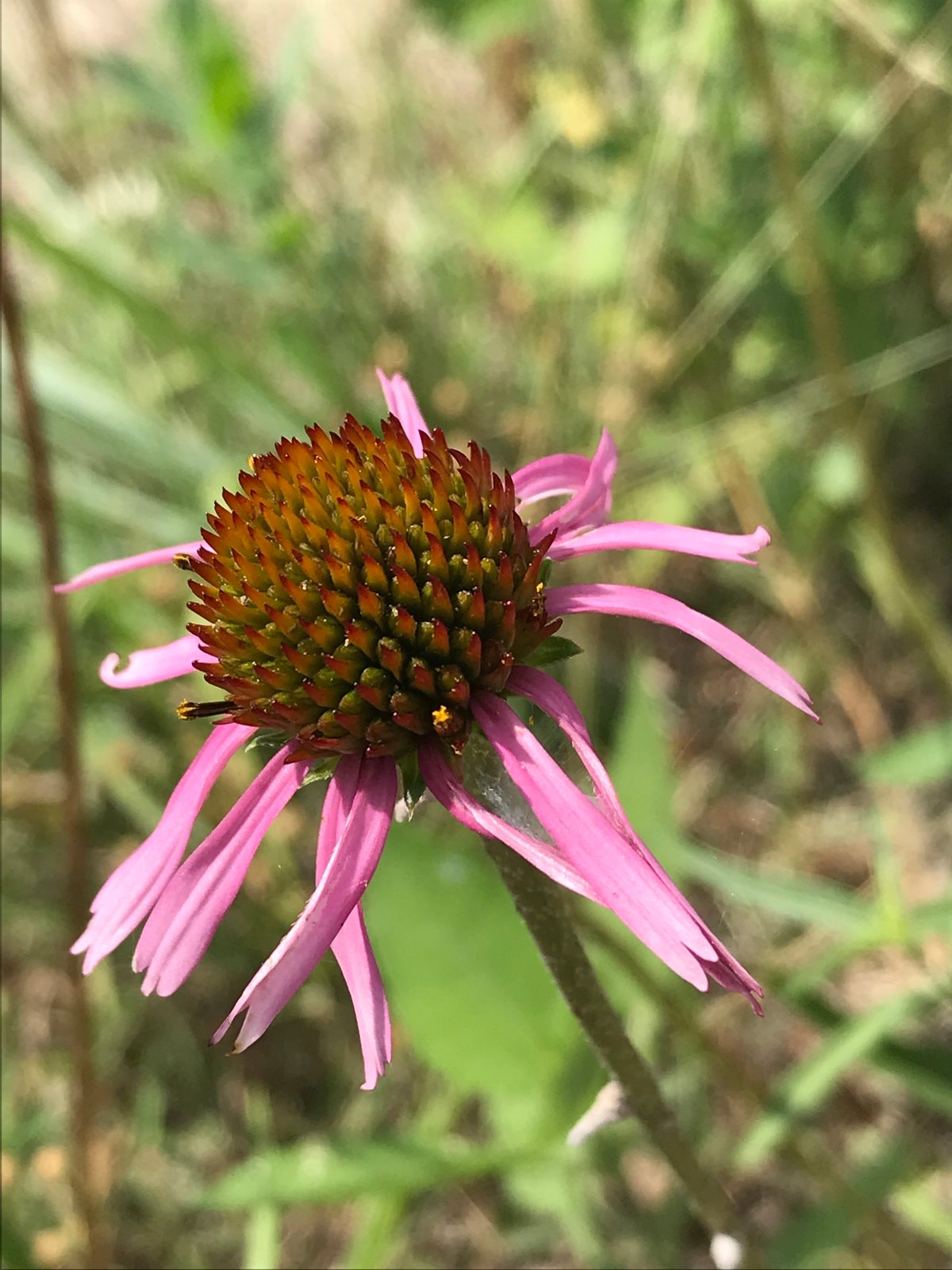
- Early to midsummer; narrow, drooping yellow petals surrounding a prominent dark brown cone.
- Foliage
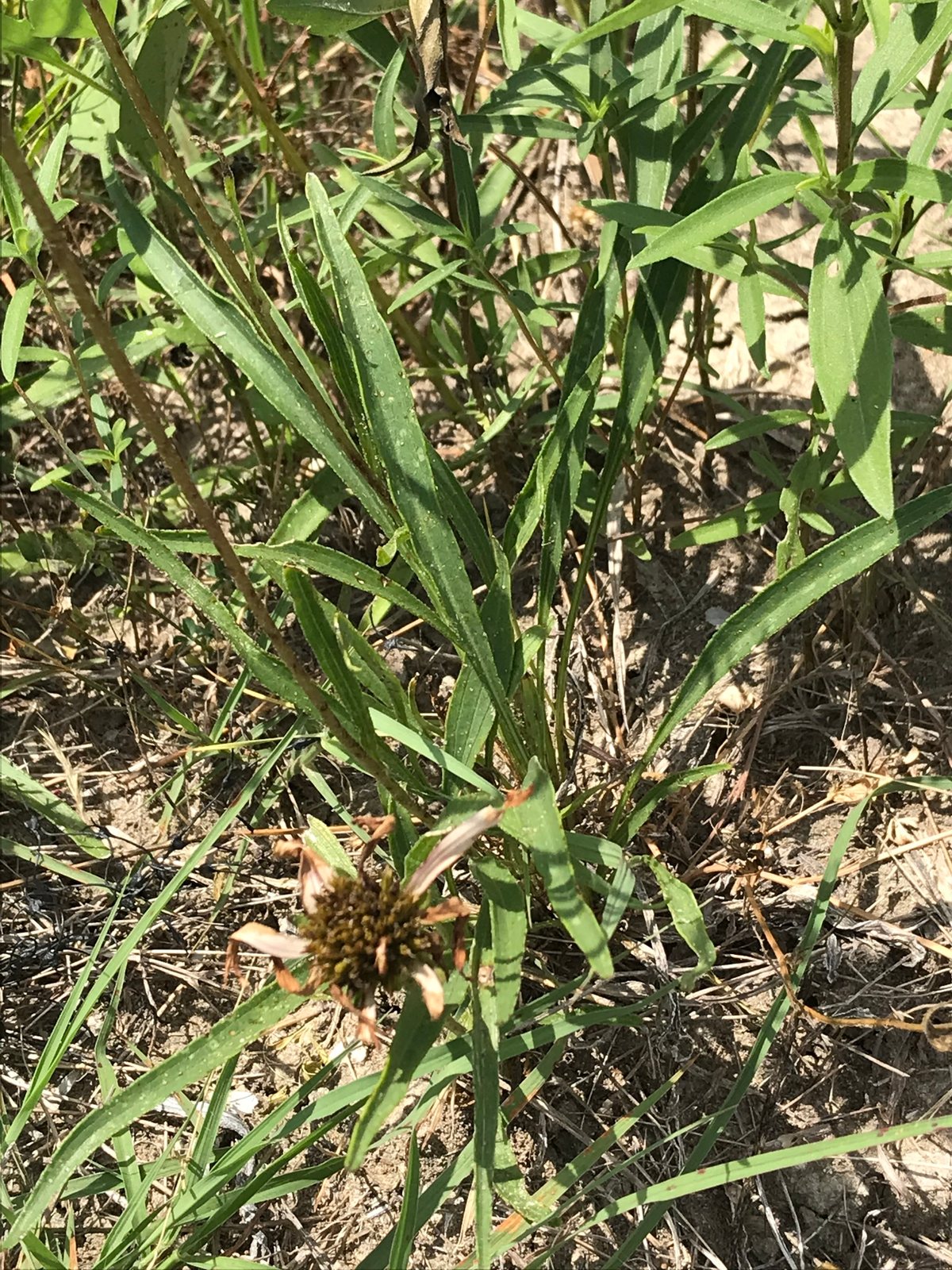
- Narrow, lance-shaped green leaves, mostly clustered near the base, with smaller leaves along the flower stems.
- Growth
- Moderate; seed-grown plants may take two or three years to flower well.
- Care needed
- Low
The year at a glance
- Pollinators
- Deer resistant
- Drought tolerant
- Wildlife
- Low allergen
| J | F | M | A | M | J | J | A | S | O | N | D | |
|---|---|---|---|---|---|---|---|---|---|---|---|---|
| Flowers | ||||||||||||
| Fruit | ||||||||||||
| Plant |
Northern hemisphere months. In Australia, shift them by six.
- Difficulty
- Easy
- Toughness
- Very tough
Will it suit your garden?
Pick your zone, country, light and whether you have pets.
Full sun is 6 or more hours of direct sun a day, part shade 3 to 6 hours, shade under 3.
How it grows
Planting day
1 ft (0.3 m)
After 1 year
1.5 ft (0.45 m)
After 2 years
2 ft (0.6 m)
After 3 years
2.5 ft (0.75 m)
full size
About 3 years to full size.
From a typical nursery size, at an average rate for this kind of plant. A rule of thumb, not a forecast.
Good to know
- Cats and dogs
- Safe
- Native to
- the US
- Growth rate
- Moderate
Care
Jobs through the year
- WaterApr–May, Sep, every 21 days
- Water established ground-grown clumps only during prolonged drought; new plants need more frequent watering.
- WaterJun–Aug, every 14 days
- During prolonged drought, soak established clumps deeply and let the soil dry between waterings.
- PruneFeb–Mar
- Cut old stems just above ground before new shoots lengthen.
- DeadheadJun–Aug, every 14 days
- Remove spent heads only to limit self-seeding; leave others for birds and winter structure.
- ProtectMar–May
- Protect emerging shoots from slugs with hand-picking or suitable barriers.
- Water deeply during dry spells in the first growing season, allowing the surface soil to dry between waterings.
- Avoid routine feeding; rich soil and excess nitrogen encourage weak, floppy growth.
- Keep mulch away from the crown and improve drainage before planting in heavy soil.
- Plant among upright grasses or use discreet supports if stems lean in exposed positions.
- Leave established clumps undisturbed where possible; their deep roots make division difficult.
Pruning. Remove spent flower heads in summer if you want to limit self-seeding, or leave them for birds and winter structure. Cut dead stems to just above ground level in late winter or early spring before new shoots lengthen.
Through the year
- Late winter
- Cut down old stems before fresh growth starts, taking care around emerging shoots.
- Spring
- Plant into well-drained soil and water thoroughly; protect young shoots from slugs.
- Early summer
- Check new plants during dry weather and support leaning stems if needed.
- Midsummer
- Deadhead selectively, or retain cones for seed and wildlife.
- Autumn
- Collect ripe seed or sow outdoors so winter cold can help break dormancy.
- Winter
- Check that water is not collecting around crowns, especially in heavy soil.
In the garden
- Plant in small groups through sunny prairie-style borders with little bluestem and prairie dropseed.
- Combine with purple coneflowers and blazing star for contrasting flower colours and shapes.
- Use in sunny gravel gardens where drainage is sharp and summer watering is limited.
- Place beside paths or seating areas where you can watch pollinators and enjoy the distinctive cones.
Garden styles it suits: Native meadow, New perennial (prairie), Pollinator garden, Wildflower, Dry gravel garden and Midwest prairie.
Plant it with: Little bluestem, Prairie dropseed, Butterfly weed, Blazing star, Purple coneflower and Wild bergamot.
Wildlife: Flowers provide nectar and pollen for bees and butterflies. Retained seed heads feed seed-eating birds, including goldfinches in North America.
Problems to watch for
- Crown or root rot in wet soil: improve drainage, keep mulch off the crown and avoid planting in winter-wet sites.
- Slugs and snails eating young shoots: inspect new growth and use hand-picking or suitable barriers.
- Aster yellows causing green, distorted flowers and stunted growth: remove and dispose of affected plants; there is no cure.
- Floppy stems in shade or rich soil: move to full sun, stop nitrogen feeding and support stems if necessary.
Safety
Not known to be toxic to cats, dogs, horses or people. Species-specific safety information is limited, so do not treat the leaves, flowers, seeds or roots as food; eating plant material may cause stomach upset.
Easily confused with
Grey-headed coneflower (Ratibida pinnata)
Also has drooping yellow petals, but its leaves are deeply divided into narrow segments rather than simple and lance-shaped.
Orange coneflower (Rudbeckia fulgida)
Usually has broader, toothed leaves and yellow petals held more horizontally around a less elongated cone.
Pale purple coneflower (Echinacea pallida)
Has a similar slender habit and strongly drooping petals, but the petals are pale pink to purplish rather than yellow.
The name
Echinacea comes from the Greek word for hedgehog, referring to the prickly cone, while paradoxa refers to the unexpected yellow flowers in a genus best known for pink and purple ones.
Propagation. Grow from seed sown outdoors in autumn, or cold-moist stratify seed before spring sowing. Seedlings may vary or hybridise where other Echinacea species grow nearby. Division is possible but difficult because of the deep root system; seed is generally the simpler method.
Checked against open data
- Accepted botanical name
- Echinacea paradoxa
- In the US and Canada
- Native in the lower 48 states.
- Native range
- Arkansas, Missouri, Oklahoma and Texas.
Sources: GBIF (CC BY 4.0), USDA PLANTS and Trefle (CC BY 4.0). The care and design notes are LandscapeGPT's own.
See it in your own yard.
Upload a photo of your yard and see it redesigned with plants that suit your climate, each checked against your zone.