Yellow loosestrife
Lysimachia punctata. Family Primulaceae. Perennial.
Also called Dotted loosestrife, Spotted loosestrife, Large yellow loosestrife.
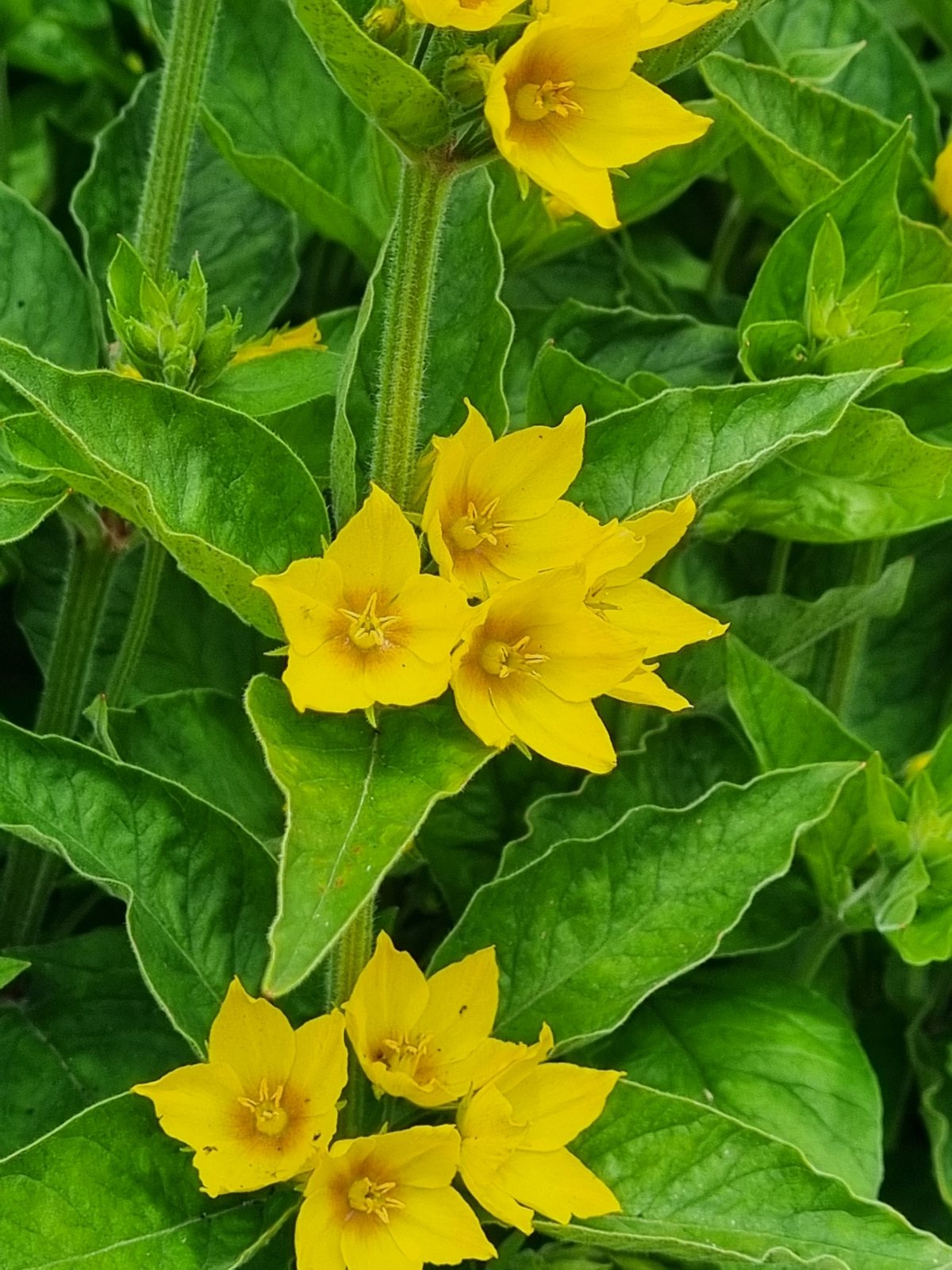
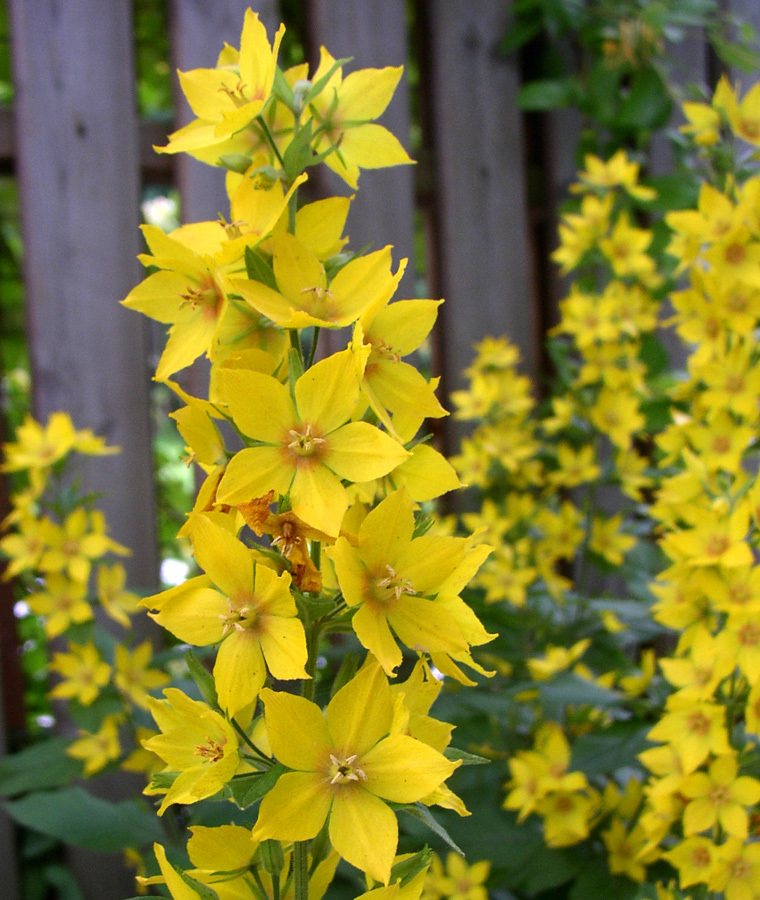
Yellow loosestrife is an upright, herbaceous perennial grown for its dense tiers of golden-yellow summer flowers. It fills damp borders quickly, but its creeping underground stems can overwhelm smaller neighbours, so give it space and control its spread.
At a glance
- Sun
- Full sun to partial shade; some afternoon shade helps in hot summers.
- Water
- Keep the soil evenly moist, especially during establishment and flowering. Established plants tolerate brief dry spells, but prolonged drought causes wilting and scorched foliage.
- Soil
- Moist, humus-rich soil that drains reasonably well; tolerates clay and a broad range of soil pH. Avoid permanently submerged planting sites.
- Height
- 2-3 ft (0.6-0.9 m)
- Spread
- 1-2 ft (0.3-0.6 m) initially; spreading colonies can become much wider.
- Flowers
- Early to midsummer, sometimes continuing into late summer; golden-yellow, cup-shaped flowers clustered around the upper stems.
- Foliage
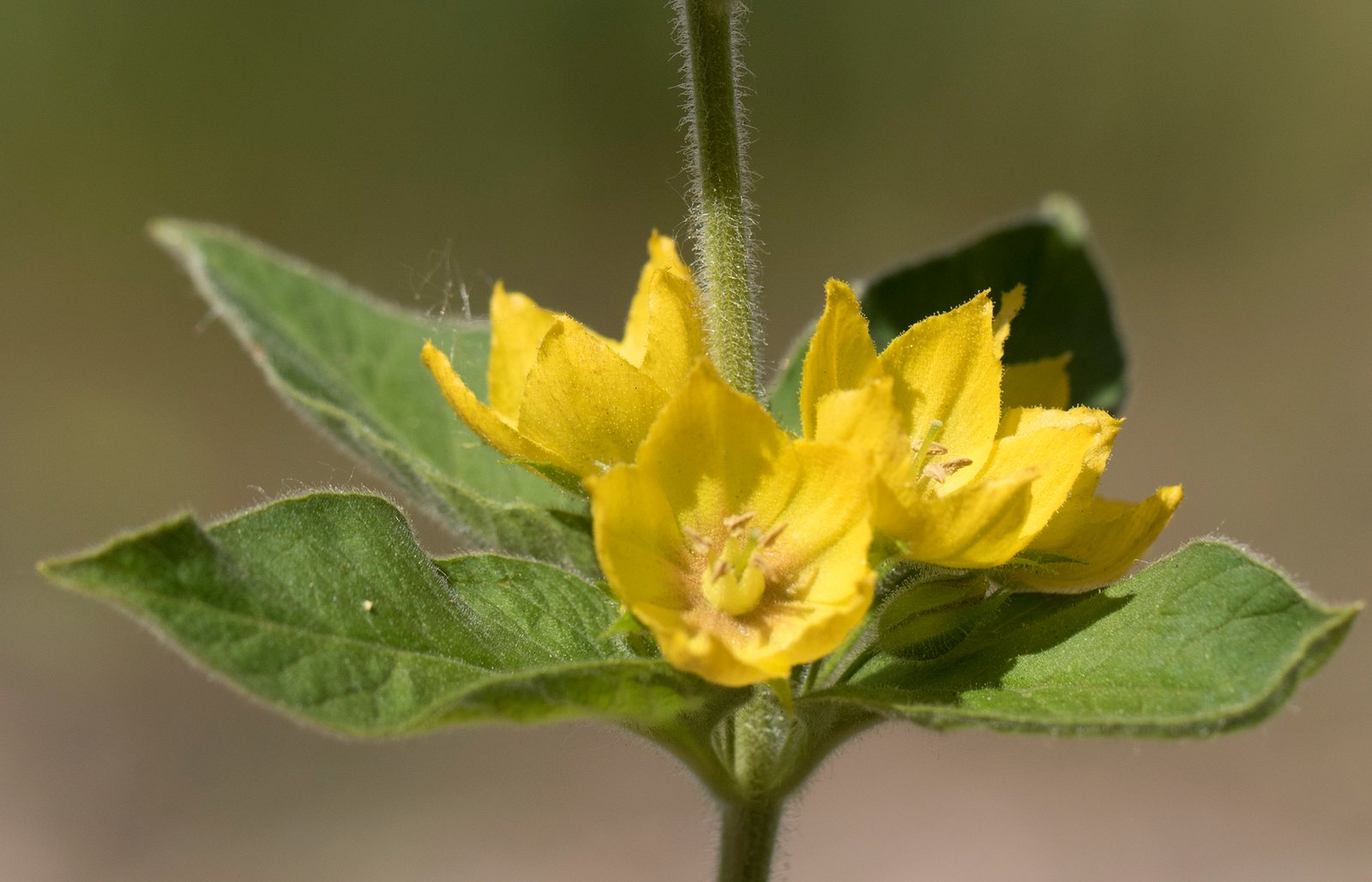
- Pointed, oval green leaves arranged in opposite pairs or whorls along upright stems; dies back in winter.
- Growth
- Fast once established, spreading by underground rhizomes.
- Care needed
- Medium
The year at a glance
- Pollinators
- Cold hardy
- Low allergen
| J | F | M | A | M | J | J | A | S | O | N | D | |
|---|---|---|---|---|---|---|---|---|---|---|---|---|
| Flowers | ||||||||||||
| Plant |
Northern hemisphere months. In Australia, shift them by six.
- Difficulty
- Easy
- Toughness
- Very tough
Will it suit your garden?
Pick your zone, country, light and whether you have pets.
Full sun is 6 or more hours of direct sun a day, part shade 3 to 6 hours, shade under 3.
How it grows
Planting day
1 ft (0.3 m)
After 1 year
1.7 ft (0.53 m)
After 2 years
2.5 ft (0.75 m)
full size
About 2 years to full size.
From a typical nursery size, at an average rate for this kind of plant. A rule of thumb, not a forecast.
Good to know
- Cats and dogs
- Safe
- Invasive in
- the US and Canada
- In the garden
- Spreads vigorously: plan to contain it.
- Growth rate
- Fast
Care
Jobs through the year
- WaterApr–May, Sep, every 7 days
- Water established plants when rain is insufficient to keep soil evenly moist.
- WaterJun–Aug, every 4 days
- Water deeply in dry weather before wilting; new plants may need more frequent watering.
- PruneFeb–Mar
- Cut remaining dead stems to ground level before new growth.
- MulchMar–Apr
- Apply compost around the clump to conserve moisture, keeping emerging shoots clear.
- PruneApr–May
- Dig out wandering underground rhizomes to contain the clump; do not compost viable roots.
- DivideMar–Apr, Sep–Oct
- Divide crowded clumps or reduce spreading colonies, keeping only the plants wanted.
- DeadheadJul–Aug, every 14 days
- Remove faded flowering stems for tidiness and less seed; this does not stop rhizome spread.
- ProtectMar–Apr
- Check emerging shoots for slugs and remove pests if damage develops.
- Water deeply during dry weather rather than allowing repeated wilting.
- Apply a thin layer of compost in spring; rich soil rarely needs additional fertiliser.
- Mulch to conserve moisture, keeping mulch clear of emerging shoots.
- Dig out wandering rhizomes each spring, removing the underground stems rather than just pulling off shoots.
- Divide congested clumps in spring or autumn, keeping only the amount you want to grow.
Pruning. Remove faded flowering stems if you want a tidier appearance and less seed production; this will not stop rhizome spread. Cut dead stems to ground level in late autumn or late winter before new shoots emerge.
Through the year
- Late winter
- Cut down any remaining dead stems before fresh growth begins.
- Spring
- Plant or divide clumps, water thoroughly, and add a thin compost mulch.
- Late spring
- Check the edge of the clump and dig out rhizomes growing into neighbouring plants.
- Summer
- Water during dry spells and remove faded flower stems if desired.
- Early autumn
- Divide or reduce established colonies while the soil is still warm and moist.
In the garden
- Use in a generous cottage border with other robust perennials for a strong block of summer yellow.
- Combine with purple-flowered cranesbills or Siberian irises for colour contrast in moist soil.
- Plant along a managed woodland edge where there is enough light for good flowering.
- Use in a contained bed beside a pond, above the permanently waterlogged margin and away from natural waterways.
Garden styles it suits: Cottage garden, English country, Traditional, Woodland, Farmhouse and Romantic rose garden.
Plant it with: Siberian iris, Hardy cranesbill, Daylily, Meadowsweet, Purple coneflower and Joe-Pye weed.
Wildlife: Flowers attract bees, including specialist oil-collecting bees where these occur. It is not a native substitute for local wetland plants, and spreading colonies can displace other vegetation.
Problems to watch for
- Unwanted spread: dig out creeping rhizomes regularly; do not put viable roots into cool home compost or dump them outside the garden.
- Slugs and snails on young shoots: inspect emerging growth and use hand-picking or wildlife-conscious slug controls where needed.
- Rust or leaf spots: remove badly affected leaves, clear infected debris, and improve air circulation.
- Wilting and brown leaf edges in dry soil: water deeply, mulch, and provide afternoon shade in hotter gardens.
Safety
Not generally known to be toxic to people, cats, dogs or horses, but reliable species-specific information on ingestion is limited. No particular poisonous part is established; do not treat the leaves, flowers or roots as edible.
Where it spreads. Spreads aggressively by rhizomes in gardens in the UK, temperate parts of the United States and southern Canada, and cool-temperate Australia. It has escaped cultivation in parts of North America, including the Pacific Northwest and northeastern United States. Keep it out of natural areas and check local invasive-plant guidance before planting.
Easily confused with
Garden loosestrife (Lysimachia vulgaris)
Usually has branched clusters of yellow flowers toward the tops of the stems rather than the conspicuous tiers of flowers nestled among upper leaves found in yellow loosestrife.
Fringed loosestrife (Lysimachia ciliata)
Has conspicuously hairy leaf stalks and more loosely arranged, often nodding yellow flowers on slender stalks.
Purple loosestrife (Lythrum salicaria)
Bears tall spikes of purple-pink flowers, not yellow cups; it belongs to a different plant family and is a serious invasive wetland plant in much of North America.
The name
The species name punctata means 'dotted' or 'spotted', referring to the small glandular dots on the plant.
Propagation. Divide in spring or early autumn, giving each piece healthy roots and several shoots. Rhizome fragments can regrow, so collect unwanted pieces carefully; propagate named cultivars by division to preserve their foliage characteristics.
Checked against open data
- Accepted botanical name
- Lysimachia punctata
- In the US and Canada
- Introduced in Canada and the lower 48 states.
- Native range
- Albania, Austria, Bulgaria, Czechoslovakia, Greece, Hungary, Iran, Italy, Krym, North Caucasus, Poland and Romania.
- Measured
- Soil pH 5.5 to 6.5. Average height 49 cm.
Sources: GBIF (CC BY 4.0), USDA PLANTS and Trefle (CC BY 4.0). The care and design notes are LandscapeGPT's own.
See it in your own yard.
Upload a photo of your yard and see it redesigned with plants that suit your climate, each checked against your zone.