Aji amarillo pepper
Capsicum baccatum. Family Solanaceae. Annual.
Also called Ají amarillo, Peruvian yellow pepper, Yellow aji pepper.
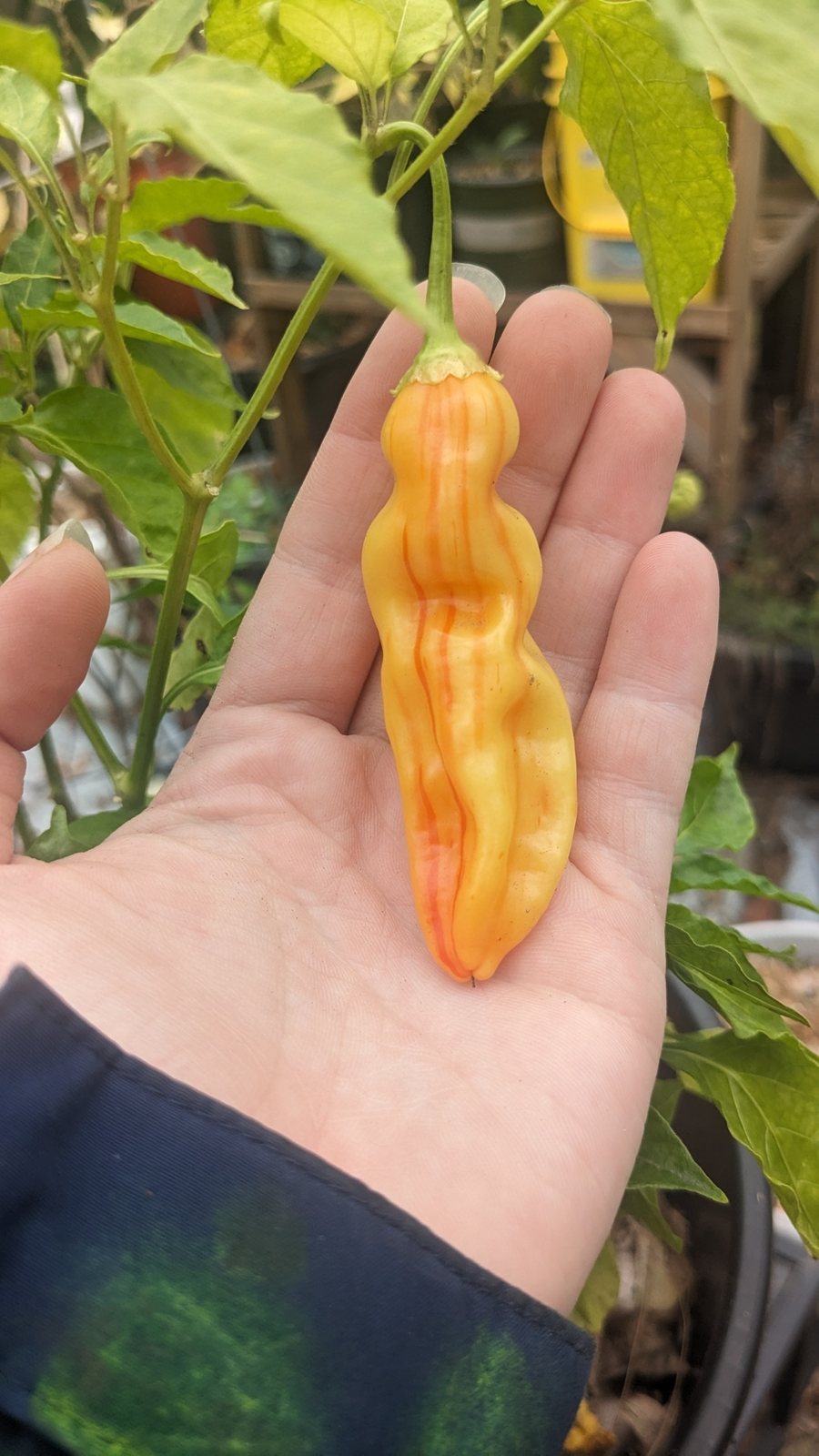
Aji amarillo is a frost-tender perennial pepper usually grown as an annual for its long, orange-yellow fruits, which have fruity flavour and substantial heat. It needs a long, warm growing season; in cooler parts of the United States, Canada and the United Kingdom, a greenhouse or polytunnel gives a more dependable ripe crop.
At a glance
- Sun
- Full sun, ideally at least 6-8 hours daily, in a warm position sheltered from strong wind.
- Water
- Water deeply when the soil surface starts to dry, keeping the root zone evenly moist but never waterlogged. Containers may need daily checking in hot weather.
- Soil
- Fertile, well-drained soil with added mature compost; slightly acidic to neutral soil is suitable. Use free-draining potting mix in containers.
- Height
- 3-5 ft (0.9-1.5 m)
- Spread
- 2-3 ft (0.6-0.9 m)
- Flowers
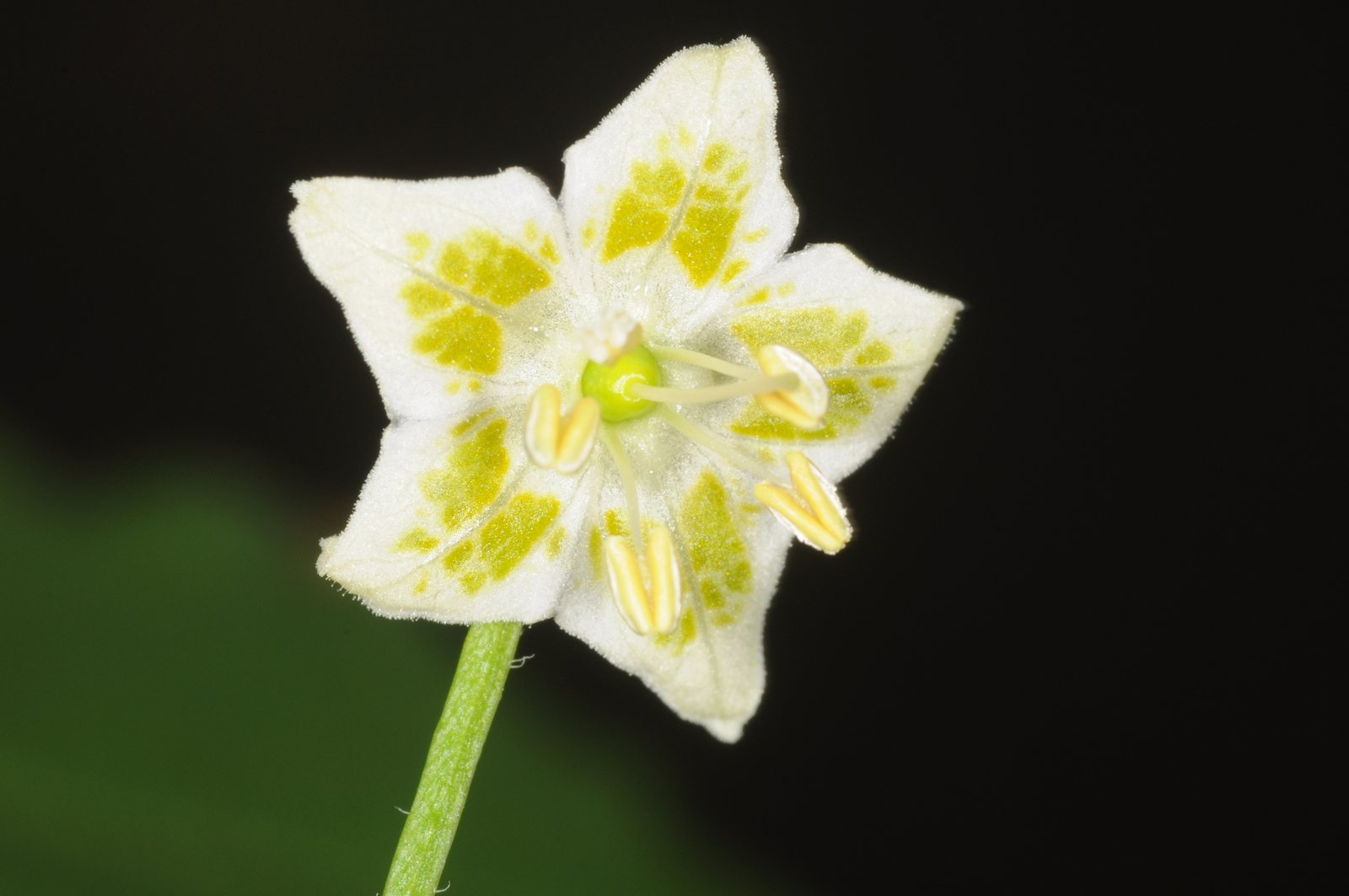
- Small white flowers with yellow-green blotches, appearing from late spring or summer until cold weather.
- Foliage
- Pointed, oval green leaves on branching stems that become woody with age.
- Growth
- Fast in warm weather; slow in cool conditions.
- Care needed
- Medium
The year at a glance
- Pollinators
- Heat tolerant
- Low allergen
- Edible
| J | F | M | A | M | J | J | A | S | O | N | D | |
|---|---|---|---|---|---|---|---|---|---|---|---|---|
| Flowers | ||||||||||||
| Fruit | ||||||||||||
| Plant |
Northern hemisphere months. In Australia, shift them by six.
- Difficulty
- Hard
- Toughness
- Fairly tough
Will it suit your garden?
Pick your zone, country, light and whether you have pets.
Full sun is 6 or more hours of direct sun a day, part shade 3 to 6 hours, shade under 3.
How it grows
Planting day
0.5 ft (0.15 m)
After 1 year
4 ft (1.2 m)
full size
Full size in one season.
From a typical nursery size, at an average rate for this kind of plant. A rule of thumb, not a forecast.
Good to know
- Cats and dogs
- Mildly toxic: may upset a stomach
- Growth rate
- Moderate
Care
Jobs through the year
- WaterMay–Jun, every 4 days
- Water established ground-grown plants as the surface dries; adjust for rainfall and check new transplants more often.
- WaterJul–Aug, every 3 days
- Keep established ground-grown plants evenly moist; water sooner in heat and check containers daily.
- WaterSep–Oct, every 7 days
- Water established ground-grown plants when soil starts drying, reducing frequency in cool, wet weather.
- FeedJul–Sep, every 14 days
- Once fruit sets, give container plants tomato feed at label rates; feed ground-grown plants only if needed.
- MulchJun
- Mulch warm soil to steady moisture, keeping mulch clear of stems.
- ProtectMay–Jun
- Harden off, plant only with nights above 13°C, and install stakes with loose ties.
- ProtectAug–Oct
- Support fruit-laden branches; extend the short ripening season under ventilated cover and avoid frost.
- HarvestSep–Oct, every 7 days
- Snip firm orange-yellow peppers with scissors and wear gloves; pick green fruit before frost if necessary.
- Plant out only after frost risk has passed and nights are consistently above about 55°F (13°C); harden off indoor-grown plants first.
- Use a container holding at least 7-10 US gallons (27-38 litres), or space plants 2-3 ft (0.6-0.9 m) apart in the ground.
- Water at soil level and avoid repeated cycles of wilting followed by soaking.
- Once fruits begin to set, feed container plants with a tomato fertiliser according to its label; avoid excessive nitrogen.
- Mulch after the soil has warmed, leaving a gap around the stem.
- Stake early and tie branches loosely as the fruit load increases.
Pruning. Routine pruning is unnecessary; remove damaged or diseased growth as it appears. Avoid heavy pinching in short-season gardens because it can delay fruiting.
Harvest
Pick the elongated peppers when they have changed from green to a rich orange-yellow and feel firm; green fruits are edible but lack the full ripe flavour. Allow roughly 4-5 months from transplanting to ripe fruit, sometimes longer in cool conditions, and cut stalks with scissors rather than pulling. Wear gloves when cutting fruits and keep juice away from your eyes.
Through the year
- Late winter
- Sow indoors about 10-12 weeks before your intended planting-out date, using gentle bottom heat around 75-85°F (24-29°C).
- Early spring
- Provide strong light and pot seedlings into larger containers as their roots fill the existing pots.
- Late spring
- Harden plants off gradually, then plant into warm soil after frost risk has passed; install stakes.
- Summer
- Maintain even moisture, feed once fruit sets, and check leaf undersides for pests.
- Late summer
- Harvest fully coloured peppers regularly and support heavily laden branches.
- Autumn
- Harvest before frost. Move selected healthy container plants into bright, frost-free shelter if you want to try overwintering them.
In the garden
- Place in a sunny kitchen garden where the tall plants can stand behind lower vegetables and herbs.
- Grow in large courtyard or patio containers, using simple stakes to support the upright shape.
- Mix into an edible border for green foliage followed by conspicuous orange-yellow fruit.
- Pair with low flowers such as sweet alyssum, keeping enough space around the pepper for airflow.
Garden styles it suits: Potager (kitchen garden), Edible landscape, Modern courtyard, Homestead, Sensory garden and Small-space.
Plant it with: Basil, Chives, Sweet alyssum, French marigold, Lettuce and Coriander.
Wildlife: Flowers attract visiting bees, although peppers can self-pollinate. Aphids may attract ladybirds and hoverflies; avoid broad-spectrum insecticides where possible.
Problems to watch for
- Aphids: inspect tender shoots and leaf undersides; dislodge with water or use an insecticidal soap labelled for edible peppers.
- Red spider mites: watch for fine webbing and pale stippling under hot, dry greenhouse conditions; use predatory mites or a labelled treatment before infestations become severe.
- Blossom-end rot: dark, sunken patches at the fruit tip usually indicate disrupted calcium uptake; maintain steady moisture and avoid damaging roots rather than automatically adding calcium.
- Late ripening or flower drop: cold nights, excessive heat and water stress can prevent a useful crop; start early, provide shelter, ventilate greenhouses and keep watering consistent.
Safety
The fruits are edible for people, but capsaicin can cause strong burning of the mouth, skin and eyes, and stomach upset. Keep hot fruits away from cats, dogs and horses because they can irritate the mouth and digestive tract. Leaves and stems are not culinary parts; their toxicity to these animals is not well established, so prevent browsing.
Easily confused with
Cayenne pepper (Capsicum annuum)
Cayenne typically has narrower, often wrinkled fruits that ripen red and plain white flowers without the characteristic yellow-green blotches of aji amarillo.
Habanero pepper (Capsicum chinense)
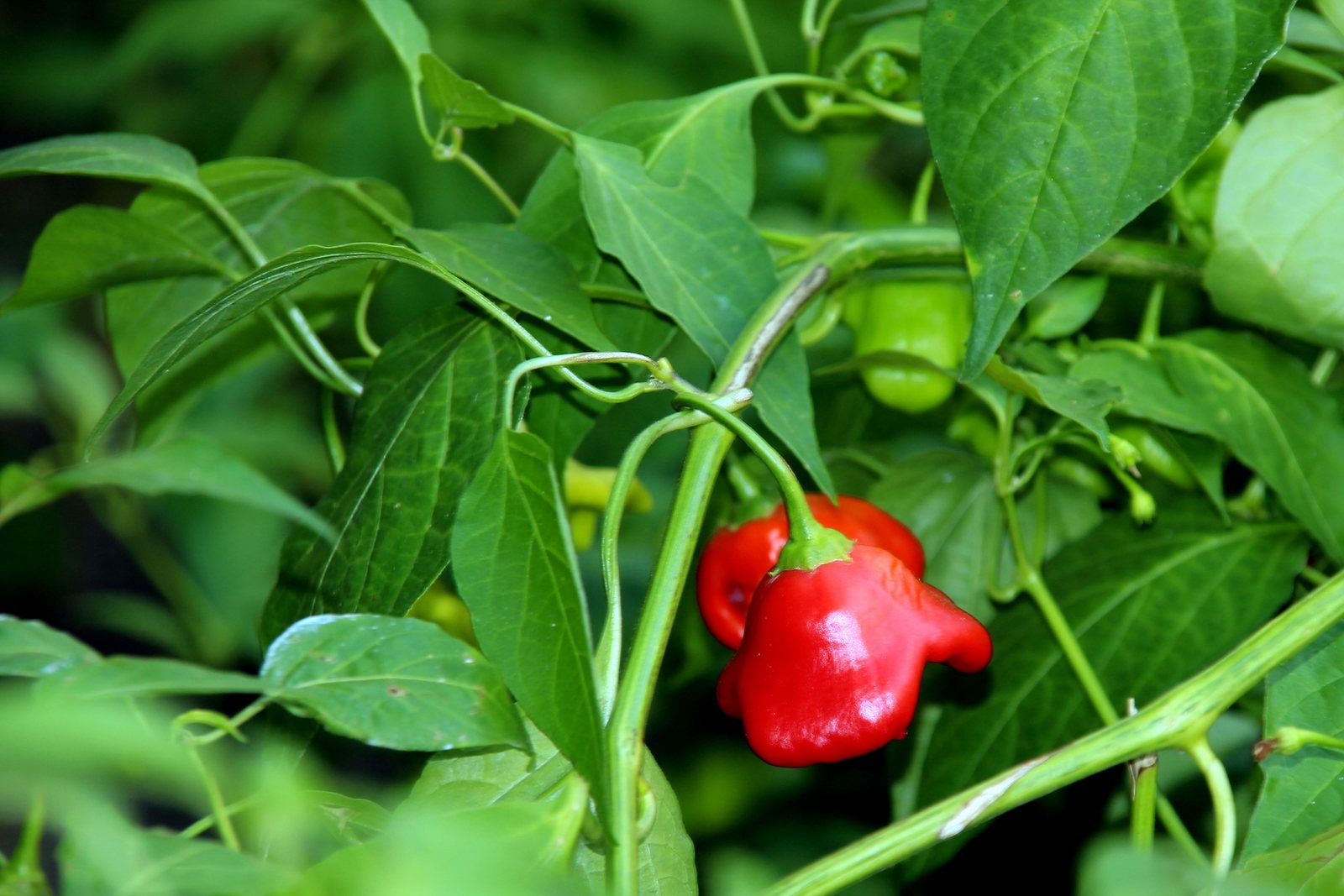
Habanero usually has squat, lantern-shaped fruits rather than long, tapered ones; its flowers lack the yellow-green blotches.
Lemon drop pepper (Capsicum baccatum)
This is another selection of the same species, usually with smaller, narrower fruits that ripen bright lemon yellow rather than orange-yellow. The flowers alone will not distinguish them reliably.
The name
Ají amarillo means 'yellow chilli' in Spanish, although the ripe fruit is usually orange-yellow, and baccatum means 'berry-bearing'.
Propagation. Sow seed indoors in warmth; germination commonly takes 1-3 weeks but may be slower. Save seed from fully ripe, healthy fruits, noting that seed from plants cross-pollinated by other compatible peppers may not come true. Softwood cuttings can also root in warm, humid conditions.
Checked against open data
- Accepted botanical name
- Capsicum baccatum
- Native range
- Argentina Northeast, Argentina Northwest, Bolivia, Brazil South, Brazil Southeast, Brazil West-Central, Paraguay, Peru and Uruguay.
Sources: GBIF (CC BY 4.0) and Trefle (CC BY 4.0). The care and design notes are LandscapeGPT's own.
See it in your own yard.
Upload a photo of your yard and see it redesigned with plants that suit your climate, each checked against your zone.