Alexandra palm
Archontophoenix alexandrae. Family Arecaceae. Tree.
Also called Alexander palm, King palm, Northern bangalow palm.
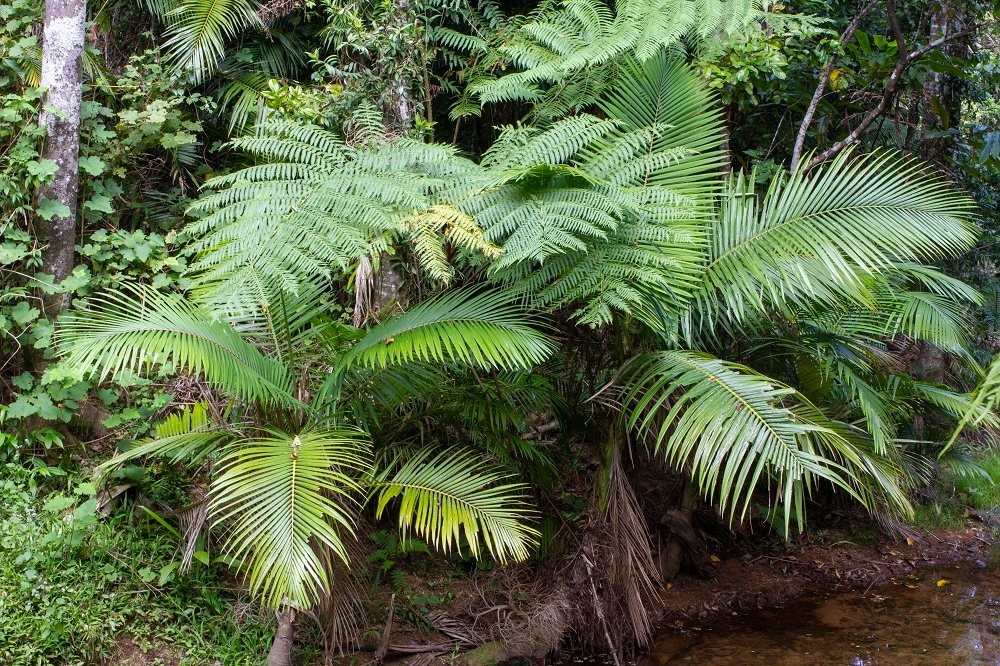
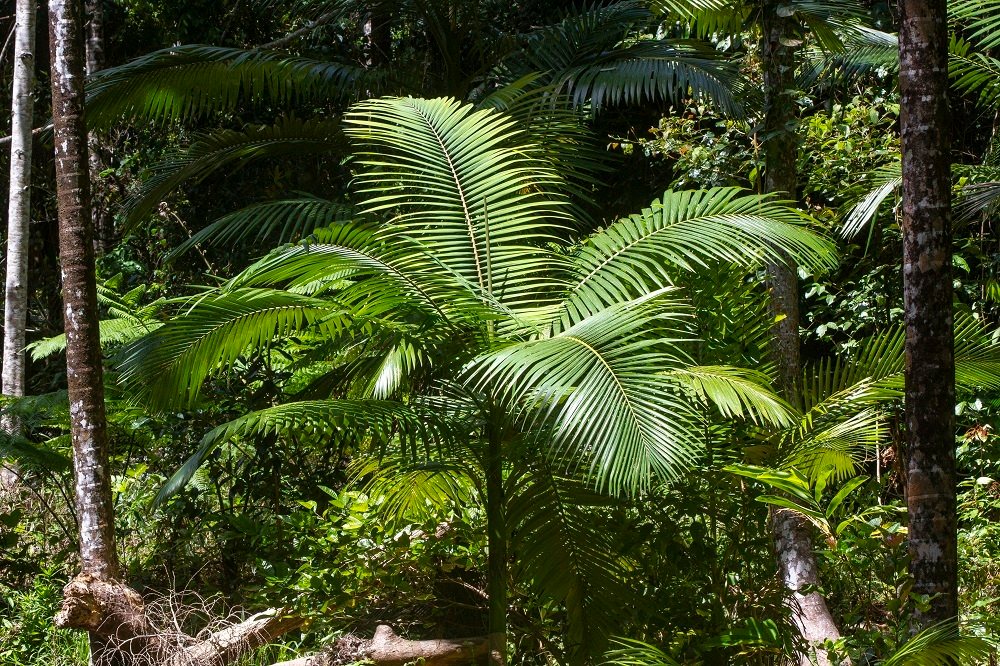
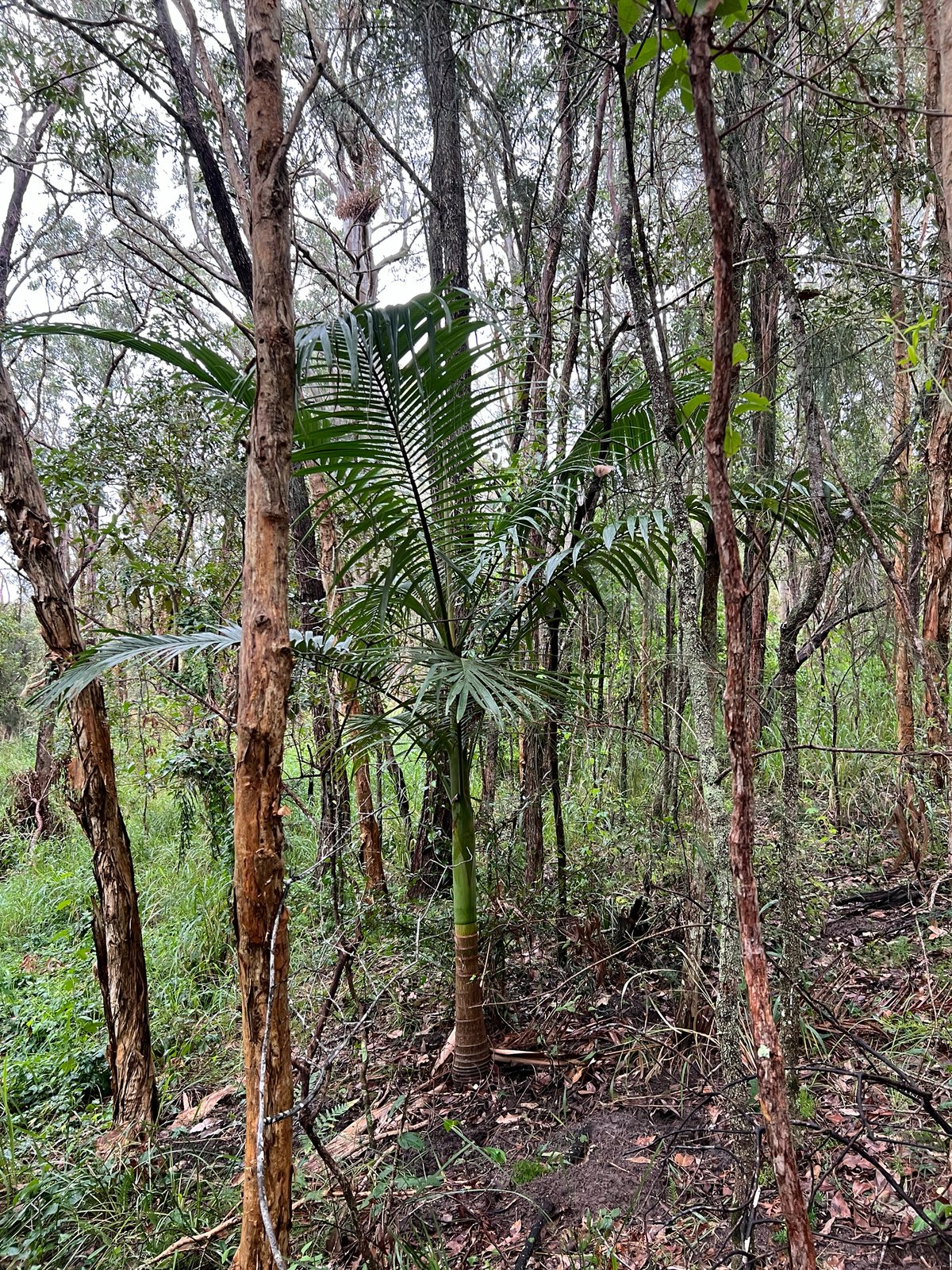
A tall, single-stemmed palm from northeastern Queensland, grown for its smooth, ringed trunk, green crownshaft and arching feather-like leaves. It gives warm, moist gardens a strong vertical accent but needs space for falling fronds. It is not reliably hardy outdoors in the UK or most of Canada; young plants can be kept in containers under warm, bright cover.
At a glance
- Sun
- Full sun to partial shade; young plants benefit from light shade, especially in hot, dry climates.
- Water
- Keep the root zone consistently moist, especially during establishment and hot weather. Established plants tolerate brief dry spells, but prolonged drought causes browning and poor growth.
- Soil
- Deep, fertile, moisture-retentive soil with good drainage; slightly acidic to neutral soil is ideal. Avoid persistently stagnant, waterlogged ground.
- Height
- 40-80 ft (12-24 m)
- Spread
- 10-15 ft (3-4.5 m)
- Flowers
- Branched clusters of small cream-white flowers beneath the crownshaft, mainly in spring and summer; flowering can be less seasonal in tropical climates.
- Foliage
- Evergreen. Long, arching, pinnate leaves with narrow green leaflets and distinctly silvery-white undersides; a smooth green crownshaft tops the trunk.
- Growth
- Fast in warm conditions with adequate moisture and nutrients; slow in cool climates.
- Care needed
- Medium
The year at a glance
- Pollinators
- Heat tolerant
- Wildlife
| J | F | M | A | M | J | J | A | S | O | N | D | |
|---|---|---|---|---|---|---|---|---|---|---|---|---|
| Flowers | ||||||||||||
| Fruit | ||||||||||||
| Plant |
Northern hemisphere months. In Australia, shift them by six.
- Difficulty
- Hard
- Toughness
- Needs looking after
Will it suit your garden?
Pick your zone, country, light and whether you have pets.
Full sun is 6 or more hours of direct sun a day, part shade 3 to 6 hours, shade under 3.
How it grows
Planting day
7 ft (2.2 m)
After 1 year
10 ft (3 m)
After 2 years
12 ft (3.7 m)
After 3 years
15 ft (4.5 m)
After 5 years
20 ft (6.1 m)
About 20 years to full size.
From a typical nursery size, at an average rate for this kind of plant. A rule of thumb, not a forecast.
Good to know
- Cats and dogs
- Mildly toxic: may upset a stomach
- Native to
- Australia
- Invasive in
- the US
- In the garden
- Spreads vigorously: plan to contain it.
- Growth rate
- Moderate
Care
Jobs through the year
- WaterApr–May, Sep–Oct, every 7 days
- Keep roots lightly moist; locally grow in a movable container and check moisture before watering.
- WaterJun–Aug, every 4 days
- Water deeply before the root ball dries out; containers and young palms may need more in heat.
- WaterJan–Mar, Nov–Dec, every 14 days
- In bright, frost-free shelter, keep lightly moist without saturating cool roots.
- FeedMay, Jul
- Apply slow-release palm fertilizer with magnesium and trace elements, following its release interval.
- MulchMay–Jun
- Apply organic mulch over exposed soil, keeping the trunk base clear.
- PruneJun–Aug
- Remove only fully dead fronds or unwanted fruit stalks within safe reach; never cut the growing tip.
- ProtectJan–May, Sep–Dec
- Outdoor winters are unsuitable; provide bright, frost-free shelter and move outside only in warm weather.
- Plant during warm weather, keeping the root ball at its original depth; never bury the trunk base.
- Water deeply and regularly while establishing, then irrigate during dry weather before the soil dries out completely.
- Apply a slow-release palm fertiliser containing magnesium and trace elements during active growth, following the label rate.
- Spread organic mulch over the root zone, keeping it clear of the trunk.
- Protect young palms from frost and drying winds; move container plants under bright, frost-free cover before cold weather.
Pruning. This palm sheds old fronds naturally; remove only completely dead fronds or unwanted flower and fruit stalks when safely accessible. Never cut the growing tip or strip off healthy green leaves, and use a qualified arborist for work above ground level.
Through the year
- Spring
- Plant once the soil is warm and frost risk has passed; water thoroughly and mulch.
- Spring
- Apply palm fertiliser as active growth resumes and check older leaves for nutrient-deficiency symptoms.
- Summer
- Water deeply during dry spells, checking container plants more often than those in the ground.
- Late summer
- Remove unwanted fruit stalks before berries ripen where seedlings or dropped fruit would be a problem.
- Autumn
- Move container plants into bright, frost-free shelter in cool climates; reduce feeding as growth slows.
- Winter
- Keep sheltered plants lightly moist rather than wet, and check indoor foliage for mites and scale.
In the garden
- Plant as a tall focal point in a warm, sheltered lawn or large courtyard.
- Use an avenue or informal group to create a high canopy without a dense screen at ground level.
- Combine with broad-leaved tropical plants for contrasting leaf shapes and layered shade.
- Use young container-grown specimens on sheltered terraces, allowing for eventual height and the need for winter protection.
Garden styles it suits: Modern tropical, Tropical, Luxury resort, Architectural minimal, Australian native and Balinese.
Plant it with: Bird of paradise, Philodendron, Bromeliads, Bird's nest fern, Shell ginger and Cast-iron plant.
Wildlife: Flowers attract insects, and birds eat the ripe red fruits and disperse the seeds. Fallen fruit can produce numerous seedlings in suitable climates.
Problems to watch for
- Frost damage: leaves scorch and severe cold can kill the growing point; choose a frost-free site and protect or move young container plants before cold nights.
- Nutrient deficiencies: yellowing, spotting or weak new growth can indicate potassium, magnesium or manganese shortages; use a complete palm fertiliser and seek a soil or leaf test if symptoms persist.
- Scale insects and spider mites: inspect leaf undersides, especially under cover; wash off mites and treat infestations with a labelled horticultural oil or insecticidal soap.
- Root or crown rot: poor drainage and prolonged wetness in cool conditions encourage decay; improve drainage, avoid burying the trunk and reduce winter watering.
Safety
Not known to be toxic to people, cats, dogs or horses. The fruits are not regarded as food, and swallowing fruits or seeds may cause stomach upset or choking.
Where it spreads. Naturalised and invasive in parts of Hawaii. It also escapes cultivation and is treated as an environmental weed in parts of coastal New South Wales, Australia, outside its native Queensland range; birds spread the seed into moist vegetation.
Easily confused with
Bangalow palm (Archontophoenix cunninghamiana)
Its leaflets are green rather than silvery-white underneath, and its flowers are usually pinkish to lilac rather than cream-white.
Solitaire palm (Ptychosperma elegans)
Usually smaller and more slender, with leaflets that have conspicuously blunt, jagged tips rather than the Alexandra palm's pointed tips.
Royal palm (Roystonea regia)
Develops a much thicker, often swollen, pale grey trunk and a fuller crown with leaflets arranged in several planes.
The name
The species name alexandrae honours Princess Alexandra of Denmark, later Queen Alexandra, wife of Britain's King Edward VII.
Propagation. Grow from fresh seed. Remove the ripe fruit pulp, clean the seeds and sow in a warm, moist, free-draining medium; germination commonly takes several weeks to a few months. It is single-stemmed and cannot be divided.
Checked against open data
- Accepted botanical name
- Archontophoenix alexandrae
- In the US and Canada
- Introduced in Hawaii.
- Native range
- Queensland.
- Measured
- Average height 2500 cm.
Sources: GBIF (CC BY 4.0), USDA PLANTS and Trefle (CC BY 4.0). The care and design notes are LandscapeGPT's own.
See it in your own yard.
Upload a photo of your yard and see it redesigned with plants that suit your climate, each checked against your zone.