Allegheny spurge
Pachysandra procumbens. Family Buxaceae. Groundcover.
Also called Mountain spurge, Allegheny pachysandra.
Allegheny spurge is a slow-spreading woodland perennial native to the southeastern United States. Gardeners grow it for its broad, mottled leaves and fragrant early-spring flowers, especially beneath deciduous trees and shrubs. It forms loose colonies rather than the dense, fast-spreading carpet of Japanese pachysandra.
At a glance
- Sun
- Partial to full shade; protect from strong afternoon sun.
- Water
- Moderate; keep evenly moist while establishing. Established plants tolerate occasional dry periods in shade.
- Soil
- Humus-rich, well-drained soil, preferably slightly acidic to neutral; avoid waterlogged ground.
- Height
- 0.5-1 ft (0.15-0.3 m)
- Spread
- 1-2 ft (0.3-0.6 m), eventually wider as colonies develop
- Flowers
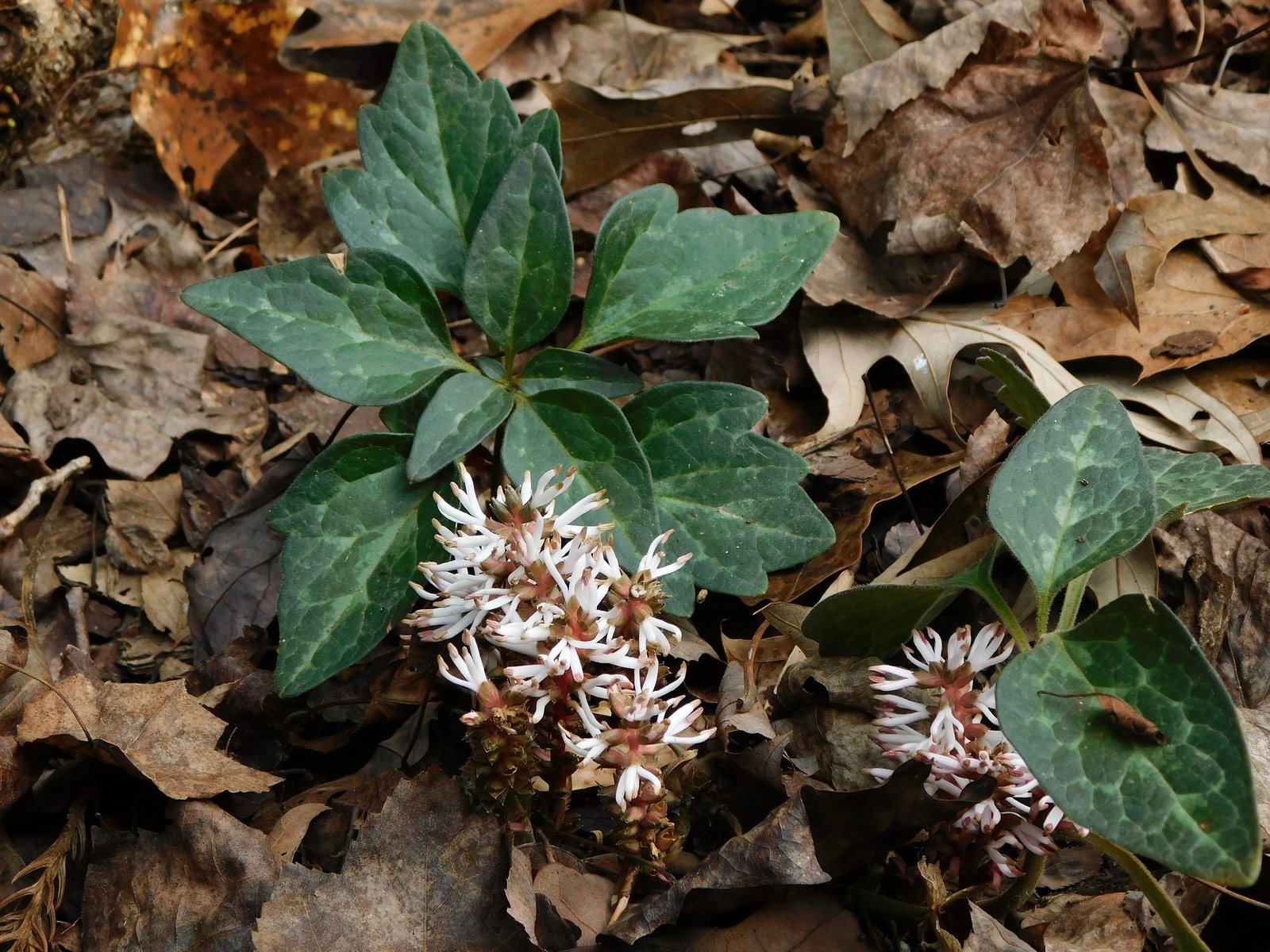
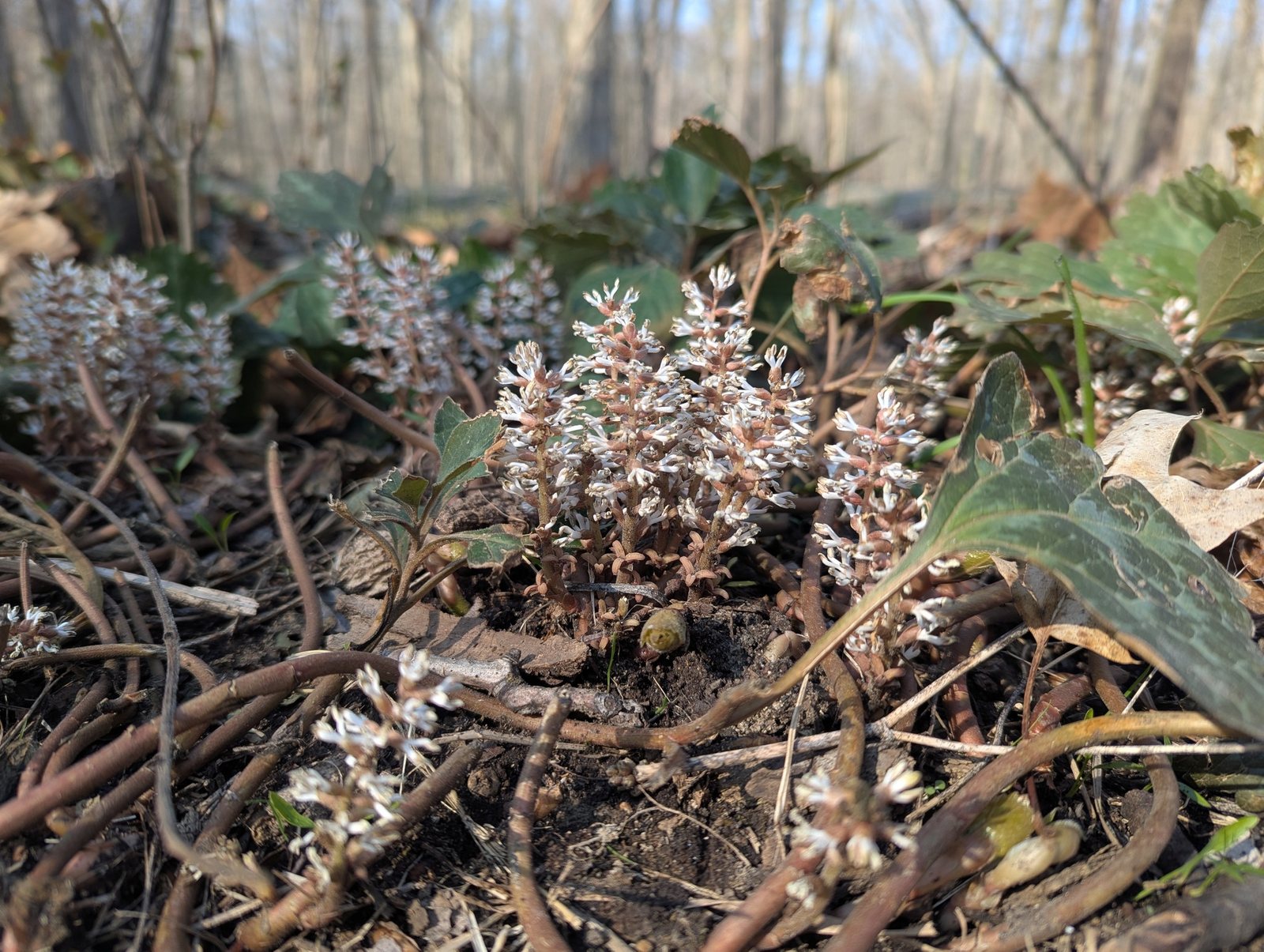
- Early spring; short spikes of fragrant creamy-white to pale pink flowers, often opening before the new leaves expand.
- Foliage
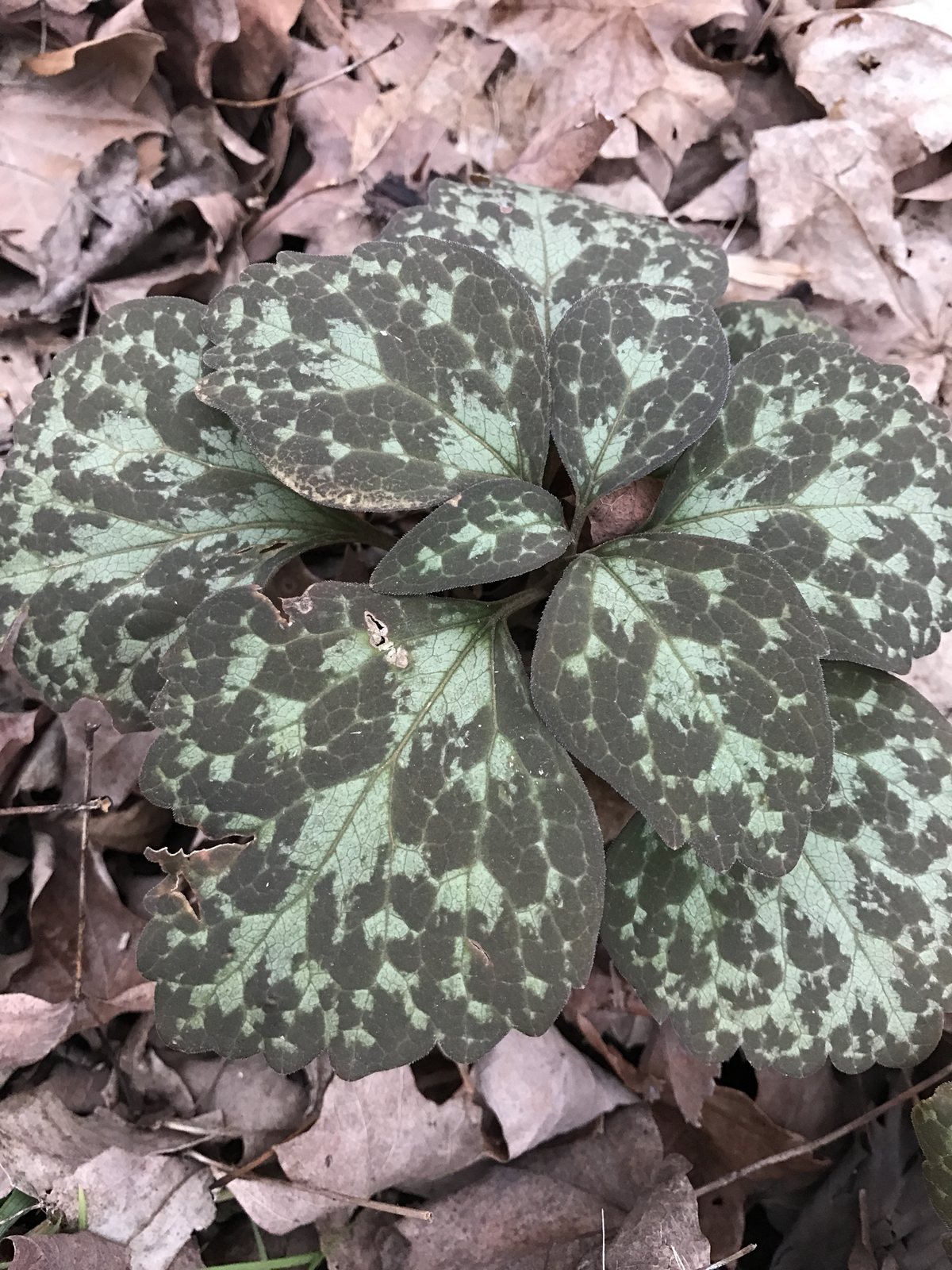
- Broad, toothed, blue-green leaves develop silvery mottling, often becoming more conspicuous with age. Leaves may take on bronze tones in cold weather.
- Growth
- Slow
- Care needed
- Low
The year at a glance
- Pollinators
- Deer resistant
- Heat tolerant
- Low allergen
- Fragrant
| J | F | M | A | M | J | J | A | S | O | N | D | |
|---|---|---|---|---|---|---|---|---|---|---|---|---|
| Flowers | ||||||||||||
| Plant |
Northern hemisphere months. In Australia, shift them by six.
- Difficulty
- Easy
- Toughness
- Fairly tough
Will it suit your garden?
Pick your zone, country, light and whether you have pets.
Full sun is 6 or more hours of direct sun a day, part shade 3 to 6 hours, shade under 3.
How it grows
Planting day
0.2 ft (0.06 m)
After 1 year
0.3 ft (0.1 m)
After 2 years
0.5 ft (0.14 m)
After 3 years
0.6 ft (0.18 m)
After 5 years
0.7 ft (0.22 m)
full size
About 4 years to full size.
From a typical nursery size, at an average rate for this kind of plant. A rule of thumb, not a forecast.
Good to know
- Cats and dogs
- Safe
- Native to
- the US
- Growth rate
- Slow
Care
Jobs through the year
- WaterApr–May, Sep–Oct, every 14 days
- Water established plants if soil is dry; keep new plants evenly moist, not saturated.
- WaterJun–Aug, every 7 days
- Water during prolonged dry spells, especially where tree roots compete for moisture.
- PruneFeb–Mar
- Snip off badly weathered leaves without damaging emerging flower spikes.
- MulchMar–Apr
- Top-dress thinly with leaf mould or compost; keep crowns free of thick material.
- DivideMar–Apr, Sep
- Divide only to propagate or limit a colony; water divisions until rooted.
- MulchOct–Nov
- Retain a light covering of shredded leaves, removing wet, matted piles from crowns.
- Water regularly during the first growing season, keeping the soil moist but not saturated.
- Water established plants during prolonged drought, especially beneath thirsty tree roots.
- Apply a thin layer of leaf mould or compost each spring; routine fertilizer is usually unnecessary.
- Mulch lightly with shredded leaves, keeping thick, wet layers away from the crowns.
- Divide only when you need more plants or want to limit a colony; this slow grower rarely needs routine division.
Pruning. In late winter or early spring, snip off badly damaged old leaves before new growth expands, taking care not to cut emerging flower spikes. Leave healthy foliage in place.
Through the year
- Late winter
- Remove badly weathered leaves without damaging emerging flower spikes.
- Early spring
- Top-dress with a thin layer of leaf mould or compost.
- Spring
- Plant or divide, then water thoroughly and keep divisions moist while they root.
- Summer
- Check soil moisture beneath trees and water during prolonged dry spells.
- Early autumn
- Plant or divide where there is enough mild weather for roots to establish before winter.
- Late autumn
- Retain a light covering of fallen leaves, but remove thick, matted piles from the crowns.
In the garden
- Plant beneath deciduous trees and shrubs for a low, textured woodland ground layer.
- Edge shaded paths with small colonies whose mottled foliage can be seen close up.
- Combine with ferns, hellebores and hostas for contrasting leaf shapes.
- Grow around spring bulbs, allowing its expanding leaves to soften the bulbs' fading foliage.
Garden styles it suits: Woodland, Traditional, Secret garden, Low-maintenance, Green on green and Southern.
Plant it with: Christmas fern, Hellebores, Hostas, Foamflower, Wild ginger and Virginia bluebells.
Wildlife: Early flowers offer pollen and nectar to small insects, including bees. Deer usually leave the foliage alone, though browsing is still possible.
Problems to watch for
- Leaf scorch: pale or browned leaves can follow strong sun or drought; provide afternoon shade and water deeply during dry spells.
- Root and crown rot: plants decline in persistently wet soil; improve drainage and avoid burying the crowns.
- Leaf blight: brown spots and dying shoots can develop in damp, crowded conditions; remove affected material, improve airflow and avoid overhead watering.
- Slugs and snails: young leaves may be chewed; remove hiding places and hand-pick after dark.
Safety
Not known to be toxic to people, cats, dogs or horses, but species-specific safety information is limited. No particular part is established as a poisoning hazard; it is not an edible plant, and pets or children should not be encouraged to eat it.
Easily confused with
Japanese pachysandra (Pachysandra terminalis)
Usually has glossy, plain green, evergreen leaves and forms a denser, faster-spreading carpet. Allegheny spurge has duller, often silver-mottled leaves and is deciduous in colder winters.
Japanese spurge 'Variegata' (Pachysandra terminalis 'Variegata')
Its leaves have distinct cream-white margins rather than the irregular silvery mottling found across Allegheny spurge leaves.
The name
Pachysandra comes from Greek words referring to the thick male flower parts, while procumbens means lying along the ground.
Propagation. Divide rooted sections of the rhizomes in spring or early autumn, keeping roots and at least one healthy shoot on each piece. Replant promptly and water until established.
Checked against open data
- Accepted botanical name
- Pachysandra procumbens
- In the US and Canada
- Native in the lower 48 states.
- Native range
- Alabama, Florida, Georgia, Kentucky, Louisiana, Mississippi, North Carolina, South Carolina, Tennessee and West Virginia.
Sources: GBIF (CC BY 4.0), USDA PLANTS and Trefle (CC BY 4.0). The care and design notes are LandscapeGPT's own.
See it in your own yard.
Upload a photo of your yard and see it redesigned with plants that suit your climate, each checked against your zone.