Allen Chickering sage
Salvia 'Allen Chickering'. Family Lamiaceae. Shrub.
Also called Allen Chickering California sage, Salvia 'Allen Chickering'.
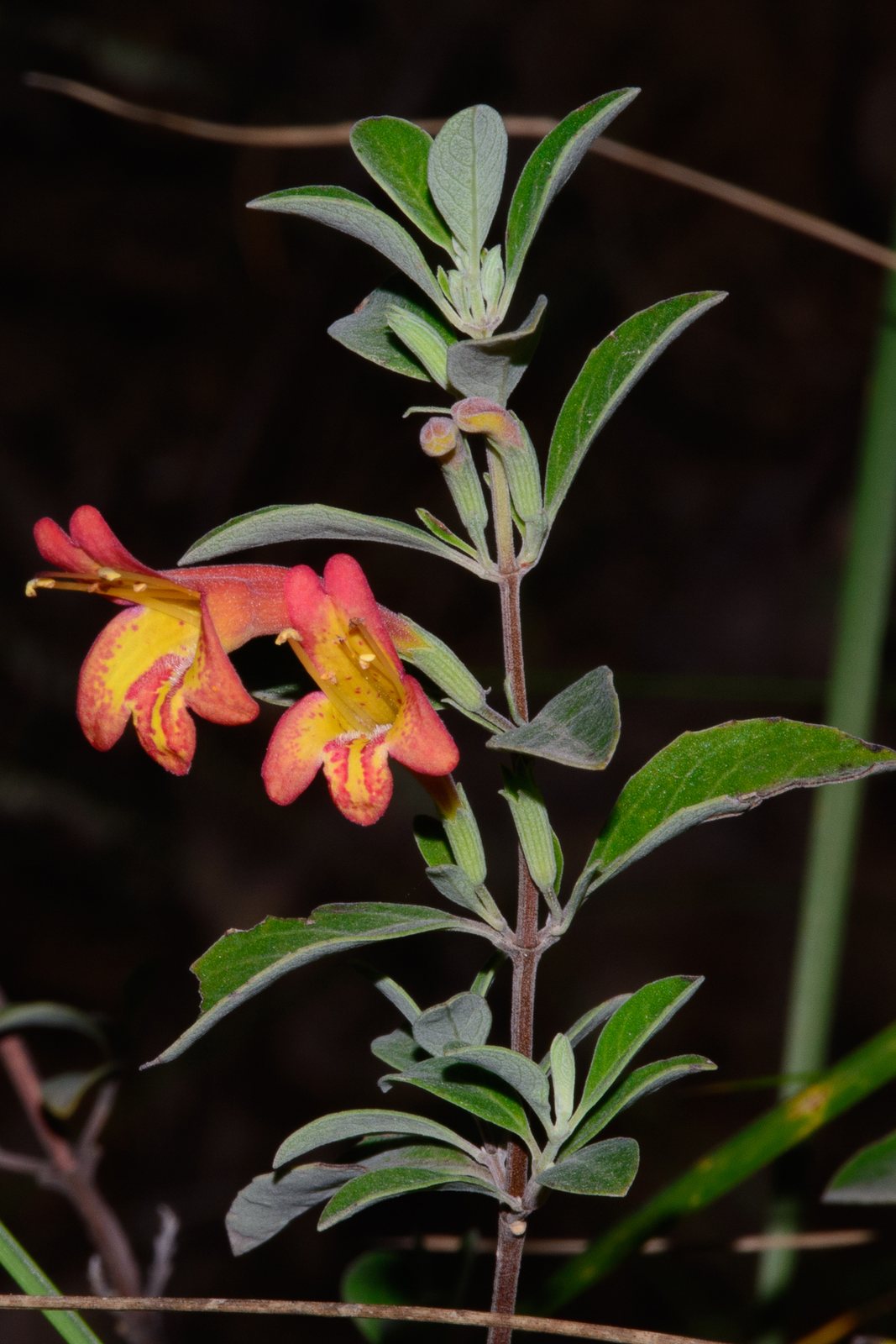
A woody California sage hybrid, Allen Chickering forms a broad mound of aromatic grey-green leaves topped by whorls of lavender-blue flowers. Gardeners grow it for its scent, pollinator value and tolerance of dry summers; it needs excellent drainage and is less dependable in cold, wet climates.
At a glance
- Sun
- Full sun; tolerates light afternoon shade in very hot inland gardens.
- Water
- Low once established. Water during establishment, then give occasional deep watering during prolonged drought rather than frequent shallow irrigation.
- Soil
- Well-drained sandy, gravelly or loamy soil. Tolerates lean soil but struggles in heavy clay that stays wet, especially in winter.
- Height
- 4-5 ft (1.2-1.5 m)
- Spread
- 4-6 ft (1.2-1.8 m)
- Flowers
- Lavender-blue flowers in spaced whorls along upright stems, mainly in late spring and early summer.
- Foliage
- Strongly aromatic, grey-green, softly hairy leaves; usually evergreen, but may thin or shed during severe drought or cold.
- Growth
- Fast in suitable conditions.
- Care needed
- Low
The year at a glance
- Pollinators
- Deer resistant
- Drought tolerant
- Heat tolerant
- Wildlife
- Low allergen
- Fragrant
| J | F | M | A | M | J | J | A | S | O | N | D | |
|---|---|---|---|---|---|---|---|---|---|---|---|---|
| Flowers | ||||||||||||
| Plant |
Northern hemisphere months. In Australia, shift them by six.
- Difficulty
- Moderate
- Toughness
- Fairly tough
Will it suit your garden?
Pick your zone, country, light and whether you have pets.
Full sun is 6 or more hours of direct sun a day, part shade 3 to 6 hours, shade under 3.
How it grows
Planting day
1.6 ft (0.5 m)
After 1 year
2.5 ft (0.76 m)
After 2 years
3 ft (1 m)
After 3 years
4 ft (1.3 m)
After 5 years
4 ft (1.4 m)
full size
About 3 years to full size.
From a typical nursery size, at an average rate for this kind of plant. A rule of thumb, not a forecast.
Good to know
- Cats and dogs
- Safe
- Growth rate
- Fast
Care
Jobs through the year
- WaterApr–May, Sep–Oct, every 21 days
- Water established plants only if dry; check new rootballs more frequently.
- WaterJun–Aug, every 30 days
- Water deeply only during prolonged drought, letting soil dry between waterings.
- MulchMay
- Use a thin gravel mulch, keeping the woody base clear.
- PruneApr–May
- After hard frosts, trim damaged tips back to healthy leafy growth.
- PruneJul–Aug
- After flowering, remove spent stems and lightly shorten leafy shoots; never cut into bare old wood.
- ProtectJan–Apr, Oct–Dec
- Not hardy in zones 6–7; overwinter containers in a bright, cool, frost-free place.
- Plant with the crown at soil level in a freely draining position; use a raised bed or mound where drainage is poor.
- Water deeply through the first growing season, letting the soil dry between waterings.
- Once established, avoid frequent summer irrigation and keep lawn sprinklers away from the crown.
- Do not routinely fertilise; rich feeding encourages loose, floppy growth.
- Keep mulch clear of the woody base; gravel mulch suits wetter gardens.
Pruning. After flowering, remove spent flower stems and lightly shorten leafy shoots to keep the shrub compact. In colder gardens, leave further shaping until spring after hard frosts; avoid cutting into old, leafless wood.
Through the year
- Autumn
- Plant in mild-winter regions while the soil is warm, provided winter drainage is excellent.
- Winter
- Check that water drains away from the crown and remove fallen debris from the base.
- Spring
- Plant in colder areas after hard frosts; trim frost-damaged tips back to healthy leafy growth.
- Late spring
- Check new plants for dry rootballs and water deeply when needed.
- Summer
- After flowering, remove spent stems and lightly shape without cutting into bare wood.
- Late summer
- Take semi-ripe cuttings from healthy, non-flowering shoots.
In the garden
- Use as a broad structural shrub in a sunny gravel garden, leaving room for its mature spread.
- Combine with California buckwheat and deer grass in a dry California-native planting.
- Pair with rockroses and lavender for a Mediterranean border with silver foliage and blue-purple flowers.
- Place beside, rather than directly against, a path where the foliage scent can be enjoyed without constant pruning.
Garden styles it suits: California native, Mediterranean, Desert / xeriscape, Dry gravel garden, Pollinator garden and Sensory garden.
Plant it with: California buckwheat, Deer grass, California poppy, Rockrose, Lavender and Yarrow.
Wildlife: Flowers attract bees and other pollinating insects, and hummingbirds where they occur. Aromatic foliage is often avoided by deer, though browsing is still possible.
Problems to watch for
- Root and crown rot in wet soil: improve drainage, keep the crown clear and reduce irrigation; replace severely affected plants.
- Winter dieback: choose a sheltered, sunny site and wait until spring to remove damaged growth.
- Leggy growth or a bare centre: provide full sun, avoid fertiliser and lightly prune after flowering rather than cutting hard into old wood.
- Aphids on soft spring shoots: rinse off with water and preserve natural predators; treatment is rarely necessary.
Safety
Not known to be toxic to people, cats, dogs or horses, although information specific to this hybrid is limited. No part is established as seriously poisonous; it is an ornamental sage, not a substitute for culinary sage.
Easily confused with
Cleveland sage (Salvia clevelandii)
One of its parents, with similar aromatic foliage and tiered flowers; it generally has smaller, narrower leaves. Garden forms overlap considerably, so a reliable label may be needed.
Purple sage (Salvia leucophylla)
The other parent generally has paler, more silvery foliage and pinkish-lavender rather than distinctly lavender-blue flowers.
Winifred Gilman sage (Salvia clevelandii 'Winifred Gilman')
Usually more compact, with deeper violet-blue flowers than the larger, paler-flowered Allen Chickering.
The name
The cultivar honours California conservationist Allen Chickering; Salvia comes from the Latin salvare, meaning to save or heal.
Propagation. Take softwood cuttings in spring or semi-ripe cuttings in late summer and root in a freely draining medium. Use cuttings to preserve the cultivar; seedlings, if produced, will not reliably come true.
Checked against open data
- Accepted botanical name
- Salvia
Sources: GBIF (CC BY 4.0). The care and design notes are LandscapeGPT's own.
See it in your own yard.
Upload a photo of your yard and see it redesigned with plants that suit your climate, each checked against your zone.