American elderberry
Sambucus canadensis. Family Viburnaceae. Shrub.
Also called American elder, Common elderberry, Sambucus nigra subsp. canadensis.
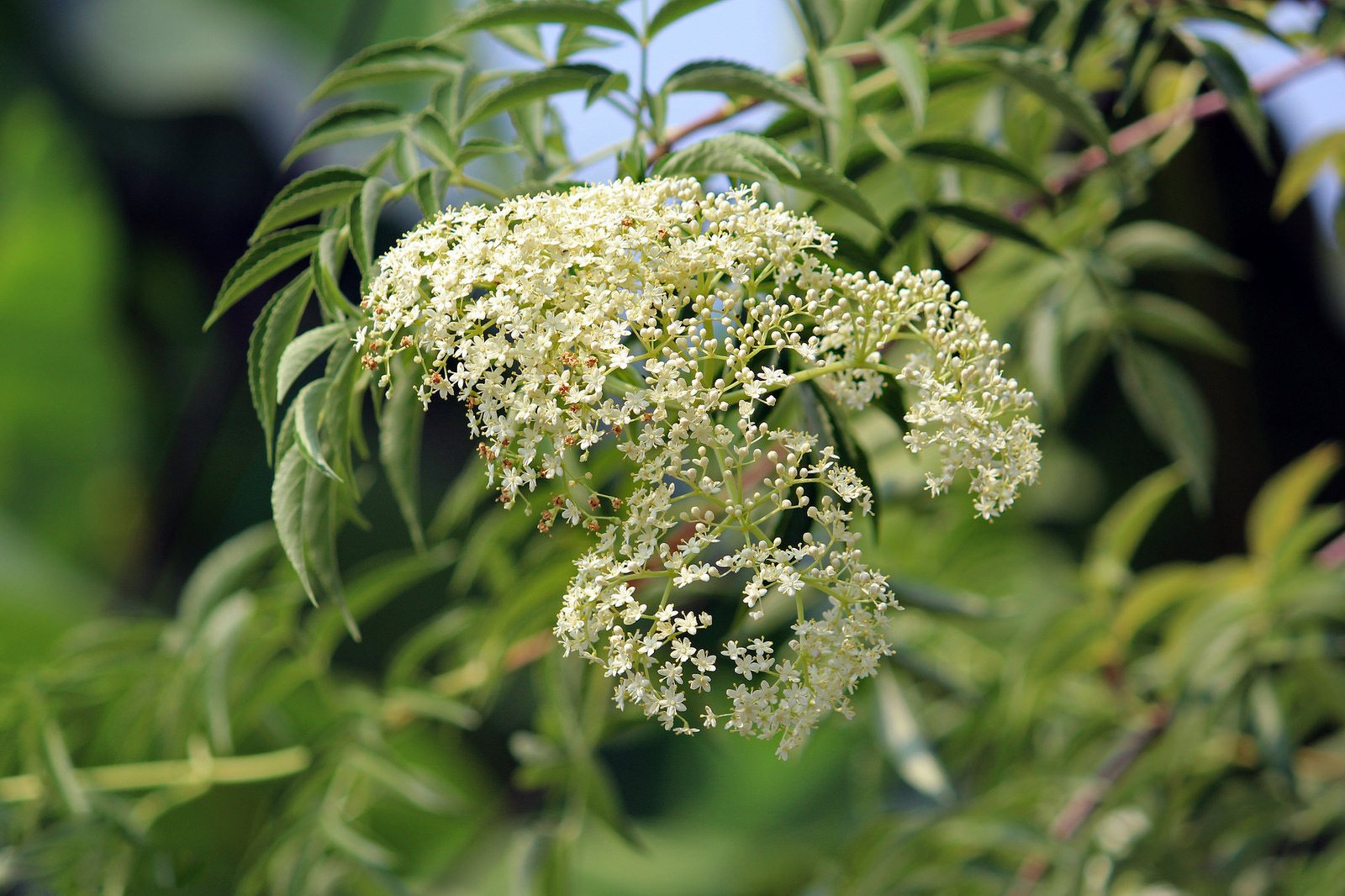
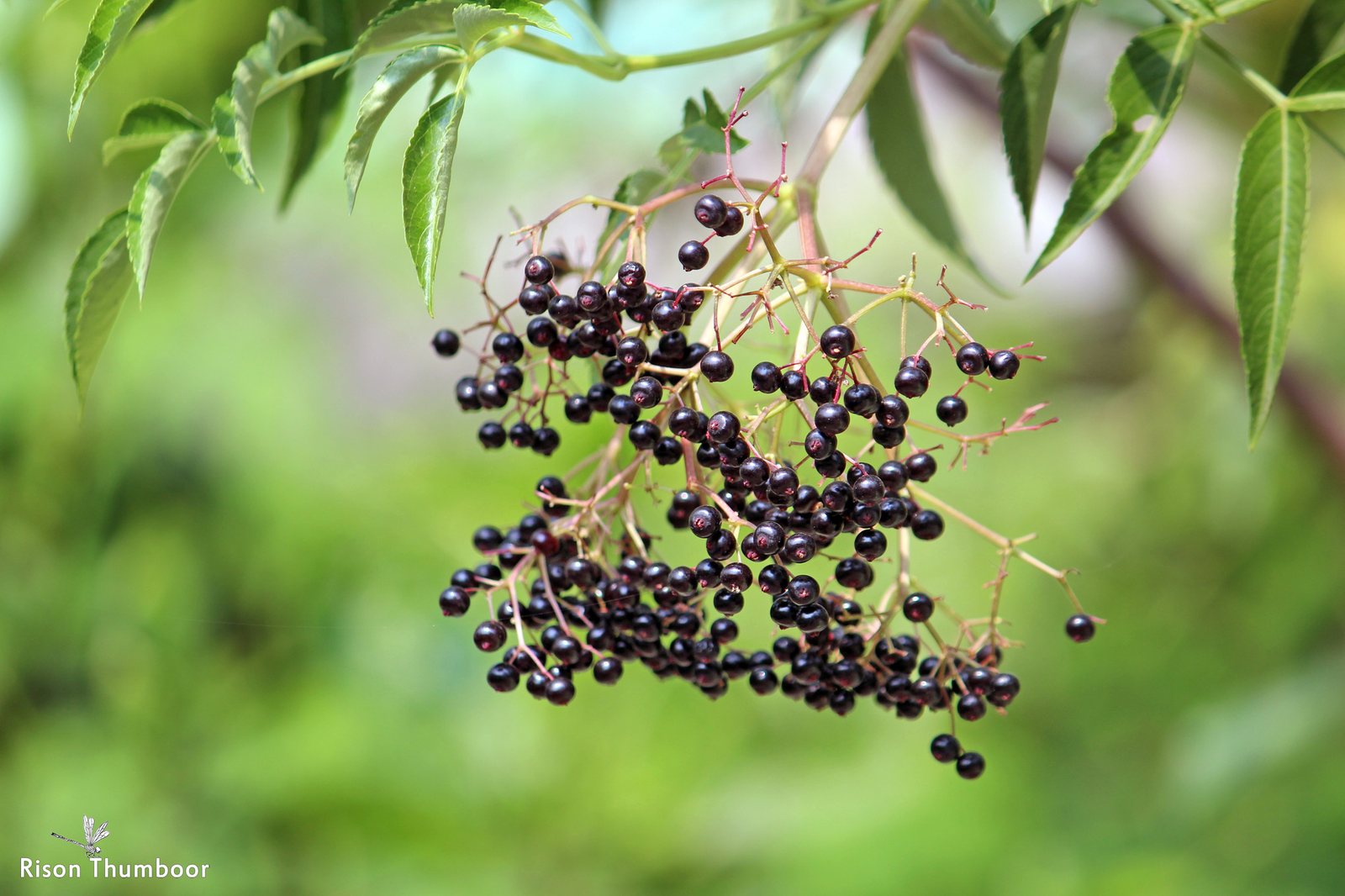
American elderberry is a deciduous, suckering shrub native to eastern and central North America, grown for broad clusters of white flowers and purple-black fruit. It suits wildlife hedges and roomy edible gardens, but needs space to form a thicket; harvest only fully ripe berries and cook them before eating.
At a glance
- Sun
- Full sun to partial shade; flowering and fruiting are best with at least 6 hours of direct sun.
- Water
- Keep soil consistently moist, especially during establishment and fruit development. Established plants tolerate brief dry spells but crop poorly in prolonged drought.
- Soil
- Moist, fertile soil rich in organic matter; tolerates clay and occasional flooding, but grows best where water does not remain stagnant.
- Height
- 5-12 ft (1.5-3.7 m)
- Spread
- 6-12 ft (1.8-3.7 m), eventually wider through suckers
- Flowers
- Late spring to midsummer, depending on climate; small creamy-white flowers in broad, flat-topped clusters.
- Foliage
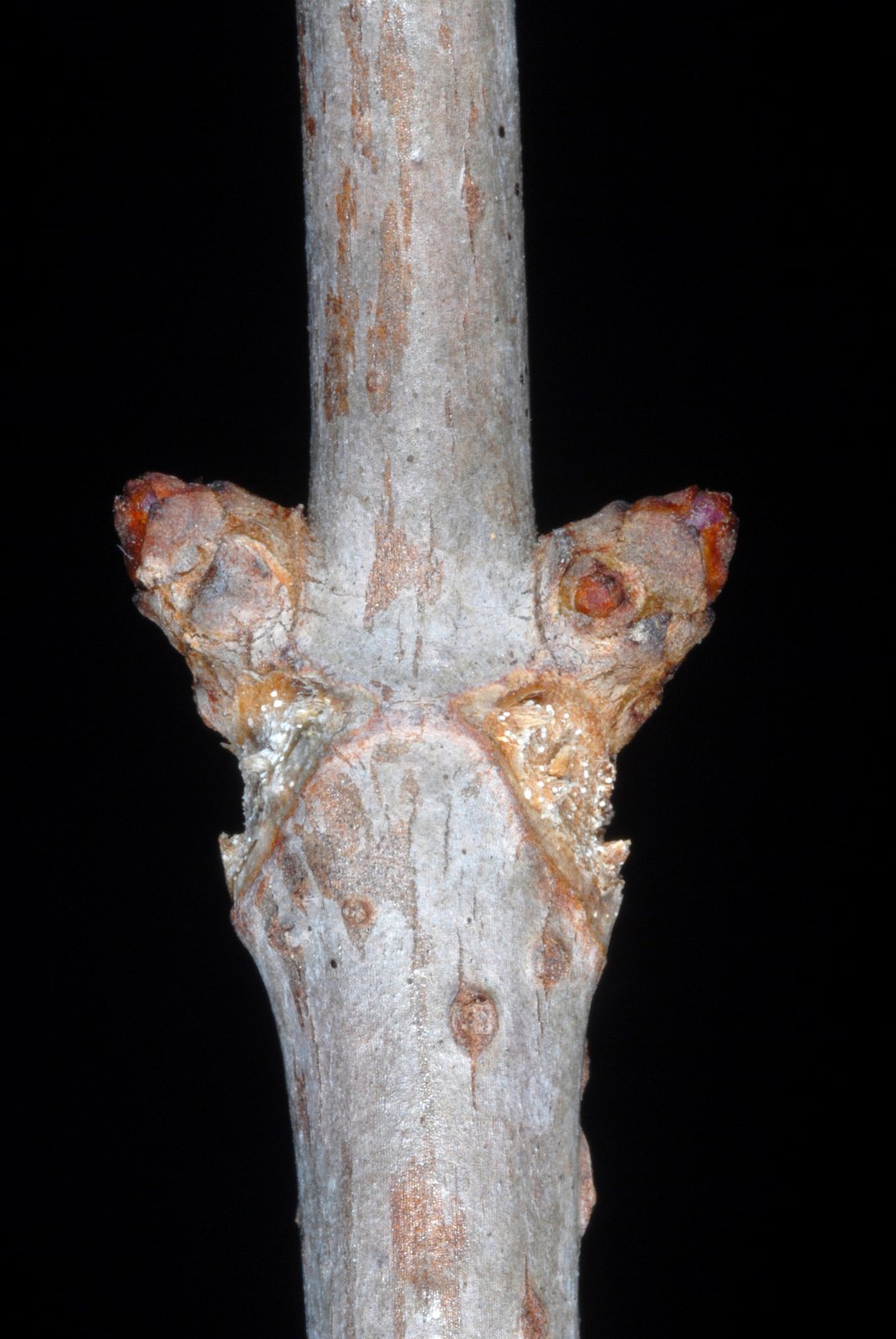
- Opposite, pinnate green leaves, usually with 5-9 pointed, toothed leaflets; autumn colour is usually yellowish and unremarkable.
- Growth
- Fast
- Care needed
- Medium
The year at a glance
- Pollinators
- Cold hardy
- Heat tolerant
- Wildlife
- Low allergen
- Edible
| J | F | M | A | M | J | J | A | S | O | N | D | |
|---|---|---|---|---|---|---|---|---|---|---|---|---|
| Flowers | ||||||||||||
| Fruit | ||||||||||||
| Plant |
Northern hemisphere months. In Australia, shift them by six.
- Difficulty
- Moderate
- Toughness
- Fairly tough
Will it suit your garden?
Pick your zone, country, light and whether you have pets.
Full sun is 6 or more hours of direct sun a day, part shade 3 to 6 hours, shade under 3.
How it grows
Planting day
1.6 ft (0.5 m)
After 1 year
4 ft (1.1 m)
After 2 years
6 ft (1.8 m)
After 3 years
8 ft (2.4 m)
After 5 years
9 ft (2.6 m)
full size
About 3 years to full size.
From a typical nursery size, at an average rate for this kind of plant. A rule of thumb, not a forecast.
Good to know
- Cats and dogs
- Toxic
- Native to
- the US and Canada
- In the garden
- Spreads vigorously: plan to contain it.
- Growth rate
- Fast
Care
Jobs through the year
- WaterApr–May, Oct, every 7 days
- Water established shrubs when rain is insufficient to keep roots moist; young plants need closer checks.
- WaterJun–Sep, every 5 days
- Deep-water in dry weather to maintain moist soil during fruit development; skip when soil remains moist.
- PruneFeb–Mar
- Remove dead and weak stems plus about one-third of the oldest canes, retaining vigorous younger wood.
- MulchMar–Apr
- Top-dress with compost and maintain 5–8 cm of organic mulch clear of stem bases.
- PruneApr–Aug
- Remove unwanted suckers while young to contain the colony.
- HarvestMay–Jul
- Pick flower heads when most flowers are open, leaving plenty for the berry crop.
- HarvestJul–Oct
- Clip fully purple-black, drooping clusters; discard unripe berries, remove stalks and cook fruit before use.
- ProtectJul–Oct
- If birds take the crop, use taut wildlife-safe netting on a frame and check it daily.
- Water deeply during dry spells, keeping the root zone moist while fruit develops.
- Apply a 2-3 in (5-8 cm) layer of organic mulch, keeping it clear of the stem bases.
- Top-dress with compost in spring; avoid heavy nitrogen feeding, which encourages leafy growth at the expense of fruit.
- Plant two genetically different American elderberries with overlapping flowering times for more reliable crops.
- Remove unwanted suckers while young to keep the colony within its allotted space.
Pruning. In late winter or early spring, remove dead, damaged and weak stems, then cut roughly one-third of the oldest stems to ground level. Retain vigorous younger stems for a regular crop; cutting the entire shrub down annually can reduce or delay fruiting.
Harvest
Expect the first substantial berry crop 2–3 years after planting; pick flower heads when most tiny white flowers are open, usually May–July in the US, UK and Canada or November–January in Australia. Harvest berries when the whole cluster is deep purple-black and drooping, typically July–October in the northern hemisphere or January–April in Australia, clipping off entire clusters rather than pulling individual berri…
Through the year
- Late winter
- Thin old stems and remove dead wood before growth begins.
- Early spring
- Plant dormant shrubs where soil is workable, then water thoroughly and mulch.
- Spring
- Top-dress with compost and remove suckers growing beyond the planting area.
- Summer
- Water during dry weather, especially as berries swell; check young shoots for aphids.
- Late summer to early autumn
- Harvest clusters when berries are fully purple-black; remove stalks and cook the fruit before use.
- Autumn
- Plant additional shrubs while soil is moist and clear fallen diseased material.
In the garden
- Use in an informal wildlife hedge with serviceberry and viburnum for successive flowers and fruit.
- Plant at the sunny edge of a woodland, where its loose habit can blend into other shrubs.
- Give it a dedicated patch in an edible landscape, with access around the plants for pruning and harvest.
- Use in the moist upper margins of a rain garden, allowing room for suckers rather than placing it beside paving.
Garden styles it suits: Wildlife garden, Native hedgerow, Food forest, Edible landscape, Woodland and Cottage garden.
Plant it with: Serviceberry, Red-osier dogwood, Buttonbush, Joe-Pye weed, Swamp milkweed and Cardinal flower.
Wildlife: Flowers attract a range of small pollinating insects, and the foliage supports native insects in North America. Birds eat the berries readily, while dense colonies provide cover and nesting shelter.
Problems to watch for
- Aphids can distort young growth: wash small colonies off with water and preserve ladybirds and other predators.
- Powdery mildew can coat leaves in crowded plantings: thin stems for airflow and avoid drought stress.
- Cane borers can cause individual shoots to wilt or die: cut affected stems back below the damaged section and dispose of them.
- Poor fruit set can follow shade, drought or inadequate cross-pollination: provide more sun, steady moisture and a genetically different American elderberry nearby.
Safety
Leaves, stems, roots and unripe berries contain cyanogenic compounds and are toxic to people, cats, dogs and horses if eaten. Raw ripe berries can also cause nausea, vomiting and diarrhoea; larger exposures to toxic parts can cause serious poisoning. For human food, use only fully ripe berries, remove stalks and cook thoroughly using a reliable recipe; do not offer raw fruit or plant trimmings to animals.
Where it spreads. Spreads vigorously by root suckers and can form broad colonies in moist gardens, including within its native eastern and central North American range. This is native thicket formation rather than evidence of invasive status there; remove unwanted suckers and keep it away from small, tightly planted beds.
Easily confused with
European elder (Sambucus nigra)
Very similar, and American elderberry is sometimes treated as its subspecies. European elder commonly develops a larger, more tree-like framework and usually has 5-7 leaflets, but these features overlap and are not a de…
Red elderberry (Sambucus racemosa)
Usually flowers earlier, with rounded or conical flower clusters followed by red berries rather than the broad, flat clusters and purple-black berries of American elderberry.
American pokeweed (Phytolacca americana)
Has alternate, simple leaves and hanging strings of dark berries on often reddish, non-woody stems. Elderberry has opposite, compound leaves and branched berry clusters on woody stems; pokeweed is poisonous.
The name
The species name canadensis means 'of Canada', referring to part of the plant's native range.
Propagation. Take hardwood cuttings during dormancy, softwood cuttings in early summer, or separate rooted suckers while dormant. Seed-grown plants vary and usually need a warm period followed by cold stratification before germinating.
Checked against open data
- Accepted botanical name
- Sambucus canadensis
- In the US and Canada
- Native in Canada, the lower 48 states and Puerto Rico. Introduced in Hawaii, Pacific Basin and US Virgin Islands.
- Native range
- Alabama, Arizona, Arkansas, Belize, Bolivia, California, Colombia, Connecticut, Costa Rica, Delaware, District of Columbia and Ecuador.
- Measured
- Soil pH 5 to 8.9. Average height 213 cm.
Sources: GBIF (CC BY 4.0), USDA PLANTS and Trefle (CC BY 4.0). The care and design notes are LandscapeGPT's own.
See it in your own yard.
Upload a photo of your yard and see it redesigned with plants that suit your climate, each checked against your zone.