American mountain ash
Sorbus americana. Family Rosaceae. Tree.
Also called American mountain-ash, American rowan.
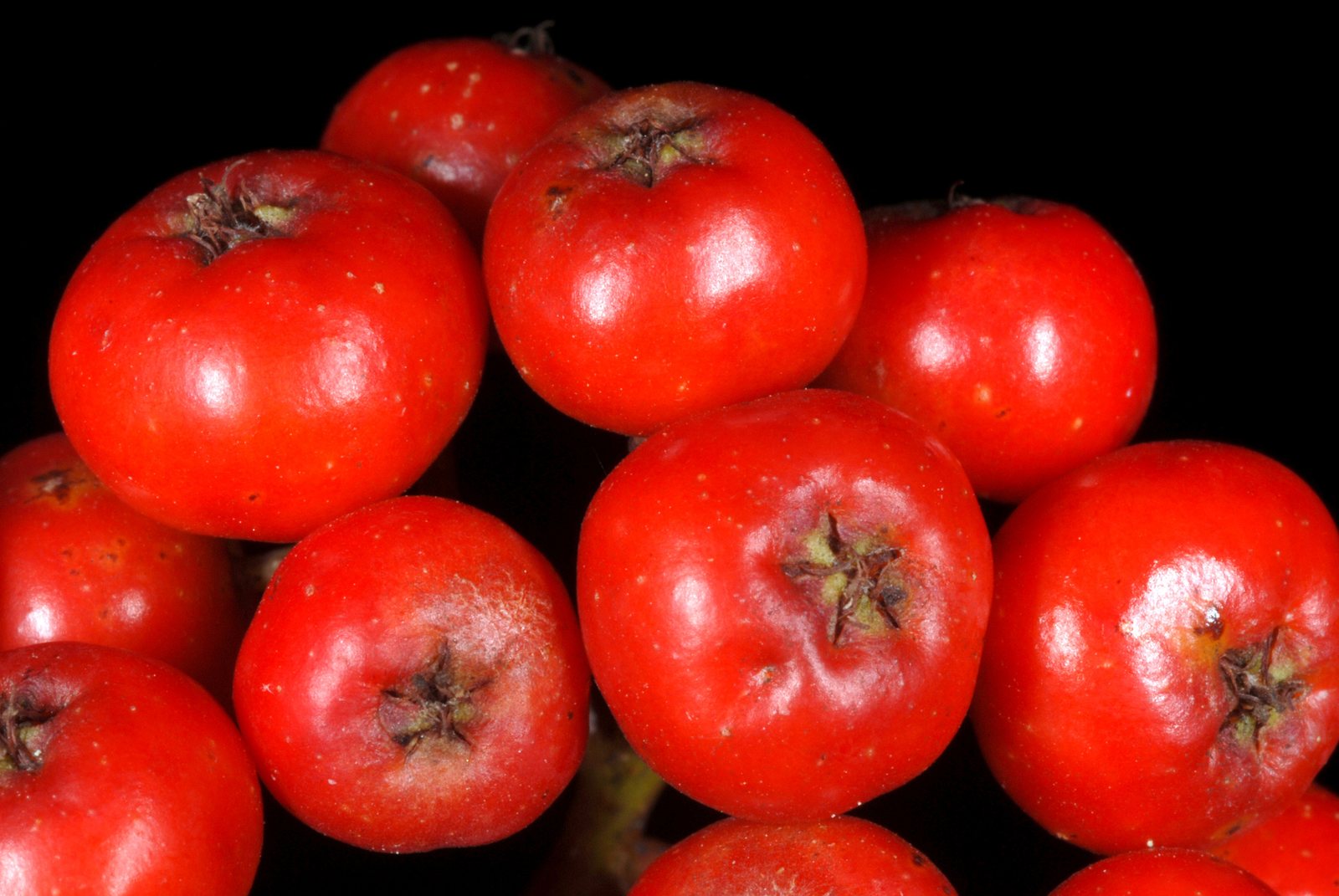
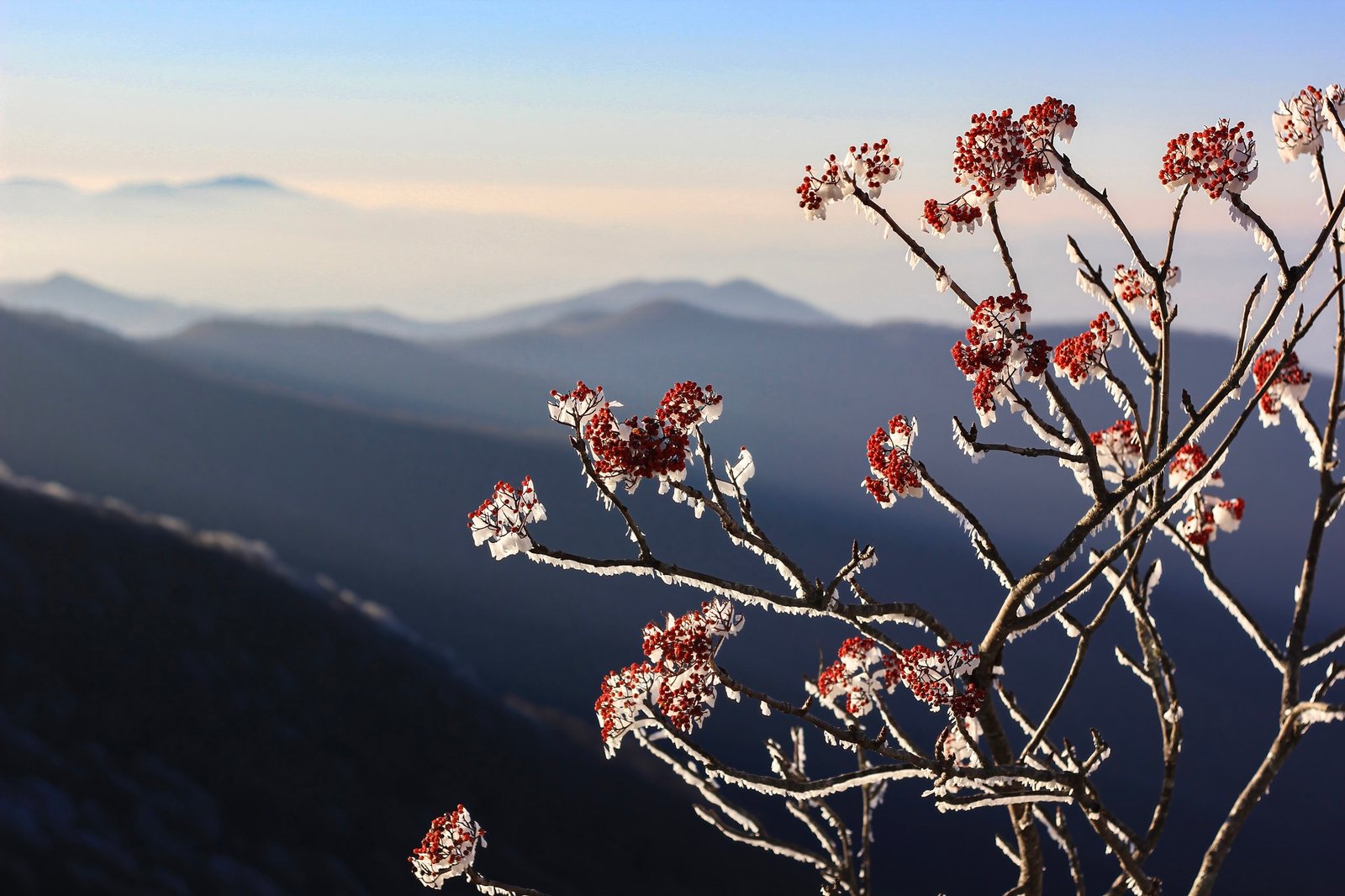
A small deciduous tree native to eastern North America, grown for its white flower clusters, orange-red berries and yellow to reddish autumn leaves. It suits cool-climate gardens but struggles with prolonged heat, drought and humid summers; despite its name, it is not a true ash.
At a glance
- Sun
- Full sun to partial shade; flowering and fruiting are usually best in sun where summers are cool.
- Water
- Moderate; keep the root zone evenly moist but not waterlogged, especially during establishment and dry summers.
- Soil
- Moist, well-drained, humus-rich soil, preferably acidic to slightly acidic. Avoid dry, compacted ground and strongly alkaline soil.
- Height
- 15-30 ft (4.5-9 m)
- Spread
- 10-20 ft (3-6 m)
- Flowers
- Late spring to early summer; small creamy-white flowers in broad, flat-topped clusters.
- Foliage
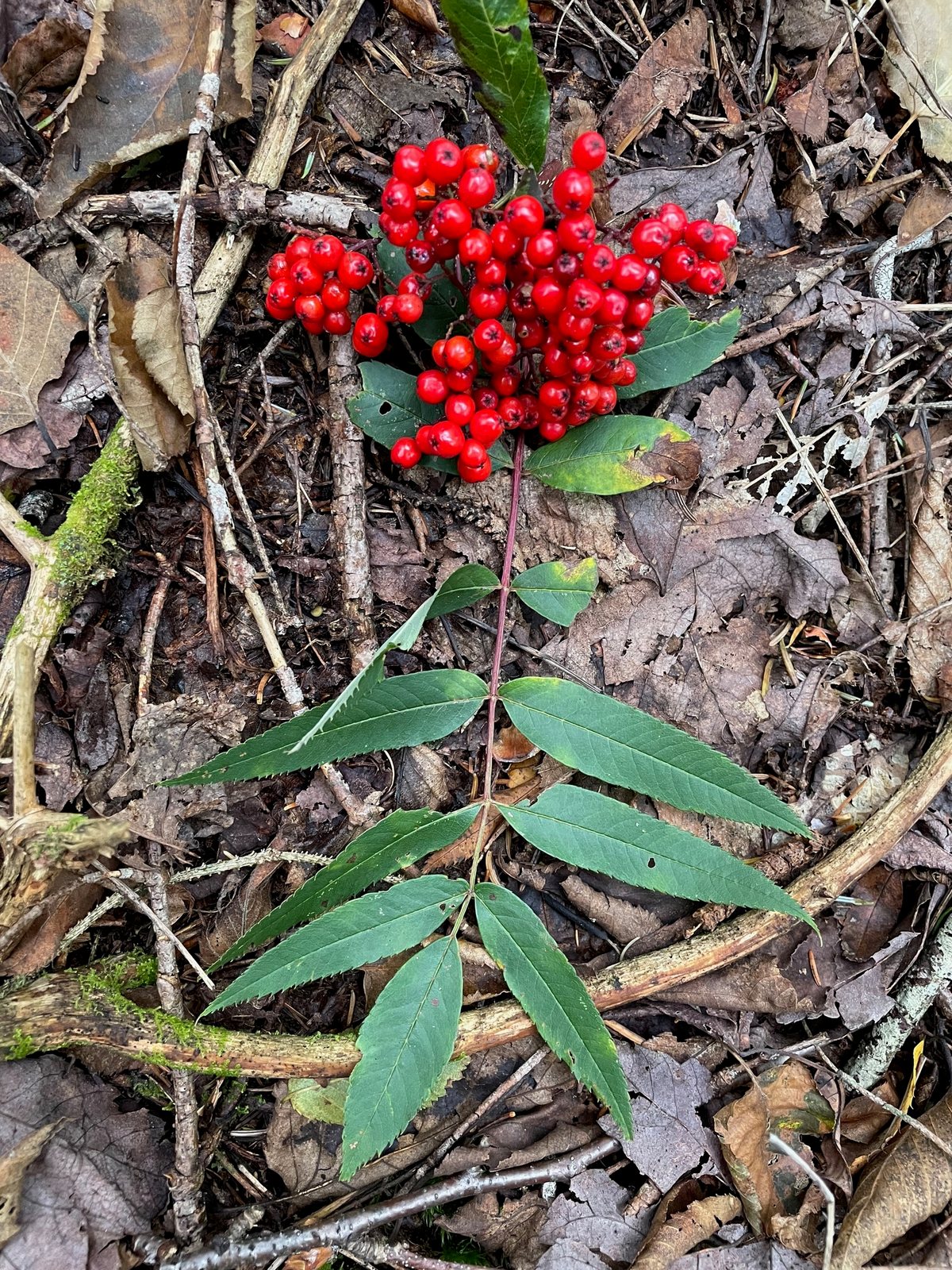
- Compound leaves with sharply toothed, narrow leaflets; green in summer, turning yellow, orange or red in autumn.
- Growth
- Slow to moderate
- Care needed
- Medium
The year at a glance
- Pollinators
- Cold hardy
- Wildlife
- Low allergen
| J | F | M | A | M | J | J | A | S | O | N | D | |
|---|---|---|---|---|---|---|---|---|---|---|---|---|
| Flowers | ||||||||||||
| Fruit | ||||||||||||
| Plant |
Northern hemisphere months. In Australia, shift them by six.
- Difficulty
- Moderate
- Toughness
- Needs looking after
Will it suit your garden?
Pick your zone, country, light and whether you have pets.
Full sun is 6 or more hours of direct sun a day, part shade 3 to 6 hours, shade under 3.
How it grows
Planting day
7 ft (2 m)
After 1 year
7 ft (2.2 m)
After 2 years
8 ft (2.4 m)
After 3 years
8 ft (2.5 m)
After 5 years
10 ft (2.9 m)
About 26 years to full size.
From a typical nursery size, at an average rate for this kind of plant. A rule of thumb, not a forecast.
Good to know
- Cats and dogs
- Mildly toxic: may upset a stomach
- Native to
- the US and Canada
- Growth rate
- Slow
Care
Jobs through the year
- WaterApr–May, Sep–Oct, every 14 days
- Water established trees deeply if dry; keep roots evenly moist during the first two years.
- WaterJun–Aug, every 7 days
- Water deeply during dry spells; young trees need closer moisture checks.
- MulchMar–Apr
- Maintain 5–8 cm of organic mulch over roots, keeping the trunk clear.
- PruneFeb–Mar
- In dry weather, remove dead, damaged or crossing branches without heavy pruning.
- PruneMay–Sep
- Remove fire-blighted shoots promptly in dry weather, cutting well below damage and disinfecting tools.
- ProtectMay–Aug
- Inspect for sawfly larvae and blight; hand-pick larvae and remove infected debris.
- ProtectOct–Nov
- Clear diseased fallen leaves and fit ventilated guards where young trunks face browsing.
- Water deeply during dry spells for the first two growing seasons; established trees also need water during drought.
- Spread 2-3 in (5-8 cm) of organic mulch over the root zone, keeping it clear of the trunk.
- Avoid routine high-nitrogen feeding, which encourages soft growth susceptible to fire blight.
- Keep lawn equipment away from the thin bark and avoid disturbing the shallow roots.
- Stake only if the root ball moves in wind, and remove supports once the tree is anchored.
Pruning. Prune in late winter during dry weather, removing dead, damaged or crossing branches and retaining a sound framework. Avoid heavy pruning; remove suspected fire-blight infections promptly in dry weather, cutting well below visible damage and disinfecting tools between cuts.
Through the year
- Late winter
- Inspect the branch structure and remove dead, damaged or crossing wood in dry weather.
- Spring
- Plant while dormant or before substantial new growth, water thoroughly and mulch the root zone.
- Late spring
- Check flowers and new shoots for blackening or hooked tips that may indicate fire blight.
- Summer
- Water during dry spells and inspect leaves for sawfly larvae, spotting or rust.
- Autumn
- Leave healthy fruit clusters for birds and collect fallen diseased leaves.
- Late autumn
- Check young trunks for browsing damage and fit a ventilated tree guard where needed.
In the garden
- Use as a small specimen tree where its flowers, fruit and autumn colour can be seen from the house.
- Plant at a sunny woodland edge with ferns and low shrubs beneath it.
- Include in a cool-climate wildlife garden to provide flowers for insects and fruit for birds.
- Combine with birches and blueberries for a naturalistic planting with a long autumn season.
Garden styles it suits: Woodland, Wildlife garden, Autumn colour, Mountain lodge, New England and Cottage garden.
Plant it with: Paper birch, Lowbush blueberry, Canadian bunchberry, Christmas fern and Wild columbine.
Wildlife: Flowers attract bees and other insects. The fruit feeds thrushes, waxwings and other birds, and the branches provide cover; deer may browse young trees.
Problems to watch for
- Fire blight: blackened flowers and hooked, dying shoots need prompt removal in dry weather; cut well below affected tissue, disinfect tools and avoid excess nitrogen.
- Mountain ash sawfly: larvae can strip leaflets; inspect foliage early and hand-pick larvae from small trees.
- Leaf spots and rust: remove fallen infected leaves, allow air circulation and water the soil rather than the foliage.
- Heat and drought stress: scorched leaves and dieback are common on unsuitable sites; mulch and water deeply, but choose another species where summers are persistently hot.
Safety
Not known to be toxic to cats, dogs or horses, although eating quantities of fruit can cause digestive upset. For people, raw fruit can cause stomach upset and should not be eaten in quantity; seeds contain cyanogenic compounds and should not be chewed. Treat it as an ornamental rather than a snack tree.
Easily confused with
European mountain ash (Sorbus aucuparia)
Its winter buds are conspicuously hairy, while American mountain ash has largely hairless, reddish-brown buds.
Showy mountain ash (Sorbus decora)
Usually has broader leaflets with shorter points; American mountain ash has narrower leaflets with long, tapering tips. Their features overlap, so leaflet shape alone is not always decisive.
White ash (Fraxinus americana)
A true ash with opposite leaves and winged seeds, not berry-like fruit. American mountain ash has alternate leaves and orange-red fruit clusters.
The name
The common name refers to its ash-like compound leaves and frequent occurrence in mountain habitats, while americana means American.
Propagation. Usually grown from seed. Clean seeds from ripe fruit and provide a moist warm period followed by several months of cold stratification; germination can be slow and irregular, sometimes taking more than one season.
Checked against open data
- Accepted botanical name
- Sorbus americana
- In the US and Canada
- Native in Canada, the lower 48 states and St. Pierre and Miquelon.
- Native range
- Connecticut, Georgia, Illinois, Maine, Maryland, Masachusettes, Michigan, Minnesota, New Brunswick, New Hampshire, New Jersey and New York.
- Measured
- Soil pH 5.3 to 6.8. Average height 914 cm.
Sources: GBIF (CC BY 4.0), USDA PLANTS and Trefle (CC BY 4.0). The care and design notes are LandscapeGPT's own.
See it in your own yard.
Upload a photo of your yard and see it redesigned with plants that suit your climate, each checked against your zone.