American sycamore
Platanus occidentalis. Family Platanaceae. Tree.
Also called American plane, Western plane, Buttonwood, Buttonball tree.
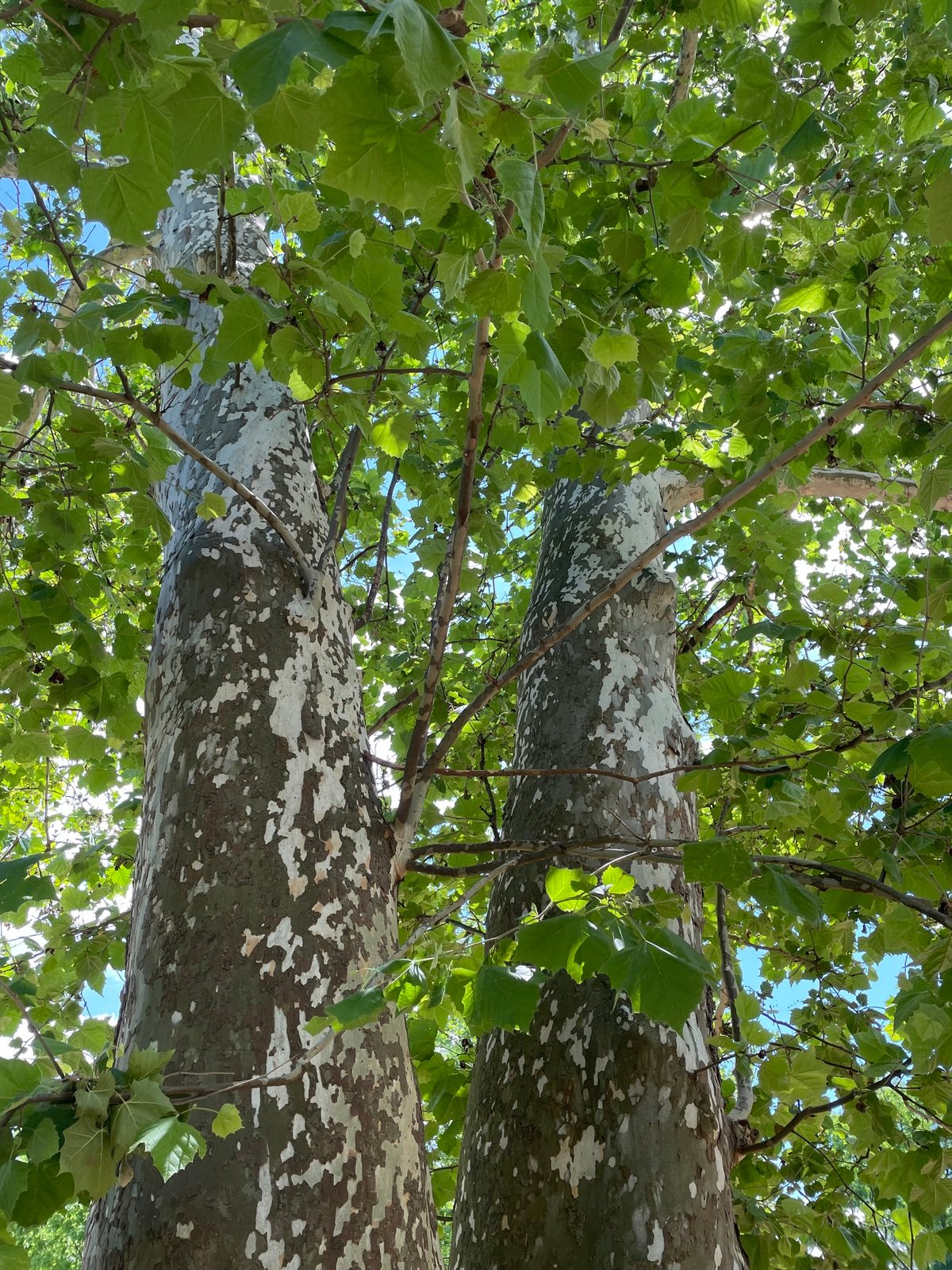
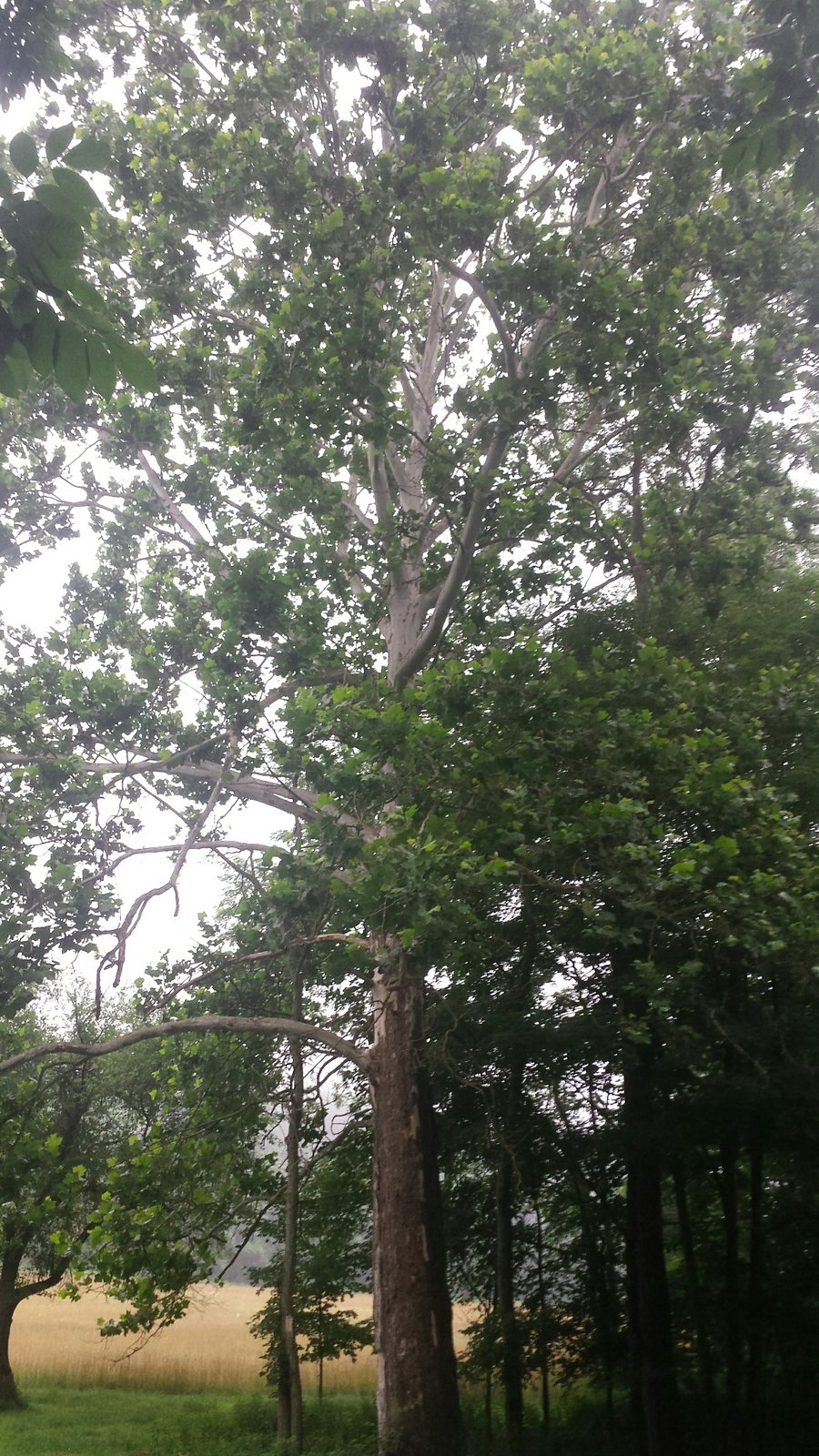
American sycamore is a very large, fast-growing deciduous tree native to eastern and central North America, grown for broad summer shade and peeling bark that reveals cream, grey and olive patches. It suits spacious gardens and moist parkland, not small yards or narrow planting strips; allow room for its wide crown, substantial roots and regular leaf, bark and seed-ball litter.
At a glance
- Sun
- Full sun; tolerates light partial shade but develops its best crown in an open position.
- Water
- Prefers consistently moist soil and tolerates periodic flooding. Water young trees during dry weather; established trees tolerate some drought but may shed leaves in prolonged heat and dryness.
- Soil
- Deep, fertile, moist but aerated soil is ideal. Tolerates clay, loam, sand and a broad pH range, including alkaline soil; avoid permanently stagnant, waterlogged ground.
- Height
- 75-100 ft (23-30 m), sometimes taller on favourable sites
- Spread
- 50-75 ft (15-23 m), sometimes wider with age
- Flowers
- Spring, as leaves emerge; small, inconspicuous reddish female and yellow-green male flowers in separate rounded clusters on the same tree.
- Foliage
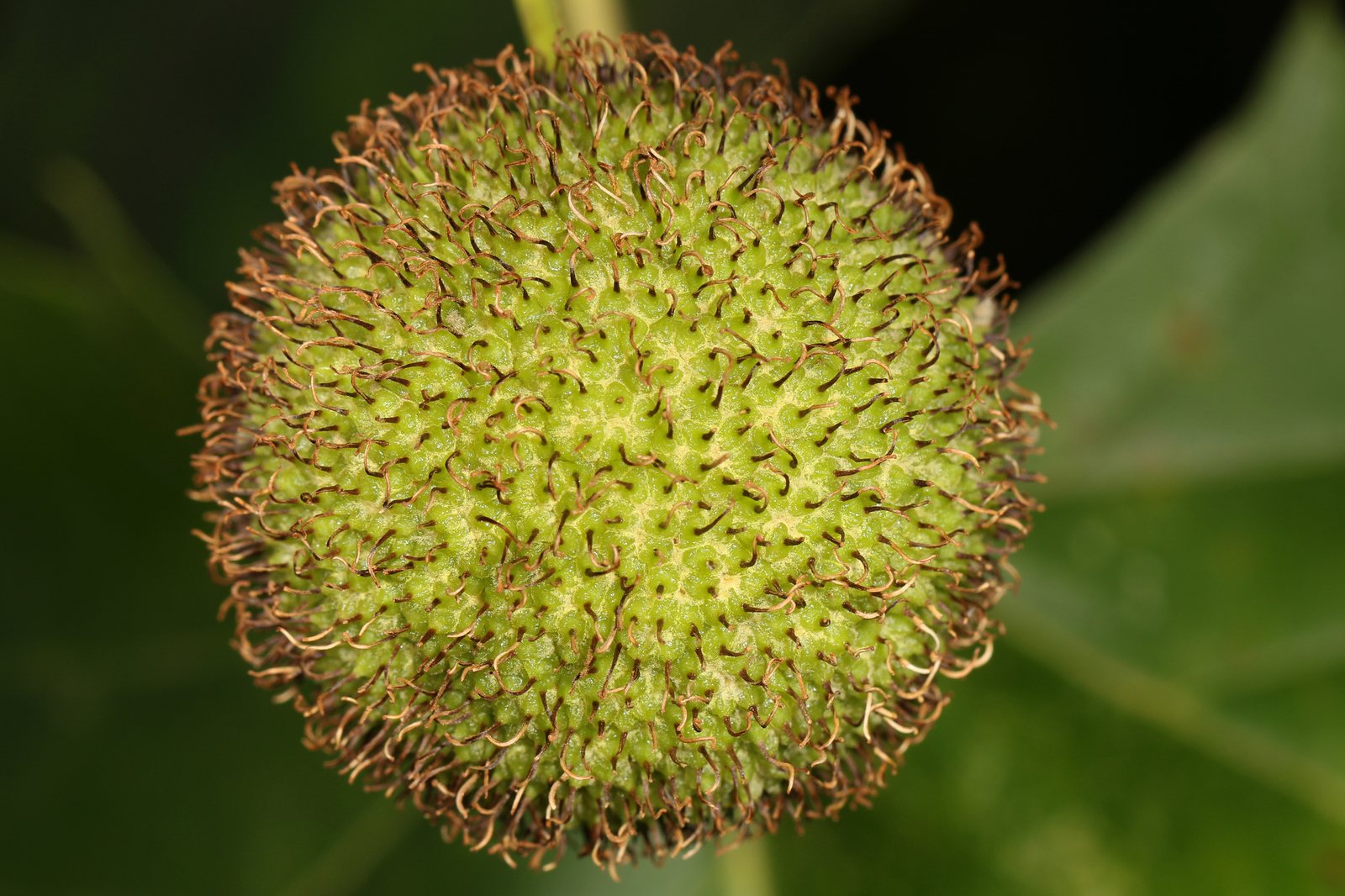
- Large, alternate, broadly three- to five-lobed green leaves with toothed margins; usually yellow-brown in autumn. Rounded brown seed balls often remain on bare branches into winter.
- Growth
- Fast, often 2 ft (0.6 m) or more a year while young on moist, fertile soil.
- Care needed
- Medium
The year at a glance
- Cold hardy
- Heat tolerant
- Wildlife
| J | F | M | A | M | J | J | A | S | O | N | D | |
|---|---|---|---|---|---|---|---|---|---|---|---|---|
| Flowers | ||||||||||||
| Fruit | ||||||||||||
| Plant |
Northern hemisphere months. In Australia, shift them by six.
- Difficulty
- Moderate
- Toughness
- Fairly tough
Will it suit your garden?
Pick your zone, country, light and whether you have pets.
Full sun is 6 or more hours of direct sun a day, part shade 3 to 6 hours, shade under 3.
How it grows
Planting day
10 ft (3.2 m)
After 1 year
16 ft (5 m)
After 2 years
22 ft (6.8 m)
After 3 years
28 ft (8.6 m)
After 5 years
40 ft (12.1 m)
About 13 years to full size.
From a typical nursery size, at an average rate for this kind of plant. A rule of thumb, not a forecast.
Good to know
- Cats and dogs
- Safe
- Native to
- the US and Canada
- Growth rate
- Fast
Care
Jobs through the year
- WaterApr–May, Sep–Oct, every 14 days
- Deep-water established trees if soil becomes dry; young trees need more frequent checks.
- WaterJun–Aug, every 7 days
- Water deeply during prolonged dry weather, especially for the first three years.
- MulchMar–Apr
- Maintain 5–8 cm of organic mulch over the root zone, clear of the trunk.
- PruneFeb
- Train young branches and remove damaged growth while dormant; never top the tree.
- ProtectOct–Nov
- Collect diseased fallen leaves to help reduce overwintering anthracnose.
- Plant well away from buildings, drains, paving and overhead wires, allowing for the full mature crown and root spread.
- Water deeply through the first two or three growing seasons whenever the root zone begins to dry.
- Spread 2-3 in (5-8 cm) of organic mulch over the root zone, keeping it clear of the trunk.
- Feed only if soil testing or poor growth indicates a deficiency; routine feeding is unnecessary on reasonably fertile soil.
- Stake only if the root ball is unstable, and remove supports once the tree is securely rooted, usually within a year.
Pruning. Prune in late winter while dormant, establishing well-spaced main branches when young and removing dead, damaged or crossing growth. Do not top the tree; use a qualified arborist for large branches or work above ground level.
Through the year
- Late winter
- Check branch structure and prune young trees before buds open.
- Spring
- Refresh mulch without piling it against the trunk, and check that ties are not constricting the bark.
- Late spring
- Watch for anthracnose after cool, wet weather; affected trees often produce replacement leaves as conditions warm.
- Summer
- Water young trees deeply during dry spells and inspect leaf undersides if foliage becomes pale or stippled.
- Autumn
- Collect fallen diseased leaves and remove accumulated litter from paths and drains.
- Late autumn
- Plant dormant nursery trees where soil remains workable, or wait until spring in regions with severe winters.
In the garden
- Use as a specimen shade tree in a large lawn, with enough open ground for its spreading crown.
- Plant beside a broad stream or pond margin where soil is moist but not permanently submerged.
- Include in large native woodland-edge plantings with moisture-loving shrubs and sedges.
- Place where its pale upper trunk and branches can be seen against dark woodland or evergreen planting in winter.
Garden styles it suits: Grand estate, Woodland, Wildlife garden, Winter interest, Traditional and Rewilded.
Plant it with: River birch, Winterberry, Buttonbush, Virginia sweetspire, Tussock sedge and Sensitive fern.
Wildlife: Seeds feed finches and other seed-eating birds, while the foliage supports moth caterpillars and other insects. Cavities in older trees provide shelter and nesting sites for birds and mammals.
Problems to watch for
- Anthracnose causes blotched leaves, early leaf fall and twig dieback, especially in cool, wet springs. Collect fallen leaves, remove dead twigs where safely accessible and maintain adequate water; established trees usually recover without spraying.
- Sycamore lace bugs cause pale stippling and dark spots beneath leaves. Tolerate light damage, conserve predatory insects and use a firm water spray on reachable foliage; seek professional advice for severe recurring infestations.
- Powdery mildew produces a white coating and sometimes distorted young leaves. Avoid excessive nitrogen feeding and improve airflow where practical; treatment is rarely needed on a mature tree.
- Bacterial leaf scorch causes recurring late-summer browning along leaf margins and progressive decline. Have it professionally diagnosed, reduce drought stress and obtain an arborist's advice; there is no cure.
Safety
Not known to be toxic to people, cats, dogs or horses. Fine hairs from leaves and breaking seed balls can irritate eyes, skin and airways, so avoid inhaling dust when clearing litter. It is not the sycamore maple, Acer pseudoplatanus, whose seeds and seedlings can poison horses.
Easily confused with
London plane (Platanus × acerifolia)
Very similar mottled bark and lobed leaves, but seed balls commonly hang in pairs rather than singly as in American sycamore. Fruit number varies, so check several stalks.
Oriental plane (Platanus orientalis)
Usually has more deeply cut, narrower leaf lobes and several seed balls along each stalk, rather than the broad lobes and usually solitary balls of American sycamore.
Sycamore maple (Acer pseudoplatanus)
Has opposite leaves and paired winged seeds, unlike American sycamore's alternate leaves and round seed balls; this is the tree commonly called sycamore in Britain.
The name
The botanical epithet occidentalis means 'western', referring to this plane tree's American origin.
Propagation. Grow from seed collected from mature brown seed balls in autumn or winter. Break the balls apart carefully to avoid inhaling hairs, then sow in spring in moist seed compost, barely covering the seed; seedlings need good light and steady moisture.
Checked against open data
- Accepted botanical name
- Platanus occidentalis
- In the US and Canada
- Native in Canada and the lower 48 states.
- Native range
- Alabama, Arkansas, Connecticut, Delaware, District of Columbia, Florida, Georgia, Illinois, Indiana, Iowa, Kansas and Kentucky.
- Measured
- Soil pH 4.9 to 6.5. Average height 2705 cm.
Sources: GBIF (CC BY 4.0), USDA PLANTS and Trefle (CC BY 4.0). The care and design notes are LandscapeGPT's own.
See it in your own yard.
Upload a photo of your yard and see it redesigned with plants that suit your climate, each checked against your zone.