Areca palm
Dypsis lutescens. Family Arecaceae. Tree.
Also called Golden cane palm, Butterfly palm, Yellow palm, Chrysalidocarpus lutescens.
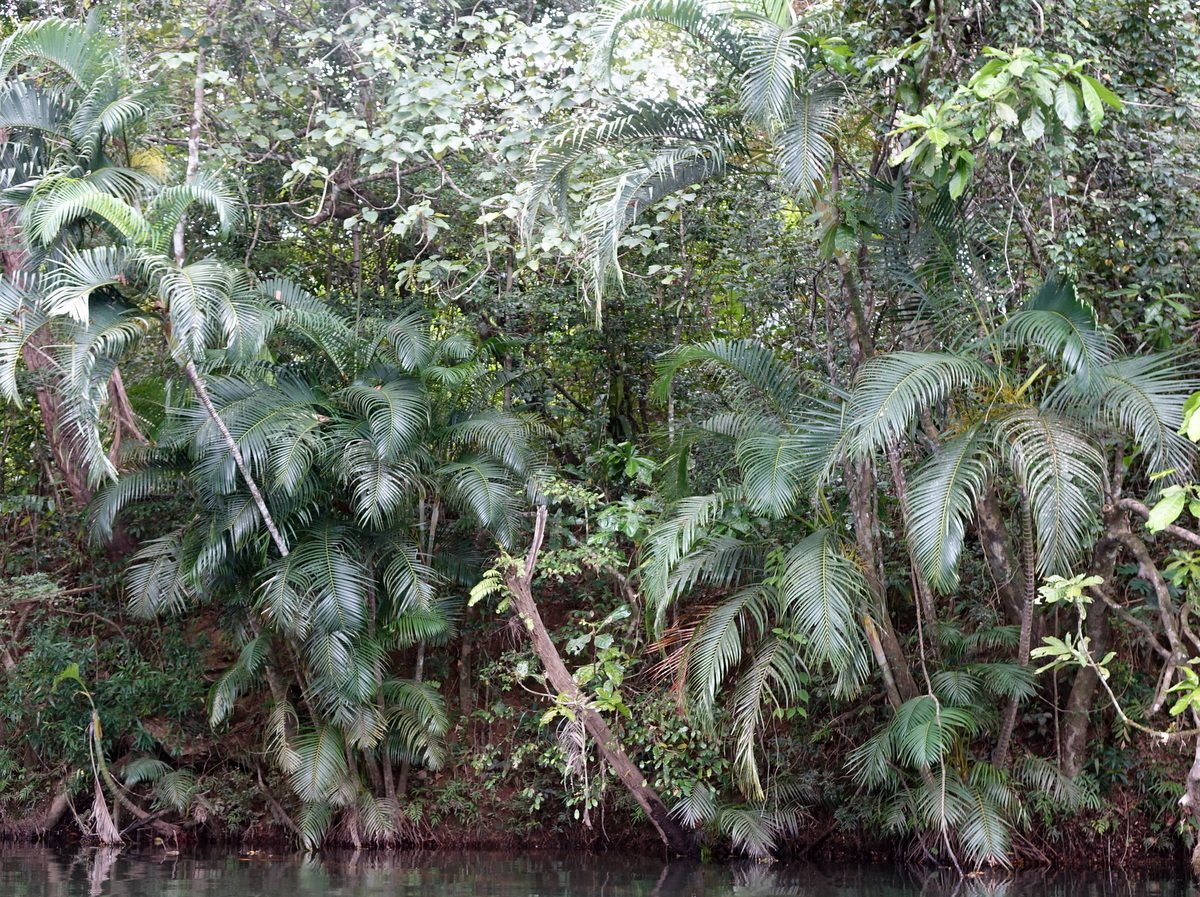
A clump-forming evergreen palm from Madagascar, grown for its arching, feathery leaves and yellow-green canes. It makes a soft screen in frost-free gardens; in colder regions, grow it as a houseplant or move containers outdoors only during warm weather.
At a glance
- Sun
- Partial shade to full sun outdoors, with gradual acclimatisation to strong sun. Indoors, provide bright, filtered light.
- Water
- Keep evenly moist during active growth, allowing the surface to dry slightly between waterings. Water less in cool conditions, but do not let the root ball dry out completely or stand in water.
- Soil
- Moist but well-drained soil rich in organic matter; slightly acidic conditions are best. Use a free-draining potting mix in containers.
- Height
- 20-30 ft (6-9 m) outdoors; commonly 6-8 ft (1.8-2.4 m) indoors
- Spread
- 8-15 ft (2.4-4.6 m) outdoors; usually narrower in containers
- Flowers
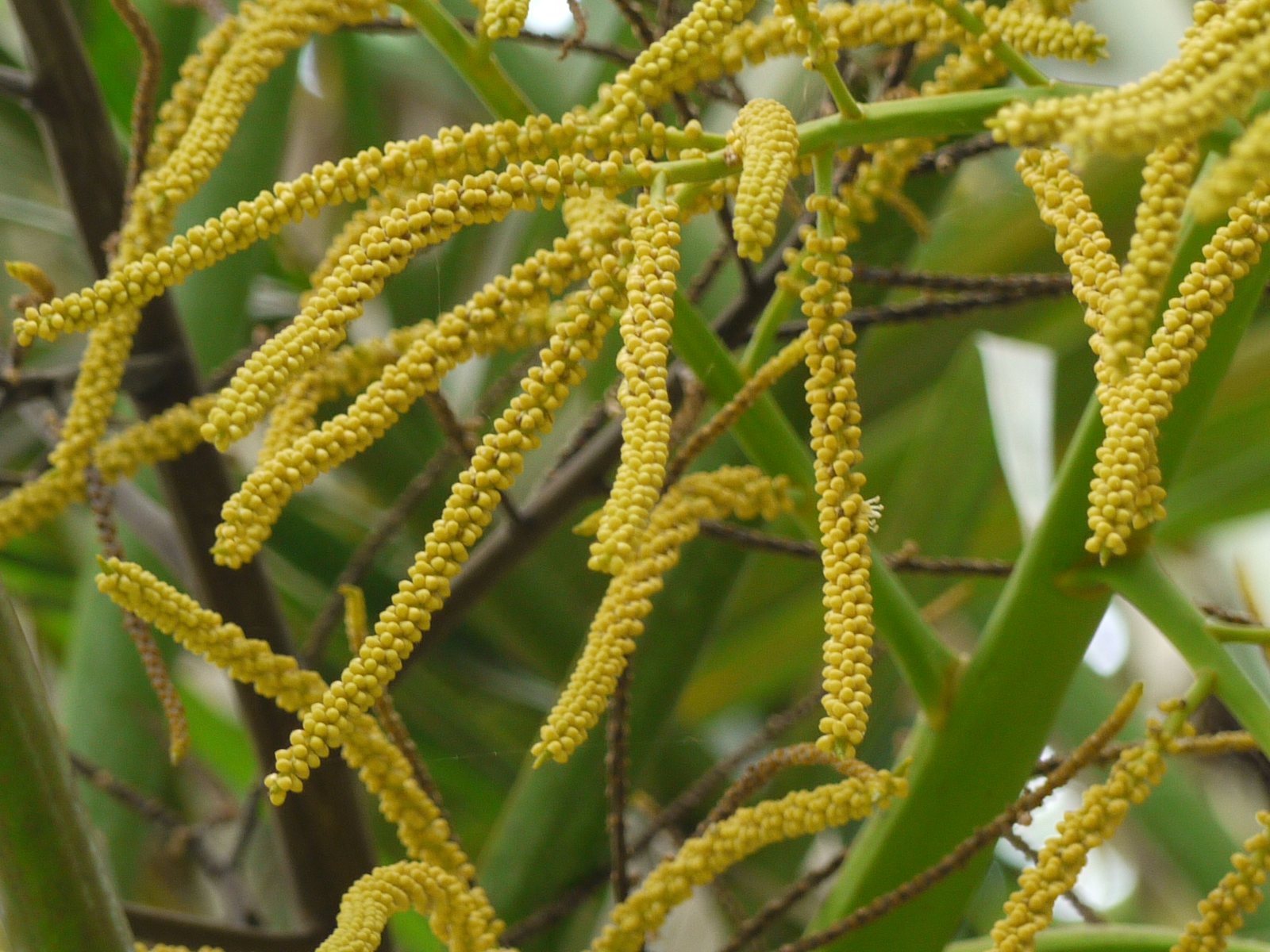
- Small yellow flowers in branched clusters, usually in summer on mature outdoor plants; flowering is uncommon indoors.
- Foliage
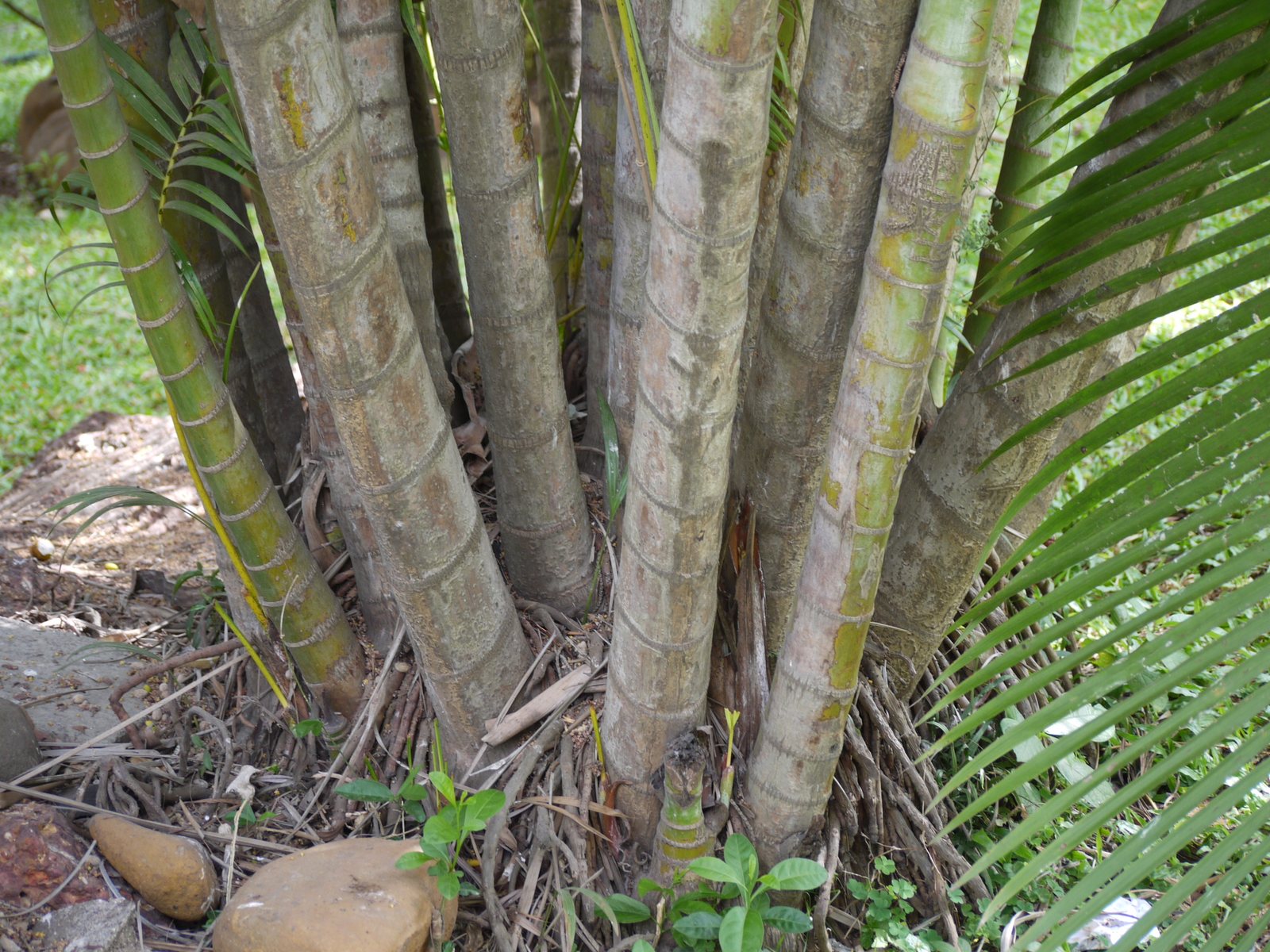
- Evergreen. Long, arching, feather-shaped green leaves with many narrow leaflets, carried on yellow-green, ringed canes.
- Growth
- Moderate in warm, moist conditions; slower indoors.
- Care needed
- Medium
The year at a glance
- Pollinators
- Heat tolerant
- Wildlife
| J | F | M | A | M | J | J | A | S | O | N | D | |
|---|---|---|---|---|---|---|---|---|---|---|---|---|
| Flowers | ||||||||||||
| Fruit | ||||||||||||
| Plant |
Northern hemisphere months. In Australia, shift them by six.
- Difficulty
- Moderate
- Toughness
- Needs looking after
Will it suit your garden?
Pick your zone, country, light and whether you have pets.
Full sun is 6 or more hours of direct sun a day, part shade 3 to 6 hours, shade under 3.
How it grows
Planting day
7 ft (2 m)
After 1 year
7 ft (2.2 m)
After 2 years
8 ft (2.4 m)
After 3 years
9 ft (2.6 m)
After 5 years
10 ft (3.1 m)
About 26 years to full size.
From a typical nursery size, at an average rate for this kind of plant. A rule of thumb, not a forecast.
Good to know
- Cats and dogs
- Safe
- Invasive in
- the US
- Growth rate
- Slow
Care
Jobs through the year
- WaterApr–May, Sep–Oct, every 7 days
- Locally grow in a container; water when the surface dries slightly and empty saucers.
- WaterJun–Aug, every 4 days
- Check pots and water thoroughly as needed; young plants and hot-weather pots need closer checks.
- WaterJan–Mar, Nov–Dec, every 14 days
- Check indoor pots and water as needed; never let the root ball dry completely or remain saturated.
- FeedApr–Aug, every 30 days
- Feed containers lightly with a complete palm fertiliser, following its label; stop as growth slows.
- PruneApr–Sep
- Remove fully brown fronds or unwanted canes at their bases; never cut growing tips.
- ProtectJan–May, Sep–Dec
- Keep indoors in bright filtered light before nights fall below 10°C; flowers and fruit are rare indoors.
- ProtectJun
- Move outside only when nights stay above 10°C, gradually acclimatising in sheltered shade.
- Water thoroughly, then empty saucers or outer pots so the roots do not remain submerged.
- Feed outdoor plants during the growing season with a slow-release palm fertiliser containing potassium, magnesium and micronutrients, following the label.
- Feed container plants lightly during active growth; stop feeding when growth slows in winter.
- Mulch outdoor plants to conserve moisture, keeping mulch clear of the canes.
- Bring containers indoors before nights fall below about 50°F (10°C), and keep them away from heaters and cold draughts.
Pruning. Remove fully brown fronds at their bases whenever needed, leaving green or partly yellow leaves to support the plant. Cut unwanted canes at ground level to thin the clump, but never shorten a cane by cutting off its growing tip.
Through the year
- Spring
- Check drainage and repot container plants only if crowded, using a pot just one size larger.
- Spring
- Begin feeding as active growth resumes and refresh mulch around outdoor clumps.
- Early summer
- Move indoor plants outside only after nights are reliably warm; start in sheltered shade.
- Summer
- Check soil moisture frequently and inspect leaf undersides for mites and scale.
- Autumn
- Bring containers into a bright indoor position before cool nights arrive.
- Winter
- Reduce watering to match slower growth, without allowing the root ball to become completely dry.
In the garden
- Plant several clumps as an informal privacy screen in a frost-free courtyard.
- Use beside a sheltered terrace or pool, allowing space for the arching leaves.
- Combine with broad-leaved tropical plants to contrast fine and bold foliage.
- Place a container-grown specimen in a bright conservatory or spacious indoor corner.
Garden styles it suits: Modern tropical, Luxury resort, Tropical, Modern courtyard, Balinese and Spa retreat.
Plant it with: Bird of paradise, Cast-iron plant, Bromeliads, Philodendrons, Boston fern and Shell ginger.
Wildlife: Flowers attract visiting insects, and birds may eat the small fruits in warm climates. Dense clumps provide shelter, but this palm is not a substitute for locally native habitat plants.
Problems to watch for
- Spider mites cause fine stippling and webbing, especially indoors: rinse leaf undersides and use insecticidal soap labelled for the plant if needed.
- Scale insects and mealybugs weaken plants and leave sticky honeydew: remove small infestations by hand and treat persistent infestations with a labelled horticultural oil.
- Root rot follows persistently wet, poorly drained conditions: improve drainage, empty saucers and let the surface dry slightly before watering again.
- Yellowing or spotted older leaves outdoors can indicate nutrient deficiency, especially in alkaline soil: use a balanced palm fertiliser rather than adding individual nutrients without a diagnosis.
Safety
Not known to be toxic to cats, dogs, horses or people. No part is recognised as poisonous, although chewing plant material can cause stomach upset; it is not grown as an edible plant.
Where it spreads. Reported as invasive in Cuba and Puerto Rico. Check local guidance before planting in tropical regions, where birds can disperse its seeds.
Easily confused with
Parlour palm (Chamaedorea elegans)
Usually much smaller, with slender green stems and shorter, less densely feathered leaves; several separate seedlings are often sold together in one pot.
Kentia palm (Howea forsteriana)
Has a single trunk rather than naturally forming a clump, with broader, more widely spaced, drooping leaflets.
Betel nut palm (Areca catechu)
Forms a single tall, straight trunk with a prominent green crownshaft, rather than a cluster of yellow-green canes.
The name
The species name lutescens means 'becoming yellow', referring to its yellowish leaf stalks and canes.
Propagation. Sow fresh seed in a warm, consistently moist propagation mix; germination can take several months. Small rooted divisions can be separated carefully, but disturbance of established clumps can cause substantial root damage.
Checked against open data
- Accepted botanical name
- Dypsis lutescens
- In the US and Canada
- Introduced in the lower 48 states, Pacific Basin and Puerto Rico.
Sources: GBIF (CC BY 4.0) and USDA PLANTS. The care and design notes are LandscapeGPT's own.
See it in your own yard.
Upload a photo of your yard and see it redesigned with plants that suit your climate, each checked against your zone.