Arrowleaf balsamroot
Balsamorhiza sagittata. Family Asteraceae. Perennial.
Also called Arrow-leaved balsamroot.
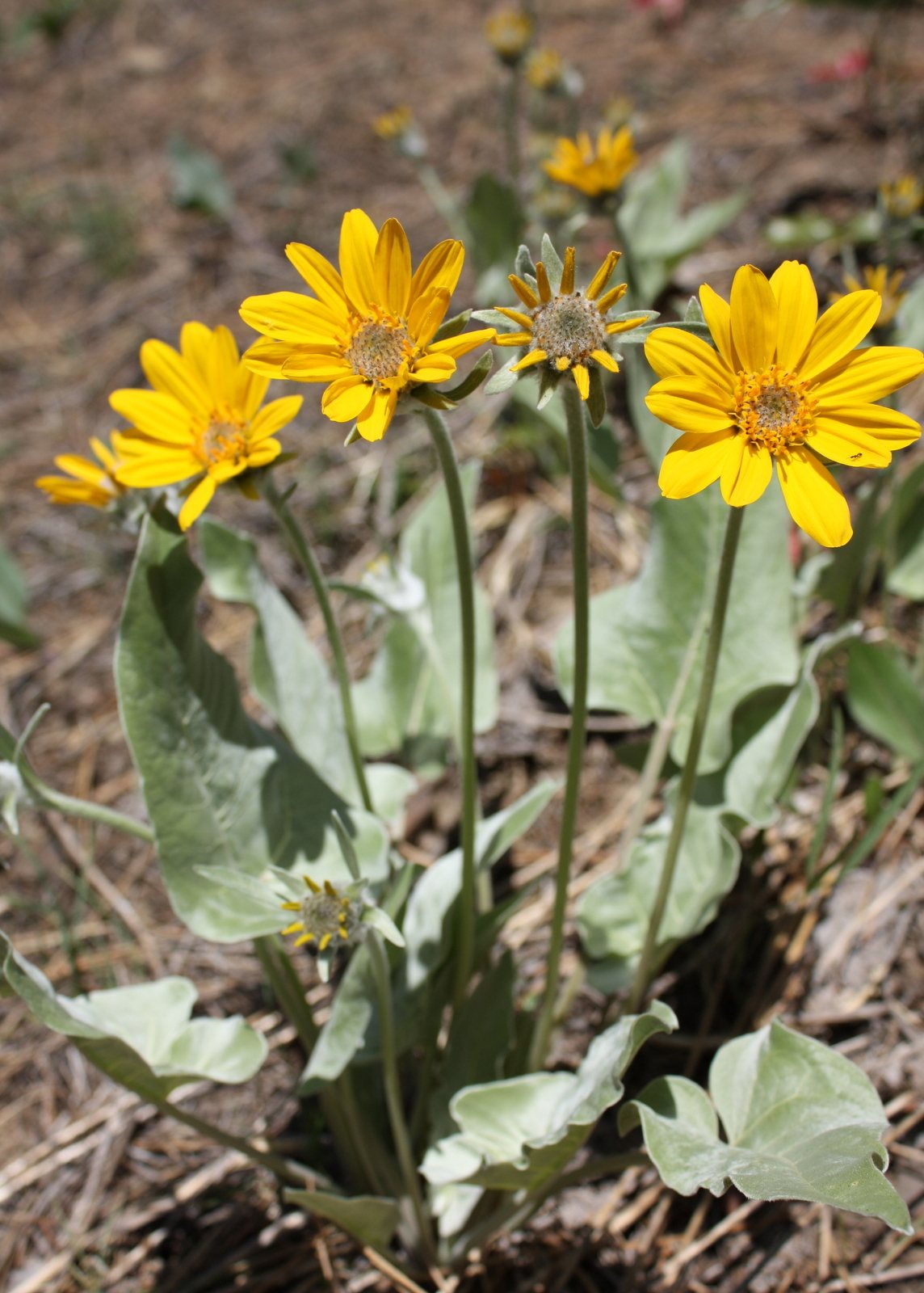
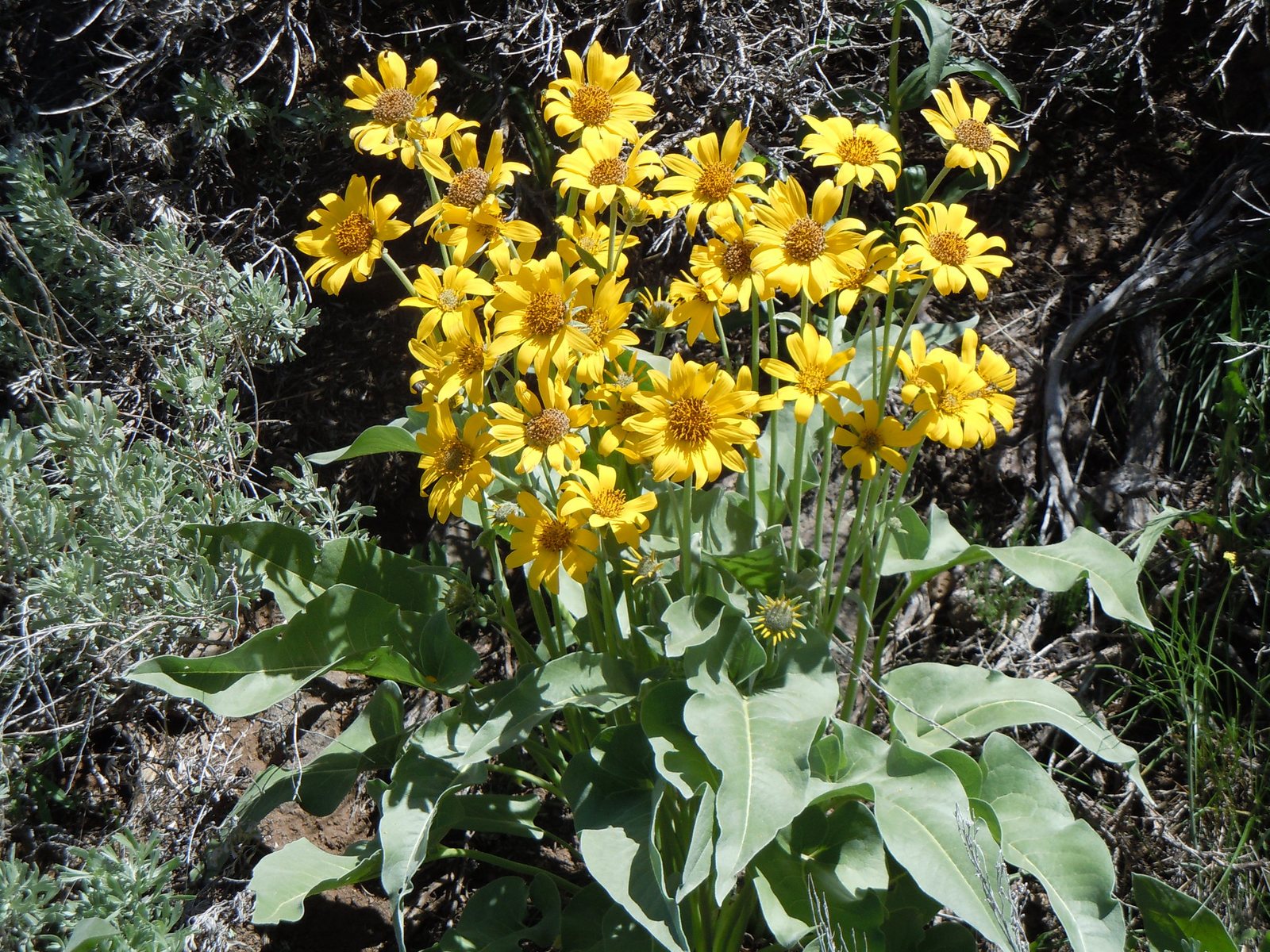
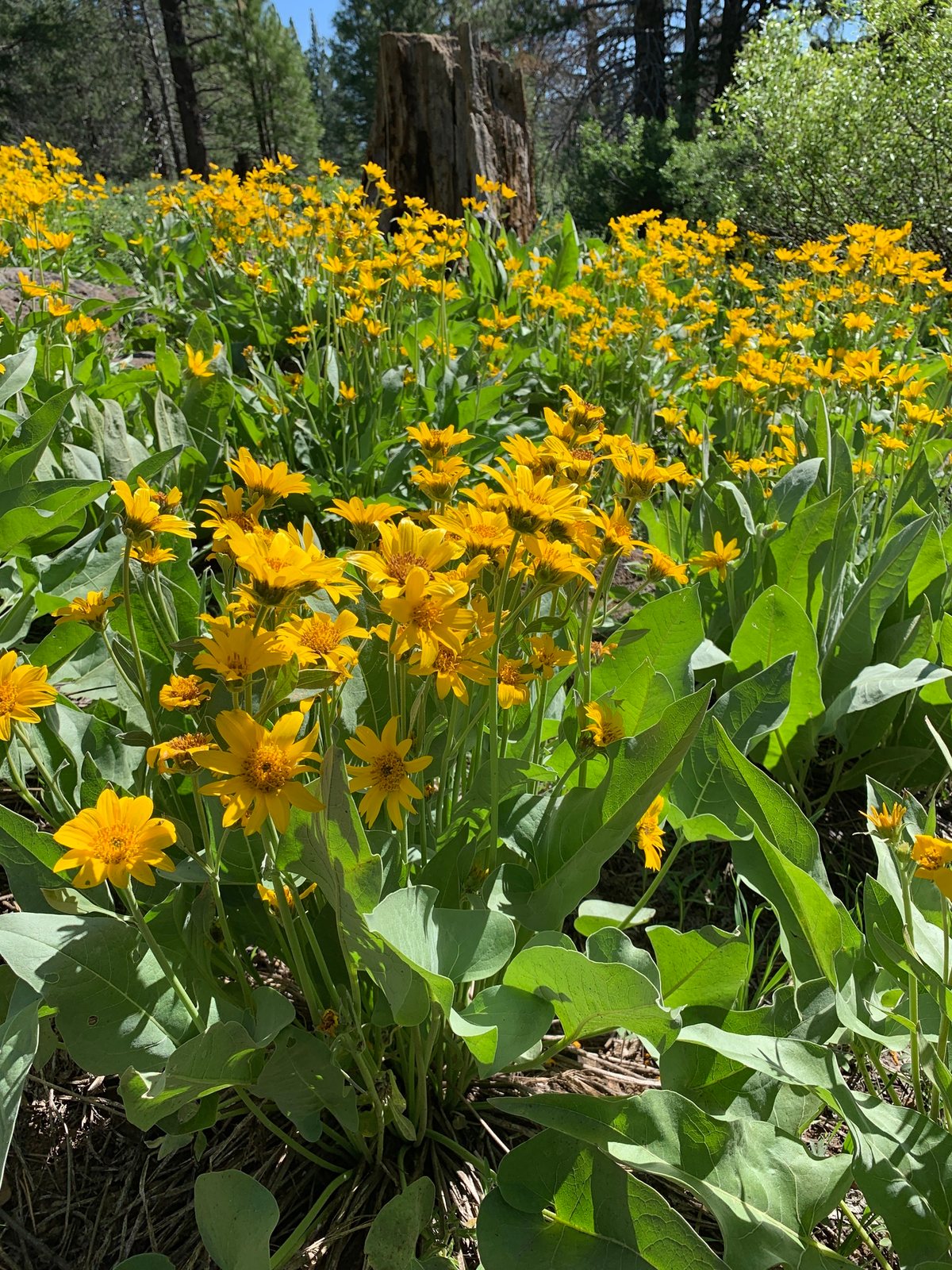
Arrowleaf balsamroot is a long-lived wildflower from western North America, grown for its yellow, sunflower-like blooms and broad, silvery arrow-shaped leaves. Its deep taproot suits dry, sunny gardens, but it establishes slowly and performs poorly in wet soils or humid climates.
At a glance
- Sun
- Full sun; tolerates light shade but flowers best in open sites.
- Water
- Low once established. Provide occasional deep watering during establishment, then allow the soil to dry; avoid routine summer irrigation.
- Soil
- Well-drained sandy, gravelly or loamy soil, preferably with a deep rooting layer. Avoid waterlogged ground and heavily enriched beds.
- Height
- 1-3 ft (0.3-0.9 m)
- Spread
- 1-2 ft (0.3-0.6 m)
- Flowers
- Spring to early summer, depending on elevation and climate; bright yellow flowers with yellow centres.
- Foliage
- Large, arrow-shaped basal leaves covered with fine hairs, giving them a grey-green to silvery appearance. Leaves often dry back during summer drought.
- Growth
- Slow; seed-grown plants commonly take several years to flower.
- Care needed
- Low
The year at a glance
- Pollinators
- Drought tolerant
- Cold hardy
- Wildlife
- Low allergen
| J | F | M | A | M | J | J | A | S | O | N | D | |
|---|---|---|---|---|---|---|---|---|---|---|---|---|
| Flowers | ||||||||||||
| Fruit | ||||||||||||
| Plant |
Northern hemisphere months. In Australia, shift them by six.
- Difficulty
- Moderate
- Toughness
- Fairly tough
Will it suit your garden?
Pick your zone, country, light and whether you have pets.
Full sun is 6 or more hours of direct sun a day, part shade 3 to 6 hours, shade under 3.
How it grows
Planting day
1 ft (0.3 m)
After 1 year
1.2 ft (0.36 m)
After 2 years
1.4 ft (0.42 m)
After 3 years
1.6 ft (0.49 m)
After 5 years
2 ft (0.6 m)
full size
About 5 years to full size.
From a typical nursery size, at an average rate for this kind of plant. A rule of thumb, not a forecast.
Good to know
- Cats and dogs
- Safe
- Native to
- Canada
- Growth rate
- Slow
Care
Jobs through the year
- WaterMar–May, every 21 days
- For established plants, water deeply only during prolonged spring drought; young plants need more attention.
- ProtectMar–May
- Protect emerging seedlings from slugs and remove competing weeds.
- ProtectJan–Feb, Oct–Dec
- Keep crowns free of wet leaves and ensure winter drainage.
- PruneJul–Aug
- Remove fully brown leaves if desired; leave some ripe seed heads for wildlife.
- Choose a permanent position with full sun and excellent drainage.
- Plant young, container-grown plants without disturbing their taproots.
- Water young plants deeply but infrequently, letting the soil dry between waterings.
- Do not feed routinely; avoid rich compost and high-nitrogen fertilisers.
- Keep weeds away from slow-growing seedlings and leave the crown free of damp organic mulch.
- Do not divide established clumps or water dormant plants to force fresh summer growth.
Pruning. Remove dry flower stalks after seed has ripened, or leave them for seed-eating wildlife. Cut away dead leaves once fully brown, keeping clear of the crown.
Through the year
- Autumn
- Sow fresh seed outdoors in a protected seedbed or deep pots so it receives natural winter chilling.
- Winter
- Check that pots and planting sites drain freely; prevent standing water around crowns.
- Early spring
- Plant young nursery stock before strong growth begins, keeping the rootball intact.
- Spring
- Remove competing weeds and protect emerging seedlings from slugs.
- Early summer
- Leave some flower heads to mature if you want seed or food for wildlife.
- Summer
- Allow established plants to become dormant as the soil dries; remove fully dead foliage if desired.
In the garden
- Plant in loose groups among drought-tolerant bunchgrasses for a western meadow effect.
- Use on sunny, well-drained banks where its broad leaves contrast with fine grasses.
- Combine with penstemons and buckwheats in a dry pollinator border.
- Place in a gravel garden with later-flowering neighbours that soften the gaps left by summer dormancy.
Garden styles it suits: Native meadow, Wildflower, Pollinator garden, Desert / xeriscape, Dry gravel garden and Mountain lodge.
Plant it with: Bluebunch wheatgrass, Idaho fescue, Prairie junegrass, Sulphur buckwheat, Showy penstemon and Yarrow.
Wildlife: Flowers provide pollen and nectar for native bees and other insects, and the seeds feed birds and small mammals. Deer and other grazing animals may browse the foliage and flowers.
Problems to watch for
- Crown or root rot in wet soil: improve drainage or move young plants to a raised, gritty site; avoid summer irrigation once established.
- Slugs and snails eating seedlings: inspect young growth and use barriers or a labelled iron-phosphate bait where needed.
- Poor seed germination: use fresh seed and provide a prolonged period of cold, moist conditions before spring warmth.
- Failure after transplanting or division: use young plants with intact roots; established taproots resent disturbance.
Safety
Not known to be toxic to people, cats, dogs or horses. Roots, seeds and young shoots have traditional food uses, but pet-specific safety information is limited; do not treat this as advice to eat garden plants.
Easily confused with
Puget balsamroot (Balsamorhiza deltoidea)
Usually has greener, less densely hairy leaves with broadly triangular blades and heart-shaped bases; arrowleaf balsamroot has more distinctly arrow-shaped, silvery leaves.
Hooker's balsamroot (Balsamorhiza hookeri)
Its leaves are deeply lobed or divided, unlike the broad, undivided leaves of arrowleaf balsamroot.
Mule's ears (Wyethia amplexicaulis)
Has greener, mostly hairless leaves, including conspicuous stem leaves that clasp the flowering stems; arrowleaf balsamroot carries most of its silvery leaves at ground level.
The name
Balsamorhiza means 'balsam root', referring to the resinous root, while sagittata means 'arrow-shaped', describing the leaves.
Propagation. Grow from seed, preferably sown outdoors in autumn. Seed generally needs cold, moist stratification, and germination can be uneven. Use deep containers and plant out while young; division is unsuitable because of the large taproot.
Checked against open data
- Accepted botanical name
- Wyethia sagittata Balsamorhiza sagittata is an older name for Wyethia sagittata.
- Native range
- Alberta, Arizona, British Columbia, California, Colorado, Idaho, Montana, Nevada, North Dakota, Oregon, South Dakota and Utah.
- Measured
- Soil pH 6.5 to 8. Average height 51 cm.
Sources: GBIF (CC BY 4.0) and Trefle (CC BY 4.0). The care and design notes are LandscapeGPT's own.
See it in your own yard.
Upload a photo of your yard and see it redesigned with plants that suit your climate, each checked against your zone.