Idaho fescue
Festuca idahoensis. Family Poaceae. Ornamental grass.
Also called Idaho blue fescue.
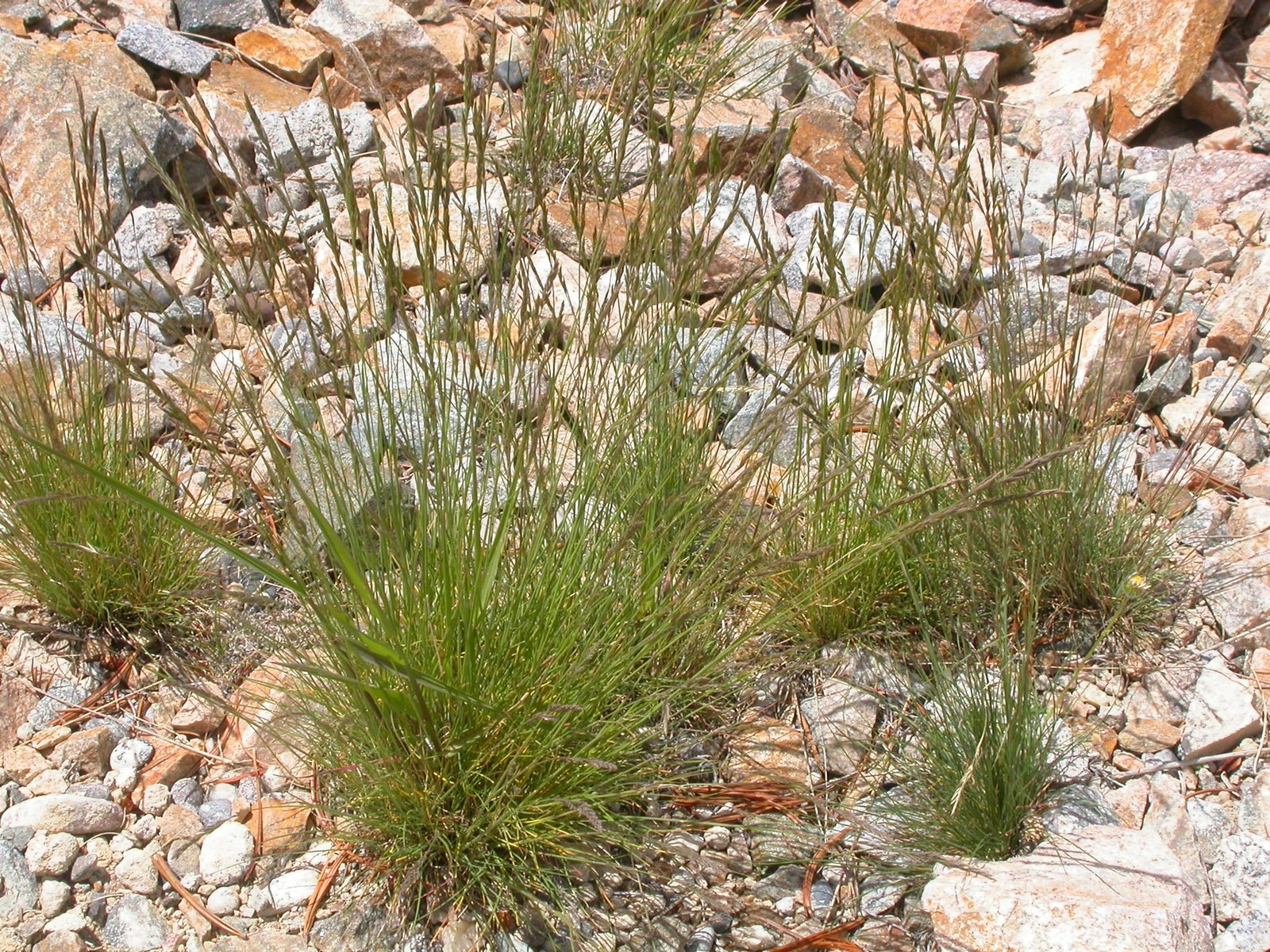
Idaho fescue is a fine-textured, clump-forming grass native to western North America. Gardeners grow it for its narrow blue-green leaves, airy summer flower stems and tolerance of dry conditions once established. It suits sunny, well-drained gardens, but struggles in persistently wet soil and hot, humid climates.
At a glance
- Sun
- Full sun; tolerates light shade, particularly in hotter inland gardens.
- Water
- Low once established; water regularly during establishment, allowing the soil surface to dry between waterings.
- Soil
- Well-drained sandy, gravelly or loamy soil; tolerates lean soil but dislikes waterlogged ground, especially in winter.
- Height
- 1-2.5 ft (0.3-0.75 m), including flower stems
- Spread
- 1-1.5 ft (0.3-0.45 m)
- Flowers
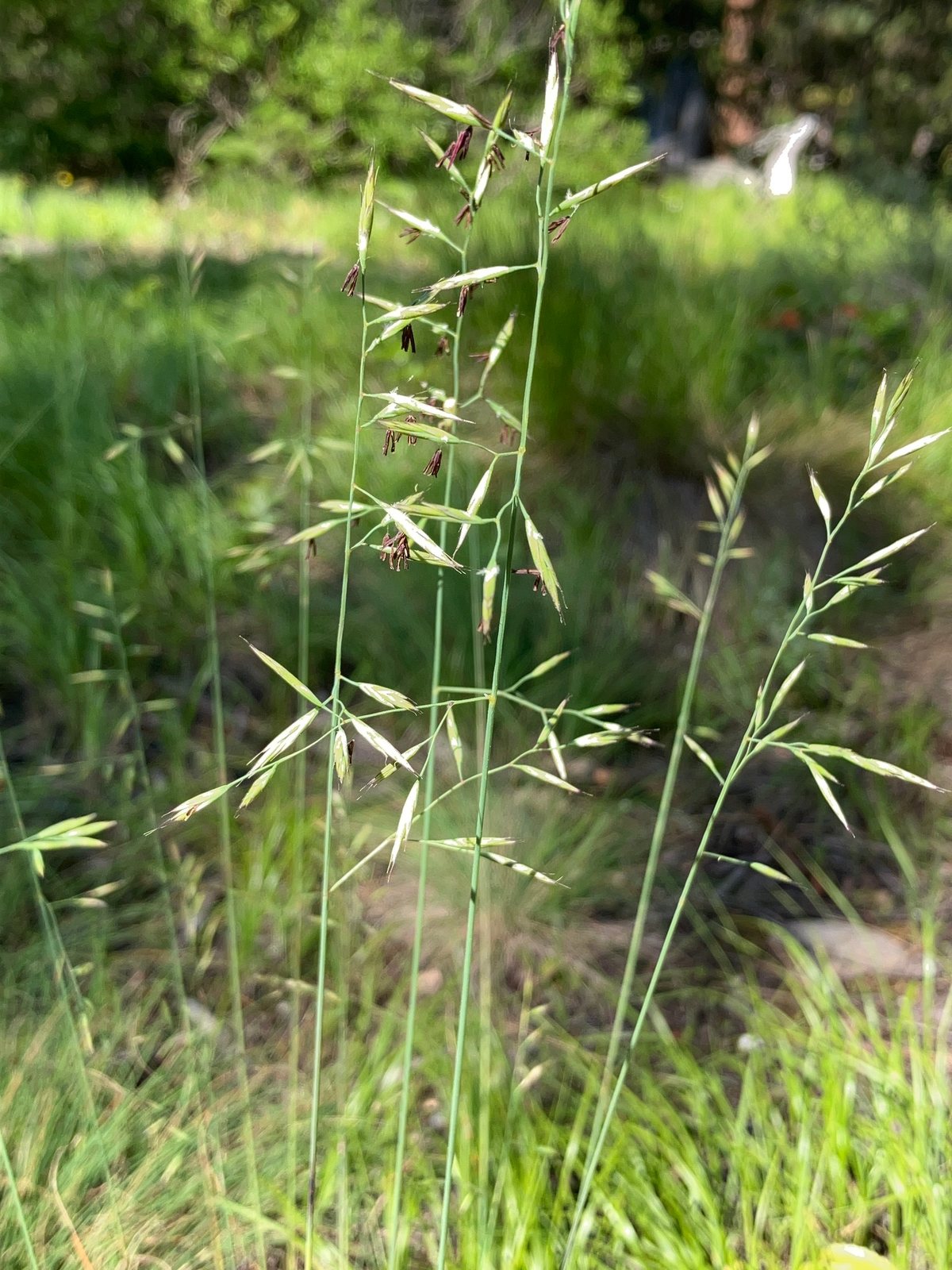
- Late spring to midsummer; slender, open clusters of greenish to purplish flowers mature to straw-coloured seed heads.
- Foliage
- Very narrow, rolled or folded leaves form dense, upright-to-arching tufts; colour varies from green to blue-grey. Usually evergreen in mild climates and semi-evergreen in cold winters.
- Growth
- Slow to moderate
- Care needed
- Low
The year at a glance
- Deer resistant
- Drought tolerant
- Cold hardy
- Wildlife
| J | F | M | A | M | J | J | A | S | O | N | D | |
|---|---|---|---|---|---|---|---|---|---|---|---|---|
| Flowers | ||||||||||||
| Fruit | ||||||||||||
| Plant |
Northern hemisphere months. In Australia, shift them by six.
- Difficulty
- Easy
- Toughness
- Very tough
Will it suit your garden?
Pick your zone, country, light and whether you have pets.
Full sun is 6 or more hours of direct sun a day, part shade 3 to 6 hours, shade under 3.
How it grows
Planting day
1.1 ft (0.35 m)
After 1 year
1.3 ft (0.4 m)
After 2 years
1.5 ft (0.46 m)
After 3 years
1.7 ft (0.51 m)
After 5 years
1.7 ft (0.53 m)
full size
About 3 years to full size.
From a typical nursery size, at an average rate for this kind of plant. A rule of thumb, not a forecast.
Good to know
- Cats and dogs
- Safe
- Native to
- the US and Canada
- Growth rate
- Slow
Care
Jobs through the year
- WaterApr–May, Sep–Oct, every 28 days
- For established plants, water deeply only if soil is dry and rain insufficient; water new plants more often.
- WaterJun–Aug, every 21 days
- Water established clumps deeply during prolonged drought only; young plants need more frequent watering.
- PruneFeb–Mar
- Gently comb out dead leaves and remove old flower stems; do not shear healthy evergreen foliage.
- DivideMar–Apr
- Divide only ageing clumps with sparse centres, replanting vigorous outer sections.
- DeadheadJun–Jul
- Optionally remove flower stems before seeds ripen to prevent unwanted seedlings.
- ProtectJan–Feb, Oct–Dec
- Clear wet leaves from crowns and prevent standing winter water.
- Plant with the crown at soil level in a sunny position with good drainage.
- Water deeply during the first growing season when the root zone dries; reduce watering once established.
- Avoid routine feeding; rich soil and excess nitrogen encourage soft, floppy growth.
- Keep organic mulch away from the crown; gravel mulch is useful in dry gardens.
- Divide ageing clumps in spring if the centres become sparse.
Pruning. In late winter or early spring, gently comb out dead leaves and remove old flower stems before fresh growth becomes substantial. Avoid shearing healthy evergreen foliage to the ground.
Through the year
- Late winter
- Remove broken flower stems and gently comb dead foliage from the clumps.
- Spring
- Plant or divide clumps while conditions are cool and the soil is workable.
- Late spring
- Check newly planted grasses for dry root balls and water deeply when needed.
- Summer
- Leave flower heads for texture, or remove them before seed ripens if seedlings are unwanted.
- Autumn
- Remove unwanted seedlings and clear fallen leaves that collect around the crowns.
- Winter
- Check that rain drains freely and keep wet mulch away from the plant bases.
In the garden
- Repeat small groups through a gravel garden for fine texture among rocks and drought-tolerant perennials.
- Use in western North American native meadow planting with flowering perennials and other bunchgrasses.
- Edge sunny paths with loose, separate clumps rather than a tightly clipped border.
- Plant on well-drained slopes to provide year-round cover and help hold surface soil.
Garden styles it suits: Native meadow, Dry gravel garden, Desert / xeriscape, Mountain lodge, New perennial (prairie) and Pacific Northwest woodland.
Plant it with: Yarrow, Prairie smoke, Blue grama, Sulphur buckwheat, Arrowleaf balsamroot and Pearly everlasting.
Wildlife: Provides cover for small animals and invertebrates; seed may be eaten by birds. It is wind-pollinated rather than a nectar source for bees.
Problems to watch for
- Crown or root rot in wet soil: improve drainage or move the plant to a raised, freely draining position; replace badly rotted clumps.
- Browning or summer dormancy during severe drought: give an occasional deep watering if a greener appearance is wanted, without keeping the soil constantly moist.
- Sparse or dead centres in older clumps: divide in spring and replant vigorous outer sections.
- Rust may mark leaves in damp, crowded conditions: improve airflow, avoid overhead watering and remove badly affected dead foliage.
Safety
Not known to be toxic to people, cats, dogs or horses. As with other grasses, eating coarse leaves or seed heads can cause irritation; ornamental plants should not be treated as tested livestock forage.
Easily confused with
Blue fescue (Festuca glauca)
Common garden selections usually form shorter, more intensely blue cushions than Idaho fescue. Colour and size overlap, so these features alone do not give a certain identification.
Sheep fescue (Festuca ovina)
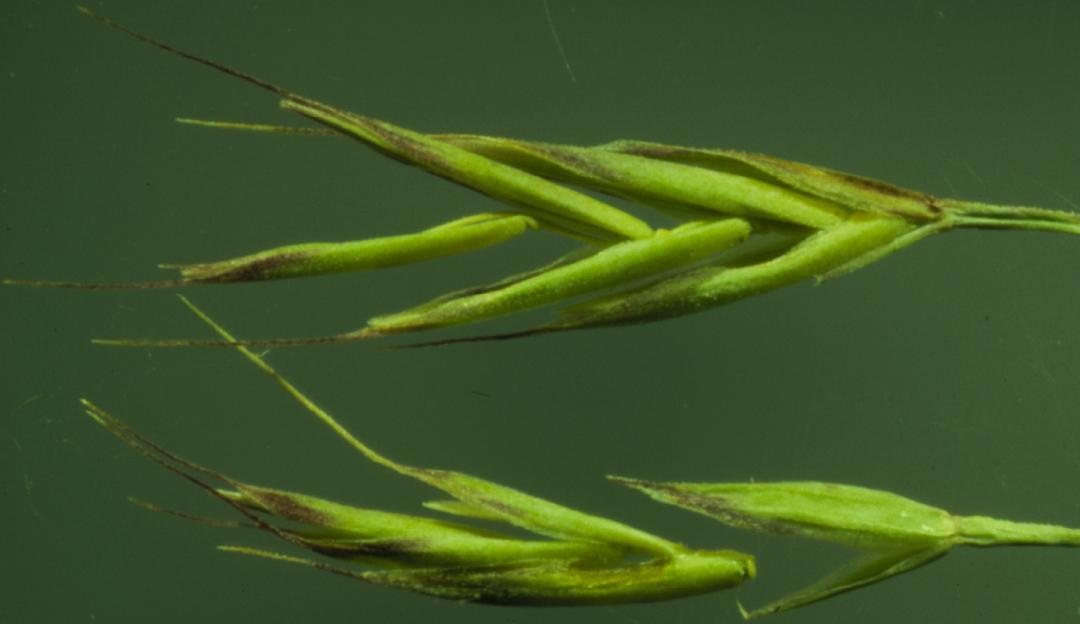
Also has very fine leaves and a tufted habit, but is usually smaller with shorter flower stems. Reliable separation may require examining mature flower parts with a hand lens.
The name
The epithet idahoensis means 'of Idaho', while Festuca is an old Latin name for a grass or stalk.
Propagation. Sow seed in autumn or spring, or divide established clumps in early spring. Seed-grown plants vary in leaf colour and habit; division preserves the parent plant's appearance.
Checked against open data
- Accepted botanical name
- Festuca idahoensis
- In the US and Canada
- Native in Canada and the lower 48 states.
- Native range
- Alberta, Arizona, British Columbia, California, Colorado, Idaho, Montana, Nevada, New Mexico, Oregon, Saskatchewan and South Dakota.
- Measured
- Soil pH 5.6 to 8.4. Average height 52 cm.
Sources: GBIF (CC BY 4.0), USDA PLANTS and Trefle (CC BY 4.0). The care and design notes are LandscapeGPT's own.
See it in your own yard.
Upload a photo of your yard and see it redesigned with plants that suit your climate, each checked against your zone.