Prairie junegrass
Koeleria macrantha. Family Poaceae. Ornamental grass.
Also called Junegrass, Crested hairgrass.
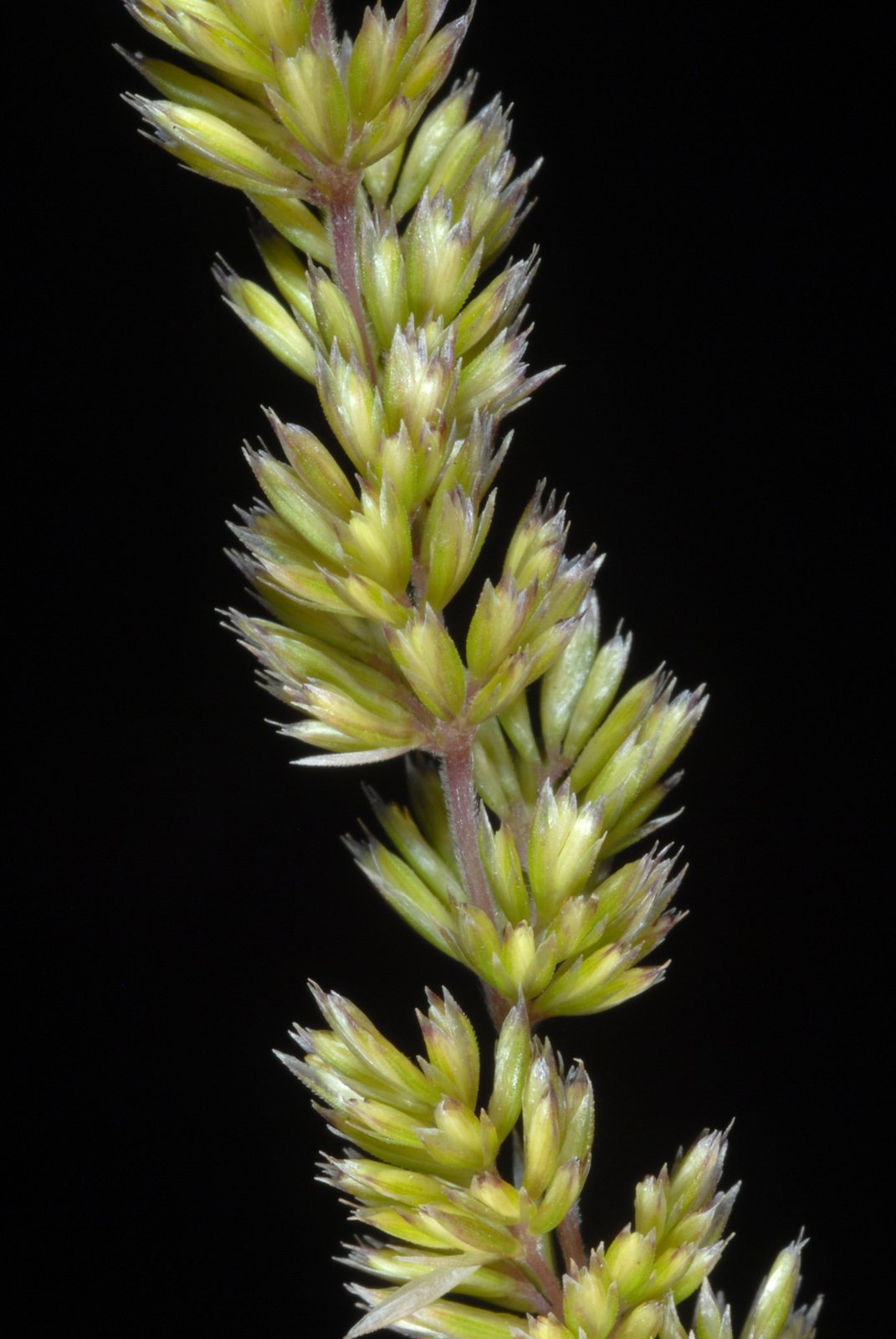
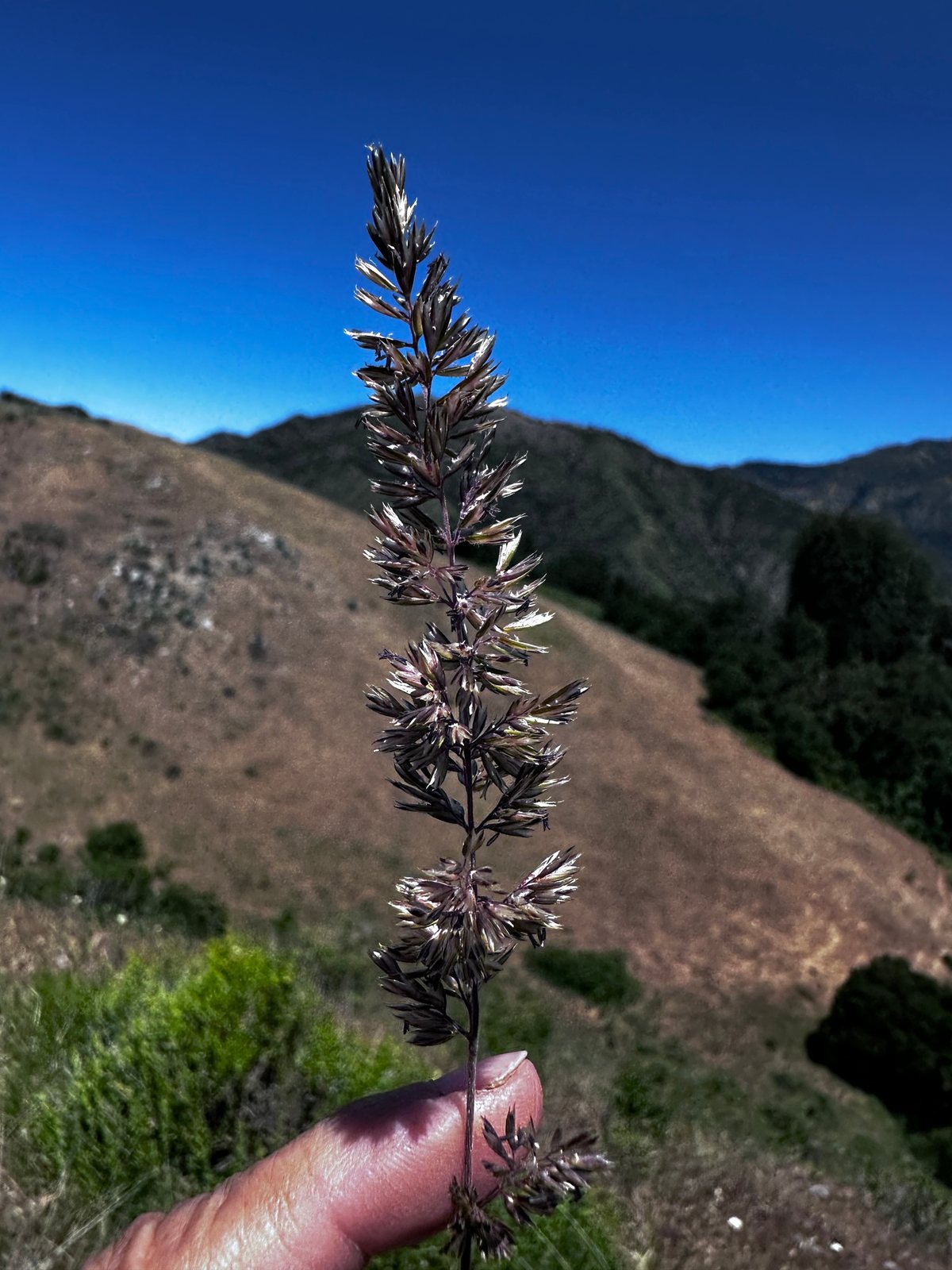
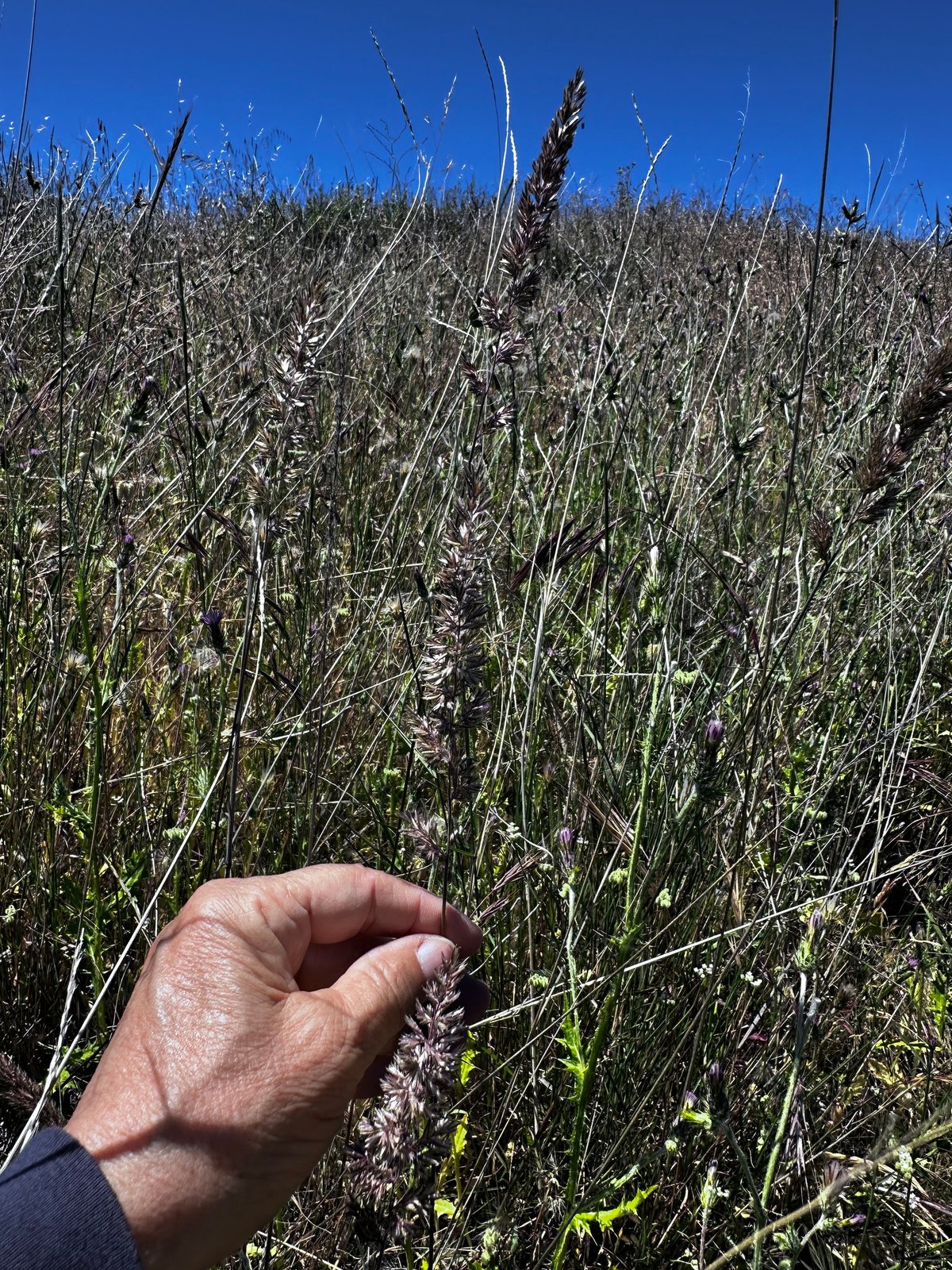
Prairie junegrass is a small, cool-season bunchgrass native to North America and Eurasia, grown for its fine leaves and upright, silvery-green flower heads. It suits sunny, dry gardens, gravel beds and short meadow plantings without spreading by runners. It grows most actively in cool weather and may turn partly brown during summer drought.
At a glance
- Sun
- Full sun; tolerates light shade but flowers less freely.
- Water
- Low once established. Water young plants during dry spells; established clumps tolerate drought but dislike persistently wet ground.
- Soil
- Well-drained sandy, gravelly or loamy soil, preferably lean rather than heavily enriched. Tolerates alkaline soil; avoid wet clay and poorly drained winter sites.
- Height
- 1-2 ft (0.3-0.6 m), including flower stems
- Spread
- 0.5-1 ft (0.15-0.3 m)
- Flowers
- Late spring to early summer; narrow, silvery-green flower heads mature to pale straw.
- Foliage
- Fine, narrow green to grey-green leaves form a low tuft. Foliage may remain partly green in mild winters but becomes dormant in cold weather or summer drought.
- Growth
- Slow to moderate; seedlings take time to form substantial clumps.
- Care needed
- Low
The year at a glance
- Deer resistant
- Drought tolerant
- Cold hardy
- Wildlife
| J | F | M | A | M | J | J | A | S | O | N | D | |
|---|---|---|---|---|---|---|---|---|---|---|---|---|
| Flowers | ||||||||||||
| Fruit | ||||||||||||
| Plant |
Northern hemisphere months. In Australia, shift them by six.
- Difficulty
- Easy
- Toughness
- Very tough
Will it suit your garden?
Pick your zone, country, light and whether you have pets.
Full sun is 6 or more hours of direct sun a day, part shade 3 to 6 hours, shade under 3.
How it grows
Planting day
1.1 ft (0.35 m)
After 1 year
1.2 ft (0.38 m)
After 2 years
1.4 ft (0.41 m)
After 3 years
1.5 ft (0.44 m)
After 5 years
1.5 ft (0.45 m)
full size
About 3 years to full size.
From a typical nursery size, at an average rate for this kind of plant. A rule of thumb, not a forecast.
Good to know
- Cats and dogs
- Safe
- Native to
- the US, Canada and the UK
- Growth rate
- Slow
Care
Jobs through the year
- WaterApr–May, Sep–Oct, every 21 days
- Water established clumps only during prolonged drought; young plants need more frequent watering.
- WaterJun–Aug, every 21 days
- Water sparingly only in prolonged drought; allow summer dormancy rather than forcing green growth.
- PruneFeb–Mar
- Comb out dead leaves or trim to 5–8 cm before new growth.
- DivideMar–Apr
- Divide ageing or congested clumps as spring growth begins.
- DeadheadJun–Jul
- Remove fading heads before seed ripens only if self-seeding is unwanted; otherwise retain for winter.
- ProtectOct–Nov
- Clear wet leaves from crowns and ensure winter drainage.
- Water after planting and during prolonged dry spells through the first growing season.
- Once established, water sparingly and let the soil dry between waterings.
- Avoid routine fertiliser and rich compost, which encourage weak, floppy growth.
- Keep the crown clear of damp organic mulch; use a light gravel mulch if needed.
- Divide ageing or congested clumps in early spring while they are actively growing.
Pruning. In late winter or early spring, before fresh growth starts, comb out dead leaves or trim the clump to about 2-3 in (5-8 cm). Remove flower stems after they fade if you want to limit self-seeding, or leave them for their straw-coloured winter structure.
Through the year
- Late winter
- Remove collapsed stems and dead foliage before new shoots develop.
- Early spring
- Plant or divide clumps into free-draining soil and water them in.
- Spring
- Weed around young clumps before neighbouring plants shade them.
- Early summer
- Leave the flowering heads for display, or cut them before seed ripens to reduce seedlings.
- Summer
- Water new plantings during drought; allow established plants to become partly dormant rather than keeping the soil constantly wet.
- Autumn
- Remove fallen leaves that collect over the crown and check that water drains freely.
In the garden
- Plant in repeated small groups along a sunny gravel path for fine texture and low, upright flower heads.
- Use in short native meadow plantings with locally appropriate prairie wildflowers.
- Combine with low flowering perennials in a rock garden, keeping taller plants from shading the clumps.
- Place near the front of a dry perennial border, where its early flowers contrast with broader leaves.
Garden styles it suits: Native meadow, Midwest prairie, Dry gravel garden, Desert / xeriscape, New perennial (prairie) and Wildlife garden.
Plant it with: Purple prairie clover, Prairie smoke, Lanceleaf coreopsis, Butterfly weed, Pale purple coneflower and Blue grama.
Wildlife: Provides cover for small insects, and its seeds may be eaten by small birds. In its native North American range it also supports grass-feeding insects. The flowers are wind-pollinated rather than a nectar source.
Problems to watch for
- Crown rot in wet soil: improve drainage or move the plant to a raised, gravelly position; avoid burying the crown.
- Flopping in rich soil or shade: stop feeding and move to a sunnier, leaner site.
- Brown foliage during summer drought: this can be normal dormancy; avoid heavy watering intended to force continuous growth.
- Poor establishment among vigorous neighbours: weed carefully and give young clumps open space until their roots develop.
Safety
Not known to be toxic to people, cats, dogs or horses. No part is recognised as poisonous, although eating coarse grass can irritate pets' mouths or stomachs.
Easily confused with
Blue hair grass (Koeleria glauca)
Usually has more distinctly blue-grey foliage and a denser, compact tuft. Prairie junegrass is generally greener, though foliage colour overlaps and labels are useful.
Crested dog's-tail (Cynosurus cristatus)
Its flower head is noticeably one-sided, with a comb-like arrangement of spikelets. Prairie junegrass has a more evenly cylindrical, softly textured head.
The name
Koeleria honours the botanist Georg Ludwig Koeler, macrantha means large-flowered, and junegrass refers to its early-summer flowering in much of North America.
Propagation. Grow from seed sown shallowly in spring, keeping the surface lightly moist until germination. Divide established clumps in early spring; seed-grown plants may take more than one season to develop a good flowering display.
Checked against open data
- Accepted botanical name
- Koeleria macrantha
- In the US and Canada
- Native in Alaska, Canada and the lower 48 states. Introduced in Hawaii.
- Native range
- Afghanistan, Alabama, Alaska, Albania, Alberta, Amur, Arizona, Arkansas, Austria, Baleares, Baltic States and Belgium.
- Measured
- Soil pH 6 to 8. Average height 21 cm.
Sources: GBIF (CC BY 4.0), USDA PLANTS and Trefle (CC BY 4.0). The care and design notes are LandscapeGPT's own.
See it in your own yard.
Upload a photo of your yard and see it redesigned with plants that suit your climate, each checked against your zone.